From Real Exams Quiz
Secondary 4 Social Studies Ancient Civilisations Quiz
Free Sec 4 Social Studies Ancient Civilisations quiz, HY3 Exam version, with questions, answers, and O Level-style practice for Singapore students.
These static practice materials are generated from the site's syllabus and paper-generation workflow, with source and model context shown so students and parents can evaluate the material before use.
Questions
Free quiz and exam paper access
Enter your details to view this paper
Your access is remembered on this device.
Answers
Secondary 4 Social Studies Quiz - Ancient Civilisations (Answer Key)
Total Marks: 40
Duration: 45 minutes
Section A: Short Answer
Q1. [1 mark]
Answer: Tigris and Euphrates Rivers (accept "Tigris" or "Euphrates" or "both").
Teaching note: Mesopotamia means "between rivers". The two rivers provided water for farming. Common mistake: naming Nile (that is Egypt).
Q2. [1 mark]
Answer: Hieroglyphs (accept "hieratic" or "demotic").
Teaching note: Egyptian writing used pictures; hieroglyphs are the most well-known.
Q3. [1 mark]
Answer: Steatite (or soapstone).
Teaching note: Indus seals were typically carved from steatite and fired.
Q4. [1 mark]
Answer: Indus Valley civilisation.
Teaching note: Mohenjo-daro was a major city of the Indus Valley, located in present-day Pakistan.
Q5. [1 mark]
Answer: Varna (or caste system).
Teaching note: Vedic texts describe four varnas: Brahmins, Kshatriyas, Vaishyas, Shudras.
Section B: Source-Based Questions
Q6. (a) [2 marks]
Answer: The Nile flooded predictably and left fertile silt; this allowed surplus crops and specialised labour.
Marking: 1 mark for flooding/silt, 1 mark for surplus/specialised society.
Teaching note: Source A explicitly states these points; students must use evidence.
(b) [2 marks]
Answer: Pharaoh had divine authority; made offerings to gods (ruler seen as link to divine).
Marking: 1 mark for divine authority, 1 mark for offering/religious role.
Q7. [1 mark]
Answer: Egypt (2000 thousand).
Teaching note: From Source C table, Egypt 2000 > Mesopotamia 1500 > Indus 900.
Q8. [6 marks]
Answer: Sources agree to a large extent.
- Source A: Nile floods → fertile silt → surplus → complex society (environment supports growth).
- Source C: Egypt & others show population rise from 2500 to 1500 BCE.
- Link: Environmental factor (river) in A matches population increase in C for Egypt.
- Partial: C does not state cause, but aligns with A.
Marking: 2 marks for identifying A's point, 2 for C's data, 2 for explanation of agreement.
Teaching note: Show comparison, not just description.
Q9. [6 marks]
Answer: Similar in showing central authority.
- D: rulers built walls/armies → defence by government.
- E: temple officials distributed grain → central authority managed resources.
- Both show organised government role.
- Differ: D is military, E is economic/religious.
Marking: 3 marks for points from D, 2 for E, 1 for comparison conclusion.
Q10. [7 marks]
Answer: Source A or B more useful than F.
- F is a blog, biased, calls them "primitive/backward" – unreliable for achievements.
- A gives factual environmental achievement; B shows organised temple building.
- Usefulness: A/B based on evidence, F opinion.
Marking: 3 for evaluating F, 4 for A/B choice with reason.
Teaching note: Reliability = trust; Usefulness = relevance.
Q11. [2 marks]
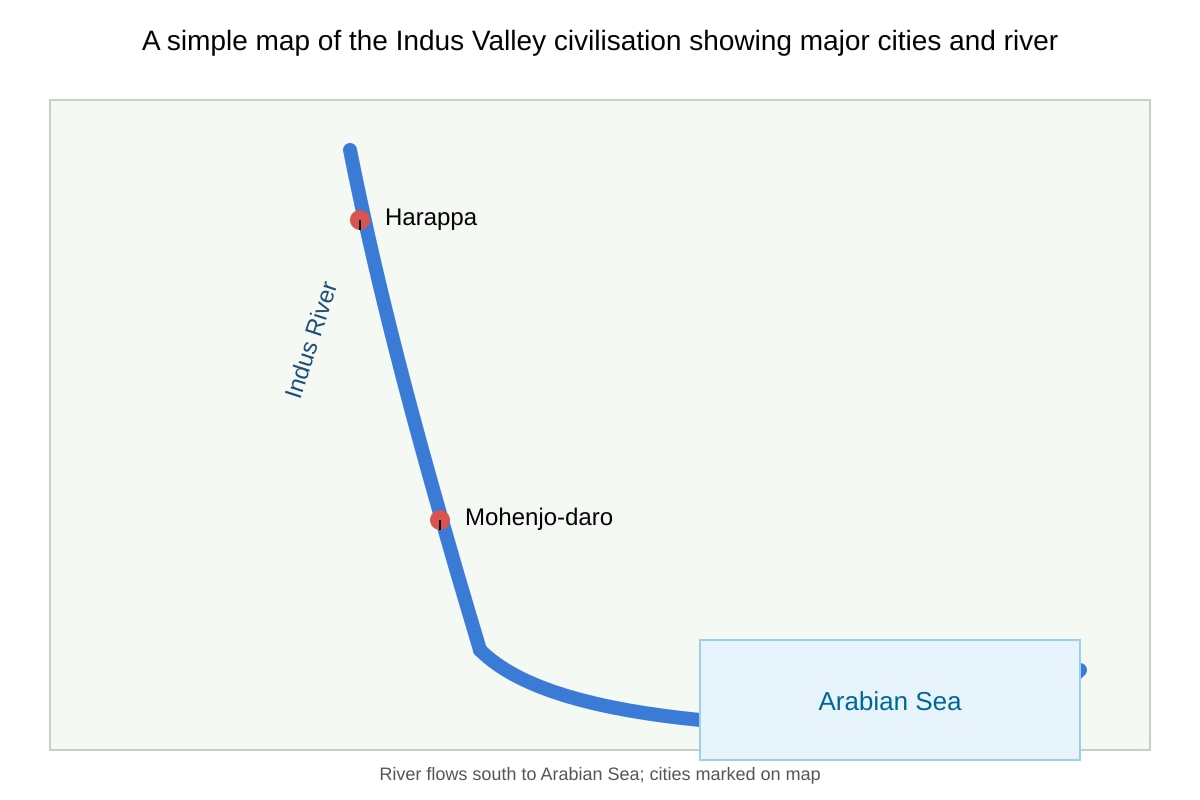
Answer: Harappa and Mohenjo-daro (from map labels).
Marking: 1 each.
Q12. [2 marks]
Answer: Used oracle bones to consult ancestors; bronze casting for rituals.
Marking: 1 each.
Q13. [7 marks]
Answer: Not surprised.
- Source A: Egypt had pharaoh as religious figure.
- Expectation: ancient rulers linked to religion.
- Source H: Shang kings also religious (oracle bones).
- Aligns with expectation.
Marking: 2 for A summary, 2 for H, 3 for explanation of low surprise.
Q14. [1 mark]
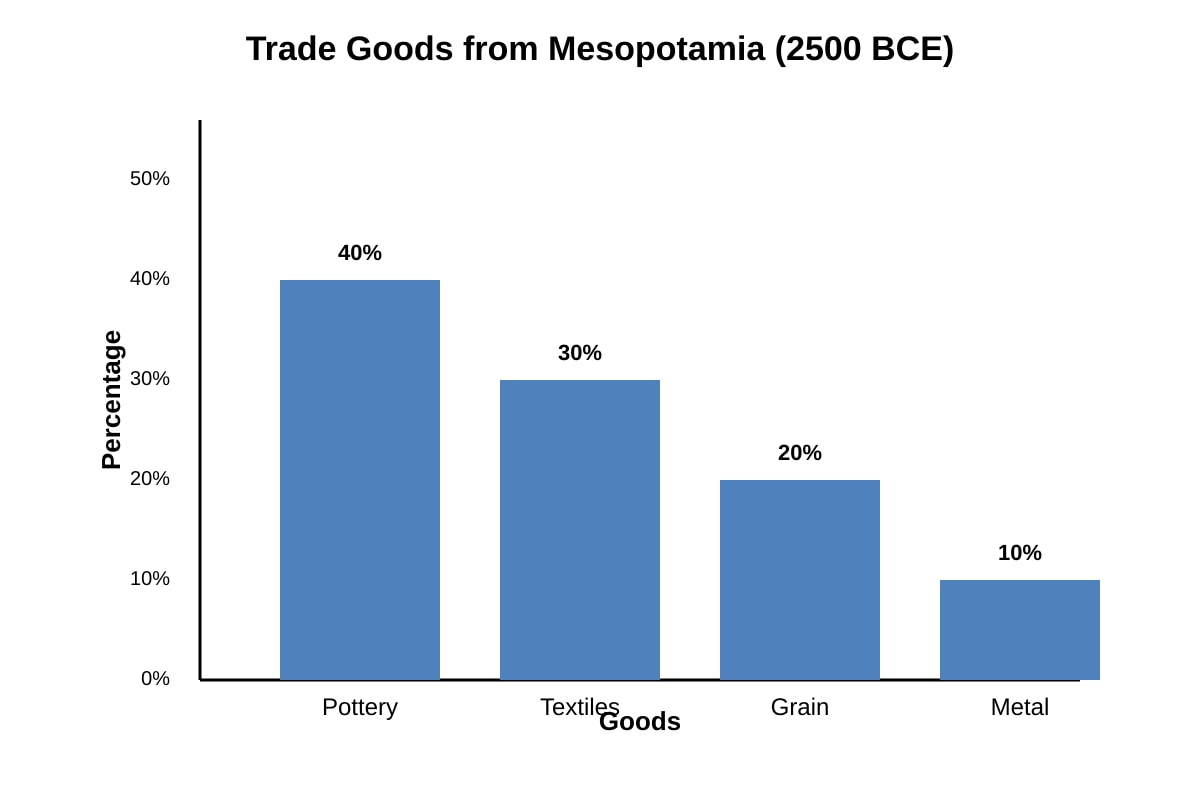
Answer: Pottery (40%).
Q15. [6 marks]
Answer: Source I does not prove D wrong.
- D: conflict over land/water, defence.
- I: trade goods (pottery etc.) shows trade existed.
- Both can be true: they traded AND fought.
- I lacks conflict data, so no contradiction.
Marking: 2 for D, 2 for I, 2 for synthesis.
Section C: Extended Response
Q16. [10 marks]
Answer: Disagree to large extent.
- Sources D, E show conflict/defence; not purely peaceful.
- Source I trade supports some peace.
- Balanced: some trade, but war evident.
Marking descriptors: 10 = uses 3+ sources, balanced, clear conclusion. 7–8 = 2 sources, some balance. 5 = one-sided.
Q17. [8 marks]
Answer: Rulers greater impact (or religious, with reason).
- A: pharaoh controlled society via divine.
- H: Shang king ritual + likely political.
- Daily life: taxes, laws by ruler.
Marking: 4 for Egypt, 4 for Shang comparison.
Q18. [4 marks]
Answer: Grid streets; drainage system; standard bricks (any 2).
Marking: 2 each.
Q19. [3 marks]
Answer: To record transactions/religion.
Marking: 1 definition, 2 explanation.
Q20. [5 marks]
Answer: Agree partially.
- Example: Source E central resource management similar to modern gov.
- Link to governance principle.
Marking: 2 example, 3 explanation.