AI Generated Exam Paper
Secondary 4 Social Studies Practice Paper 3
Free Sec 4 Social Studies Practice Paper 3, HY3 AI version, with questions, answers, and O Level-style practice for Singapore students.
These static practice materials are generated from the site's syllabus and paper-generation workflow, with source and model context shown so students and parents can evaluate the material before use.
Questions
TuitionGoWhere Practice Paper - Social Studies Secondary 4
TuitionGoWhere Practice Paper (AI) — Version 3 of 5
Subject: Social Studies
Level: Secondary 4
Paper: Practice Paper (Topic: Essay Explanation)
Duration: 1 hour 30 minutes
Total Marks: 60
Name: ___________________________
Class: ____________
Date: ____________
Instructions:
- This practice paper contains 20 questions focused on essay explanation skills using source-based and issue-based contexts.
- Answer all questions in the spaces provided.
- Use the provided sources and syllabus knowledge to support your explanations.
- Marks for each question are shown in brackets [ ].
- Section marks and question marks total exactly 60.
Section A: Understanding Essay Claims (Questions 1–5) — 10 marks
1. "The government has a more important role than citizens in ensuring Singapore's economic well-being." Using your own knowledge, explain what this claim means in one sentence. [2]
2. Study the statement: "Integration is better than assimilation for a diverse society." Identify one keyword that shows the type of policy comparison being made. [1]
3. "Globalisation brings more benefits than problems to Singapore." State whether this is an evaluative claim or a factual claim. [1]
4. Read Source X: "The town council organised a cleaning drive with 200 residents participating." Which actor (government or citizen) is shown taking action? [1]
5. "Singapore is prepared for a potential terrorist attack." Give one reason why this claim requires explanation rather than a yes/no answer in an essay. [1]
Section B: Source-Based Explanation (Questions 6–13) — 24 marks
Source A: A government report (2022) stating that SkillsFuture credits helped 500,000 workers upgrade skills, with 70% reporting better job prospects.
Source B: A forum letter (2023) from a freelance worker stating that training courses are too generic and do not help those in unstable jobs.
6. Study Sources A and B. How far do the sources agree that SkillsFuture helps workers? Explain your answer using both sources. [6]
7. Which source is more useful as evidence that government training schemes benefit citizens? Explain your answer. [7]
8. Having read Source A, are you surprised by Source B? Explain your answer. [7]
9. "The government has a more important role than citizens in preparing Singapore for globalisation." Using Sources A and B, explain how far you agree. [4]
Source C: A news article (2021) on racial harmony: "Community clubs held 120 inter-faith dialogues, but some residents objected to a mosque building nearby (NIMBY syndrome)."
Source D: A policy paper (2020) stating integration allows groups to keep their culture while sharing national identity.
10. Compare how Sources C and D show different challenges in managing diversity. [6]
Section C: Essay Explanation & Evaluation (Questions 14–20) — 26 marks
14. "'Globalisation is a force for good.' Using sources in this case study, explain how far you agree with this statement." Plan the structure of your essay with two supporting points and two challenging points. [4]
15. "Citizens play a more crucial role than the government in maintaining social harmony." Using syllabus knowledge, explain how far you agree. [8]
16. Extract E shows housing policy trade-offs. Explain the trade-offs the government faces between affordability and sustainability. Use evidence from the extract. [6]
Extract E: "HDB flats are heavily subsidised, costing the government $2 billion yearly, but resale prices have risen, making upgrades hard for lower-income families."
17. "Both government and citizens are equally responsible for environmental sustainability. Do you agree?" Explain your answer with examples. [4]
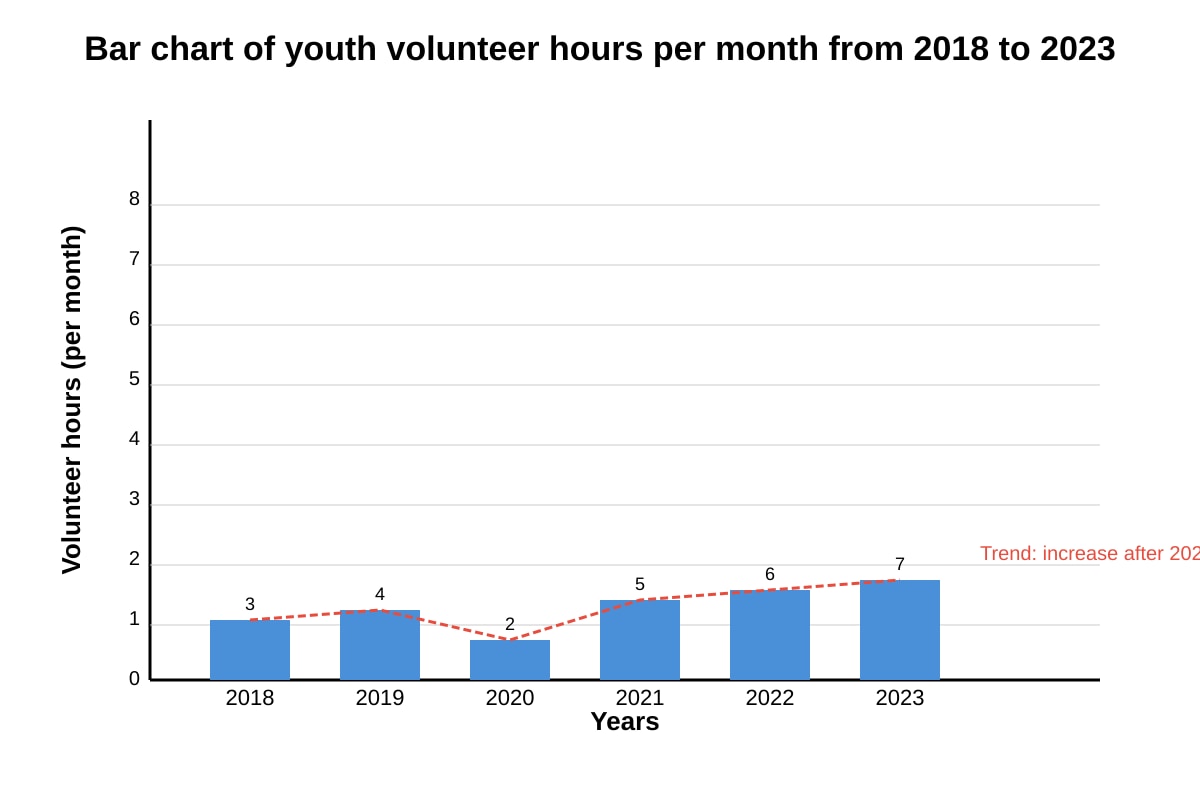
18. Study the chart placeholder below. Explain one trend it shows about youth volunteerism and link it to citizen roles. [4]
Image pending generation: chart for Q18.
19. "Singapore's meritocracy ensures opportunities for all." Using syllabus principles, explain one challenge to this claim. [2]
20. "'The government has a more important role than citizens in promoting national interests.' Using sources and knowledge, explain how far you agree with this statement." [8]
Answers
TuitionGoWhere Practice Paper — Answer Key (Version 3)
Subject: Social Studies
Level: Secondary 4
Paper: Practice Paper (Essay Explanation)
Total Marks: 60
Section A: Understanding Essay Claims (Q1–5) — 10 marks
Q1 [2]
Answer: The claim means the state's policies and planning matter more than individual actions for the country's prosperity.
Teaching note: Define "economic well-being" (jobs, growth). Mark: 1 for identifying government role, 1 for citizen comparison.
Q2 [1]
Answer: "Integration" or "assimilation" (policy type keyword).
Teaching note: Shows policy comparison; accept either term.
Q3 [1]
Answer: Evaluative claim.
Teaching note: It judges good/bad, not verifiable fact.
Q4 [1]
Answer: Citizens (residents).
Teaching note: Town council is government but residents acted.
Q5 [1]
Answer: Because preparedness has many aspects (policy, drills, public help) needing explanation.
Teaching note: Essays need "how far" not yes/no.
Section B: Source-Based Explanation (Q6–13) — 24 marks
Q6 [6]
Answer: Partial agreement. Source A shows large-scale help (500k workers, 70% better prospects). Source B says generic courses fail freelancers. They agree training exists but disagree on universal benefit.
Marking: 2 for Source A evidence, 2 for Source B, 2 for balanced conclusion.
Q7 [7]
Answer: Source A more useful (official data, broad reach). Source B useful for limitations but narrow. Explain reliability (gov report) vs usefulness (citizen view).
Marking: 3 for A eval, 3 for B, 1 conclusion.
Q8 [7]
Answer: Not surprised because A shows scheme scale but not perfect fit; B shows mismatch. Expectation from A is positive but B reveals gap.
Marking: 2 Source A summary, 2 Source B, 3 reasoning surprise level.
Q9 [4]
Answer: Partly agree: Gov provides framework (A) but citizens must use skills (B).
Marking: 2 each source link.
Q10 [6]
Answer: C shows ground tension (NIMBY), D shows policy ideal. Compare real vs planned harmony.
Marking: 3 each source.
Section C: Essay Explanation (Q14–20) — 26 marks
Q14 [4]
Answer: Support: jobs, tech. Challenge: inequality, cultural loss.
Marking: 2 support, 2 challenge.
Q15 [8]
Answer: Gov sets laws; citizens build ties. Agree partly: both needed.
Marking descriptors: 4 gov, 4 citizen examples.
Q16 [6]
Answer: Affordability (subsidy $2b) vs sustainability (resale rise hurts poor). Trade-off: spend now vs long-term equity.
Marking: 3 extract evidence, 3 explanation.
Q17 [4]
Answer: Yes: gov rules, citizens recycle. Examples given.
Marking: 2 each side.
Q18 [4]
Answer: Trend: rise from 3 to 7 hrs post-2020. Shows youth civic role growing.
Must show: chart bars labelled, increase visible.
Q19 [2]
Answer: Challenge: unequal start (rich get more tutoring).
Marking: 1 concept, 1 example.
Q20 [8]
Answer: Gov leads defence; citizens support via national service. Partial agree.
Marking: 4 gov, 4 citizen with sources.
Free quiz and exam paper access
Enter your details to view this paper
Your access is remembered on this device.