From Real Exams Exam Paper
Secondary 4 Social Studies Preliminary Examination Paper 4
Free Sec 4 Social Studies Prelim Paper 4, DeepSeek Exam version, with questions, answers, and O Level-style practice for Singapore students.
These static practice materials are generated from the site's syllabus and paper-generation workflow, with source and model context shown so students and parents can evaluate the material before use.
Questions
Free quiz and exam paper access
Enter your details to view this paper
Your access is remembered on this device.
Answers
TuitionGoWhere Practice Paper – Social Studies Secondary 4
Answer Key and Marking Scheme
Paper: PRELIM – Version 4
Total Marks: 50
Section A: Source-Based Case Study [30 marks]
Question 1 [6 marks]
Question: Study Sources A and B. How far do these sources agree on the state of social cohesion in Singapore? Explain your answer.
Marking Scheme:
| Level | Marks | Descriptor |
|---|---|---|
| L1 | 1–2 | Identifies basic agreement or disagreement without explanation or evidence |
| L2 | 3–4 | Identifies points of agreement and/or disagreement with some evidence from sources |
| L3 | 5–6 | Explains both agreement and disagreement with specific evidence from both sources, reaching a balanced conclusion |
Model Answer:
Sources A and B agree to a limited extent on the state of social cohesion in Singapore.
Points of agreement:
- Both sources acknowledge that diversity and social harmony are important in Singapore. Source A states that "multicultural heritage is our strength" and Source B notes that 78% of respondents agreed that racial and religious harmony is important.
- Both sources recognise that maintaining cohesion requires effort. Source A mentions "constant effort to maintain harmony" while Source B's survey findings suggest that proximity alone "does not always lead to understanding."
Points of disagreement:
- Source A presents an optimistic view, emphasising government policies and the potential for citizens to "see diversity as an opportunity." In contrast, Source B reveals significant gaps, with only 52% having close cross-cultural friendships and 35% feeling uncomfortable with different cultural practices.
- Source A focuses on what can be achieved through collective effort, while Source B highlights current limitations in social integration, suggesting that the reality falls short of the ideal presented in Source A.
Conclusion: While both sources agree on the importance of social cohesion, they differ in their assessment of how successfully it has been achieved. Source A is aspirational, while Source B provides evidence of ongoing challenges. Therefore, they agree only partially.
Question 2 [7 marks]
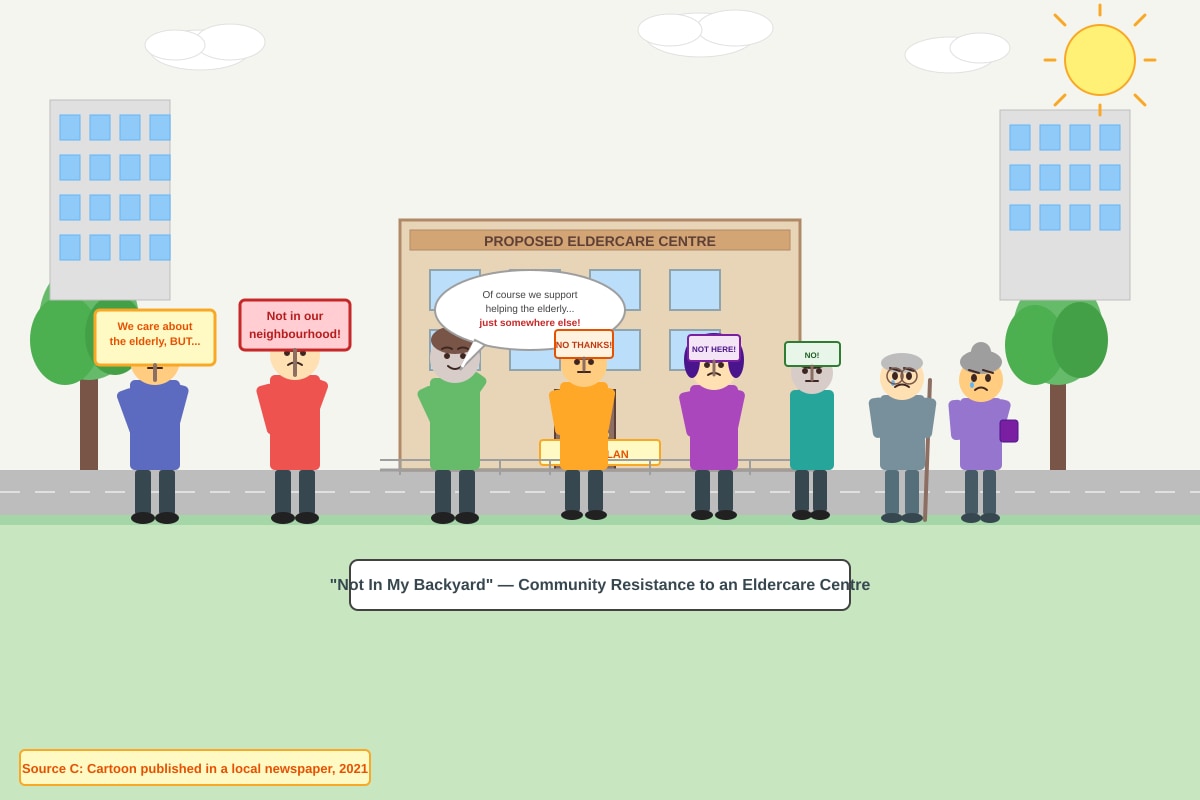
Question: Study Source C. Having read Source A, are you surprised by the attitudes shown in Source C? Explain your answer.
Marking Scheme:
| Level | Marks | Descriptor |
|---|---|---|
| L1 | 1–2 | States surprise or lack of surprise without explanation |
| L2 | 3–4 | Explains expectation from Source A and compares with Source C, with some reasoning |
| L3 | 5–7 | Clearly explains expectation from Source A, analyses Source C's content, and provides well-reasoned explanation for degree of surprise |
Model Answer:
Having read Source A, I am partially surprised by the attitudes shown in Source C.
Expectation from Source A: Source A presents an optimistic view of Singapore's approach to diversity. The minister emphasises that "every Singaporean must play their part" and suggests that citizens should "see diversity as an opportunity rather than a challenge." This creates an expectation that Singaporeans are generally supportive of inclusive initiatives and willing to embrace community facilities that serve diverse needs.
Content of Source C: Source C depicts residents protesting against an eldercare centre in their neighbourhood, holding placards that say "We care about the elderly, BUT..." and "Not in our neighbourhood!" This illustrates the NIMBY (Not In My Backyard) syndrome, where people support a cause in principle but oppose its implementation near them.
Explanation of partial surprise:
- Why I am surprised: Source A suggests that Singaporeans understand the importance of contributing to an inclusive society. The outright rejection shown in Source C contradicts this expectation, as the residents appear unwilling to accept a facility that would benefit elderly members of the community.
- Why I am not entirely surprised: Source A itself acknowledges that "laws alone cannot create a truly inclusive society," implying that challenges remain. The residents in Source C claim they "care about the elderly" but object to the location, suggesting they support the principle but not the personal inconvenience. This reveals the gap between abstract support and practical acceptance that Source A hints at.
Conclusion: I am surprised by the extent of the NIMBY attitude given Source A's emphasis on citizen participation, but not entirely surprised because Source A acknowledges that building an inclusive society requires ongoing effort beyond policy.
Question 3 [7 marks]
Question: Study Sources D and E. Which source is more useful as evidence that Singaporeans are willing to resolve community tensions? Explain your answer.
Marking Scheme:
| Level | Marks | Descriptor |
|---|---|---|
| L1 | 1–2 | States which source is more useful without explanation or evidence |
| L2 | 3–4 | Explains usefulness of one or both sources with some reference to content |
| L3 | 5–7 | Evaluates both sources against criteria of usefulness (reliability, relevance, scope), makes explicit comparison, and reaches justified conclusion |
Model Answer:
Both sources provide useful evidence, but Source D is more useful as evidence that Singaporeans are willing to resolve community tensions.
Evaluation of Source D:
- Relevance: Source D directly addresses community tensions and their resolution. It provides specific data: 320 neighbour dispute cases, with 68% of cross-cultural cases successfully resolved through dialogue. This directly demonstrates willingness to resolve tensions.
- Reliability: The source comes from a community mediation centre's annual report, an official organisation with expertise in dispute resolution. The statistical data suggests systematic record-keeping, enhancing credibility.
- Scope: It covers a wide range of cases (320) and identifies specific causes of conflict, providing comprehensive evidence of resolution efforts.
Evaluation of Source E:
- Relevance: Source E provides a personal anecdote about limited neighbour interaction and one positive experience of cross-cultural connection. It shows willingness to connect but is limited to one individual's experience.
- Reliability: As an online forum post, the author's identity and accuracy cannot be verified. It represents one subjective perspective rather than systematic evidence.
- Scope: The source describes a single personal experience, which may not represent broader trends.
Comparison: Source D is more useful because it provides systematic, verifiable evidence from an authoritative source showing that a significant majority of cross-cultural disputes (68%) are successfully resolved. This demonstrates widespread willingness to resolve tensions. Source E, while offering valuable personal insight, is limited in scope and reliability. However, Source E is useful in showing the motivation behind resolution (personal connection), which complements Source D's statistical evidence.
Conclusion: Source D is more useful due to its reliability, scope, and direct relevance to the question of willingness to resolve tensions.
Question 4 [10 marks]
Question: "Singapore has successfully built an inclusive society where diversity is celebrated." Using all the sources in this case study, explain how far you would agree with this statement.
Marking Scheme:
| Level | Marks | Descriptor |
|---|---|---|
| L1 | 1–3 | Simple agreement or disagreement with limited or no source evidence |
| L2 | 4–6 | Explains agreement and/or disagreement using some sources, with basic reasoning |
| L3 | 7–8 | Balanced explanation using multiple sources, with clear reasoning and some evaluation |
| L4 | 9–10 | Comprehensive, balanced evaluation using all or most sources, well-reasoned argument, and justified conclusion |
Model Answer:
I agree with the statement to a moderate extent. While Singapore has made significant progress in building an inclusive society, the sources reveal ongoing challenges that prevent full celebration of diversity.
Evidence supporting the statement (agree):
Source A highlights the government's commitment to diversity through policies like the Ethnic Integration Policy and Maintenance of Religious Harmony Act. The minister's emphasis on seeing "diversity as an opportunity" reflects an official narrative of inclusion.
Source D provides concrete evidence of successful resolution of community tensions, with 68% of cross-cultural misunderstanding cases resolved through dialogue. This demonstrates that mechanisms exist and are effective in managing diversity-related conflicts.
Source E shows that ground-level interactions can foster connection, as seen when the Indian neighbours' gesture of sharing Deepavali sweets created a positive cross-cultural experience. This suggests that diversity can indeed be celebrated at the personal level.
Evidence challenging the statement (disagree):
Source B reveals significant gaps between ideals and reality. Only 52% of respondents have close cross-cultural friendships, and 35% feel uncomfortable with different cultural practices. This suggests that diversity is not fully embraced in daily life.
Source C illustrates the NIMBY syndrome, where residents oppose an eldercare centre in their neighbourhood despite claiming to support elderly care. This shows that acceptance of diversity and inclusion often falters when it requires personal sacrifice or inconvenience.
Source E also reveals that the resident "barely knows" their neighbours after 15 years, indicating limited meaningful interaction across communities. The resident notes that "real understanding comes from everyday interactions, not just campaigns and policies," suggesting that official efforts have not fully translated into genuine inclusion.
Balanced evaluation:
Singapore has established strong institutional frameworks (Source A) and resolution mechanisms (Source D) that support an inclusive society. However, the gap between official policy and lived experience (Sources B, C, E) indicates that success is partial. Diversity may be tolerated and managed, but not yet fully "celebrated" in the sense of genuine embrace and integration across all communities.
Conclusion: Singapore has built a foundation for an inclusive society, but challenges in everyday attitudes and behaviours mean that the claim of successful celebration of diversity is only partially accurate. Continued effort is needed to bridge the gap between policy ideals and social reality.
Section B: Structured Response Questions [20 marks]
Question 5 [8 marks]
Question: Explain the roles that citizens and the government play in managing socio-cultural diversity in Singapore. Which role do you think is more important? Explain your answer.
Marking Scheme:
| Level | Marks | Descriptor |
|---|---|---|
| L1 | 1–3 | Describes roles of one or both actors without clear explanation or comparison |
| L2 | 4–6 | Explains roles of both actors with some reasoning about importance |
| L3 | 7–8 | Clearly explains roles of both actors, makes reasoned comparison, and justifies which is more important with well-developed argument |
Model Answer:
Roles of the government: The government plays a crucial role in managing socio-cultural diversity through legislation and policy. Key measures include the Ethnic Integration Policy in public housing, which ensures a balanced ethnic mix in HDB estates to prevent racial enclaves. The Maintenance of Religious Harmony Act provides legal safeguards against actions that threaten religious harmony. The government also promotes shared values and national identity through education and public campaigns, such as Racial Harmony Day. These structural measures create a framework for peaceful coexistence.
Roles of citizens: Citizens contribute to managing diversity through their daily attitudes and behaviours. This includes being open to understanding different cultures, building friendships across ethnic and religious lines, and participating in community activities that foster interaction. Citizens also play a role by rejecting prejudice and stereotypes, and by speaking up against discrimination. At the community level, ground-up initiatives such as interfaith dialogues and neighbourhood events help build trust and mutual understanding.
Which role is more important: I believe the government's role is more important in the Singapore context, although both are essential.
The government's role is foundational because it establishes the legal and policy framework within which citizens operate. Without laws against discrimination and policies promoting integration, individual efforts at harmony would be vulnerable to social tensions and conflict. Singapore's history of racial riots in the 1960s demonstrates that strong government intervention is necessary to maintain stability in a diverse society.
Furthermore, the government has the resources and authority to implement large-scale programmes (such as the Ethnic Integration Policy) that shape the social environment in ways individual citizens cannot. While citizen efforts are vital for genuine acceptance and celebration of diversity, these efforts are more likely to succeed within a supportive framework created by the government.
However, I acknowledge that government policies alone are insufficient. As Source A in the case study notes, "laws alone cannot create a truly inclusive society." Ultimately, both roles are complementary: the government provides the structure, and citizens bring it to life through their actions.
Question 6 [12 marks]
(a) Explain two challenges that Singapore faces in maintaining social harmony in a diverse society. [4 marks]
Marking Scheme:
| Marks | Descriptor |
|---|---|
| 1–2 | Identifies one or two challenges with limited explanation |
| 3–4 | Clearly explains two challenges with relevant detail |
Model Answer:
Challenge 1: Prejudice and stereotypes Singapore's diversity means that people of different races, religions, and cultures live in close proximity. However, this proximity can sometimes reinforce stereotypes and prejudices rather than reduce them. When people have limited meaningful interaction with other communities, they may rely on assumptions and generalisations, leading to misunderstandings and tension. For example, racial stereotypes can affect how people perceive and treat others in workplaces, schools, and neighbourhoods.
Challenge 2: Competing needs and interests Different communities may have different needs and practices that can create friction. For instance, religious practices such as prayer times or dietary requirements may require accommodations that affect shared spaces or schedules. The NIMBY syndrome, where residents oppose community facilities like eldercare centres or halfway houses in their neighbourhoods, illustrates how individual interests can conflict with broader social needs. Balancing these competing demands while maintaining harmony is an ongoing challenge.
(b) "The government's approach of integration is more effective than assimilation in managing diversity in Singapore." Do you agree? Explain your answer. [8 marks]
Marking Scheme:
| Level | Marks | Descriptor |
|---|---|---|
| L1 | 1–3 | States agreement or disagreement with limited explanation of integration and assimilation |
| L2 | 4–6 | Explains both approaches with some reasoning about effectiveness in Singapore context |
| L3 | 7–8 | Clearly explains both approaches, evaluates their effectiveness in Singapore's context, and reaches a well-justified conclusion |
Model Answer:
I strongly agree that integration is more effective than assimilation in managing diversity in Singapore.
Understanding the approaches:
- Assimilation expects minority groups to adopt the dominant culture's practices, values, and identity, often at the expense of their own cultural heritage. This approach aims for uniformity.
- Integration allows different groups to maintain their distinct cultural identities while participating in a shared national community. It emphasises mutual adaptation and respect for diversity.
Why integration is more effective in Singapore:
Preserves cultural identity: Singapore is a nation built by immigrants from diverse backgrounds. Forcing assimilation would mean asking communities to give up their languages, religions, and cultural practices, which would likely cause resentment and alienation. Integration respects the cultural heritage of all communities, fostering a sense of belonging without requiring cultural sacrifice.
Reflects Singapore's multicultural reality: Singapore's national identity is explicitly multicultural, with four official languages and recognition of major festivals from different communities. The integration approach aligns with this reality by celebrating diversity rather than suppressing it. Policies such as the Ethnic Integration Policy ensure mixed neighbourhoods while allowing communities to maintain their cultural practices.
Builds genuine harmony: Assimilation can create surface-level conformity while hiding underlying tensions. Integration, by encouraging mutual understanding and respect, builds deeper social cohesion. When communities feel their identities are valued, they are more likely to contribute positively to society.
Avoids historical failures: Countries that have pursued assimilationist policies have often faced backlash and social division. In contrast, Singapore's integration approach has contributed to decades of relative peace and harmony in a region where ethnic and religious tensions have sometimes led to conflict.
Limitations of integration: Integration is not without challenges. It requires continuous effort to balance different needs and may be slower to achieve social cohesion than assimilation. However, the long-term benefits of a genuinely inclusive society outweigh these challenges.
Conclusion: Integration is more effective because it aligns with Singapore's multicultural identity, preserves the dignity of all communities, and builds sustainable harmony based on mutual respect rather than forced conformity.
END OF ANSWER KEY