AI Generated Exam Paper

Secondary 4 Pure Physics Practice Paper 3

Free AI-Generated Gemma 4 31B Secondary 4 Pure Physics Practice Paper 3 practice paper with questions and answers for Singapore students. This page is rendered as a direct URL so the questions and answers can be discovered without pressing in-page buttons.

These static practice materials are generated from the site's syllabus and paper-generation workflow, with source and model context shown so students and parents can evaluate the material before use.

Secondary 4 Pure Physics AI Generated Generated by Gemma 4 31B Updated 2026-06-03

Questions

<!-- TuitionGoWhere generation metadata: stage=5-2; model=google/gemma-4-31b-it; model_label=Gemma 4 31B; generated=2026-06-01; Sources: Stage 4-0 LLM templates, syllabus context, and Stage 2 evidence where available. -->

TuitionGoWhere Practice Paper - Pure Physics Secondary 4

TuitionGoWhere Practice Paper (AI)

Subject: Pure Physics
Level: Secondary 4
Paper: Practice Paper (Version 3)
Duration: 2 Hours
Total Marks: 60
Name: ____________________ Class: __________ Date: __________


Instructions:

  1. This paper consists of two sections: Section A (Structured) and Section B (Extended Response).
  2. Answer all questions.
  3. Show all necessary working for calculations.
  4. Use g=10 m/s2g = 10\text{ m/s}^2 where applicable.

Section A: Structured Questions (35 Marks)

Question 1 A skydiver of mass 75 kg jumps from a plane. (a) State the resultant force acting on the skydiver the instant he jumps. [1] (b) Explain why the skydiver eventually reaches a terminal velocity. [3] (c) If the skydiver opens a parachute, explain the change in his terminal velocity. [2]

Question 2 A uniform meter rule is pivoted at the 40 cm mark. A mass of 100 g is placed at the 10 cm mark to balance the rule. (a) State the principle of moments. [2] (b) Calculate the weight of the meter rule. [2] (c) Where should a 200 g mass be placed to maintain equilibrium if the 100 g mass is removed? [2]

Question 3 A hydraulic jack has a small piston of area 2.0×10³ m22.0 \times 10^{-3}\text{ m}^2 and a large piston of area 5.0×101 m25.0 \times 10^{-1}\text{ m}^2. (a) Calculate the force exerted by the large piston if a force of 100 N is applied to the small piston. [2] (b) State one advantage of using a hydraulic system over a simple lever. [1]

Question 4 A copper block of mass 0.8 kg is heated from 25°C to 95°C. The specific heat capacity of copper is 390 J/kgK390\text{ J/kgK}. (a) Calculate the thermal energy absorbed by the block. [2] (b) If this energy was provided by an electric heater with 80% efficiency, calculate the total electrical energy input. [2]

Question 5 A ray of light travels from air (n=1.0n=1.0) into a glass block (n=1.5n=1.5). (a) Calculate the critical angle for the glass-air interface. [2] (b) Describe the condition for total internal reflection to occur. [2]

Question 6 An electric motor with an efficiency of 70% is used to lift a 5 kg mass at a constant speed of 0.4 m/s. (a) Calculate the useful output power of the motor. [2] (b) Calculate the electrical power input. [2]

Question 7 A sample of a radioactive isotope has an initial activity of 1600 Bq. After 12 hours, the activity is 200 Bq. (a) Determine the number of half-lives that have passed. [1] (b) Calculate the half-life of the isotope. [2]


Section B: Extended Response (25 Marks)

Question 8 (Electricity & Magnetism) A transformer is used to step down the voltage from a 240 V AC mains supply to 12 V. The primary coil has 2000 turns and the secondary coil has 100 turns. (a) Calculate the voltage ratio of the transformer. [1] (b) If the transformer is ideal, calculate the current in the secondary coil when the primary current is 0.5 A. [3] (c) In reality, the transformer is 85% efficient. Calculate the actual current in the secondary coil for the same primary current. [3] (d) State two ways to reduce energy loss in a transformer. [2]

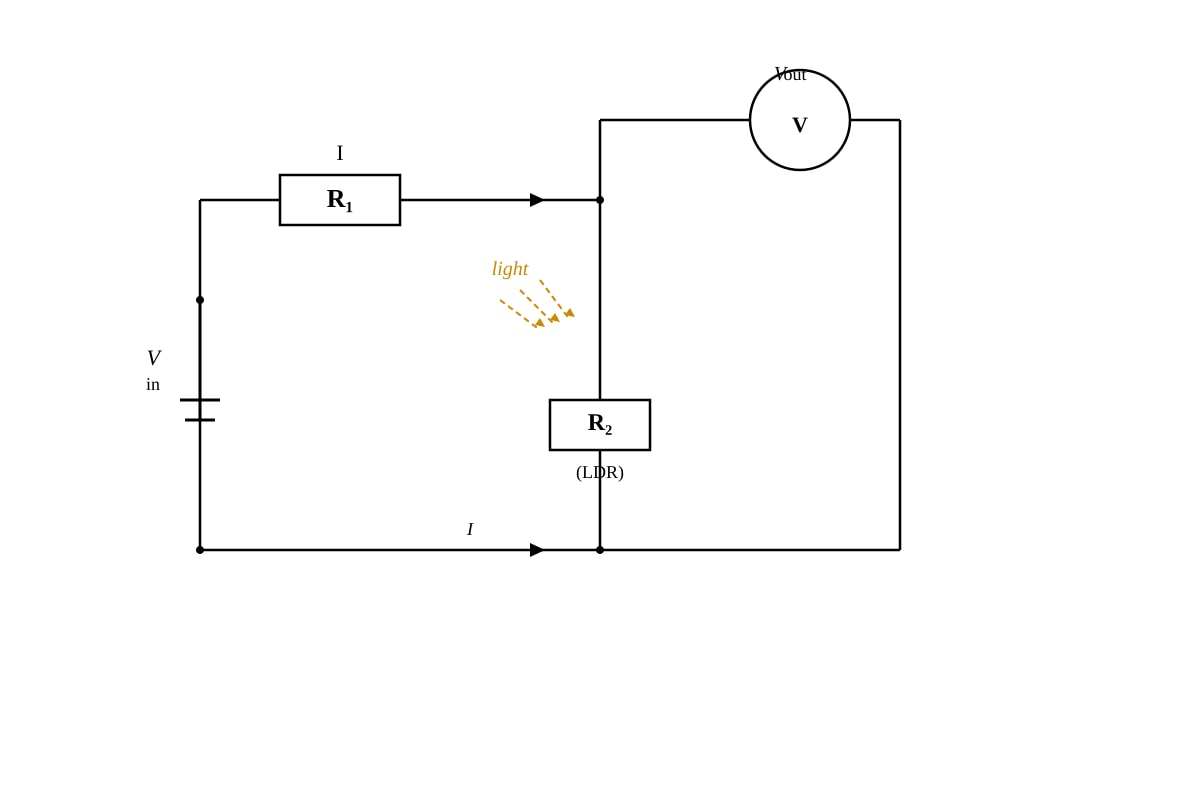
Question 9 (DC Circuits) A potential divider circuit consists of a 12 V battery connected to a fixed resistor R1=2kΩR_1 = 2\text{k}\Omega and a light-dependent resistor (LDR) R2R_2 in series. (a) Explain how the output voltage across the LDR changes as the light intensity increases. [3] (b) Calculate the value of R2R_2 when the output voltage across it is 4 V. [3] (c) Draw a circuit diagram for this potential divider. [2]

Question 10 (Electromagnetism & Induction) A coil of wire is connected to a sensitive galvanometer. A permanent magnet is moved quickly into the coil. (a) State the observation made on the galvanometer. [1] (b) Explain the physics principle behind this observation. [3] (c) Describe how the magnitude of the induced EMF can be increased. [3] (d) A DC motor uses this principle. Explain the role of the split-ring commutator in a DC motor. [3]

Question 11 (Household Electricity) A 2.0 kW electric kettle is connected to a 230 V mains supply. (a) Calculate the current flowing through the kettle. [2] (b) The fuse in the plug is rated at 13 A. Explain whether this fuse will blow during normal operation. [2] (c) State the function of the earth wire in the kettle's plug. [2]

Answers

<!-- TuitionGoWhere generation metadata: stage=5-2; model=google/gemma-4-31b-it; model_label=Gemma 4 31B; generated=2026-06-01; Sources: Stage 4-0 LLM templates, syllabus context, and Stage 2 evidence where available. -->

Answer Key - Pure Physics Secondary 4 (Version 3)

Section A

Question 1 (a) Weight (or mgmg) [1] (b) Initially, weight is the only force, causing acceleration. As speed increases, air resistance increases [1]. The resultant force (WRW - R) decreases, so acceleration decreases [1]. Eventually, air resistance equals weight, resultant force is zero, and velocity becomes constant [1]. (c) Terminal velocity decreases [1] because the parachute increases surface area, increasing air resistance for the same speed, resulting in a lower speed where R=WR = W [1].

Question 2 (a) For a body in rotational equilibrium, the sum of clockwise moments about a pivot equals the sum of anticlockwise moments about the same pivot [2]. (b) Anticlockwise moment = 0.1kg×10×(4010)=30 Nm0.1\text{kg} \times 10 \times (40-10) = 30\text{ Nm}. Clockwise moment (Weight of rule) = W×(5040)=10WW \times (50-40) = 10W. 10W=30W=3 N10W = 30 \rightarrow W = 3\text{ N} [2]. (c) Total anticlockwise moment needed = 3 Nm3\text{ Nm} (from rule's weight). 0.2kg×10×d=32d=3d=1.5 cm0.2\text{kg} \times 10 \times d = 3 \rightarrow 2d = 3 \rightarrow d = 1.5\text{ cm} from pivot. Position = 40+1.5=41.5 cm40 + 1.5 = 41.5\text{ cm} or 401.5=38.5 cm40 - 1.5 = 38.5\text{ cm} [2].

Question 3 (a) P=F/A=100/(2.0×103)=50,000 PaP = F/A = 100 / (2.0 \times 10^{-3}) = 50,000\text{ Pa}. F2=P×A2=50,000×(5.0×101)=25,000 NF_2 = P \times A_2 = 50,000 \times (5.0 \times 10^{-1}) = 25,000\text{ N} [2]. (b) Force multiplication / Mechanical advantage [1].

Question 4 (a) Q=mcΔθ=0.8×390×(9525)=0.8×390×70=21,840 JQ = mc\Delta\theta = 0.8 \times 390 \times (95 - 25) = 0.8 \times 390 \times 70 = 21,840\text{ J} [2]. (b) Input=Output/0.8=21,840/0.8=27,300 J\text{Input} = \text{Output} / 0.8 = 21,840 / 0.8 = 27,300\text{ J} [2].

Question 5 (a) sinc=1.0/1.5=0.667c=41.8\sin c = 1.0 / 1.5 = 0.667 \rightarrow c = 41.8^\circ [2]. (b) Light must travel from denser to less dense medium [1] and angle of incidence must exceed the critical angle [1].

Question 6 (a) Pout=Fv=(5×10)×0.4=20 WP_{out} = Fv = (5 \times 10) \times 0.4 = 20\text{ W} [2]. (b) Pin=20/0.7=28.57 WP_{in} = 20 / 0.7 = 28.57\text{ W} [2].

Question 7 (a) 16008004002001600 \rightarrow 800 \rightarrow 400 \rightarrow 200 (3 half-lives) [1]. (b) T1/2=12/3=4 hoursT_{1/2} = 12 / 3 = 4\text{ hours} [2].

Section B

Question 8 (a) 240/12=20:1240 / 12 = 20:1 [1]. (b) For ideal: VpIp=VsIs240×0.5=12×Is120=12IsIs=10 AV_p I_p = V_s I_s \rightarrow 240 \times 0.5 = 12 \times I_s \rightarrow 120 = 12 I_s \rightarrow I_s = 10\text{ A} [3]. (c) Pin=120 WP_{in} = 120\text{ W}. Pout=120×0.85=102 WP_{out} = 120 \times 0.85 = 102\text{ W}. Is=102/12=8.5 AI_s = 102 / 12 = 8.5\text{ A} [3]. (d) Use laminated iron core (reduce eddy currents) [1]; Use soft iron core (easy magnetization) [1].

Question 9 (a) Light intensity increases \rightarrow Resistance of LDR (R2R_2) decreases [1]. Since R1R_1 is constant, the proportion of voltage across R2R_2 decreases [1]. Therefore, output voltage decreases [1]. (b) Vout=(R2/(R1+R2))×Vin4=(R2/(2000+R2))×12V_{out} = (R_2 / (R_1 + R_2)) \times V_{in} \rightarrow 4 = (R_2 / (2000 + R_2)) \times 12 4(2000+R2)=12R28000+4R2=12R28R2=8000R2=1000 Ω4(2000 + R_2) = 12 R_2 \rightarrow 8000 + 4 R_2 = 12 R_2 \rightarrow 8 R_2 = 8000 \rightarrow R_2 = 1000\text{ }\Omega [3]. (c) [Diagram: Battery \rightarrow R1R_1 \rightarrow R2R_2 (LDR) \rightarrow Battery; Voltmeter across R2R_2] [2].

Question 10 (a) The needle of the galvanometer deflects momentarily [1]. (b) Moving magnet creates a change in magnetic flux through the coil [1]. According to Faraday's Law, this induces an electromotive force (EMF) [1], which drives a current [1]. (c) Use a stronger magnet [1], increase the number of turns in the coil [1], or move the magnet faster [1]. (d) It reverses the direction of the current in the coil every half turn [1]. This ensures the force on the coil remains in the same direction [1], allowing the motor to rotate continuously in one direction [1].

Question 11 (a) I=P/V=2000/230=8.70 AI = P / V = 2000 / 230 = 8.70\text{ A} [2]. (b) No, it will not blow [1] because the operating current (8.70 A) is less than the fuse rating (13 A) [1]. (c) Provides a low-resistance path to earth [1] so that in case of a fault (live wire touching case), the current flows to earth, blowing the fuse and preventing electric shock [1].