AI Generated Quiz
Secondary 4 Pure Biology Cells Biomolecules Quiz
Free Sec 4 Pure Biology Cells Biomolecules quiz, HY3 AI version, with questions, answers, and O Level-style practice for Singapore students.
These static practice materials are generated from the site's syllabus and paper-generation workflow, with source and model context shown so students and parents can evaluate the material before use.
Questions
Free quiz and exam paper access
Enter your details to view this paper
Your access is remembered on this device.
Answers
Secondary 4 Pure Biology Quiz - Cells Biomolecules (Answer Key)
Total Marks: 40
Note: This answer key is syllabus-aligned and generated from LLM-inferred templates. It is not based on official past-year exam papers.
Section A
1. Root hair cells [1]
Teaching note: Water is absorbed from soil by root hair cells, which are extensions of epidermal cells in the root. Common mistake: writing "xylem" (xylem transports water, does not absorb it from soil).
2. Mitochondria [1]
Teaching note: Mitochondria are the sites of aerobic respiration where ATP is produced. Common mistake: confusing with chloroplasts (site of photosynthesis, plant only).
3. Iodine solution [1]
Teaching note: Iodine turns from brown to blue-black in presence of starch. This is a standard food test.
4. Osmosis [1]
Teaching note: Osmosis is diffusion of water through a partially permeable membrane. Must mention membrane to be correct definition.
5. Active site [1]
Teaching note: In lock-and-key model, substrate fits into enzyme's active site. Common mistake: saying "enzyme" generally instead of active site.
Section B
6. (a) Diffusion [1] (b) A concentration gradient (higher O₂ in alveoli than blood) [1]
Teaching note: Oxygen moves down its concentration gradient from alveoli (high) to blood (low) by diffusion, no energy needed.
7. [3]
- High glucose decreases water potential of solution outside RBC. [1]
- Water moves out of RBC by osmosis (from higher to lower water potential). [1]
- RBC loses water, shrinks (crenation), may be damaged. [1]
Teaching note: Link solute concentration → water potential → direction of water movement → consequence.
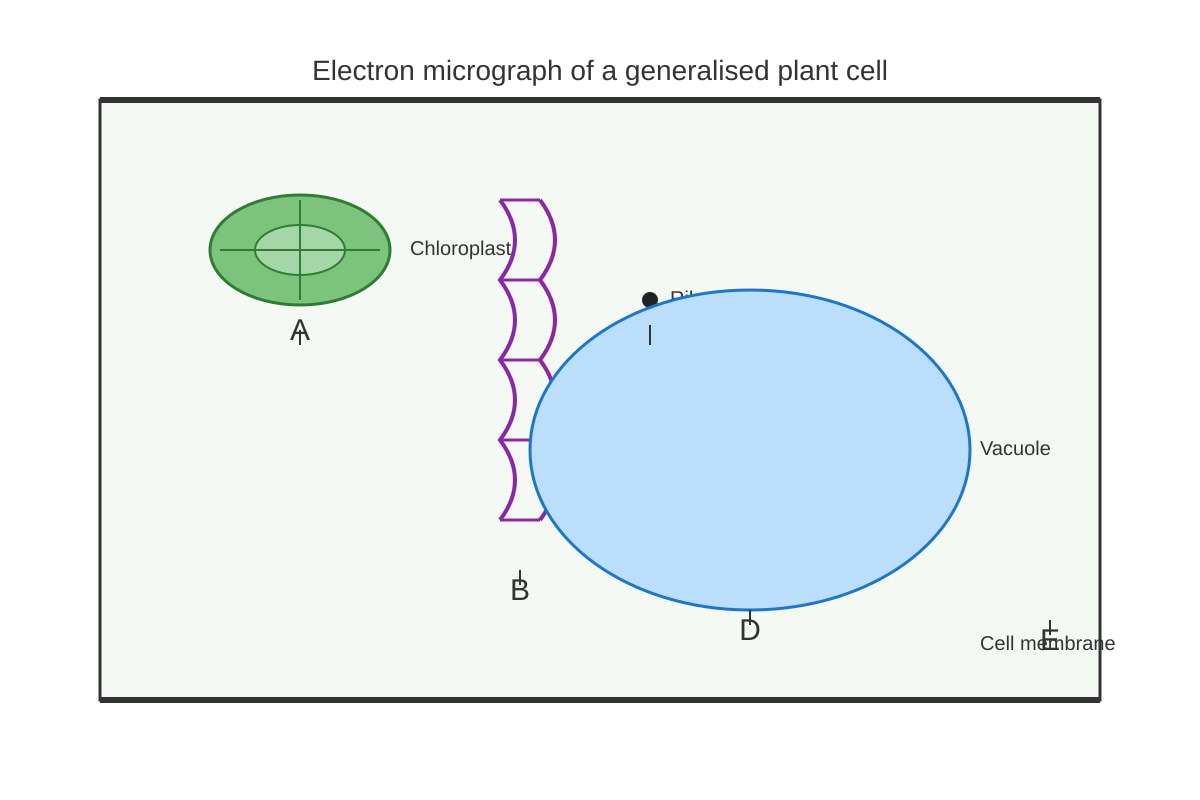
8. C (ribosome) [1]
Teaching note: Ribosomes are site of protein synthesis. A = chloroplast, B = ER, D = vacuole, E = membrane.
9. [2] Any two:
- Plant cell has cell wall, animal cell does not. [1]
- Plant cell has chloroplasts, animal cell does not. [1]
- Plant cell has large central vacuole, animal cell has small/no vacuole. [1] (max 2)
Teaching note: Do not say "plant has nucleus, animal does not" – both have nuclei.
10. (a) Benedict's test [1] (b) Blue → green/yellow/orange/red (brick red) [1]
Teaching note: Reducing sugars reduce Cu²⁺ to Cu⁺ giving colour change on heating.
11. [2]
- Long hair-like projection increases surface area for absorption. [1]
- Thin wall / large vacuole for water uptake by osmosis. [1]
Teaching note: Root hair cell also has many mitochondria for active transport of ions.
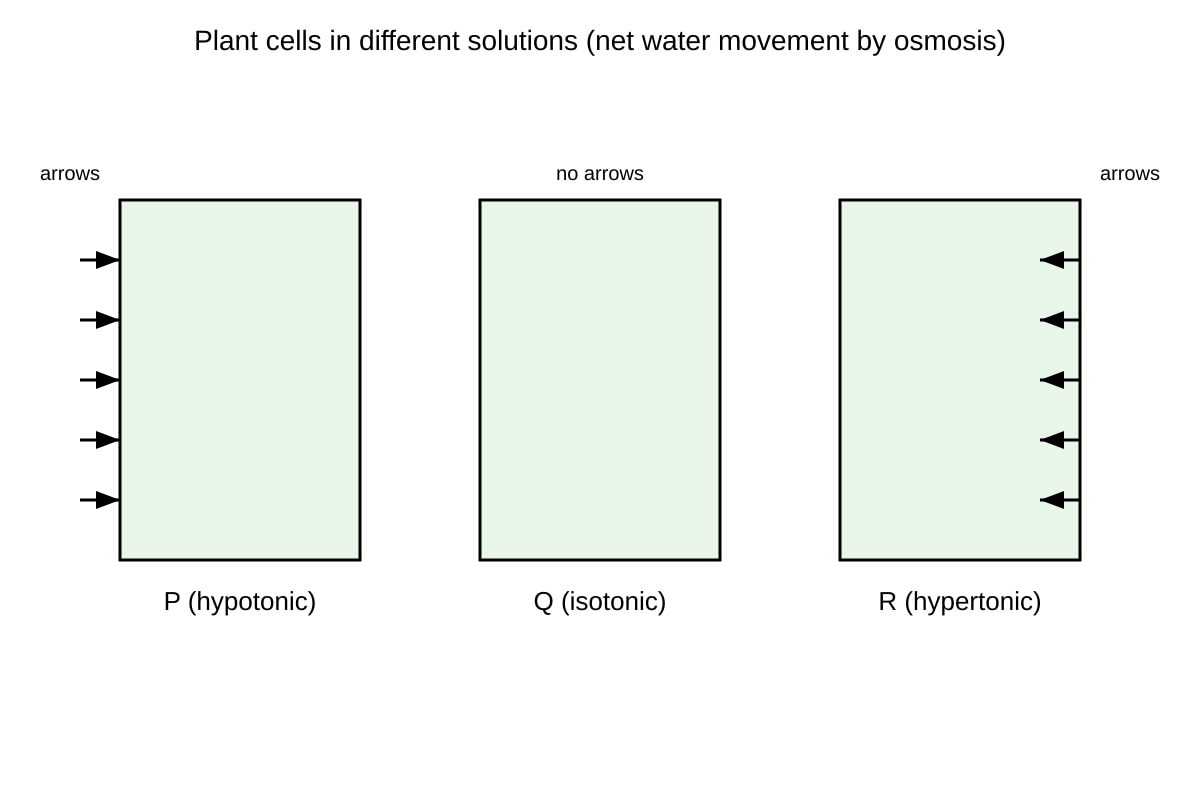
12. R [1]
Teaching note: R has water leaving cell (arrows outward) → plasmolysis. P is turgid, Q is normal.
13. (a) Energy source / respiration [1] (b) Glucose / starch / glycogen [1]
Teaching note: Carbohydrates are quick energy stores.
14. [3]
- Glucose absorbed from intestine to blood is against concentration gradient. [1]
- Active transport needed to move against gradient, requires ATP. [1]
- Oxygen moves from alveoli (high) to blood (low) down gradient by diffusion, no energy. [1]
15. Amino acids [1]
Teaching note: Proteins are polymers of amino acids joined by peptide bonds.
Section C
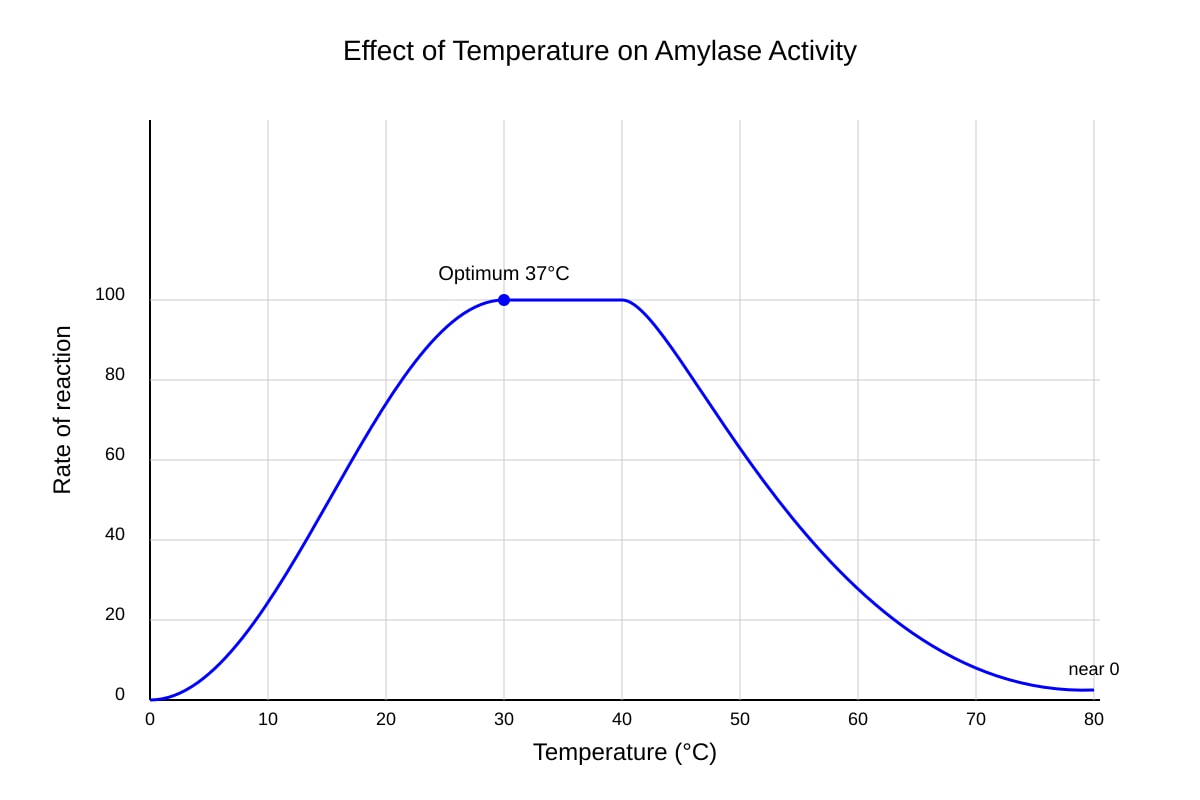
16. (a) [2] Rate increases from 0°C to optimum at 37°C, then decreases to 0 at 80°C. [2]
(b) [4]
- Below 37°C: higher temperature = more kinetic energy = more collisions = faster rate. [1]
- At 37°C: optimum, most enzyme-substrate complexes form. [1]
- Above 37°C: enzyme denatures, active site changes shape. [1]
- Substrate cannot bind, rate falls to zero. [1]
17. (a) Osmosis [1]
(b) [3] Glucose moved from low (intestine) to high (blood) concentration needs active transport + ATP. [1] Oxygen moves down gradient (alveoli→blood) by diffusion, no energy. [1] Different gradients explain different mechanisms. [1]
(c) [2] Glucose absorption stops/decreases [1] because no ATP for active transport. [1]
18. (a) Blue → purple/violet [1]
(b) [3] Proteins have peptide bonds. [1] Biuret reagent reacts with peptide bonds. [1] More peptide bonds = stronger colour. [1]
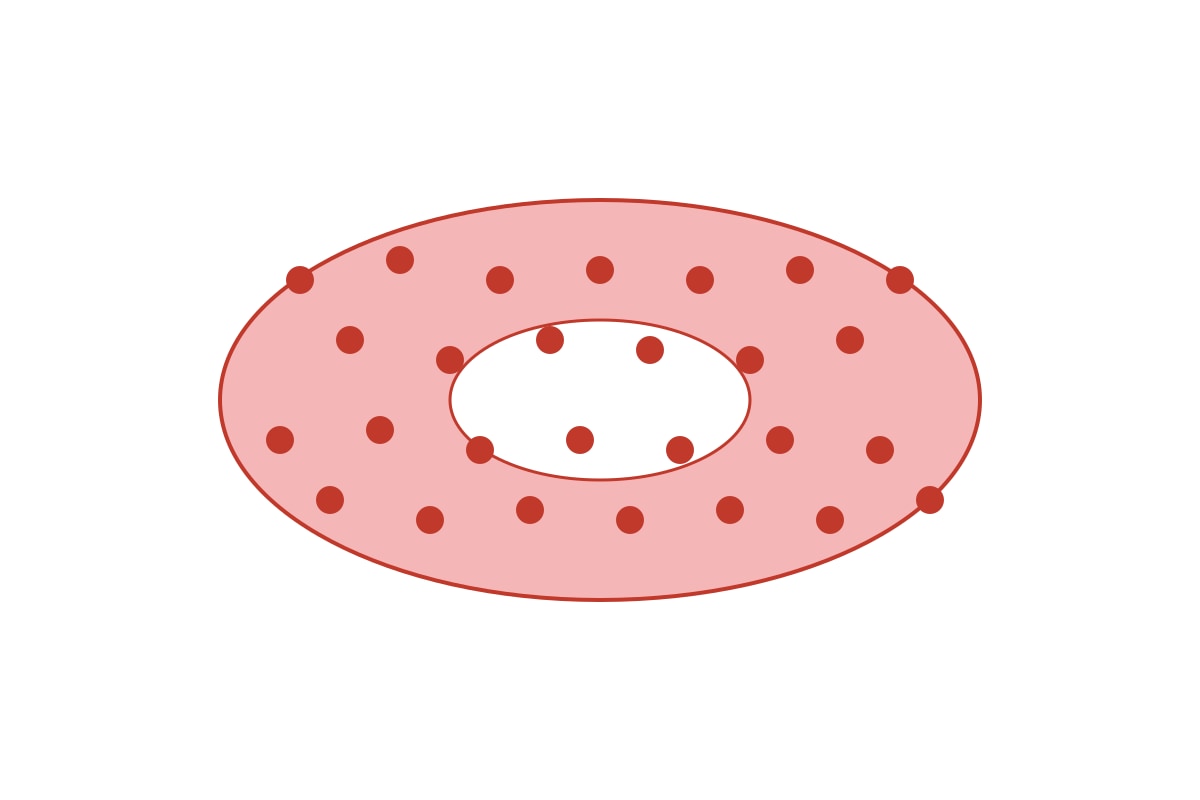
19. (a) Red blood cell / erythrocyte [1]
(b) [4]
- No nucleus: more space for haemoglobin. [2]
- Biconcave shape: increases surface area for O₂ exchange. [2]
20. (a) Nucleus / chloroplast / mitochondria / vacuole [1]
(b) [3] Leaf cell has true nucleus with DNA enclosed. [1] Bacterial cell has no nucleus, DNA free in cytoplasm. [1] Shows eukaryotic vs prokaryotic difference. [1]