From Real Exams Quiz
Secondary 4 Pure Biology Human Physiology Quiz
Free Sec 4 Pure Biology Human Physiology quiz, HY3 Exam version, with questions, answers, and O Level-style practice for Singapore students.
These static practice materials are generated from the site's syllabus and paper-generation workflow, with source and model context shown so students and parents can evaluate the material before use.
Questions
Free quiz and exam paper access
Enter your details to view this paper
Your access is remembered on this device.
Answers
Secondary 4 Pure Biology Quiz - Human Physiology: Answer Key
Total Marks: 40
Topic: Human Physiology
Section A: Short Answer
1. Pulmonary vein. [1]
Teaching note: The pulmonary vein is the only vein that carries oxygenated blood (from lungs to left atrium). Common mistake: writing “aorta” (artery, not from lungs).
2. Absorption of water / formation of faeces. [1]
Teaching note: Large intestine reabsorbs water and minerals; stores undigested material.
3. Medulla oblongata. [1]
Teaching note: Part of brainstem controlling autonomic functions including breathing.
4. Ultrafiltration. [1]
Teaching note: High pressure in glomerulus forces water, ions, glucose, amino acids into Bowman’s capsule.
5. Red blood cell (erythrocyte). [1]
Teaching note: Contains haemoglobin which binds O₂.
Section B: Structured Response
6. (a) Breaks down starch into maltose (or sugars). [1]
(b) Salivary glands (mouth). [1]
Teaching note: Amylase secreted in saliva; pancreatic amylase later in duodenum.
7. [3] Mark breakdown:
- Large surface area due to folds/villi/microvilli (1)
- Thin wall (one cell thick) for short diffusion distance (1)
- Rich blood capillary network to maintain concentration gradient (1)
Teaching note: These adaptions speed up diffusion of nutrients into blood.
8. [3]
- Hypothalamus detects low water potential of blood (1)
- Stimulates pituitary to release ADH (1)
- ADH makes kidney collecting ducts more permeable, more water reabsorbed (1)
Teaching note: Negative feedback restores osmoregulation.
9. (a) Number of heart beats per minute. [1]
(b) [2] Exercise needs more O₂ and produces more CO₂; heart pumps faster to deliver O₂ and remove CO₂. (2 marks for linking need to rate)
Teaching note: Pulse = arterial expansion from ventricular contraction.
10. [3]
- CO₂ diffuses from tissues into plasma (1)
- Some converted to hydrogencarbonate ions (HCO₃⁻) in RBC (1)
- Transported in plasma to lungs, reconverted, exhaled (1)
Teaching note: ~70% as HCO₃⁻, ~20% carbamino, ~10% dissolved.
Section C: Data & Diagram Interpretation
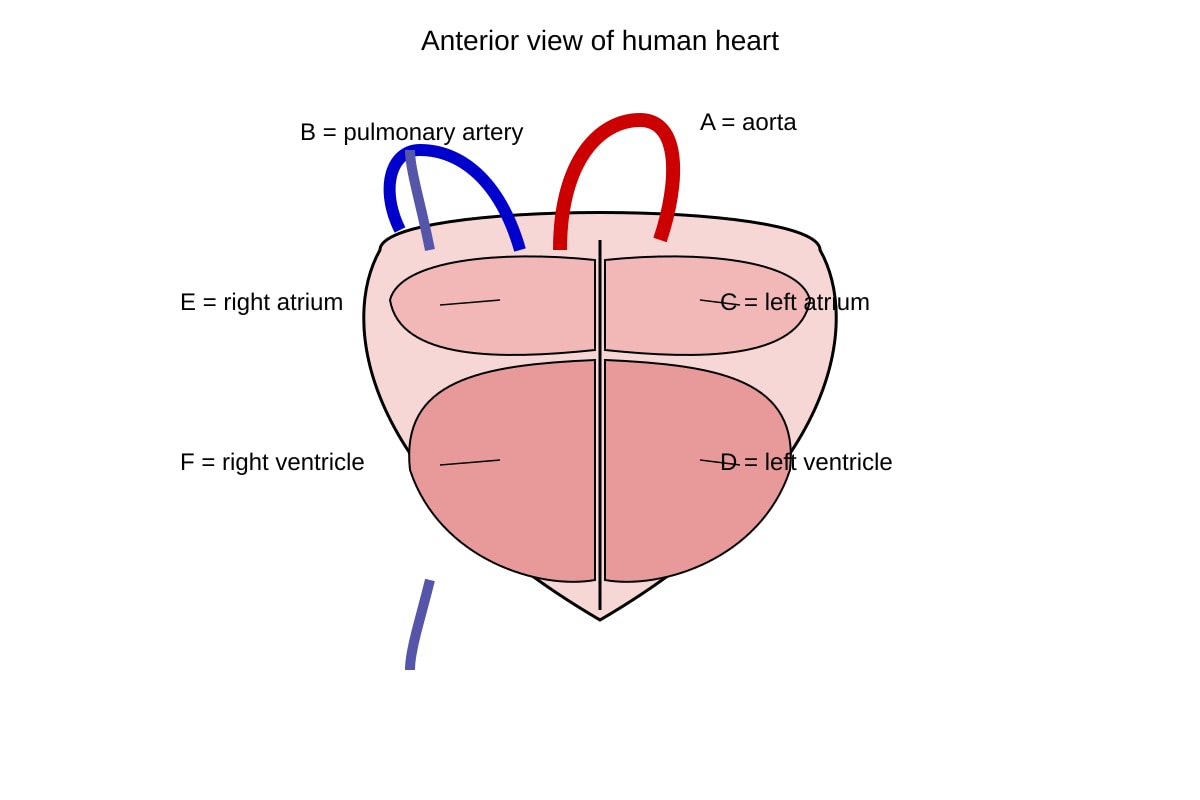
11. (a) Left ventricle. [1]
(b) Thick muscular wall to pump blood to whole body. [1]
Teaching note: Left side thicker than right because systemic circulation needs higher pressure.
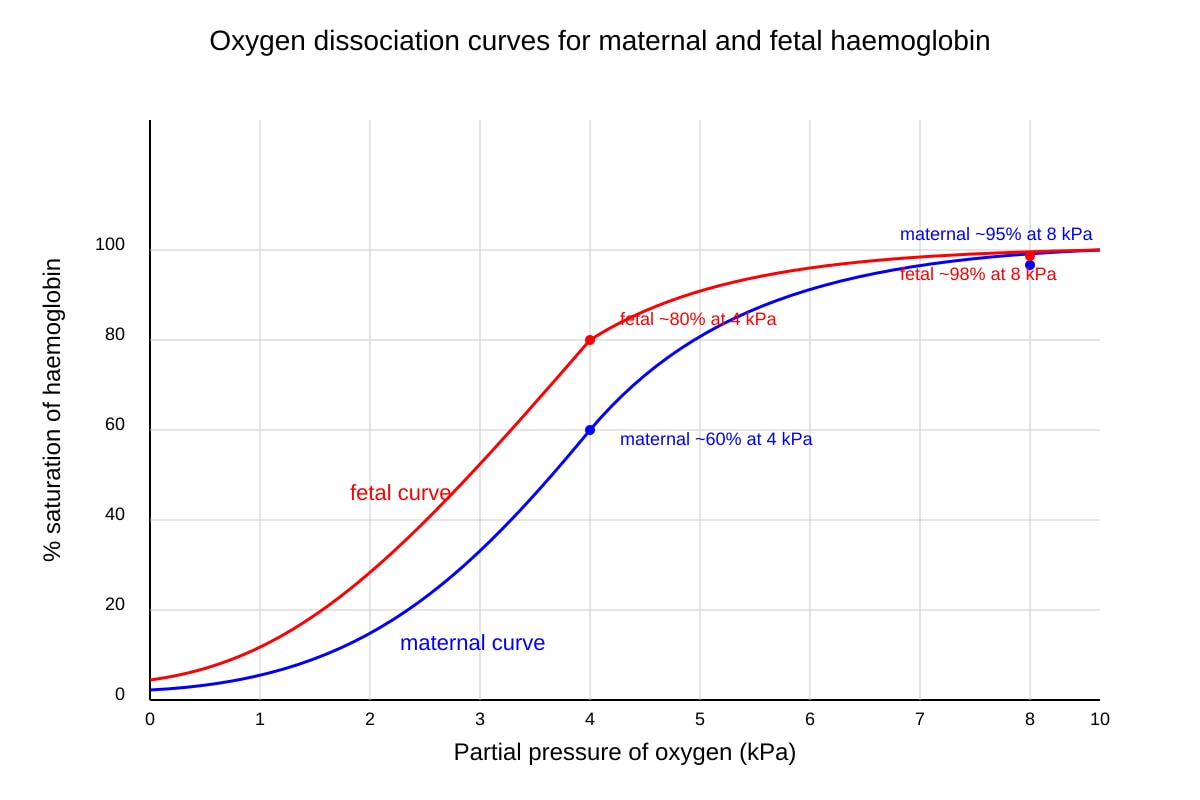
12. [2] Fetal haemoglobin has higher affinity for O₂; at low partial pressure in placenta it loads O₂ from maternal blood.
Teaching note: Curve left-shifted; ensures O₂ transfer to fetus.
13. (a) % increase = (7.2 – 4.5)/4.5 × 100 = 2.7/4.5 × 100 = 60%. [2]
(b) Insulin. [1]
Teaching note: Show subtraction then divide by original.
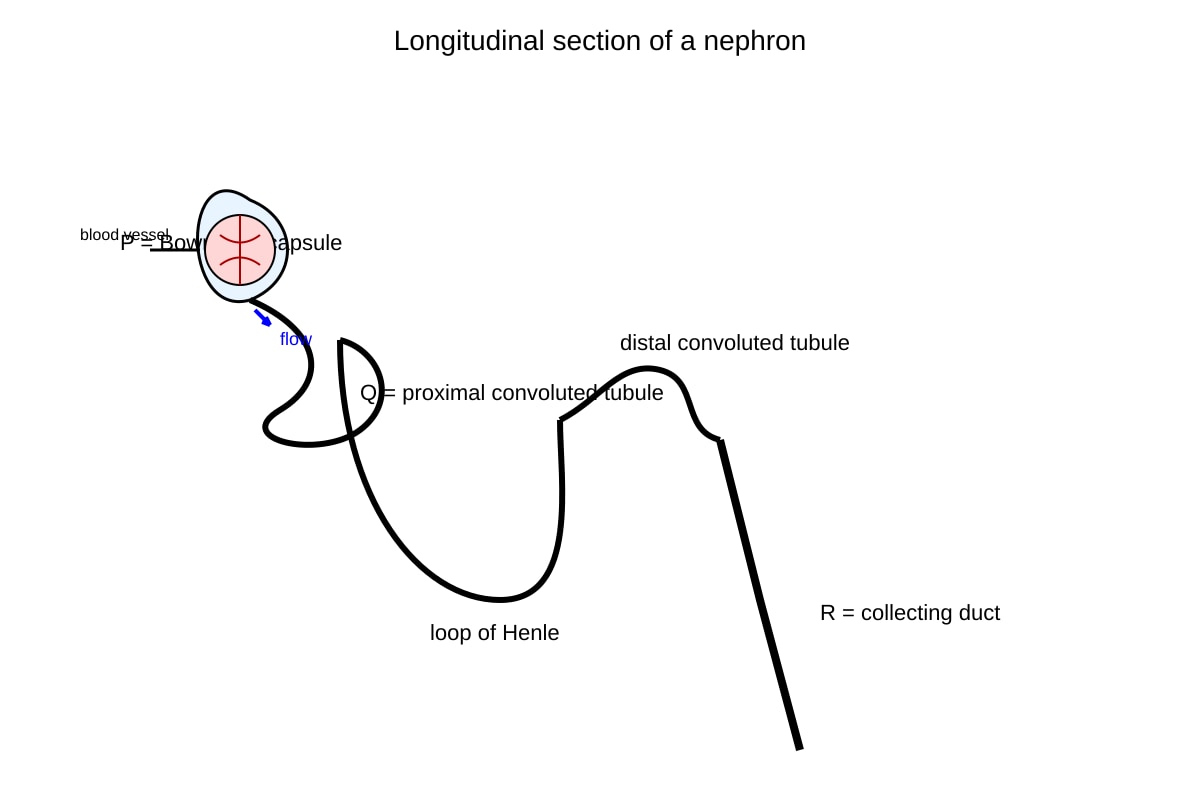
14. [2] Ultrafiltration at P; glucose (or amino acids, ions, water) reabsorbed at Q. [2]
Teaching note: P = Bowman’s capsule; Q = proximal tubule selective reabsorption.
15. [3]
- Exercise increases respiration, more CO₂ produced (1)
- Need to remove CO₂ and take in more O₂ (1)
- Higher breathing rate increases alveolar ventilation (1)
Teaching note: Links to gas exchange efficiency.
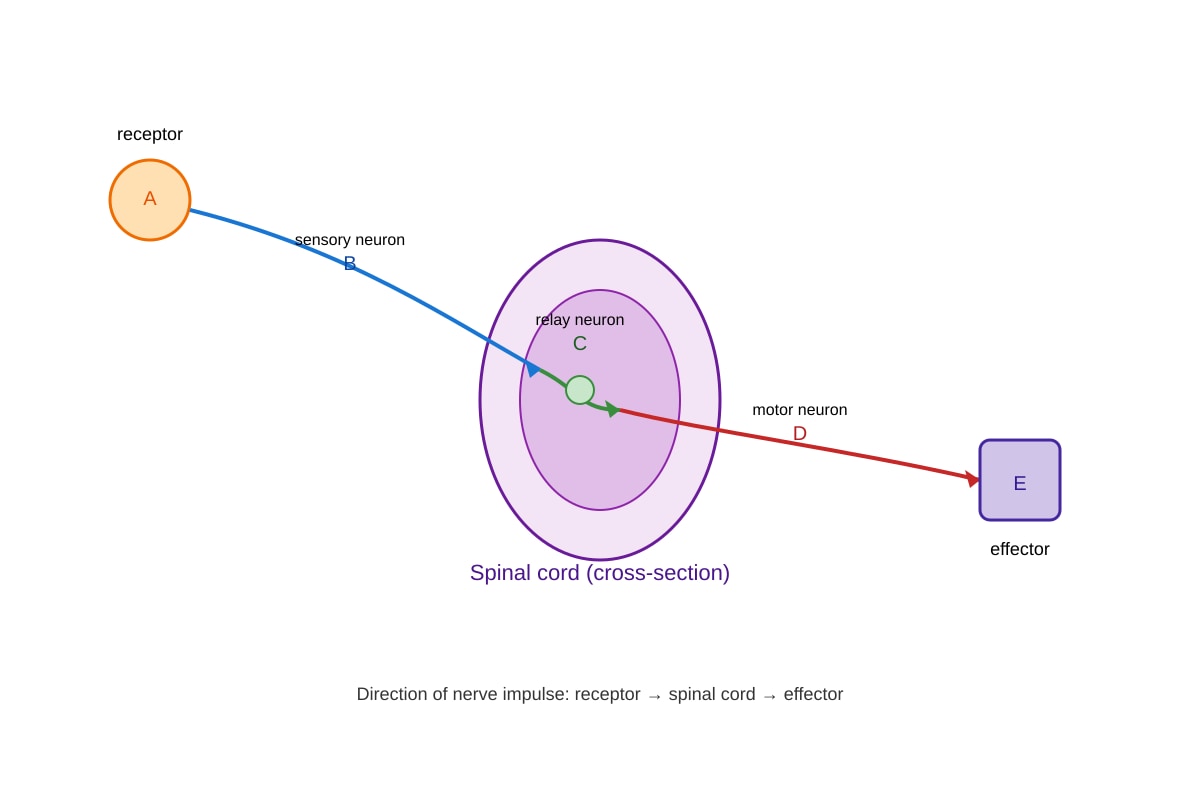
16. (a) Sensory neuron. [1]
(b) Relays impulse from sensory to motor neuron in spinal cord. [1]
Teaching note: Enables rapid reflex without brain.
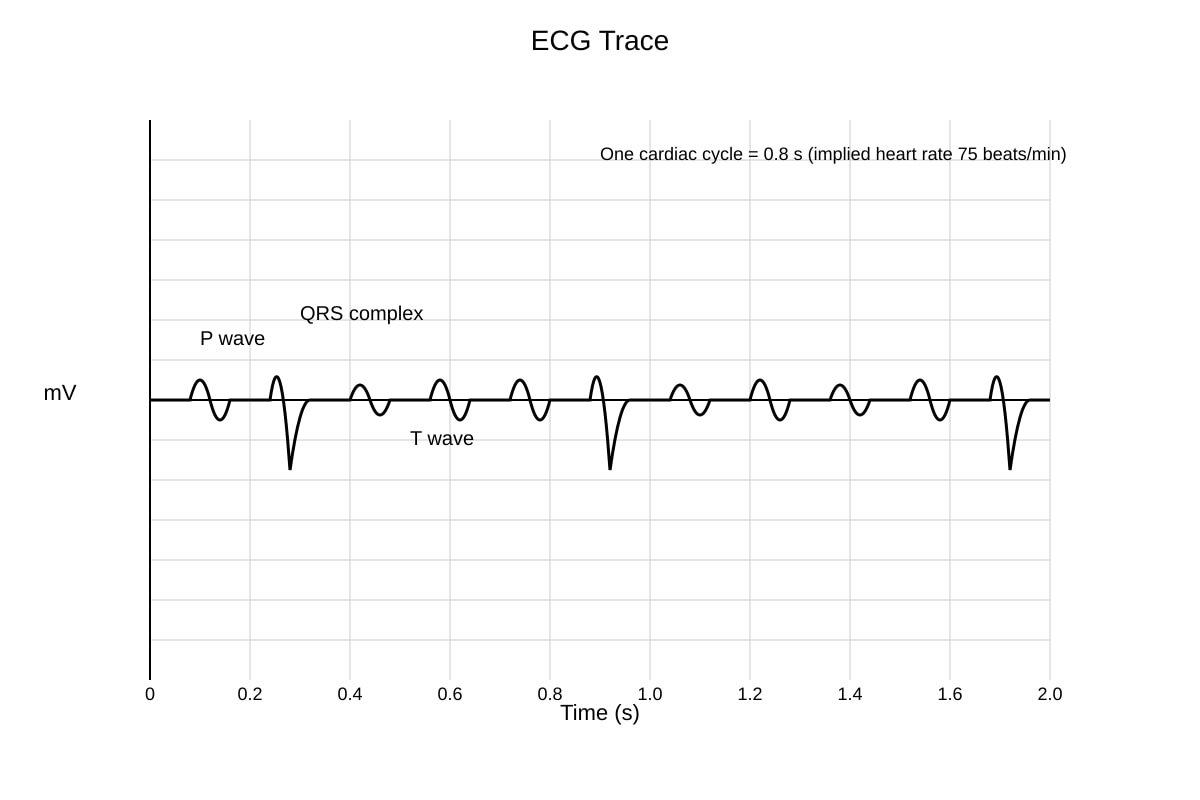
17. (a) T wave. [1]
(b) Rate = 60 / 0.8 = 75 beats/min. [2]
Teaching note: One cycle 0.8 s; 60 s ÷ 0.8.
18. [3]
- External intercostal muscles contract, ribcage up/out (1)
- Diaphragm contracts, flattens (1)
- Thoracic volume increases, pressure drops, air in (1)
Teaching note: Active process of inhalation.
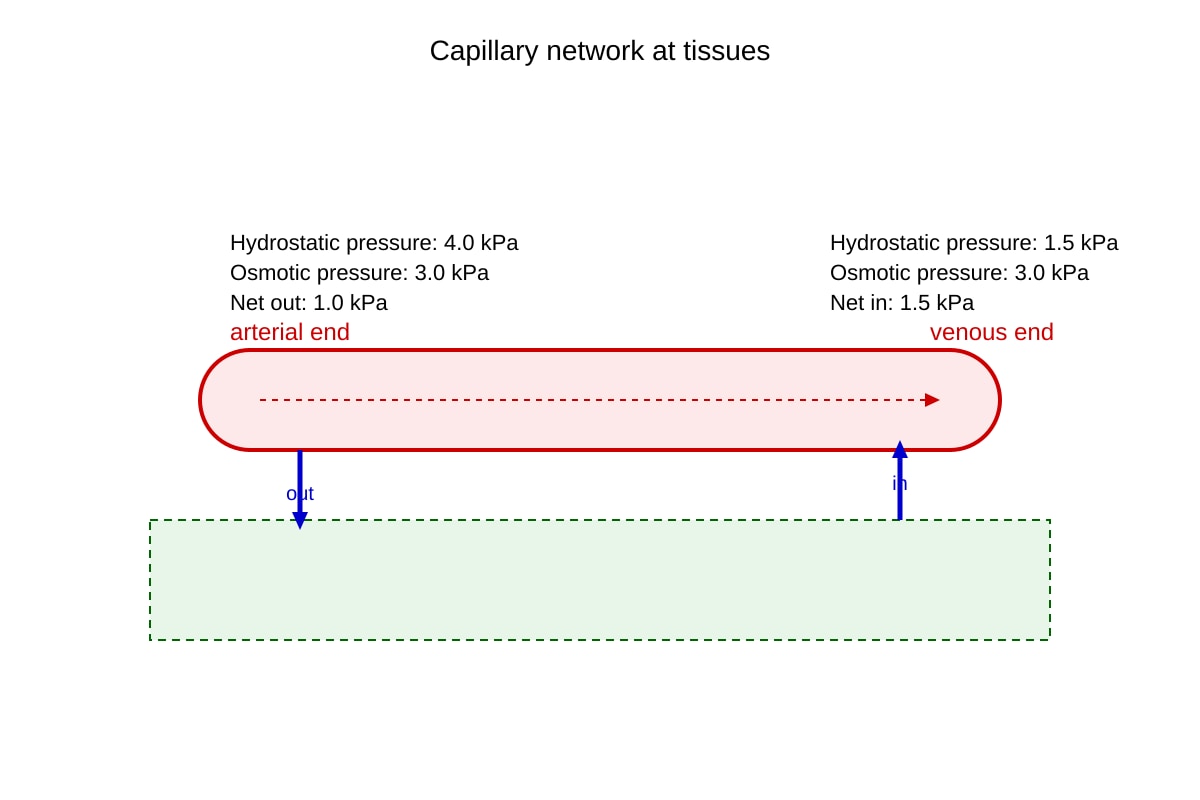
19. [2] Outward (to tissues); hydrostatic pressure (4.0) > osmotic (3.0).
Teaching note: Net outward filtration at arterial end.
20. [3]
- Consequence: reduced bile production (1)
- Explanation: bile emulsifies fats; less bile → poor fat digestion (2)
Teaching note: Liver also detoxifies; other valid answers accepted with reason.