From Real Exams Quiz
Secondary 4 Pure Biology Evolution Diversity Quiz
Free Sec 4 Pure Biology Evolution Diversity quiz, HY3 Exam version, with questions, answers, and O Level-style practice for Singapore students.
These static practice materials are generated from the site's syllabus and paper-generation workflow, with source and model context shown so students and parents can evaluate the material before use.
Questions
Free quiz and exam paper access
Enter your details to view this paper
Your access is remembered on this device.
Answers
Secondary 4 Pure Biology Quiz - Evolution Diversity (Answer Key)
Total Marks: 40
Topic: Evolution Diversity
Section A (1 mark each)
1. Natural selection
Teaching note: Natural selection is the process where organisms better adapted to the environment tend to survive and reproduce more. Not to be confused with "evolution" (the broader change in gene frequencies).
2. Habitat isolation (or ecological isolation)
Teaching note: This is a type of prezygotic barrier where populations occupy different habitats and rarely encounter each other.
3. Phenotype
Teaching note: Phenotype = observable traits (e.g., height, colour) shaped by genotype + environment. Genotype alone is not correct.
4. Genetic drift
Teaching note: Genetic drift is random change in allele frequencies, especially in small populations. Mutation also introduces variation but the "by chance" keyword points to drift.
5. Cladogram (or phylogenetic tree)
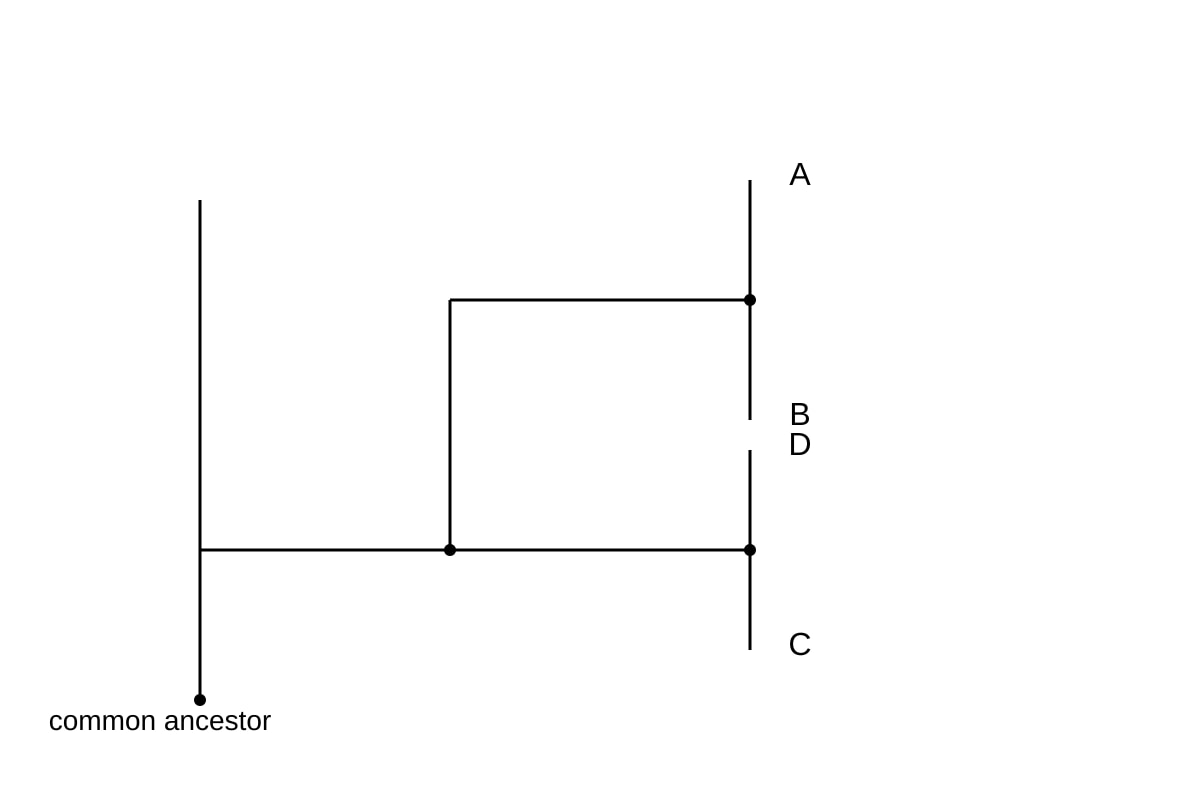
Teaching note: The image shows branching from a common ancestor; such diagrams are cladograms. Accept "evolutionary tree".
Section B (2 marks each)
6. Natural selection is driven by environmental pressures; artificial selection is driven by human choice.** (2 marks: 1 for each contrast)
Teaching note: Example – humans breed dogs for appearance (artificial) vs. drought selecting deep beaks (natural).
7. Any two:** (i) fossil record, (ii) DNA/protein sequences, (iii) comparative anatomy, (iv) embryology. (2 marks: 1 each)
Teaching note: These show common ancestry or divergence.
8. Random mutation creates resistant individuals; antibiotics kill susceptible bacteria, resistant ones survive and reproduce.** (2 marks: 1 for mutation, 1 for selection/survival)
Teaching note: Resistance is not caused by antibiotic "creating" trait but by selection of existing mutants.
9. Any two:** (i) soft bodies decay, (ii) fossils destroyed by geology, (iii) not all organisms fossilise. (2 marks: 1 each)
10. All alleles/genes present in a reproducing population at a time.** (2 marks: 1 for "all genes/alleles", 1 for "population")**
Section C (3 marks each)
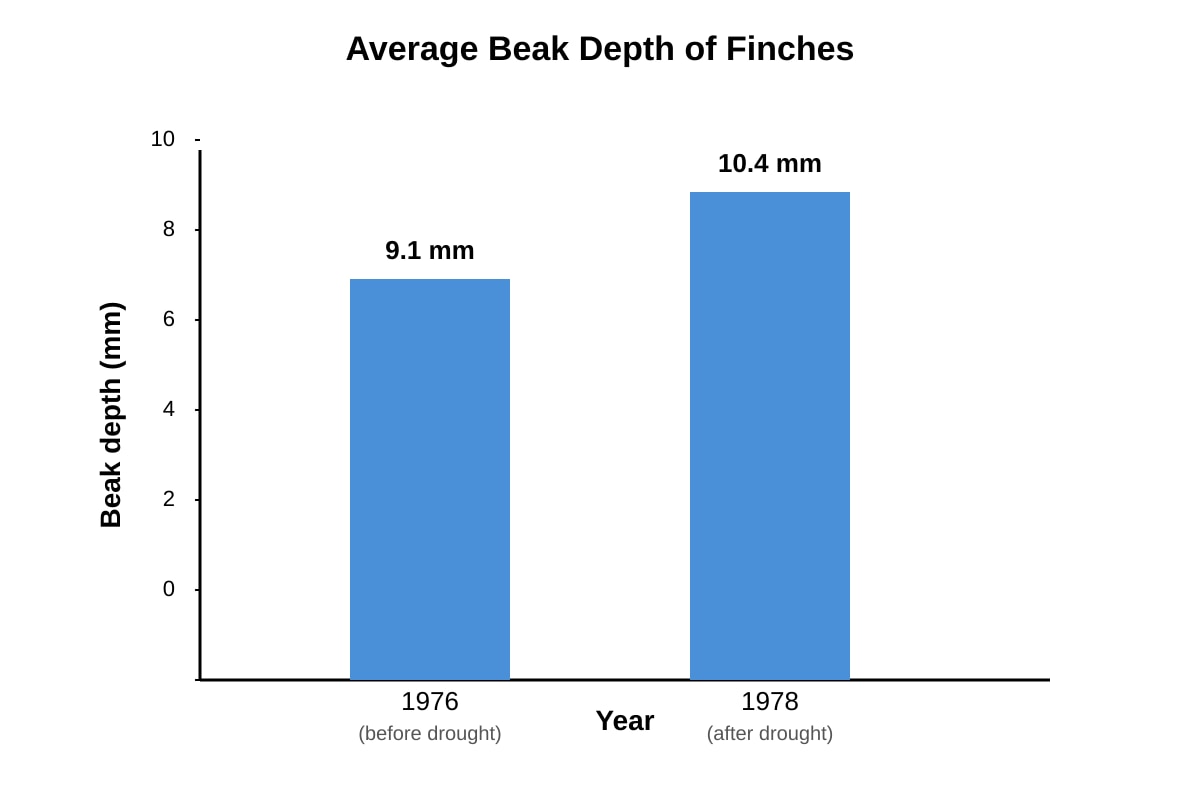
11. Drought reduced seeds; birds with deeper beaks ate better and survived; they reproduced, shifting average depth up.** (3 marks: 1 env. pressure, 1 survival diff., 1 inheritance)
Teaching note: Graph shows 9.1→10.4 mm; this is directional selection.
12. Polluted trees darkened; light moths seen/eaten; dark moths camouflaged; dark frequency rose.** (3 marks: 1 pollution effect, 1 predation on light, 1 survival of dark)
Teaching note: Classic peppered moth example.
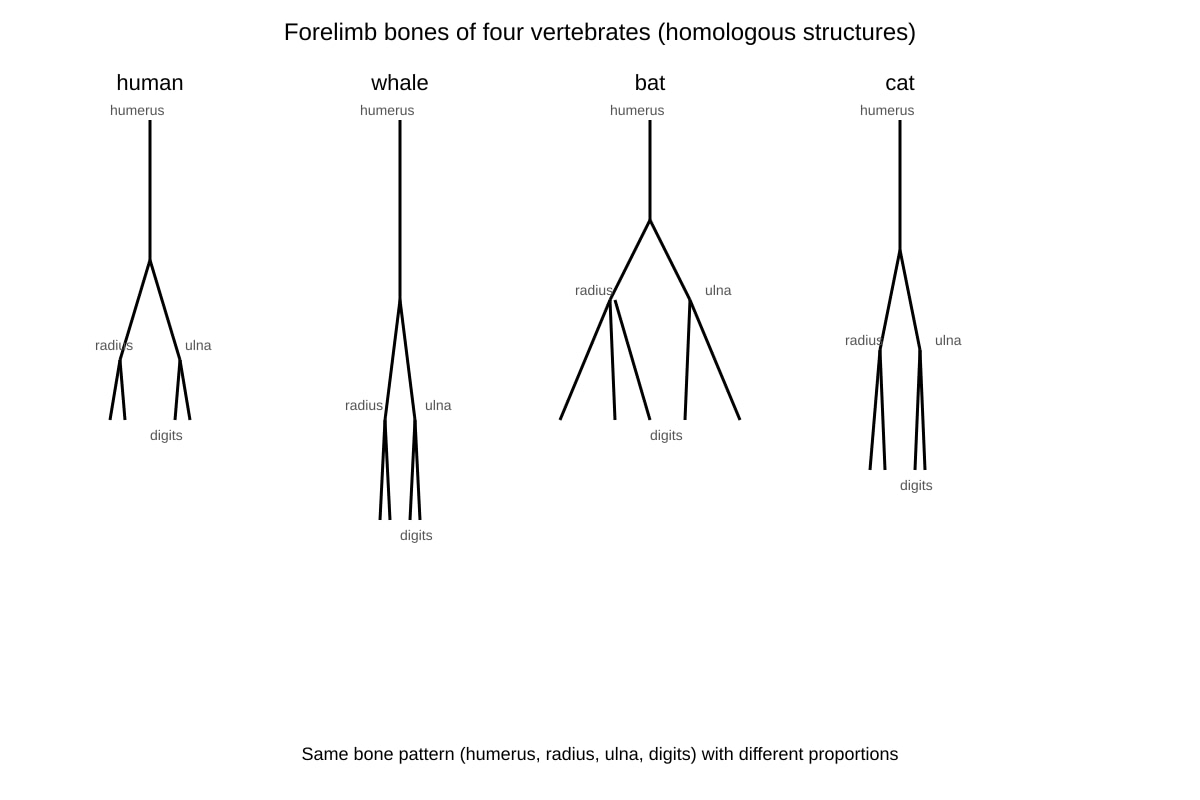
13. Shared structure from common ancestor; modified for different functions.** (3 marks: 1 same bones, 1 common ancestor, 1 divergence/modification)
Teaching note: Homologous ≠ analogous (convergent).
14. .** (3 marks: 1 stating , 1 square root, 1 answer 0.4)
Working: Recessive phenotype = = 16% = 0.16. .
15. Barrier splits population; no gene flow; different selection/mutation; reproductive isolation forms.** (3 marks: 1 split, 1 no gene flow, 1 isolation)
16. X and Y most closely related (3 diff only). (3 marks: 1 pair, 2 reasoning on fewest differences = recent common ancestor)
17. Mutation changes DNA creating new alleles; recombination shuffles alleles in meiosis. (3 marks: 1 mutation def., 1 recombination def., 1 variation link)
18. ; .** (3 marks: 1 q, 1 formula sub, 1 answer)
19. Unrelated species face similar environments; similar selective pressures shape similar traits. (3 marks: 1 unrelated, 1 same environment, 1 similar pressure)
Teaching note: E.g., dolphin & shark streamlined bodies.
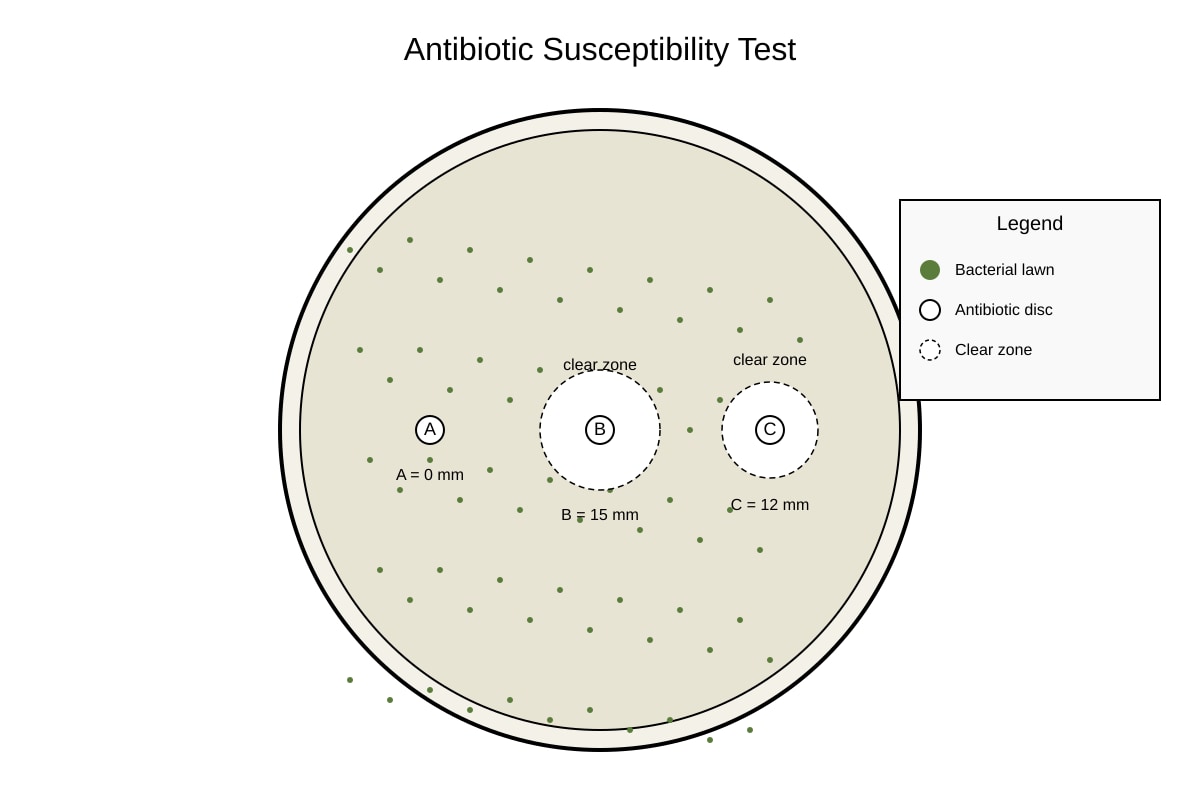
20. Antibiotic A least effective (no clear zone). (3 marks: 1 A, 1 no zone = bacteria grow, 1 conclusion)
Teaching note: Zone = inhibition; A=0 mm means no effect.