AI Generated Exam Paper
Secondary 4 Pure Biology Practice Paper 5
Free Sec 4 Pure Biology Practice Paper 5, HY3 AI version, with questions, answers, and O Level-style practice for Singapore students.
These static practice materials are generated from the site's syllabus and paper-generation workflow, with source and model context shown so students and parents can evaluate the material before use.
Questions
TuitionGoWhere Practice Paper - Pure Biology Secondary 4
TuitionGoWhere Practice Paper (AI)
Version: 5 of 5
Subject: Pure Biology
Level: Secondary 4
Paper: Practice Paper (Topic: Cells Biomolecules)
Duration: 45 minutes
Total Marks: 40
Name: ________________________
Class: ____________
Date: ____________
Instructions
- Answer all questions in the spaces provided.
- This paper contains 20 questions across Sections A, B, C, and D.
- Marks for each question are shown in brackets [ ].
- Section totals: Section A = 10, Section B = 10, Section C = 10, Section D = 10. Total = 40.
- Use a pen with black or blue ink. Diagrams should be drawn clearly where required.
Section A: Recall and Identification (Questions 1–5) [10 marks]
1. Name the cells through which water is absorbed from the soil in plants. [1]
2. State the main role of proteins in living organisms. [1]
3. Which organelle is the site of ATP production in a cell? [1]
4. Name the test used to detect the presence of starch in a food sample. [1]
5. Define diffusion in one sentence. [1]
Section B: Structured Application (Questions 6–10) [10 marks]
6. (a) Name the process by which root hair cells absorb mineral ions from the soil. [1]
(b) Explain why this process requires energy. [1]
7. A student placed red blood cells into a solution with very high glucose concentration.
Explain how a decrease in the water potential of the blood may damage the red blood cells. [3]
8. Table 1 shows the movement of substances across a cell membrane.
| Substance | Direction | Mechanism |
|---|---|---|
| Oxygen | High to low concentration | ? |
| Glucose (in intestine) | Low to high concentration | ? |
(a) Name the mechanism for oxygen. [1]
(b) Name the mechanism for glucose. [1]
(c) State one difference in energy requirement between the two mechanisms. [1]
9. (a) Name the enzyme that breaks down starch into maltose. [1]
(b) State the optimum pH range for this enzyme in the human mouth. [1]
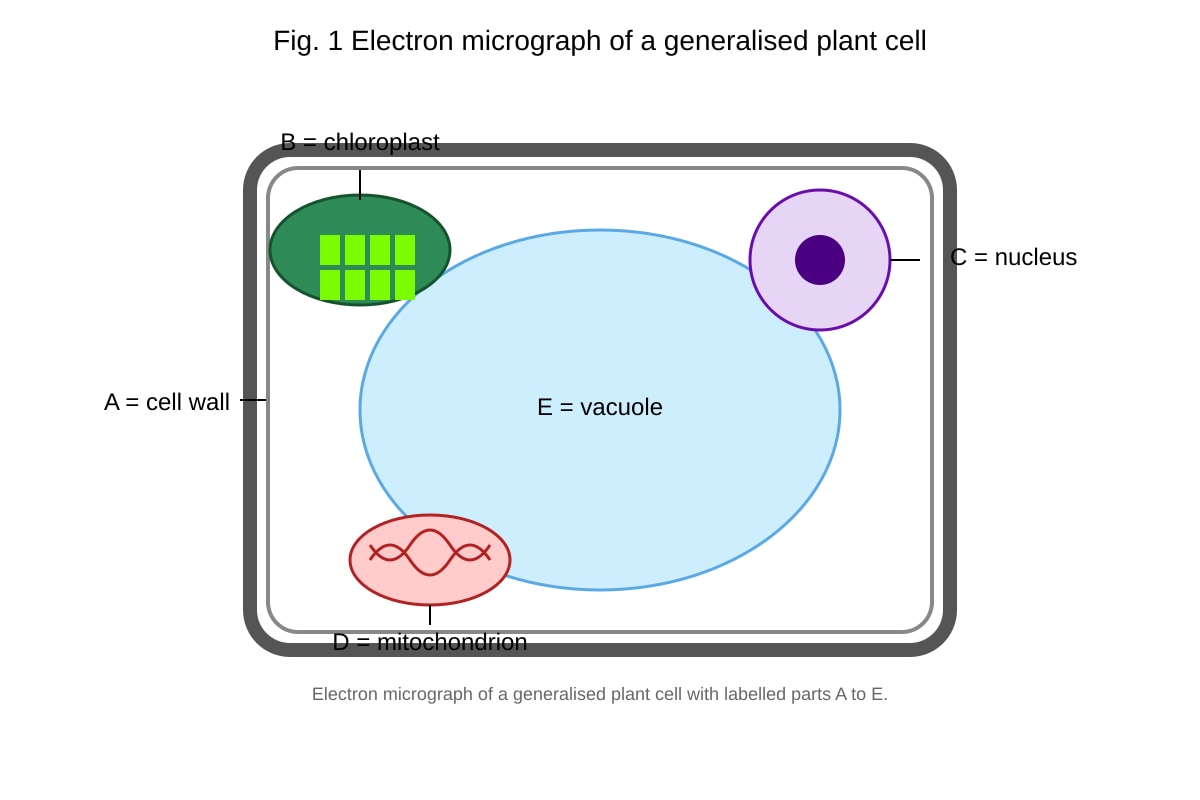
10. Fig. 1 shows an electron micrograph of a plant cell.
Image pending generation: diagram for Q10.
Which labelled structure (A–E) is the site of protein synthesis? [1]
(Note: if not labelled, state the organelle name.) [1]
Section C: Data Interpretation (Questions 11–15) [10 marks]
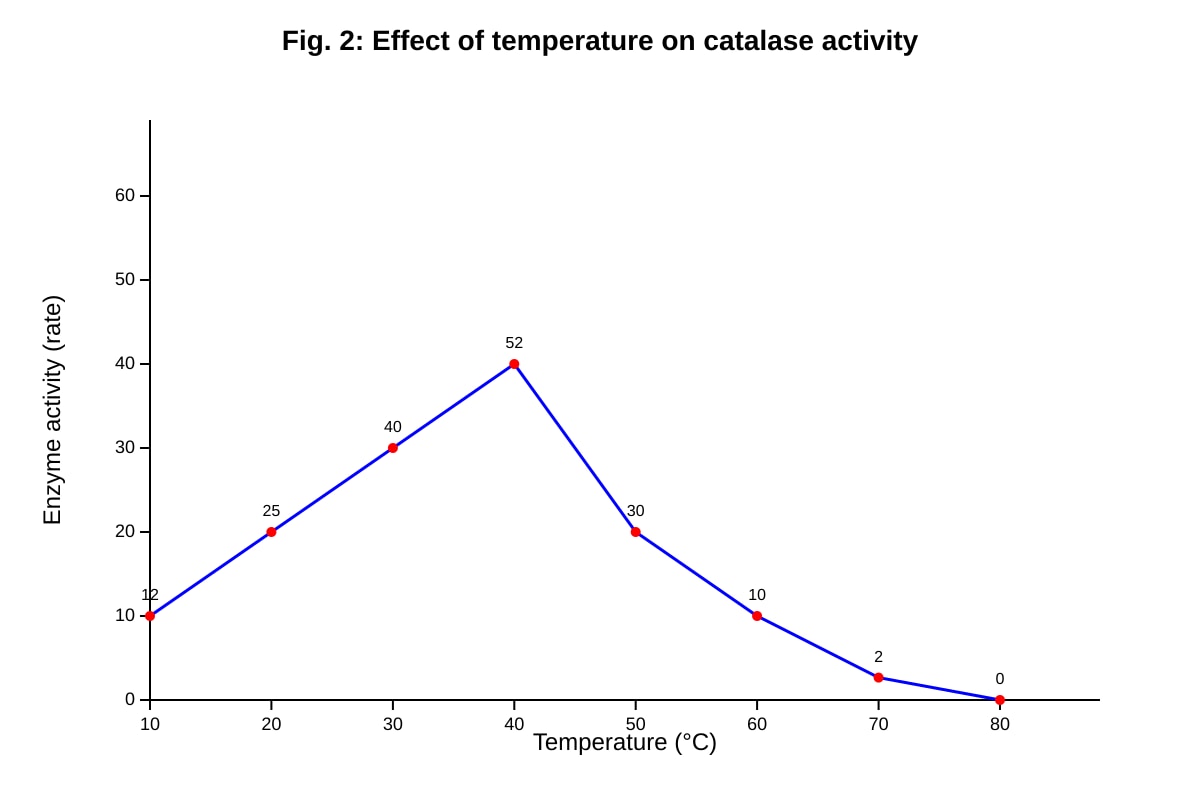
11. An investigation studied the effect of temperature on catalase activity. Fig. 2 shows the results.
Image pending generation: graph for Q11.
(a) State the optimum temperature for catalase from Fig. 2. [1]
(b) Describe the trend from 10°C to 40°C. [1]
(c) Explain why activity drops to zero at 80°C. [2]
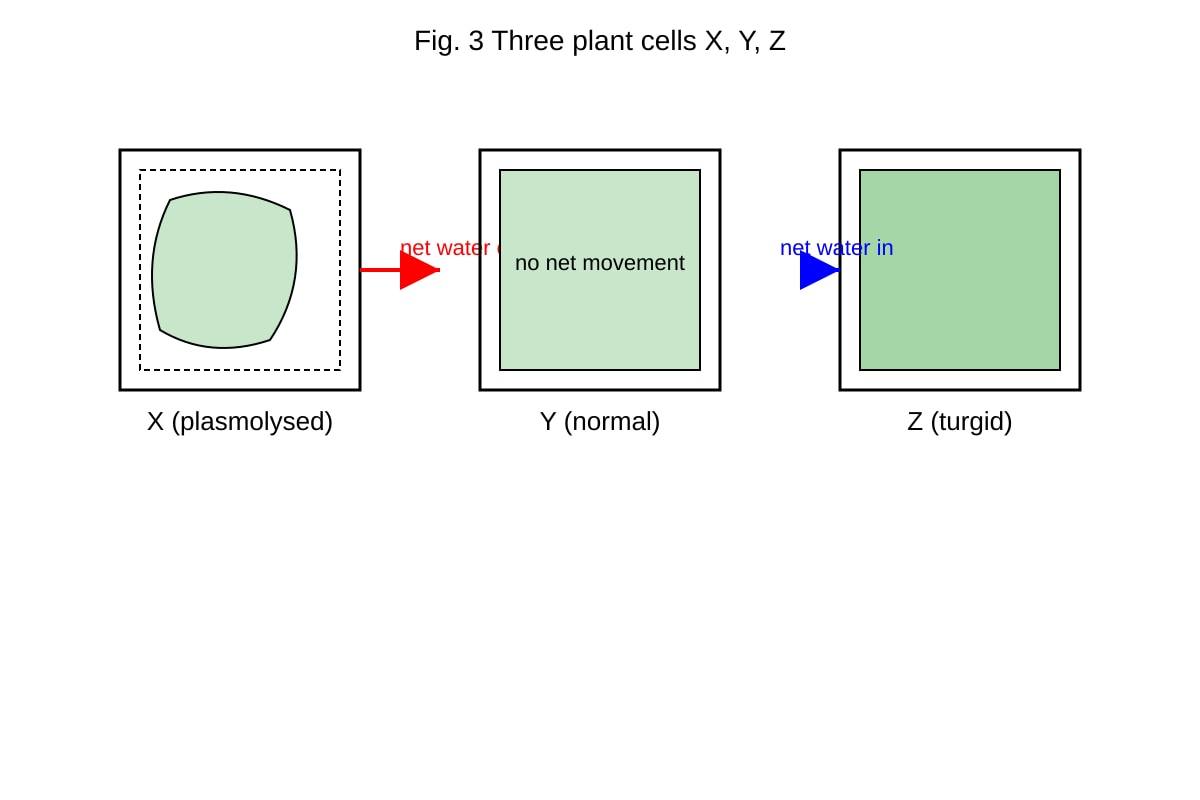
12. Fig. 3 shows three plant cells X, Y, Z in different solutions. Arrows show net water movement.
Image pending generation: diagram for Q12.
(a) Which cell (X, Y, or Z) is in a hypertonic solution? [1]
(b) Explain your answer using water potential. [2]
13. Benedict's test was performed on five unknown food samples. Results: Sample P turned brick-red, Q blue, R green, S yellow, T orange.
(a) Which sample has the highest concentration of reducing sugar? [1]
(b) Describe the colour change sequence of Benedict's reagent with increasing reducing sugar. [1]
14. A biuret test on a food sample turned purple. State what macromolecule is present and one example food source. [2]
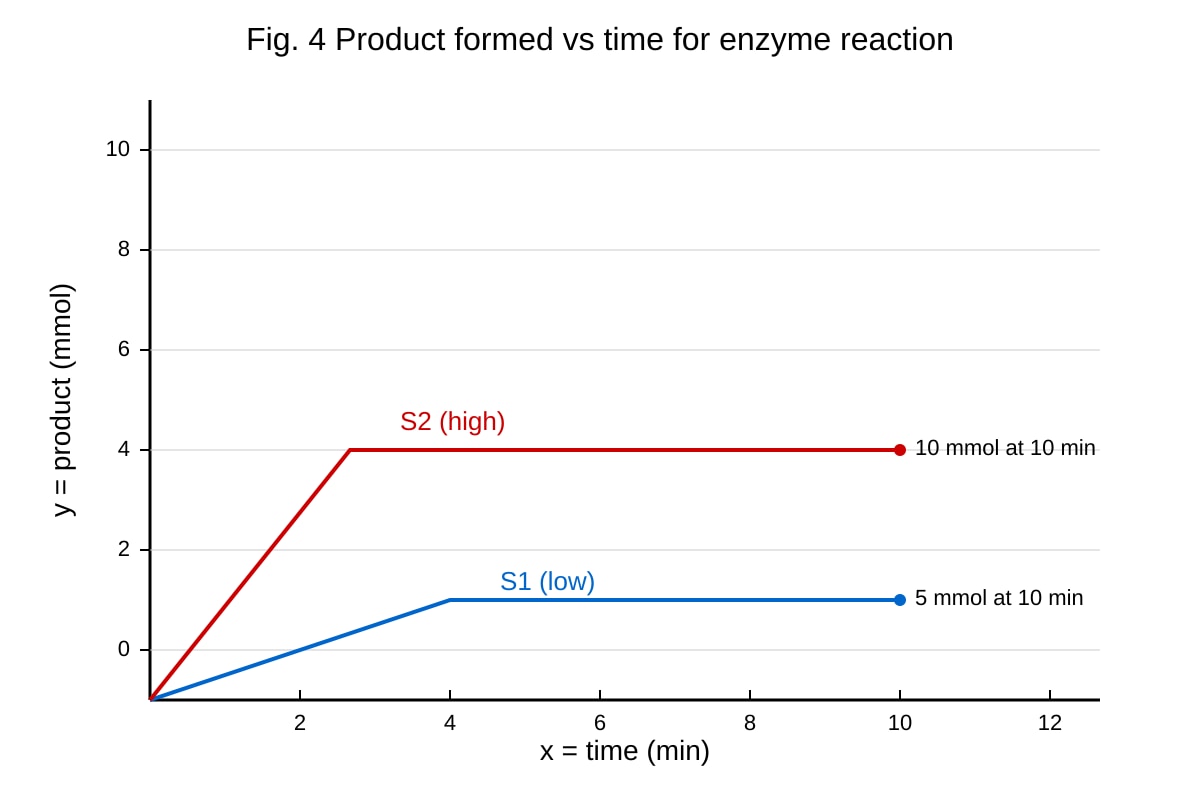
15. Fig. 4 shows a graph of product formed vs time for an enzyme reaction at two substrate concentrations (S1 low, S2 high).
Image pending generation: graph for Q15.
State the effect of higher substrate concentration on the initial rate of reaction. [1]
Explain why the rate does not increase infinitely. [1]
Section D: Synthesis and Explanation (Questions 16–20) [10 marks]
16. Explain how the structure of a muscle cell is adapted to its function. [2]
17. Compare the functions of the rough endoplasmic reticulum and the Golgi body. [2]
18. Describe how you would test a leaf for the presence of fats using the ethanol test. [2]
19. Using the lock-and-key model, explain enzyme specificity. [2]
20. A patient has low ATP production in root cells. Predict the effect on ion uptake and justify your answer using active transport principles. [2]
Answers
TuitionGoWhere Practice Paper - Pure Biology Secondary 4 (Version 5) Answer Key
Total Marks: 40
Section A: 10 | Section B: 10 | Section C: 10 | Section D: 10
Section A (1–5)
1. Root hair cells [1]
Teaching note: Water from soil enters via root hair cells (specialised epidermal cells), not xylem or root cap.
2. Growth and repair of tissues (also enzymes, antibodies) [1]
Teaching note: Proteins are polymers of amino acids; main roles include structural and functional (e.g., enzymes).
3. Mitochondrion (mitochondria) [1]
Teaching note: Site of aerobic respiration where ATP is produced.
4. Iodine test [1]
Teaching note: Iodine solution turns blue-black with starch.
5. Diffusion is the net movement of particles from a region of higher concentration to a region of lower concentration. [1]
Teaching note: No energy required; down concentration gradient.
Section B (6–10)
6. (a) Active transport [1]
(b) It moves ions against concentration gradient, requiring ATP. [1]
Teaching note: Soil minerals often at lower conc than root cell sap.
7. [3]
- High glucose decreases blood water potential. [1]
- Water moves out of RBCs by osmosis (down water potential gradient). [1]
- RBCs lose water, shrink (crenate), may be damaged. [1]
Teaching note: Do not say water moves in; crenation not plasmolysis.
8. (a) Diffusion [1] (b) Active transport [1] (c) Diffusion needs no energy; active transport needs ATP. [1]
9. (a) Amylase [1] (b) Neutral (~pH 7) [1]
Teaching note: Salivary amylase works best near pH 7.
10. Protein synthesis occurs at ribosomes. [1] In Fig. 1, ribosomes are not labelled A–E (A wall, B chloroplast, C nucleus, D mitochondrion, E vacuole); answer = ribosomes. [1]
Teaching note: If student says E or B, wrong; ribosome may be free or on rough ER.
Section C (11–15)
11. (a) 40°C [1]
(b) Activity increases with temperature. [1]
(c) At 80°C enzyme denatures; active site changes shape; no E-S complex. [2]
Teaching note: Denaturation irreversible, not "dies".
12. (a) X [1]
(b) X in hypertonic solution has lower water potential outside; water leaves cell by osmosis. [2]
Teaching note: Hypertonic = outside lower water potential.
13. (a) P (brick-red) [1]
(b) Blue → green → yellow → orange → brick-red. [1]
14. Protein present; e.g., egg, meat, beans. [2]
Teaching note: Biuret purple = peptide bonds.
15. Higher substrate = higher initial rate. [1]
Limited by enzyme concentration at saturation. [1]
Section D (16–20)
16. Many mitochondria for energy; elongated for contraction. [2]
17. Rough ER synthesises proteins; Golgi modifies/packages. [2]
18. Crush leaf, add ethanol, white emulsion indicates fats. [2]
19. Enzyme active site fits specific substrate like key in lock. [2]
20. Ion uptake decreases; active transport needs ATP. [2]
Free quiz and exam paper access
Enter your details to view this paper
Your access is remembered on this device.