AI Generated Exam Paper
Secondary 4 Pure Biology Practice Paper 3
Free Sec 4 Pure Biology Practice Paper 3, HY3 AI version, with questions, answers, and O Level-style practice for Singapore students.
These static practice materials are generated from the site's syllabus and paper-generation workflow, with source and model context shown so students and parents can evaluate the material before use.
Questions
TuitionGoWhere Practice Paper - Pure Biology Secondary 4
TuitionGoWhere Practice Paper (AI)
Version: 3 of 5
Subject: Pure Biology
Level: Secondary 4
Paper: Practice Paper (Topic: Cells & Biomolecules)
Duration: 60 minutes
Total Marks: 60
Name: __________________________
Class: ____________
Date: ____________
Instructions
- Answer all questions in the spaces provided.
- Section A: Multiple-choice style short items (1 mark each).
- Section B: Structured questions requiring short written responses.
- Section C: Data interpretation and extended structured response.
- Use blue or black pen. Diagrams may be drawn in pencil.
- Marks allocated are shown at the end of each question or part.
Section A (Questions 1–5) [5 marks]
-
Name the cells in the root epidermis through which water is absorbed from the soil. [1]
-
Which organelle is the site of ATP production in a eukaryotic cell? [1]
-
Which food test uses iodine solution to detect the presence of starch? [1]
-
State one element present in proteins but not in carbohydrates. [1]
-
What term describes the movement of water molecules from a region of higher water potential to lower water potential through a selectively permeable membrane? [1]
Section B (Questions 6–13) [24 marks]
-
(a) Define diffusion. [1]
(b) Give one example of diffusion in the human body. [1] -
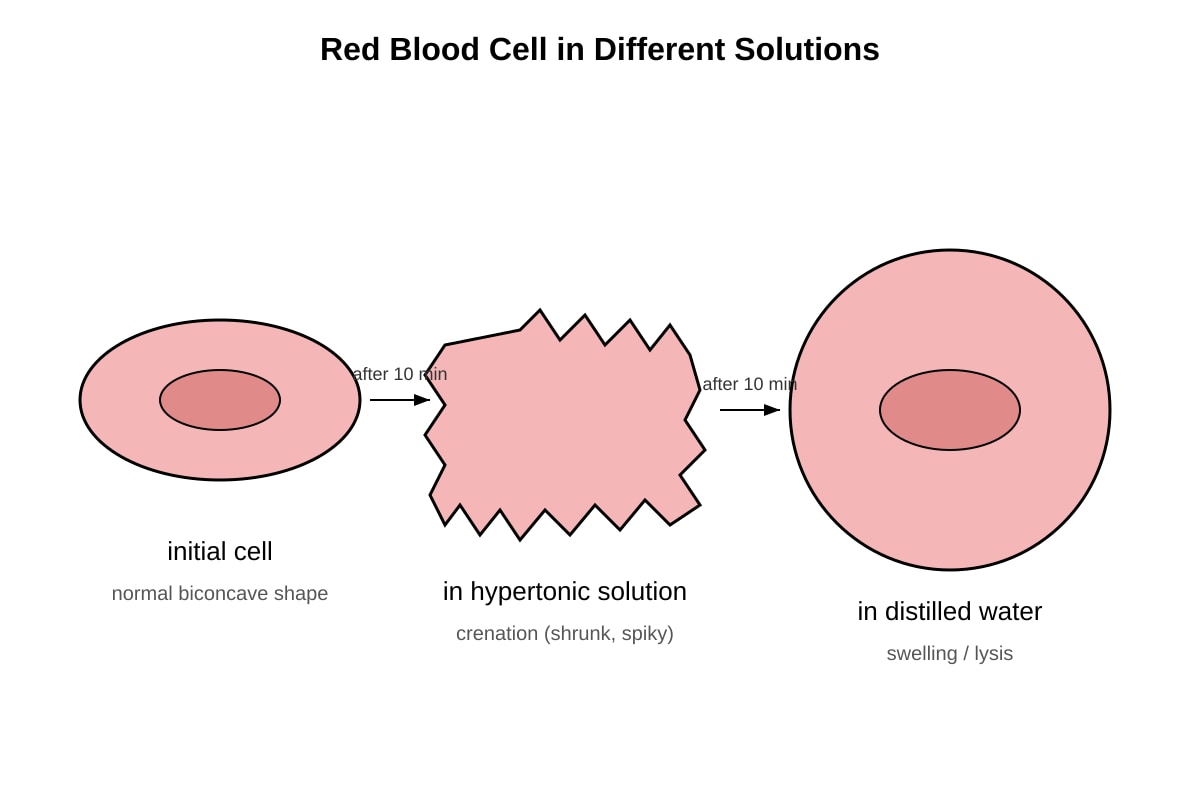
The diagram below shows an animal cell placed in a solution.
Image pending generation: diagram for Q7.
Describe what happens to the cell in the hypertonic solution and explain why. [2]
-
(a) Name the enzyme that breaks down starch into maltose. [1]
(b) State the optimum pH range for this enzyme in the human mouth. [1] -
A student carried out the biuret test on a food sample and the solution turned purple. What does this indicate? [1]
-
Complete the table below by stating the subunit (monomer) of each biomolecule. [3]
| Biomolecule | Subunit |
|---|---|
| Starch | |
| Protein | |
| Fat |
-
Explain why root hair cells are adapted for absorbing water and minerals. [3]
-
(a) What is meant by "enzyme specificity"? [1]
(b) Using the lock-and-key model, explain why an enzyme cannot act on a different substrate. [2] -
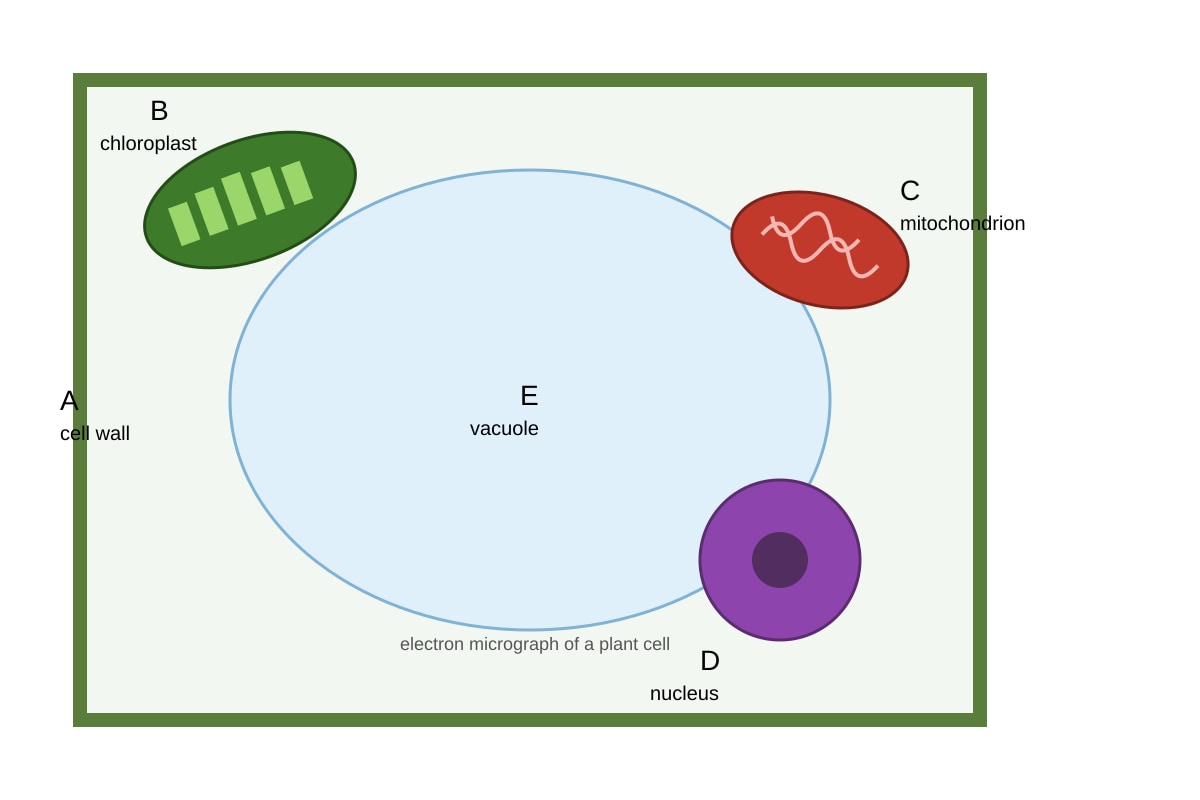
The diagram shows an electron micrograph of a plant cell.
Image pending generation: experimental_setup for Q13.
Which labelled structure (A–E) is the site of protein synthesis? Explain your answer. [2]
Section C (Questions 14–20) [31 marks]
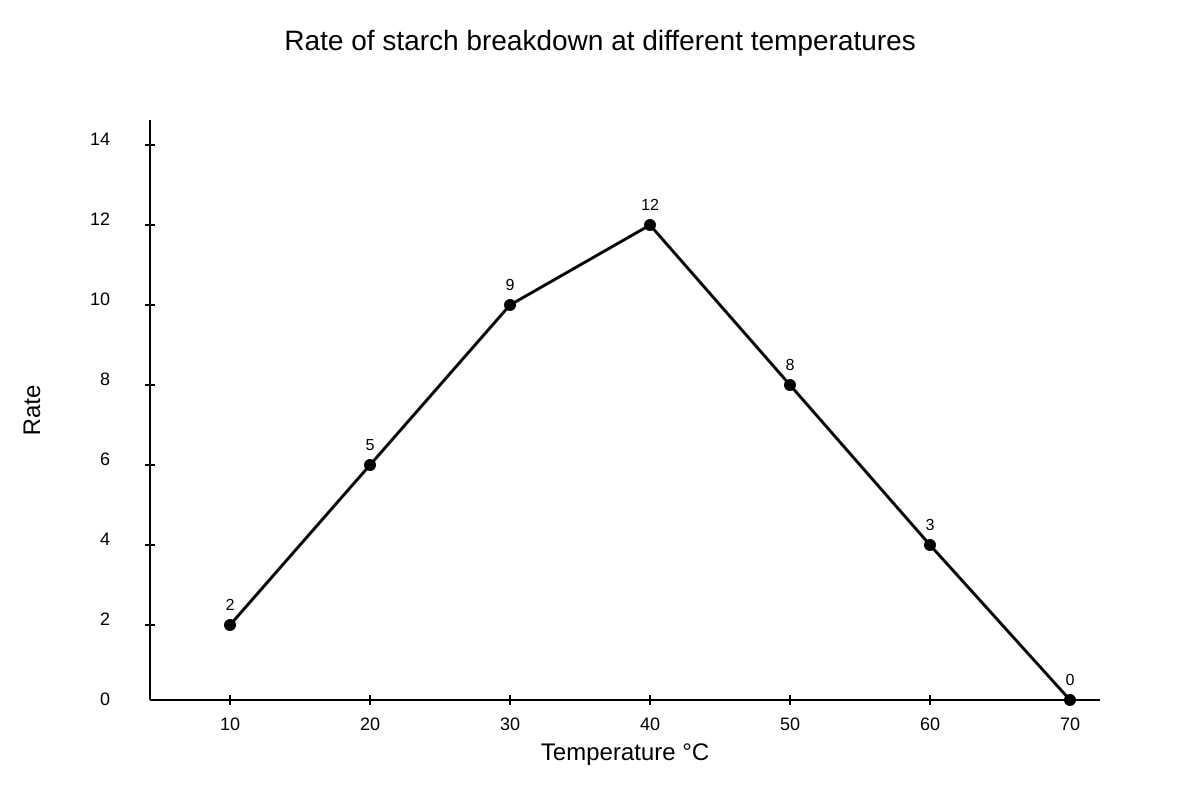
- An investigation studied the effect of temperature on amylase activity. The graph below shows rate of starch breakdown at different temperatures.
Image pending generation: graph for Q14.
(a) State the optimum temperature for amylase in this investigation. [1]
(b) Describe the relationship between temperature and rate from 10°C to 40°C. [2]
(c) Explain why the rate decreases above 50°C. [3]
15. A red blood cell is placed in a solution with very high glucose concentration.
(a) Explain how this affects the water potential of the solution. [1]
(b) Describe the movement of water and the effect on the red blood cell. [3]
-
Table below shows substances and their transport across membranes.
| Substance | Direction | Mechanism | |-----------|-----------|-----------| | O₂ | High → Low | ? | | Glucose (gut → blood) | Low → High | ? | | Water | High → Low wp | ? |
(a) Name the mechanism for each. [3]
(b) Why does glucose require energy while O₂ does not? [2] -
(a) List the chemical elements found in fats. [2]
(b) State two roles of fats in living organisms. [2] -
A student tested a leaf extract with Benedict's solution and obtained a green precipitate after heating. What does this show? Explain the test principle. [3]
-
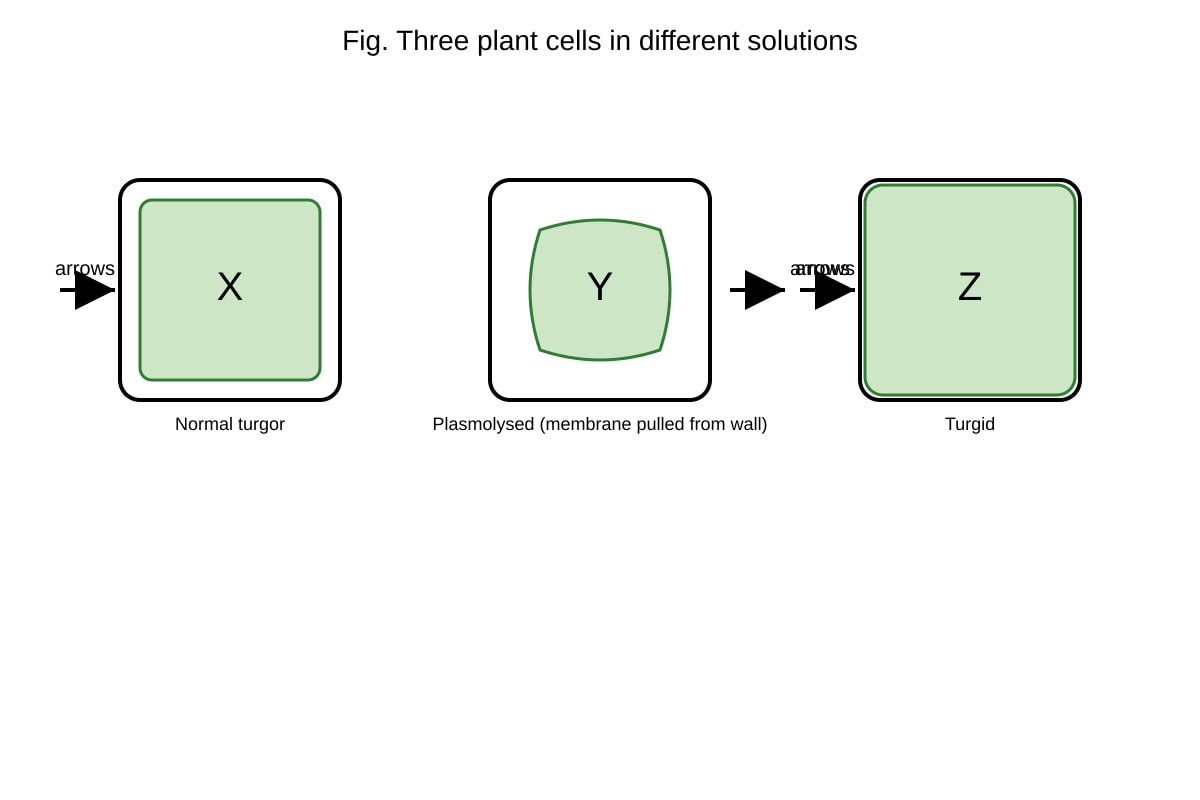
Fig. below shows three plant cells in different solutions.
Image pending generation: diagram for Q19.
(a) Which cell (X, Y, or Z) is plasmolysed? [1]
(b) Explain the water movement in cell Y using water potential. [2]
20. Enzymes are biological catalysts.
(a) State two properties of enzymes. [2]
(b) Describe how pH affects enzyme activity and what happens at very high or low pH. [4]
Answers
TuitionGoWhere Practice Paper - Pure Biology Secondary 4 (Version 3) Answer Key
Total Marks: 60
Section A
-
Root hair cells [1]
Teaching note: Water is absorbed from soil by root hair cells, which are extensions of epidermal cells increasing surface area. -
Mitochondrion (mitochondria) [1]
Teaching note: Mitochondria carry out aerobic respiration producing ATP. -
Iodine test [1]
Teaching note: Iodine turns blue-black with starch. -
Nitrogen (or sulphur) [1]
Teaching note: Proteins contain C, H, O, N; carbohydrates contain C, H, O only. -
Osmosis [1]
Teaching note: Osmosis is diffusion of water through selectively permeable membrane.
Section B
-
(a) Diffusion is the net movement of particles from a region of higher concentration to lower concentration. [1]
(b) E.g., oxygen from alveoli to blood. [1] -
In hypertonic solution, water leaves cell by osmosis → cell shrinks and becomes crenated. [2]
Reason: Lower water potential outside than inside. -
(a) Amylase [1] (b) Around pH 6.5–7.5 (neutral/slightly alkaline) [1]
-
Protein is present. [1]
Biuret test: purple = peptide bonds. -
Starch → glucose; Protein → amino acid; Fat → glycerol + fatty acid (or 3 fatty acids + glycerol). [3: 1 each]
-
Root hair cells have long projection increasing SA for absorption; thin wall; large vacuole for water uptake; mitochondria for active transport of minerals. [3]
-
(a) Enzyme acts only on specific substrate. [1]
(b) Active site shape fits only one substrate (key fits lock); different substrate shape not complementary. [2] -
None of A–E is ribosome; if E is mislabelled, clarify: protein synthesis at ribosome (not shown). If D=nucleus controls, C=mitochondrion ATP. [2]
Note: In provided labels, ribosome absent; answer should state ribosomes not labelled, or if E intended as ribosome then E. Based on placeholder, no ribosome labelled → state limitation.
Section C
-
(a) 40°C [1]
(b) Rate increases with temperature up to 40°C. [2]
(c) Above 50°C enzyme denatures; active site loses shape; no E-S complex. [3] -
(a) Water potential decreases (more solute). [1]
(b) Water moves out by osmosis; RBC shrinks (crenation). [3] -
(a) O₂: diffusion; Glucose: active transport; Water: osmosis. [3]
(b) Glucose moves against gradient needing ATP; O₂ down gradient no energy. [2] -
(a) C, H, O. [2]
(b) Energy storage, insulation. [2] -
Reducing sugar present (not much). Green = low conc. Benedict's: reducing sugar reduces Cu²⁺ to Cu₂O coloured ppt. [3]
-
(a) Y [1]
(b) Outside lower wp → water leaves cell by osmosis. [2] -
(a) Catalytic, specific, protein, denature by temp/pH. [2]
(b) Each enzyme has optimum pH; extreme pH changes charge, denatures enzyme. [4]
Free quiz and exam paper access
Enter your details to view this paper
Your access is remembered on this device.