From Real Exams Exam Paper
Secondary 4 Pure Biology Preliminary Examination Paper 5
Free Sec 4 Pure Biology Prelim Paper 5, HY3 Exam version, with questions, answers, and O Level-style practice for Singapore students.
These static practice materials are generated from the site's syllabus and paper-generation workflow, with source and model context shown so students and parents can evaluate the material before use.
Questions
Free quiz and exam paper access
Enter your details to view this paper
Your access is remembered on this device.
Answers
TuitionGoWhere Exam Practice (AI) — Pure Biology Secondary 4
PRELIM Practice Paper — Version 5 of 5 — Answer Key
Total Marks: 60
Section A: Short Answer and Recall (Q1–10) — 10 marks
Q1. Root hair cells [1]
Teaching note: Water is absorbed from soil by root hair cells, which are specialised epidermal cells of the root with long extensions increasing surface area. Common mistake: answering "xylem" (xylem transports water, not absorbs it).
Q2. Nitrogen (or sulphur) [1]
Teaching note: Proteins contain C, H, O, N (and sometimes S). Carbohydrates contain only C, H, O. Any element present in proteins but not carbohydrates is accepted; N is most common.
Q3. Mitochondrion (mitochondria) [1]
Teaching note: Mitochondria are the sites of aerobic respiration where ATP is produced. Do not confuse with chloroplast (photosynthesis).
Q4. Iodine solution [1]
Teaching note: Iodine turns blue-black in presence of starch. Benedict's is for reducing sugars, biuret for protein.
Q5. Diffusion is the net movement of particles from a region of higher concentration to a region of lower concentration. [1]
Teaching note: Must include "net movement" and direction down concentration gradient.
Q6. Active transport [1]
Teaching note: Requires energy (ATP) and moves against gradient; diffusion and osmosis are passive.
Q7. Plasmolysis [1]
Teaching note: Plant cell membrane pulls away from wall in hypertonic solution. Crenation is for animal cells.
Q8. Glucose (alpha-glucose) [1]
Teaching note: Starch is a polysaccharide of many glucose monomers.
Q9. Red blood cells (erythrocytes) [1]
Teaching note: Mature mammalian RBCs expel nucleus to maximise haemoglobin space.
Q10. Lock-and-key model [1]
Teaching note: Substrate fits enzyme active site like key into lock; explains specificity.
Section B: Structured Response and Diagram Interpretation (Q11–15) — 25 marks
Q11. [3 total]
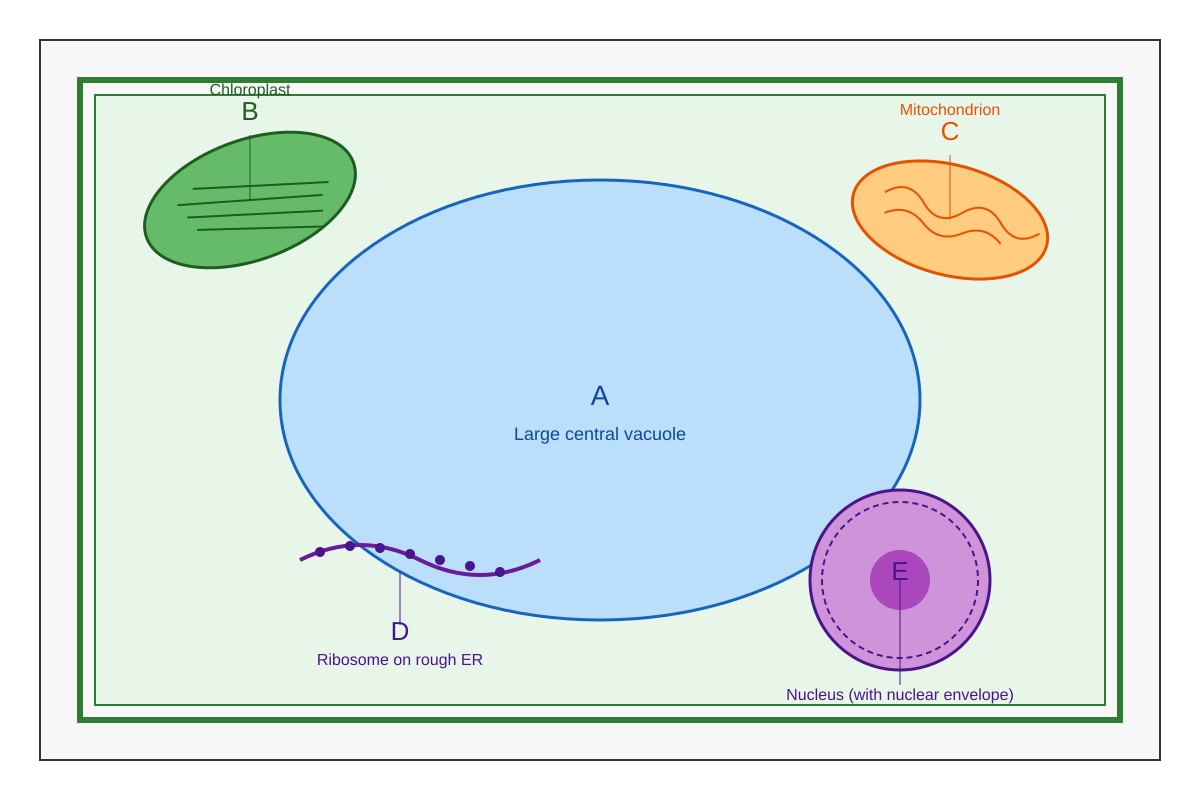
(a) D [1] — ribosomes are site of protein synthesis.
(b) B [1] — chloroplast is site of photosynthesis.
(c) Produces ATP / site of aerobic respiration [1].
Teaching note: From micrograph, D shows ribosomes on rough ER. Common error: naming nucleus (control, not synthesis site).
Q12. [4 total]
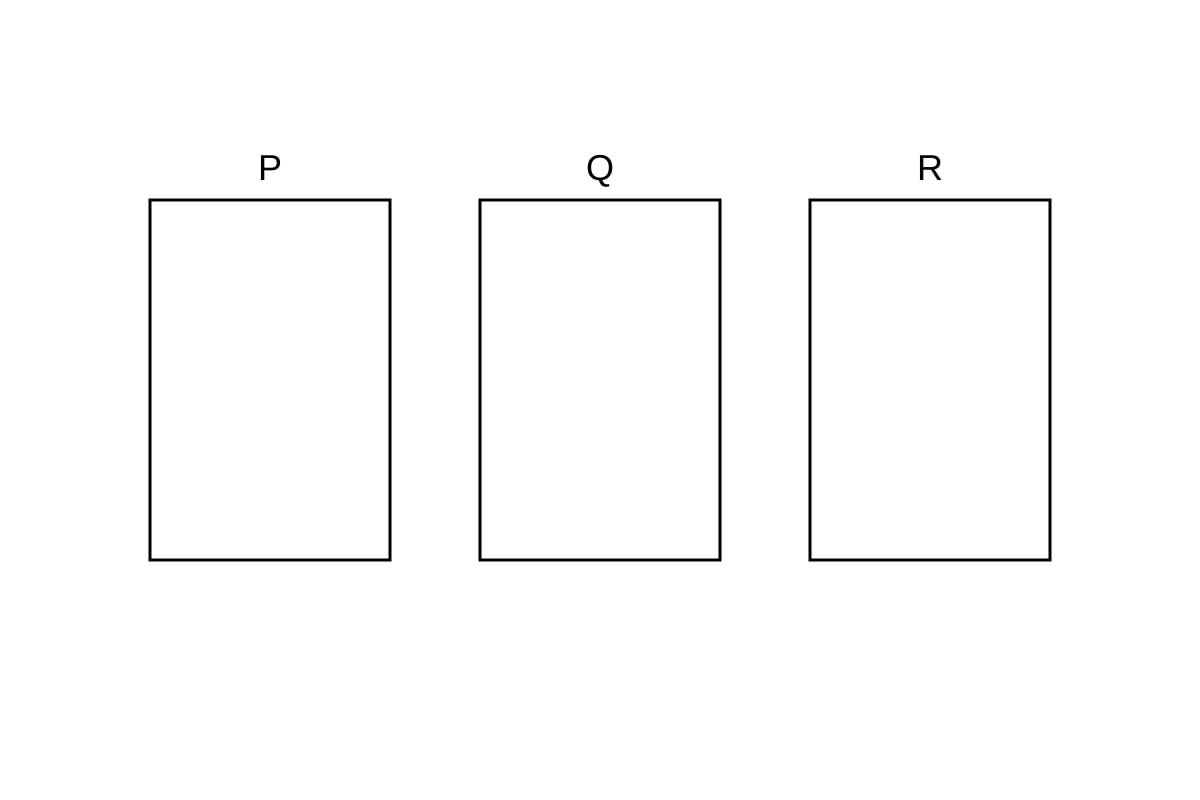
(a) P only [1] — cell water potential (–400) is lower (more negative) than solution (–200), so water moves out. R has solution –600 (lower than cell), water moves in. Q is equal, no net movement.
(b) Water moves by osmosis from higher (less negative) to lower (more negative) water potential. In P, solution (–200) > cell (–400), so water leaves cell. [2]
(c) Arrow drawn OUT of R cell [1] — wait, correction: for R, solution –600 is lower than cell –400, so water moves INTO R. Arrow points into cell. [1]
Marking: (a) P only; (b) correct reasoning on gradient; (c) arrow into R.
Q13. [3]
- Long hair-like projection increases surface area for absorption [1]
- Thin cell wall / short diffusion distance [1]
- Many mitochondria for active transport of ions [1]
Teaching note: Adaptations link structure to function (SA:V, distance, energy).
Q14. [4 total]
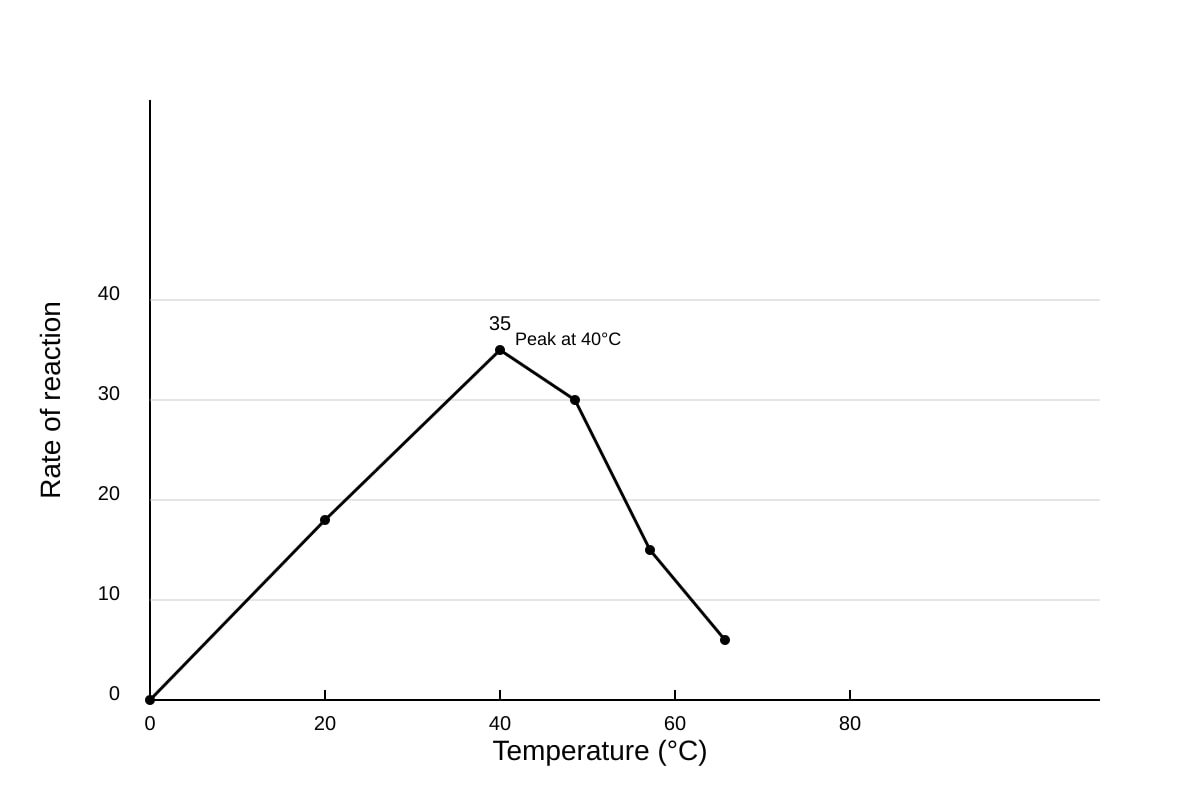
(a) 40°C [1]
(b) Above 50°C enzyme denatures; tertiary structure breaks, active site lost [2]
(c) At 10°C molecules have less kinetic energy, fewer collisions between enzyme and substrate [1]
Teaching note: Peak = optimum. Denaturation is permanent shape change.
Q15. [4 total]
(a) Out of the cell [1]
(b) Solution has lower water potential than cytoplasm → water leaves RBC by osmosis [1]; RBC shrinks and becomes crenated [1]; loss of shape impairs function / may burst or die [1].
Teaching note: High external solute = low water potential = water out.
Section C: Applied and Extended Response (Q16–20) — 25 marks
Q16. [5 total]
(a) Benedict's reagent; blue → brick-red on heating [2]
(b) Add biuret reagent (NaOH then CuSO₄) to sample; positive = purple/violet [3: steps 2, reagent 1, colour 1]
Teaching note: Ethanol test for fats (cloudy white emulsion).
Q17. [5 total]
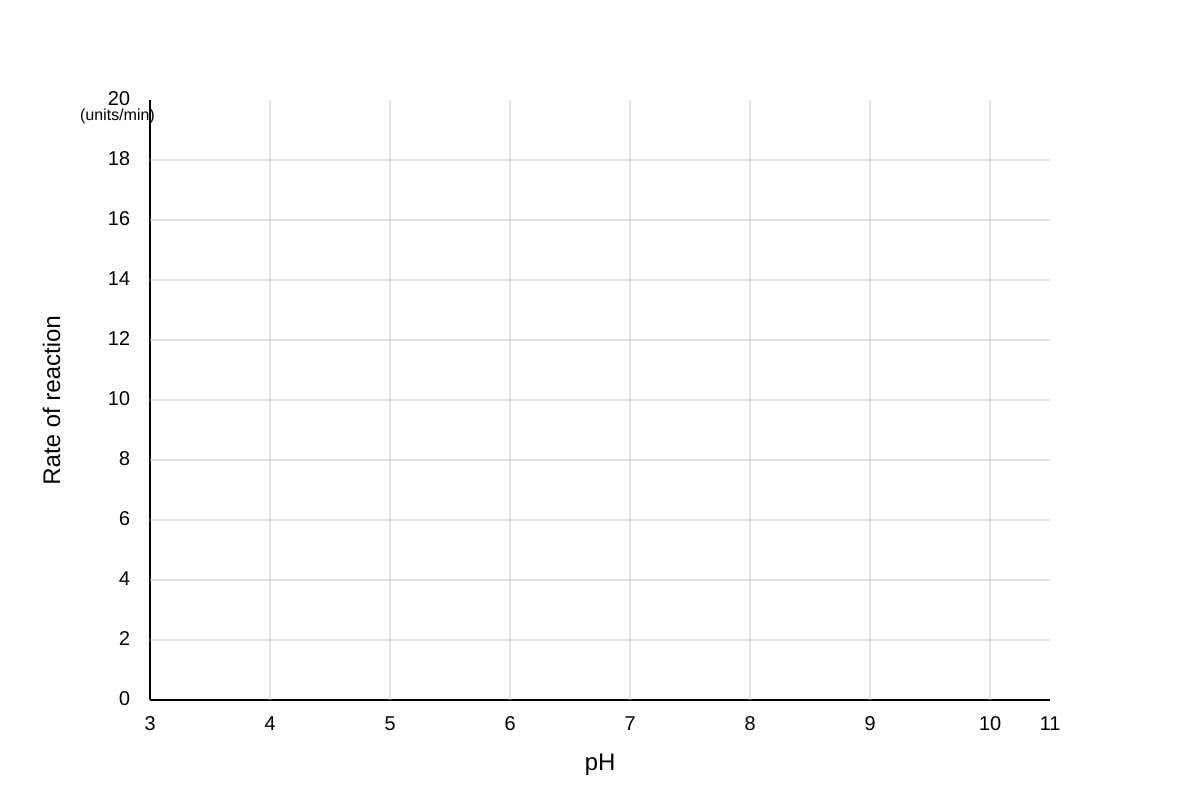
(a) Points plotted correctly at (3,2),(5,10),(7,18),(9,12),(11,4); smooth curve [2]
(b) pH 7 [1]
(c) At pH 11, enzyme active site altered / denatured by extreme alkali [2]
Teaching note: Most human enzymes near neutral; extremes break H-bonds.
Q18. [4]
Differences (any 3):
- Plant has cell wall, animal does not [1]
- Plant has chloroplasts, animal does not [1]
- Plant has large central vacuole, animal has small/no vacuole [1]
- Animal has centrioles, plant does not [1]
Teaching note: Must compare, not just list plant features.
Q19. [4]
Active transport = movement of substances across membrane against concentration gradient using energy (ATP) [2]; example: glucose absorption in intestinal villi / ion uptake by root hairs [2].
Teaching note: Distinct from diffusion (no energy, down gradient).
Q20. [5 total]
(a) High blood glucose → lower water potential of blood than RBC cytoplasm [1]; water moves out of RBC by osmosis [1]; RBC crenates, may be damaged / function reduced [1].
(b) Osmosis is passive (no energy) movement of water only down WP gradient; active transport needs ATP and moves any solute against gradient [2].
Teaching note: Clear contrast of energy, direction, substance.