From Real Exams Exam Paper
Secondary 4 Pure Biology Preliminary Examination Paper 4
Free Sec 4 Pure Biology Prelim Paper 4, HY3 Exam version, with questions, answers, and O Level-style practice for Singapore students.
These static practice materials are generated from the site's syllabus and paper-generation workflow, with source and model context shown so students and parents can evaluate the material before use.
Questions
TuitionGoWhere Exam Practice (AI) — Pure Biology Secondary 4
PRELIM Practice Paper — Cells & Biomolecules (Version 4 of 5)
School: TuitionGoWhere Secondary School (AI)
Subject: Pure Biology
Level: Secondary 4
Paper: PRELIM Practice (Cells & Biomolecules)
Version: 4
Duration: 60 minutes
Total Marks: 60
Name: ___________________________
Class: ____________
Date: ____________
Instructions:
- Answer all questions in the spaces provided.
- Use blue or black pen.
- Show all working where calculation or reasoning is required.
- Diagrams are not drawn to scale unless stated.
Section A: Short Answer & Recall (Questions 1–5, 10 marks)
1. Name the cells through which water is absorbed from the soil by a plant root. [1]
2. State one chemical element present in all proteins but absent from carbohydrates. [1]
3. Which organelle is the site of ATP production in a eukaryotic cell? [1]
4. Give the reagent used to test for the presence of starch. [1]
5. Define diffusion in one sentence. [1]
6. Name the process by which root hair cells absorb mineral ions from a dilute soil solution against a concentration gradient. [1]
7. What term describes the shrinking of a plant cell away from its cell wall in a concentrated solution? [1]
8. State the building block (monomer) of a protein molecule. [1]
9. Which type of biomolecule is the main short-term energy source for cells? [1]
10. Name the organelle that contains chlorophyll and is found only in plant cells. [1]
Section B: Diagram & Data Interpretation (Questions 11–15, 20 marks)
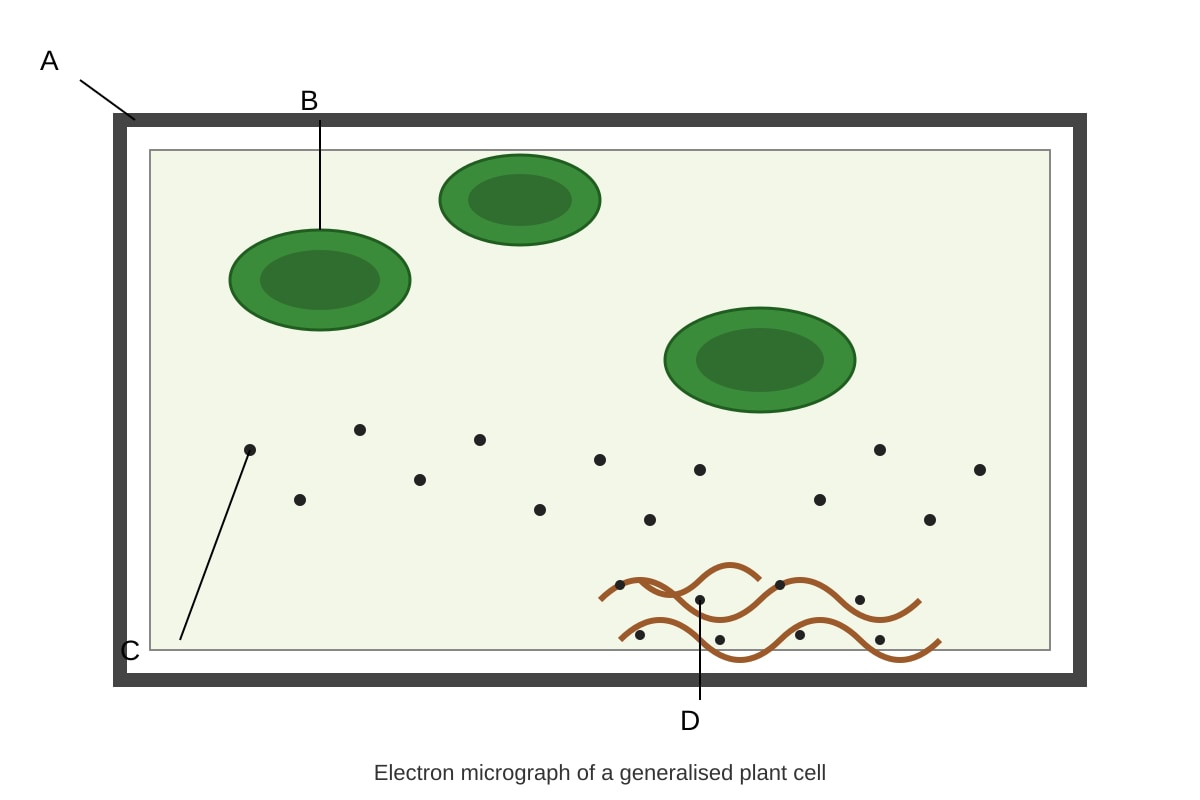
11. The electron micrograph below shows part of a plant cell.
Image pending generation: diagram for Q11.
(a) Identify structure C and state its function. [2]
(b) Which labelled structure (A–D) is the site of photosynthesis? [1]
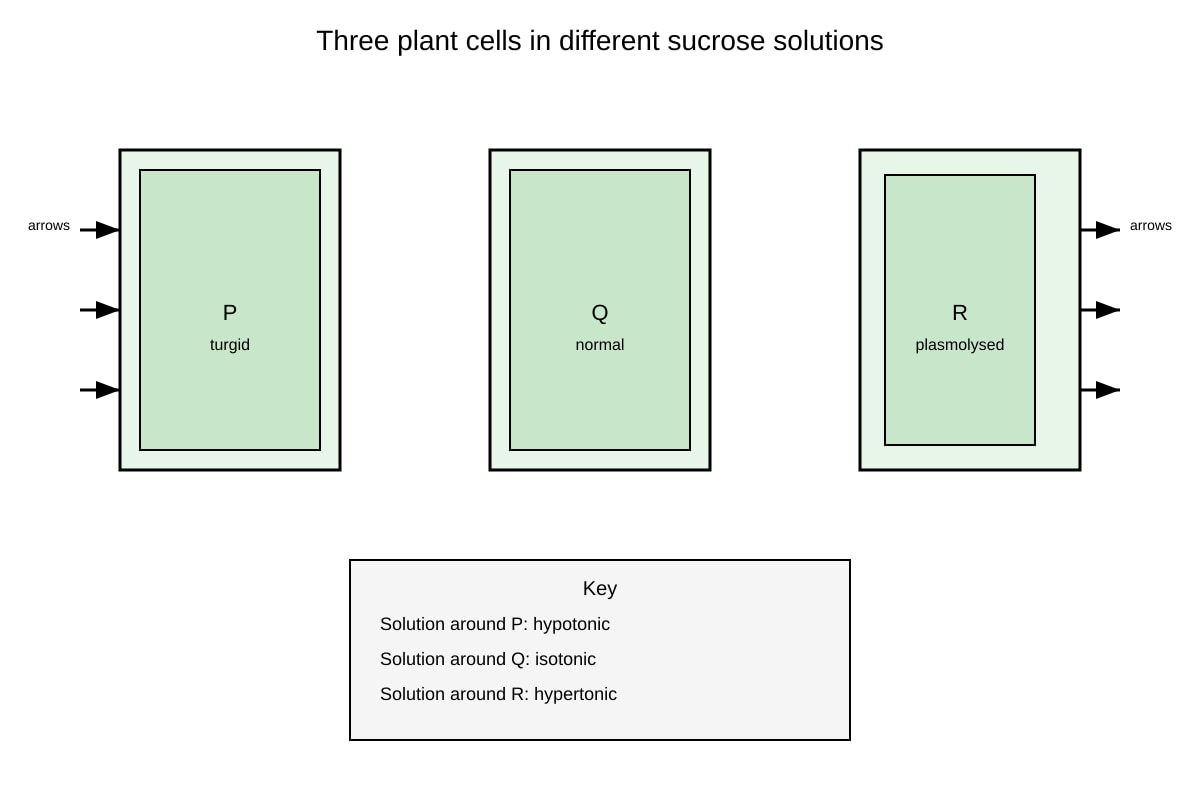
12. The diagram shows three plant cells P, Q and R placed in different sucrose solutions. Arrows show the net direction of water movement by osmosis.
Image pending generation: diagram for Q12.
(a) In which cell is water moving out of the cell by osmosis? [1]
(b) Explain why water moves in the direction shown for cell P. [2]
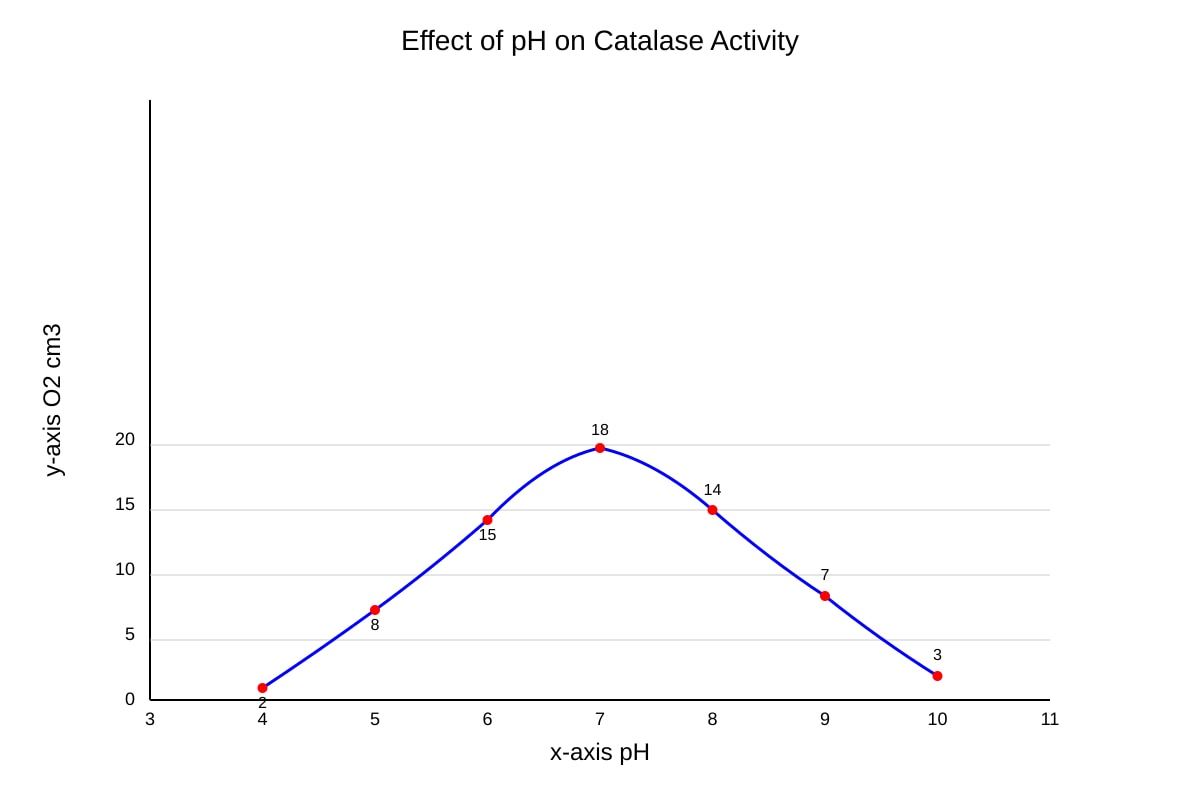
13. A student investigated the effect of pH on the activity of catalase. The graph shows the volume of oxygen produced after 1 minute at different pH values.
Image pending generation: graph for Q13.
(a) State the optimum pH for catalase from the graph. [1]
(b) Calculate the percentage decrease in oxygen produced between pH 6 and pH 9. [2]
(c) Explain why enzyme activity falls at pH 10. [2]
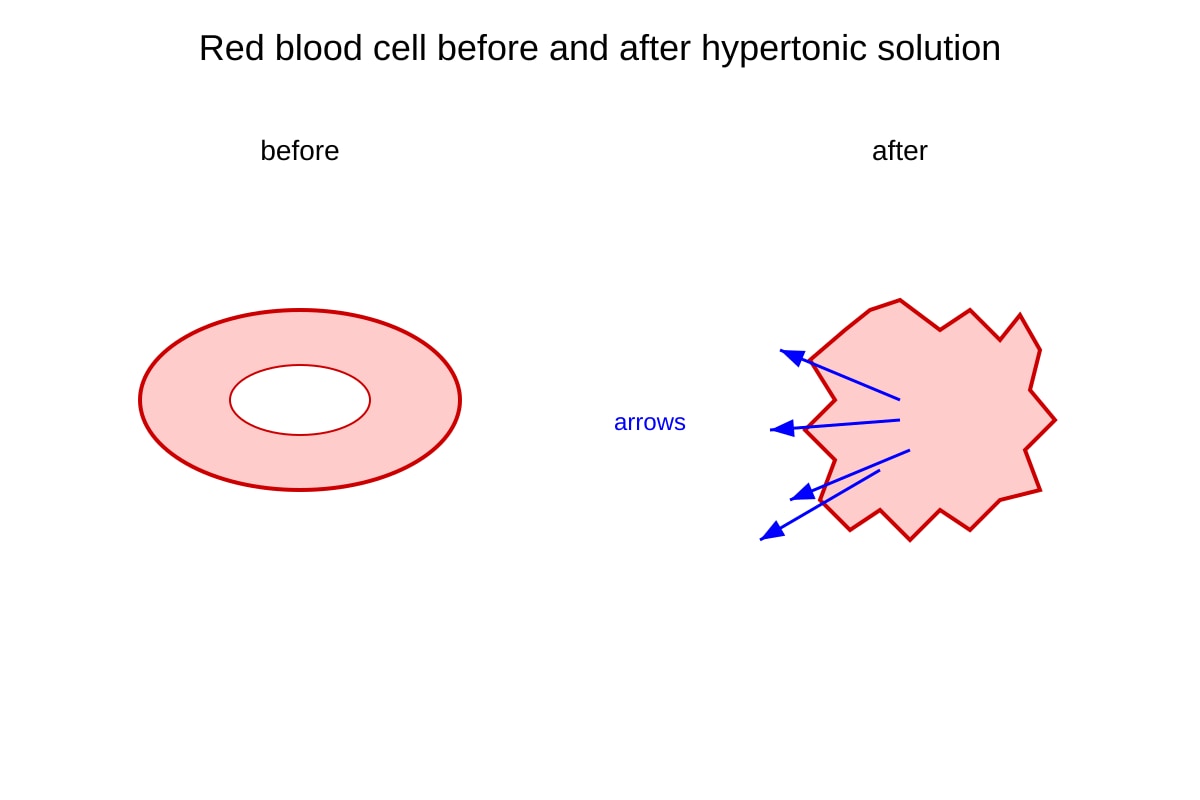
14. The figure shows a red blood cell before and after being placed in a very concentrated salt solution.
Image pending generation: diagram for Q14.
Describe what happens to the red blood cell and give the term for this change. [3]
15. Complete the table comparing animal and plant cells.
| Feature | Animal cell | Plant cell |
|---|---|---|
| Cell wall | Absent | Present |
| Chloroplast | __________ | Present |
| Permanent vacuole | __________ | Present |
[2]
Section C: Structured Response (Questions 16–20, 30 marks)
16. (a) Describe how the structure of a root hair cell is adapted for the absorption of water. [3]
(b) Explain how active transport enables root hair cells to absorb nitrate ions from the soil. [3]
17. A student carried out the Benedict's test on four unknown food samples. The results are shown below.
| Sample | Initial colour | After heating with Benedict's | Conclusion |
|---|---|---|---|
| W | Blue | Orange-red | Reducing sugar present |
| X | Blue | Blue | No reducing sugar |
| Y | Blue | Green | Small amount reducing sugar |
| Z | Blue | Brick red | High amount reducing sugar |
(a) Which sample contained the highest concentration of reducing sugar? [1]
(b) Explain why Benedict's solution changes colour when reducing sugars are present. [2]
(c) State the test for starch and the positive result. [2]
(d) Name the monomer of starch. [1]
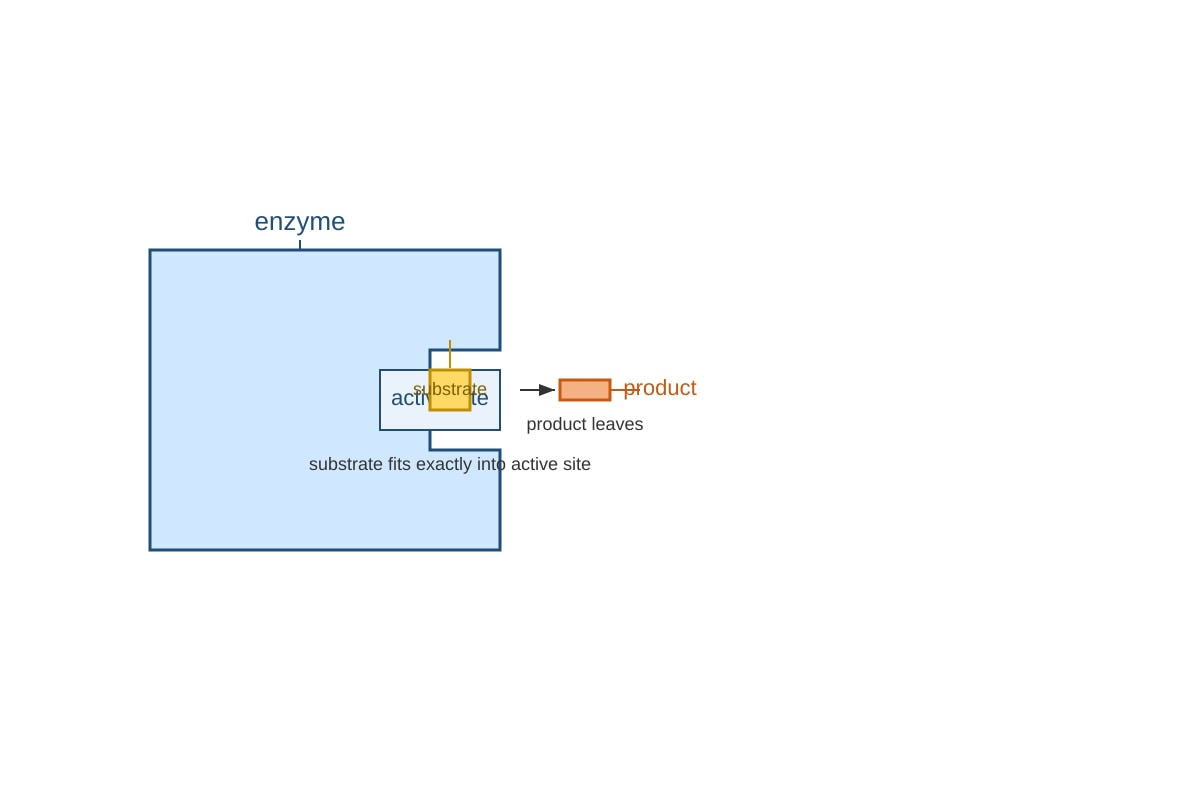
18. The diagram shows an enzyme and substrate interacting.
Image pending generation: diagram for Q18.
(a) Name the model shown. [1]
(b) Explain enzyme specificity using this model. [2]
(c) Describe and explain the effect of increasing temperature from 20 °C to 60 °C on the rate of an enzyme-controlled reaction. [4]
19. A patient has very high blood glucose after uncontrolled diabetes. This decreases the water potential of the blood.
(a) Explain how a decrease in blood water potential can damage red blood cells. [3]
(b) State the term for the process by which water moves from the blood into the surrounding tissue fluid if tissue fluid has higher water potential. [1]
(c) Suggest why maintaining stable water potential is important for cells. [2]
20. (a) List the three main classes of biomolecules studied in cells and state one role of each. [6]
(b) A cell has many mitochondria and ribosomes. Suggest why this indicates high metabolic activity. [3]
Answers
Answer Key — PRELIM Practice Paper Cells & Biomolecules (Version 4)
Subject: Pure Biology
Level: Secondary 4
Total Marks: 60
Section A (10 marks)
1. Root hair cells [1]
Teaching note: Water is absorbed from soil by root hair cells (elongated epidermal cells of root). Common mistake: writing "xylem" (xylem transports water, not absorbs).
2. Nitrogen (N) [1]
Teaching note: Proteins contain C, H, O, N (and sometimes S). Carbohydrates contain only C, H, O. So N is present in proteins but not carbohydrates.
3. Mitochondrion (mitochondria) [1]
Teaching note: Mitochondria are the sites of aerobic respiration where ATP is produced.
4. Iodine solution [1]
Teaching note: Iodine turns blue-black with starch. Benedict's is for reducing sugars, biuret for protein.
5. Diffusion is the net movement of particles from a region of higher concentration to a region of lower concentration. [1]
Teaching note: Must mention "net movement" and direction down concentration gradient.
6. Active transport [1]
Teaching note: Mineral ions move from low to high concentration using energy (ATP).
7. Plasmolysis [1]
Teaching note: Plant cell membrane pulls away from wall in hypertonic solution.
8. Amino acid [1]
Teaching note: Proteins are polymers of amino acids.
9. Carbohydrates [1]
Teaching note: E.g. glucose; fats are long-term store.
10. Chloroplast [1]
Teaching note: Site of photosynthesis, contains chlorophyll.
Section B (20 marks)
11. (a) C = ribosome; function = protein synthesis [2]
(b) B [1]
Teaching note: Ribosomes (C) are small dots for translation. Chloroplast (B) has chlorophyll for photosynthesis. Trap: confusing rough ER (D) with ribosome.
12. (a) R [1]
(b) Cell P is in hypotonic solution so its water potential is lower than outside; water moves by osmosis into the cell down the water potential gradient. [2]
Marking: 1 for hypotonic/lower WP inside, 1 for direction down gradient.
13. (a) pH 7 [1]
(b) At pH 6 = 15 cm³, pH 9 = 7 cm³. Decrease = 15 – 7 = 8 cm³. % decrease = (8 / 15) × 100 = 53.3 % [2]
Working shown.
(c) At pH 10 the enzyme is denatured / active site changes shape; fewer enzyme-substrate complexes form. [2]
14. The red blood cell loses water and shrinks; it becomes crenated. [3]
Breakdown: 1 water loss, 1 shrink, 1 term crenation.
15. Animal cell chloroplast: Absent [1]; Permanent vacuole: Absent (or small temporary) [1]
Section C (30 marks)
16. (a) Root hair cell has long extension increasing surface area for absorption [1]; thin wall for short diffusion path [1]; many mitochondria for active transport [1]. [3]
(b) Nitrate ions are at lower concentration in soil than in cell [1]; active transport uses ATP from mitochondria [1]; moves ions against gradient into cell [1]. [3]
17. (a) Z [1]
(b) Reducing sugars reduce Cu²⁺ (blue) in Benedict's to Cu⁺ oxide (red/precipitate) on heating [2].
(c) Iodine test; positive = blue-black colour [2].
(d) Glucose (or maltose/alpha glucose) [1]
18. (a) Lock-and-key model [1]
(b) Enzyme active site has specific shape; only substrate with complementary shape fits [1]; other molecules cannot bind [1]. [2]
(c) From 20–40 °C rate increases as kinetic energy and collisions rise [1]; optimum ~37–40 °C [1]; above 40–60 °C enzyme denatures, active site lost, rate falls sharply [2]. [4]
19. (a) High glucose lowers blood WP [1]; water leaves RBC by osmosis [1]; cell shrinks/crenates and may be damaged [1]. [3]
(b) Osmosis [1]
(c) Stable WP prevents excessive water loss/gain that disrupts cell function [2].
20. (a) Carbohydrates – energy source [2]; Fats – insulation / long-term energy store [2]; Proteins – growth and repair / enzymes [2]. [6]
(b) Mitochondria produce ATP for energy [1]; ribosomes make proteins for metabolism [1]; many of both = high rate of reactions [1]. [3]
Free quiz and exam paper access
Enter your details to view this paper
Your access is remembered on this device.