From Real Exams Exam Paper
Secondary 4 Pure Biology Preliminary Examination Paper 3
Free Sec 4 Pure Biology Prelim Paper 3, HY3 Exam version, with questions, answers, and O Level-style practice for Singapore students.
These static practice materials are generated from the site's syllabus and paper-generation workflow, with source and model context shown so students and parents can evaluate the material before use.
Questions
Free quiz and exam paper access
Enter your details to view this paper
Your access is remembered on this device.
Answers
TuitionGoWhere Practice Paper - Pure Biology Secondary 4 (PRELIM) Answer Key
Version 3 of 5
Section A (1–10) – 20 marks
1. [1] Root hair cells
Teaching note: Water is absorbed from soil by root hair cells (specialised epidermal cells with long extensions increasing surface area). Common trap: writing "xylem" (xylem transports water, does not absorb it).
2. [1] Protein synthesis
Teaching note: Ribosomes are the site of protein synthesis. Accept "making proteins".
3. [1] Nucleus
Teaching note: In eukaryotes, DNA is enclosed in the nucleus. Prokaryotes lack a true nucleus.
4. [1] Starch
Teaching note: Iodine solution turns blue-black with starch. Benedict's tests reducing sugar, biuret tests protein.
5. [1] Osmosis
Teaching note: Osmosis is diffusion of water through partially permeable membrane down water potential gradient.
6. [1] Nitrogen
Teaching note: Proteins contain C, H, O, N; carbs/fats contain C, H, O only.
7. [1] Active transport
Teaching note: Active transport requires energy (ATP) to move substances against gradient.
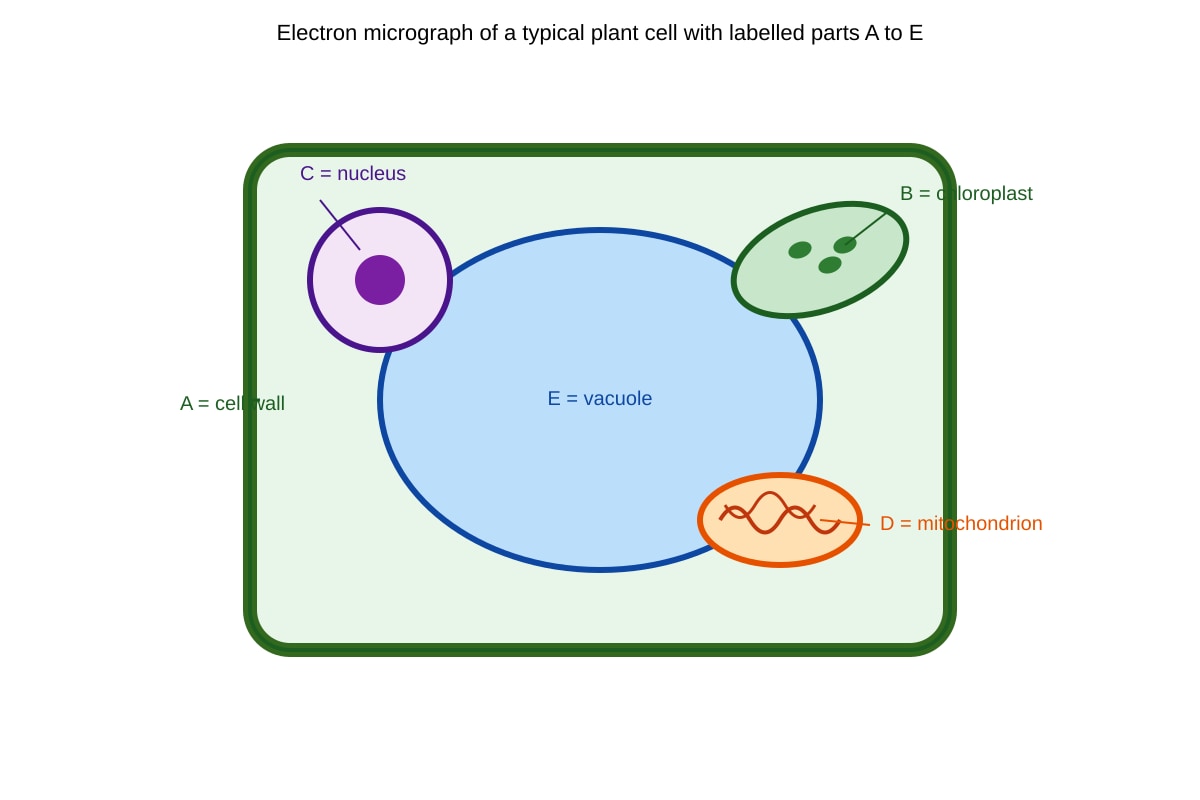
8. [1] D (mitochondrion)
Teaching note: From image, D is labelled mitochondrion, site of ATP production via aerobic respiration. Trap: choosing B (chloroplast, site of photosynthesis).
9. [1] Amylase
Teaching note: Salivary amylase in mouth hydrolyses starch to maltose.
10. [1] To allow more space for haemoglobin / to carry more oxygen
Teaching note: Mature mammalian RBC loses nucleus to maximise haemoglobin capacity.
Section B (11–15) – 20 marks
11. [3]
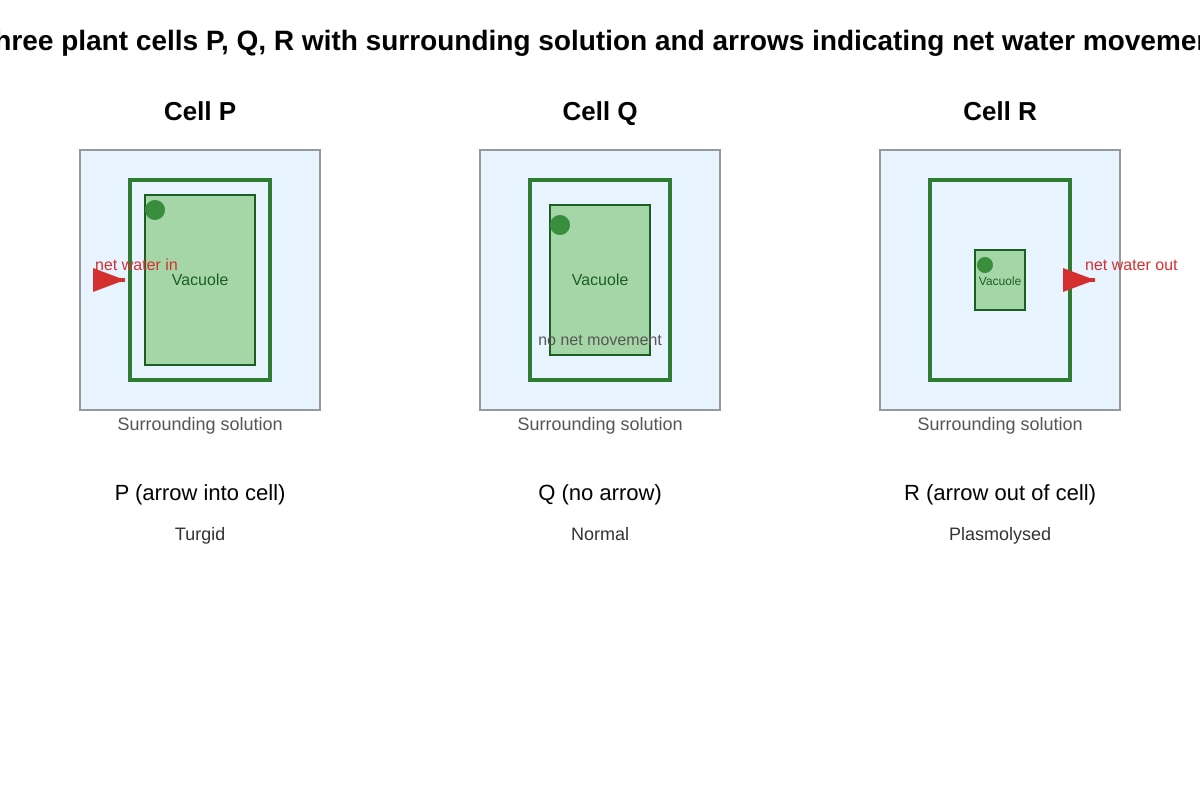
(a) [1] P
(b) [2] Cell R is in a hypertonic solution (lower water potential than cell). Water moves out by osmosis down water potential gradient, causing plasmolysis.
Marking: 1 mark for hypertonic/lower water potential, 1 mark for osmosis out.
12. [3]
(a) [1] Benedict's solution
(b) [1] Blue to brick-red (or orange/brown)
(c) [1] Heat in boiling water bath for ~2 min / use water bath not direct flame
Teaching note: Reducing sugars reduce Cu²⁺ to Cu₂O (brick-red precipitate).
13. [3]
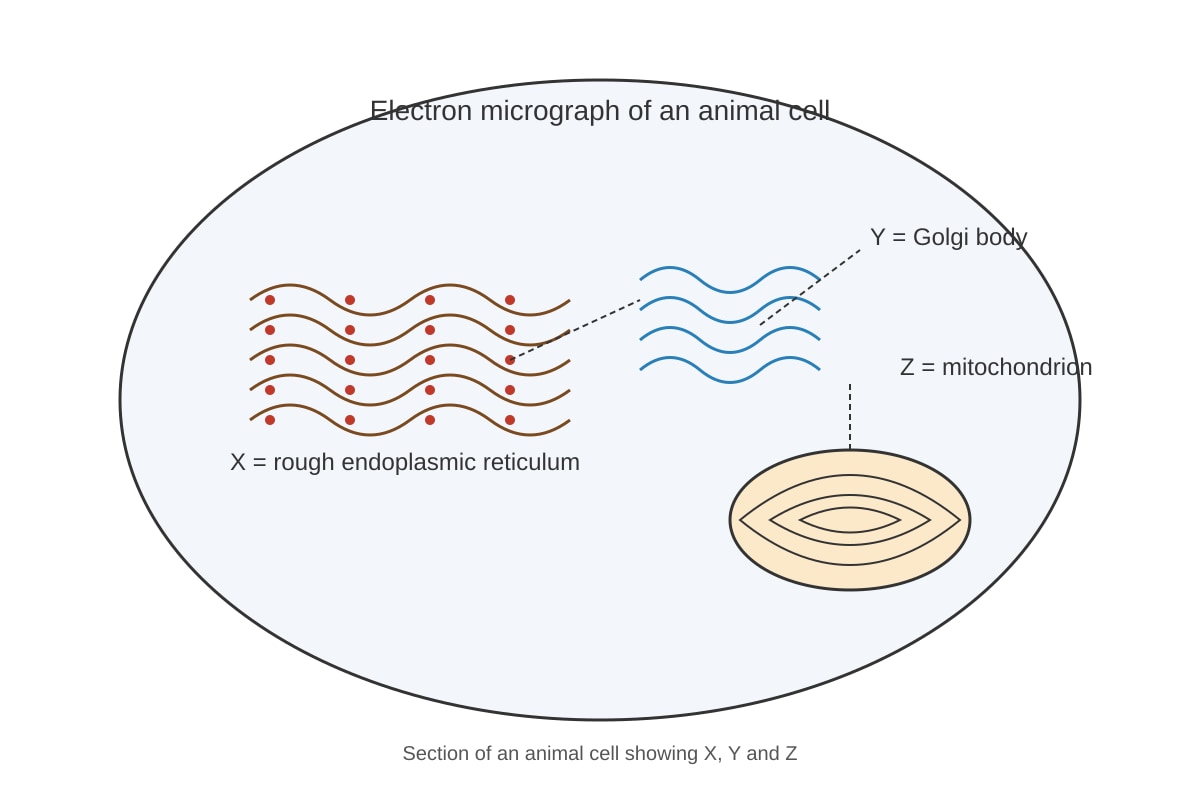
(a) [2] X = rough endoplasmic reticulum; function = transport of proteins / site of protein synthesis with ribosomes
(b) [1] Z
Marking: 1 for name, 1 for function; Z is mitochondrion (aerobic respiration).
14. [3]
- Long hair-like projection increases surface area for absorption [1]
- Thin wall (short diffusion distance) for water/ion uptake [1]
- Many mitochondria for active transport of mineral ions [1]
Teaching note: Adaptations link structure to function.
15. [3]
- High glucose lowers blood water potential below RBC water potential [1]
- Water leaves RBC by osmosis (down gradient) [1]
- RBC shrinks (crenation), may be damaged / lose function [1]
Marking descriptors: 3 marks for full chain; trap = stating water enters cell.
Section C (16–20) – 20 marks
16. [3]
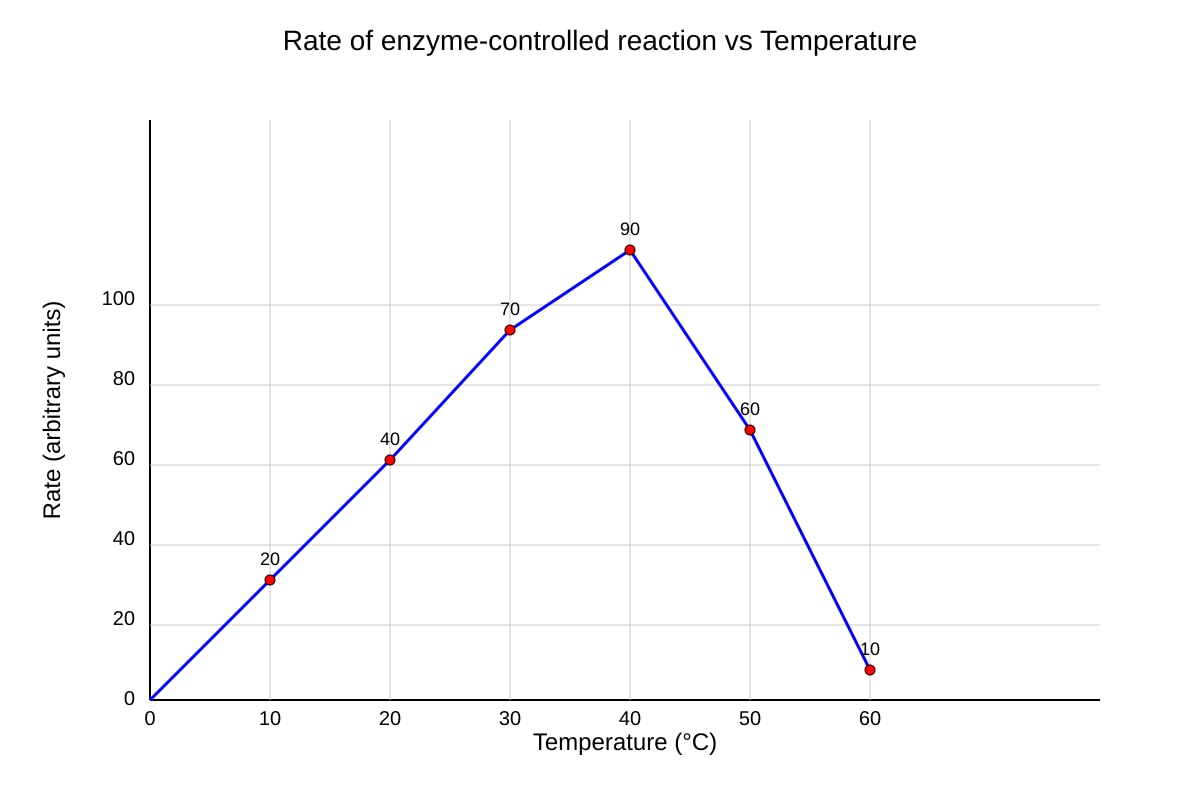
(a) [1] 40°C
(b) [2] Above optimum, enzyme denatures; active site changes shape; substrate cannot bind; rate falls.
Marking: 1 for denaturation, 1 for active site/shape loss.
17. [3]
(a) [1] Out of cell (into solution)
(b) [2] Difference = |–200 – (–100)| = 100 kPa. Solution lower water potential so water leaves.
Working: Δψ = ψ_out – ψ_cell = –200 – (–100) = –100 kPa magnitude 100 kPa.
18. [3]
| Feature | Animal cell | Plant cell |
|---|---|---|
| Chloroplast | Absent | Present |
| Permanent vacuole | Absent | Present |
| 1 mark each correct entry. |
19. [3]
- Amylase active site shape specific to starch (substrate) [1]
- Protein has different shape/amino acid sequence [1]
- Cannot fit into amylase active site (lock-and-key) so no binding/catalysis [1]
Teaching note: Enzyme specificity from 3D shape.
20. [5]
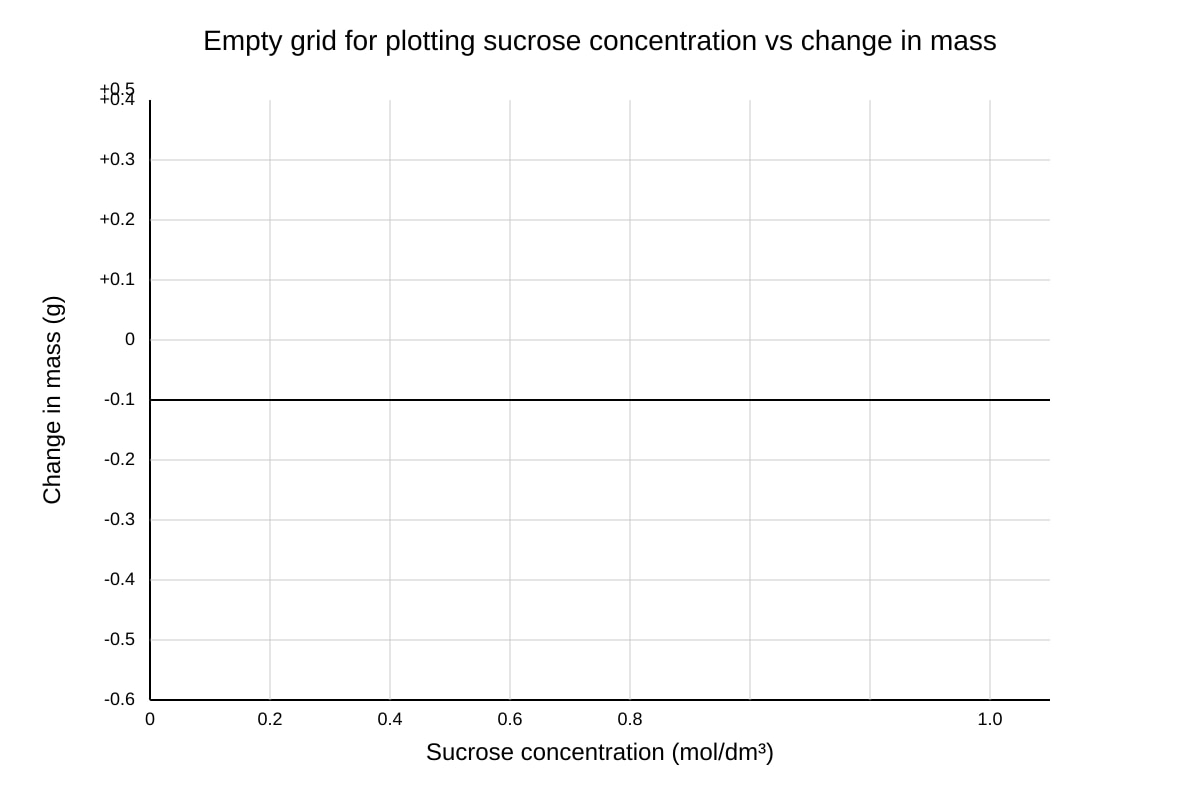
(a) [1] Between 0.2 and 0.4 mol/dm³ (approx 0.3)
(b) [2] At 0.8, solution very hypertonic; water leaves potato by osmosis; mass decreases.
(c) [2] Plot 5 points correctly, smooth curve/line; axes correct.
Marking: 1 for points, 1 for axes/line.
Total: 60 marks