AI Generated Quiz
Secondary 4 Literature Drama Quiz
Free Sec 4 Literature Drama quiz, HY3 AI version, with questions, answers, and O Level-style practice for Singapore students.
These static practice materials are generated from the site's syllabus and paper-generation workflow, with source and model context shown so students and parents can evaluate the material before use.
Questions
Free quiz and exam paper access
Enter your details to view this paper
Your access is remembered on this device.
Answers
Secondary 4 Literature Quiz - Drama: Answer Key
Total Marks: 40
Topic: Drama (syllabus-first, LLM-inferred templates)
Section A: Answers (Q1–5)
Q1. [2 marks]
Answer: Dramatic irony.
Teaching note: Dramatic irony is when the audience has knowledge that a character lacks, creating tension or humour. Define clearly; 1 mark for term, 1 mark for correct explanation if asked. Common mistake: confusing with situational irony.
Q2. [2 marks]
Answer: Soliloquy (or aside).
Teaching note: A soliloquy is a long speech to oneself revealing inner thoughts; an aside is a brief remark to audience. 1 mark for technique, 1 mark for stating it reveals private thoughts.
Q3. [2 marks]
Answer: A soliloquy is a speech delivered by a character alone on stage, expressing private thoughts to the audience.
Teaching note: Key idea: character is alone, speaks thoughts aloud. Mark breakdown: 1 mark definition, 1 mark purpose (reveals inner state).
Q4. [2 marks]
Answer: Example: "(paces nervously)" — purpose: shows character's anxiety without dialogue.
Teaching note: Stage directions are in brackets, guide actors. 1 mark for valid example, 1 mark for purpose. Avoid describing costume only without action.
Q5. [2 marks]
Answer: Dramatic irony = audience knows more than character. Example: In Romeo and Juliet, we know Juliet is alive but Romeo thinks she is dead.
Teaching note: 1 mark definition, 1 mark for coherent example. Do not use situational irony example.
Section B: Answers (Q6–15)
Q6. (a) [2]
Answer: Tense, foreboding atmosphere. Storm + night + blackout create unease.
(b) [2] Answer: Strained; Ada accuses Ben of distrust, Ben criticises her trust — emotional gap.
Teaching note: Atmosphere from setting (night, storm). Relationship via conflict in words. Mark: 1 + 1 per part.
Q7. [2 marks]
Answer: Lantern symbolises safety/hope now broken, showing loss of protection.
Teaching note: Symbol = object representing idea. Link to "he said light would keep us safe". 1 mark symbol, 1 mark explanation.
Q8. [2 marks]
Answer: Contrast: Ada "trusted" vs Ben "trust nothing". Effect: highlights opposition, deepens conflict.
Teaching note: Identify contrast (1), effect on reader (1).
Q9. [2 marks]
Answer: Suggests Ben is reflective, perhaps pessimistic; believes dark holds truth light hides.
Teaching note: Inference from metaphor. 1 mark interpretation, 1 mark textual link.
Q10. [2 marks]
Answer: Sound (thunder) + blackout abruptly end scene, leaving tension unresolved.
Teaching note: Sound and light as dramatic devices. 1 mark device, 1 mark effect.
Q11. [2 marks]
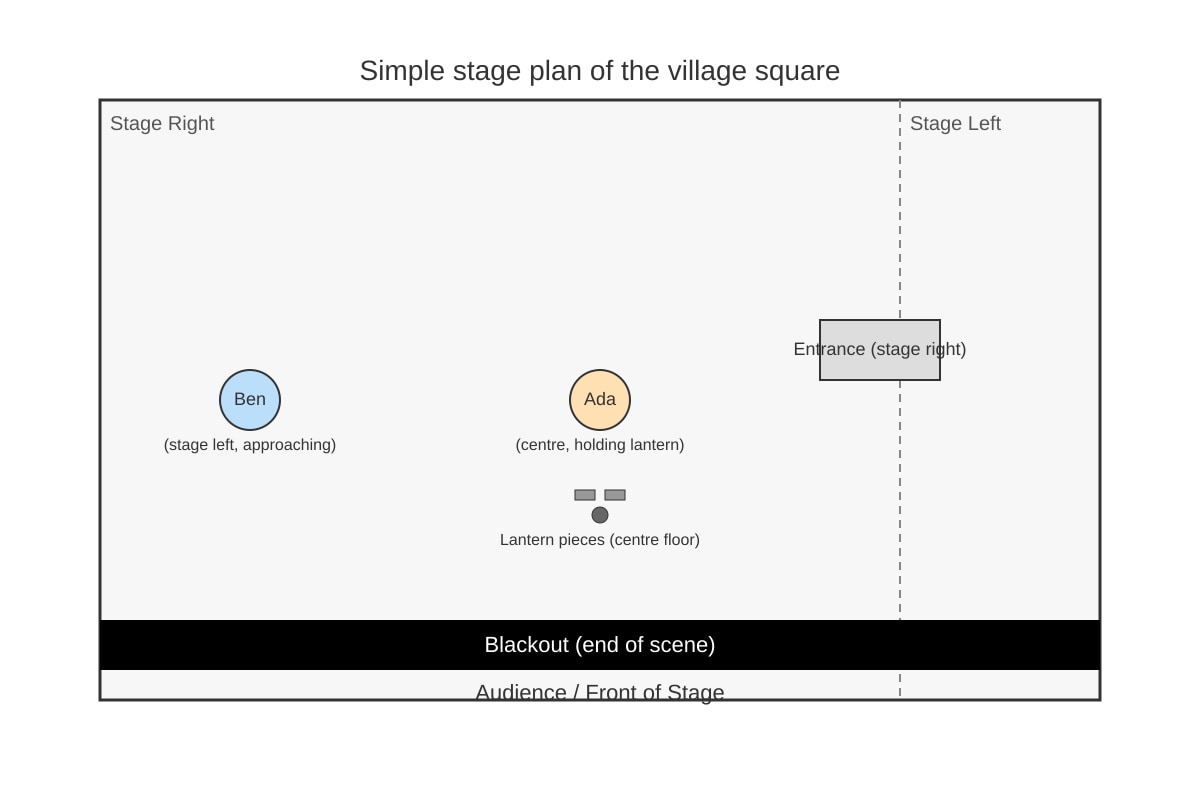
Answer: Ada centre with lantern, Ben stage left approaching = physical gap shows emotional distance; blackout ends connection.
Teaching note: Use placeholder labels. 1 mark positions, 1 mark link to emotion.
Q12. [2 marks]
Answer: Shows Ada is hopeful but naive; trusts fragile things, explaining her vulnerability.
Teaching note: Character trait from line. 1 mark trait, 1 mark development.
Q13. [2 marks]
Answer: Ada: accusing, emotional. Ben: calm, philosophical. Difference shows clash.
Teaching note: Tone = attitude in speech. 1 mark each.
Q14. [2 marks]
Answer: Blackout is sudden, leaves audience in darkness like characters, heightening mood.
Teaching note: Stagecraft purpose. 1 mark choice, 1 mark effect.
Q15. [2 marks]
Answer: Without "(quietly)", line seems confrontational not reflective, changing Ben to aggressive.
Teaching note: Stage direction alters delivery. 1 mark change, 1 mark impact.
Section C: Answers (Q16–20)
Q16. [4 marks]
Answer: Agree. Stage directions show setting (night, storm), action (drops lantern), and blackout — these create mood dialogue alone cannot. Extract: "(Thunder. Blackout.)" ends scene with tension.
Marking: 1 mark stance, 1 mark direction example, 1 mark dialogue example, 1 mark synthesis.
Teaching note: Argue with evidence from extract.
Q17. [4 marks]
Answer (Ada): Dim warm light on Ada then fade as lantern breaks = loss of hope.
Marking: 1 mark character, 1 mark lighting choice, 2 marks effect explanation.
Teaching note: Lighting conveys emotion non-verbally.
Q18. [4 marks]
Answer: Techniques: (1) Stage directions (storm, blackout) build suspense; (2) Dialogue contrast shows conflict.
Marking: 2 marks per technique with explanation.
Teaching note: Tension = rising unease via craft.
Q19. [4 marks]
Answer: Agree. Lantern "shattered" after promise of safety = protection failed.
Marking: 1 stance, 1 evidence, 2 analysis.
Teaching note: Symbol analysis with text.
Q20. [4 marks]
Answer: Change setting to classroom with phones as "lanterns"; shows modern isolation.
Marking: 1 change, 3 effect on meaning.
Teaching note: Adaptation shifts context but keeps theme.