AI Generated Quiz
Secondary 4 History Source Based Skills Quiz
Free Sec 4 History Source Based Skills quiz, HY3 AI version, with questions, answers, and O Level-style practice for Singapore students.
These static practice materials are generated from the site's syllabus and paper-generation workflow, with source and model context shown so students and parents can evaluate the material before use.
Questions
Secondary 4 History Quiz - Source Based Skills
Name: ___________________________
Class: ___________________________
Date: ___________________________
Score: _______ / 40
Duration: 60 minutes
Total Marks: 40
Instructions:
- This quiz tests your source-based skills using Secondary 4 History syllabus content.
- Read each source carefully before answering.
- Write your answers in the spaces provided.
- Use your own knowledge to support source-based answers where asked.
- Section A: 10 short source questions (1 mark each). Section B: 5 inference/comparison questions (3 marks each). Section C: 5 extended source questions (3 marks each).
Section A: Source Identification and Basic Inference (Questions 1–10, 1 mark each)
1. Study Source A below. What type of source is it?
Source A: A British colonial officer's report to London on tin mining in Perak, 1885.
2. Study Source B. Who is the author of this source?
Source B: "I joined the Nazi Party in 1932 because I believed Germany needed strong leadership." – memoir of a German worker, published 1970.
3. Study Source C. What is the purpose of this source?
Source C: Japanese propaganda poster, 1942, showing Asian peoples united under the Greater East Asia Co-Prosperity Sphere.
4. Study Source D. Is this a primary or secondary source?
Source D: Textbook chapter on the Treaty of Versailles written by a history lecturer in 2010.
5. Study Source E. What can you infer about the audience of this source?
Source E: Speech by Stalin to the Communist Party Congress, 1935, using formal political language.
6. Study Source F. Which historical concept best describes this source's content?
Source F: Photograph of unemployed Germans queuing for food, 1931.
7. Study Source G. What is the tone of this source?
Source G: "The Versailles diktat has crushed our nation's honour!" – German newspaper editorial, 1919.
8. Study Source H. What is the origin (country) of this source?
Source H: Decree from the Dutch Governor-General in Batavia on rice cultivation, 1900.
9. Study Source I. Does this source show change or continuity?
Source I: British Malaya annual trade report, 1910, showing increased rubber exports from 1900 levels.
10. Study Source J. What limitation does this source have?
Source J: Diary of a Japanese soldier in Singapore, 1942, recording only his unit's movements.
Section B: Inference and Comparison (Questions 11–15, 3 marks each)
11. Study Source K and Source L.
Source K: British resident's letter, 1890: "The Malay rulers accept our advice willingly and order is maintained."
Source L: Malay chief's oral account, 1895: "We were forced to sign the treaty; our voice was taken away."
How different are these two sources in their view of British rule? Explain your answer using details from the sources.
12. Study Source M.
Source M: Soviet cartoon, 1947, showing the USA as a wealthy man pushing Europe into poverty.
Are you surprised by this source? Explain your answer using context.
13. Study Source N and Source O.
Source N: Hitler's speech, 1934: "The Enabling Act gives the government full power to rebuild Germany."
Source O: British ambassador's report, 1934: "Hitler has used legal means to destroy democracy."
How similar are these sources as evidence about Hitler's consolidation of power? Explain.
14. Study Source P.
Source P: Vietnamese nationalist leaflet, 1946: "We demand independence from French rule by any means."
Is the view in this source expected? Explain your answer.
15. Study Source Q and Source R.
Source Q: UN report, 1950: "North Korean forces crossed the 38th parallel on 25 June 1950."
Source R: Soviet memo, 1950: "Kim Il-sung requested approval to attack the South for reunification."
How similar are the two sources? Explain your answer using details.
Section C: Extended Source Analysis (Questions 16–20, 3 marks each)
16. Study all the sources below.
Source S: Treaty of Versailles, Article 231, 1919: "Germany accepts responsibility for all loss caused by the war."
Source T: German school textbook, 1925: "The war guilt lie poisons our youth with shame."
Source U: French newspaper, 1919: "Germany must pay for the devastation it brought."
"Germany was treated unfairly by the Treaty of Versailles." How far do these sources support this view? Use the sources and your knowledge.
17. Study all the sources below.
Source V: Photograph of Pearl Harbor burning, 7 Dec 1941, taken by US Navy.
Source W: Japanese radio broadcast, 8 Dec 1941: "We struck to free Asia from Western colonialism."
Source X: US President Roosevelt speech, 8 Dec 1941: "A date which will live in infamy."
How useful are these sources for understanding the attack on Pearl Harbor? Explain.
18. Study all the sources below.
Source Y: British Malaya census 1921: "Chinese 30%, Malay 45%, Indian 15%."
Source Z: Rubber company record, 1915: "Tamil workers housed in estate lines; paid low wages."
Source AA: Malay ruler's letter, 1920: "My people lose land to plantations."
"British rule benefited all communities in Malaya." How far do the sources support this? Use sources and knowledge.
19. Study all the sources below.
Source BB: Nazi poster, 1933: "Hitler gives work and bread."
Source CC: Gestapo arrest list, 1934: "Opponents detained without trial."
Source DD: German employment chart, 1938: "Unemployment fell from 6m (1933) to 0.4m (1938)."
How far do these sources show Nazi control was based on consent? Explain using sources and knowledge.
20. Study all the sources below.
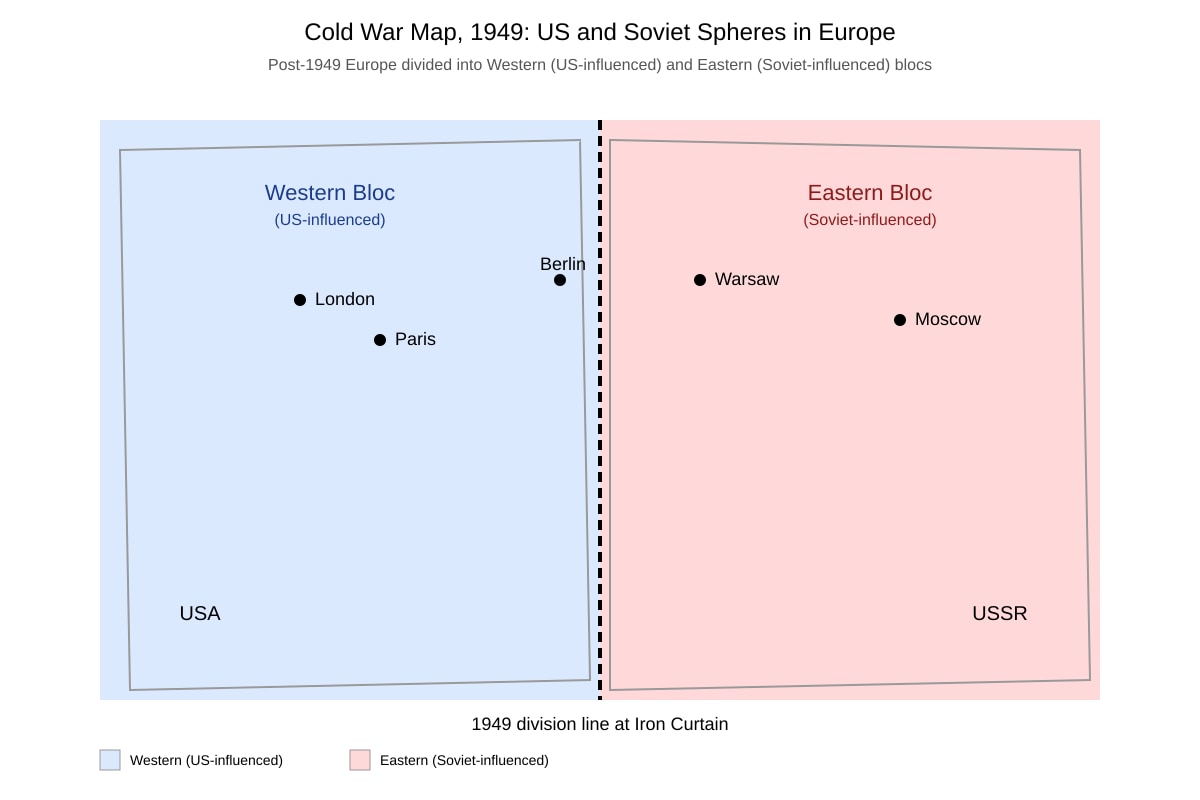
Source EE: Cold War map, 1949, showing US and Soviet spheres in Europe.
Image pending generation: map for 20.
Source FF: Churchill speech, 1946: "An iron curtain has descended across Europe."
Source GG: Soviet broadcast, 1947: "We protect workers from Western imperialism."
How far do the sources support the view that the Cold War was caused by both sides' actions? Explain.
Answers
Secondary 4 History Quiz - Source Based Skills (Answer Key)
Total Marks: 40
Level: Secondary 4
Topic: Source Based Skills
Section A: Answers (1 mark each)
Q1. Primary source / official report.
Teaching note: A report written at the time by a participant is a primary source. Type = colonial administrative document.
Q2. A German worker (who joined Nazi Party in 1932).
Teaching note: The memoir states "I joined the Nazi Party…" so the author is the worker himself, writing in 1970 (secondary in time but primary perspective).
Q3. To promote Japanese expansion / gain Asian support for Co-Prosperity Sphere.
Teaching note: Propaganda posters aim to persuade; purpose is mobilisation and legitimacy.
Q4. Secondary source.
Teaching note: Written in 2010 about 1919 events = after the event, so secondary.
Q5. Communist Party members / Soviet officials.
Teaching note: A congress speech uses formal language for party audience.
Q6. Change (or consequence / causation of Depression).
Teaching note: Photo shows unemployment = effect of Great Depression; concept = consequence.
Q7. Angry / resentful / hostile.
Teaching note: Words "crushed honour" show emotional nationalist tone.
Q8. Netherlands / Dutch.
Teaching note: Governor-General in Batavia = Dutch East Indies.
Q9. Change (increase in exports).
Teaching note: Comparison to 1900 shows rise = change.
Q10. Limited perspective (only one unit's view, not whole war).
Teaching note: Diary is narrow, lacks broader context = low utility for general claims.
Section B: Answers (3 marks each)
Q11. [3 marks]
- Source K shows willing acceptance and order (British view). [1]
- Source L shows force and loss of voice (Malay view). [1]
- They are very different: one sees cooperation, other sees coercion. [1]
Marking: 1 for each distinct view identified, 1 for explicit contrast.
Q12. [3 marks]
- Not surprised because Cold War hostility expected from Soviet anti-US stance. [1]
- Cartoon shows USA causing poverty = typical communist criticism. [1]
- Context: 1947 early Cold War, Marshall Plan tensions. [1]
Teaching note: "Surprise" needs baseline expectation from knowledge.
Q13. [3 marks]
- Both show Hitler gained full power legally (Enabling Act). [1]
- Similar in fact of power grab, but differ: Hitler praises, British criticises. [1]
- As evidence, both confirm dismantling of democracy. [1]
Q14. [3 marks]
- Expected because Vietnamese nationalism rose after WWII (Ho Chi Minh). [1]
- Leaflet shows demand for independence = typical anti-colonial view. [1]
- Context: French tried to retake Indochina, resistance natural. [1]
Q15. [3 marks]
- Both agree attack happened June 1950. [1]
- UN gives date/fact; Soviet shows planning by Kim. [1]
- Similar in confirming North initiated, but differ on reason. [1]
Section C: Answers (3 marks each)
Q16. [3 marks]
- Source T and U partially support unfairness (German shame, French demand pay). [1]
- Source S shows war guilt clause = basis of grievance. [1]
- Knowledge: reparations, lost land made Germans feel unjust. Sources partly support view. [1]
Q17. [3 marks]
- Source V useful visual proof of attack; W shows Japanese motive; X shows US shock. [1 each]
- All useful but W is biased propaganda, V is factual US record.
Q18. [3 marks]
- Sources show unequal benefit: Y plural society, Z low paid Indians, AA land loss. [1]
- Contradicts "benefited all". [1]
- Knowledge: tin/rubber profits to Britain, locals marginalised. [1]
Q19. [3 marks]
- BB and DD show consent via work/bread. [1]
- CC shows force/terror. [1]
- Knowledge: consent mixed with repression; not purely consent. [1]
Q20. [3 marks]
- EE and FF show division by both (Iron Curtain speech US side). [1]
- GG shows Soviet defensive claim. [1]
- Knowledge: both expanded spheres, so both caused Cold War. [1]
Image note: Map must show East/West split; supports visual evidence of bipolar division.
Free quiz and exam paper access
Enter your details to view this paper
Your access is remembered on this device.