From Real Exams Quiz
Secondary 4 History Ancient Civilisations Quiz
Free Sec 4 History Ancient Civilisations quiz, Qwen3.7 Exam version, with questions, answers, and O Level-style practice for Singapore students.
These static practice materials are generated from the site's syllabus and paper-generation workflow, with source and model context shown so students and parents can evaluate the material before use.
Questions
Free quiz and exam paper access
Enter your details to view this paper
Your access is remembered on this device.
Answers
Secondary 4 History Quiz - Ancient Civilisations - Answer Key
Section A: Multiple Choice Questions (10 Marks)
1. B
- Reasoning: The Nile River provided annual flooding that deposited fertile silt, allowing agriculture to flourish in an otherwise desert region. This surplus food supported population growth and civilisation.
2. C
- Reasoning: The Code of Hammurabi was one of the earliest written legal codes. Its primary purpose was to create a standardized set of laws to maintain order and justice in Babylonian society.
3. B
- Reasoning: Sumerians used cuneiform, a script made by pressing wedge-shaped marks into clay tablets. Hieroglyphics were Egyptian; Sanskrit is associated with India; Oracle Bone Script is Chinese.
4. A
- Reasoning: The Mandate of Heaven was a Chinese philosophical concept that justified the rule of the Emperor. It stated that heaven granted the right to rule based on virtue, and natural disasters or rebellions signaled the loss of this mandate.
5. C
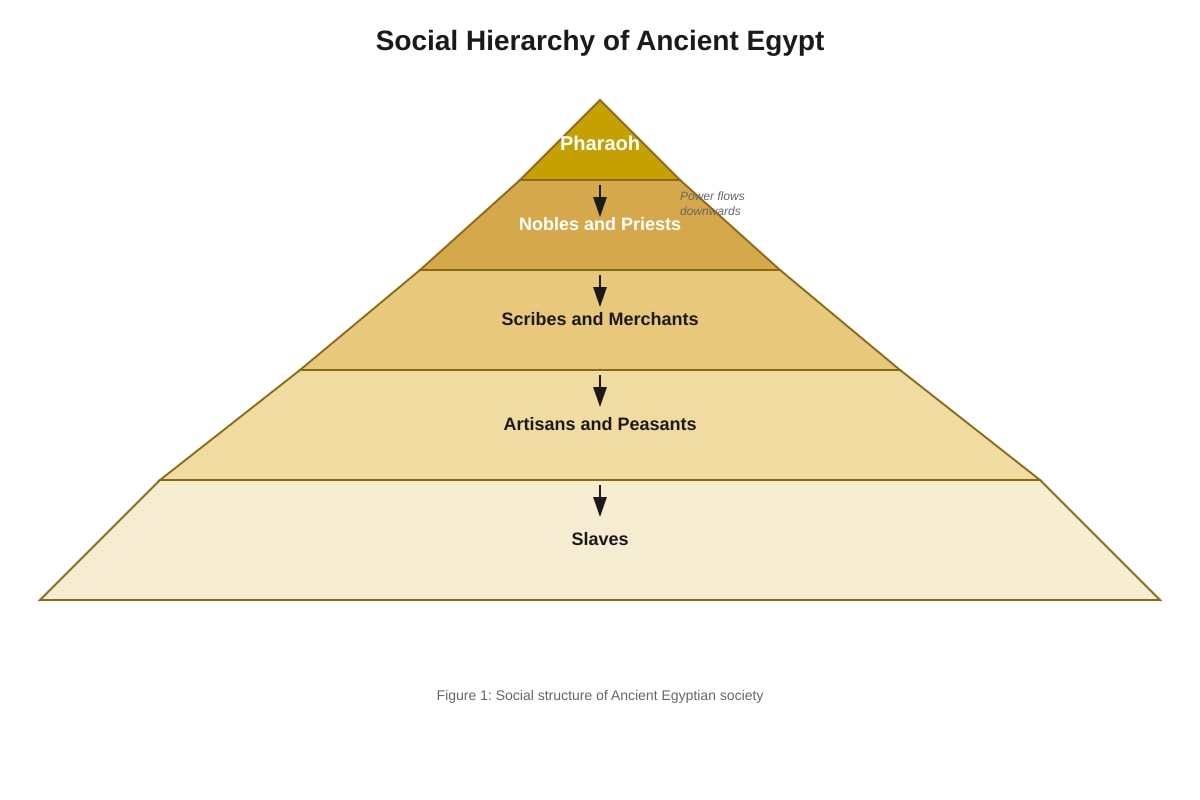
- Reasoning: Ancient Egypt had a rigid social hierarchy (pyramid structure) with the Pharaoh (considered a god-king) at the top, followed by nobles, priests, scribes, artisans, peasants, and slaves.
6. B
- Reasoning: The Great Pyramid was built as a tomb for Pharaoh Khufu (Cheops) during the Old Kingdom. It was designed to protect his body and possessions for the afterlife.
7. B
- Reasoning: The Indus Valley cities are famous for their advanced urban planning, including grid-like streets and sophisticated covered drainage and sewage systems, which were rare for the time.
8. C
- Reasoning: The Qin Dynasty, under Qin Shi Huang, unified China for the first time in 221 BCE and connected earlier walls to form the precursor to the Great Wall.
9. B
- Reasoning: Scribes were highly educated individuals who could read and write. They were essential for administration, recording taxes, laws, and religious texts.
10. B
- Reasoning: River valleys provided two critical resources: water for drinking and irrigation, and fertile soil (silt) from annual floods for growing crops. This agricultural surplus allowed civilisations to develop.
Section B: Structured Response Questions (20 Marks)
11. (a) Identify the principle of justice. [1]
- Answer: "An eye for an eye" / Retributive justice / Lex Talionis.
- Teaching Note: Accept any answer that describes punishment matching the crime.
11. (b) Explain one limitation regarding social equality. [2]
- Answer: The code treated people differently based on social class. For example, if a noble harmed a commoner, the punishment was often a fine rather than physical retaliation, whereas harm between equals resulted in physical retaliation.
- Marking: 1 mark for identifying class difference; 1 mark for explanation/example.
12. (a) Who held the highest position and their role? [2]
- Answer: The Pharaoh. He was considered a god-king who held absolute political and religious power, acting as the intermediary between the gods and the people.
- Marking: 1 mark for Pharaoh; 1 mark for role (god-king/absolute ruler).
12. (b) Explain the significance of scribes. [2]
- Answer: Scribes were essential for the bureaucracy. They recorded tax collections, census data, and legal documents. Without them, the central government could not function or manage resources effectively.
- Marking: 1 mark for administrative role; 1 mark for explanation of importance (bureaucracy/management).
13. (a) Material for Mesopotamia. [1]
- Answer: Clay tablets.
13. (b) Material for Egypt. [1]
- Answer: Papyrus (or stone for monuments).
13. (c) Reason for better preservation of Egyptian records. [2]
- Answer: Egypt’s dry desert climate helped preserve papyrus and organic materials from decay. In contrast, Mesopotamia’s humid environment caused clay tablets to crumble or be reused, and papyrus (if imported) would rot.
- Marking: 1 mark for climate factor; 1 mark for link to preservation.
14. (a) Environmental factor for Indus decline. [1]
- Answer: Drying up of the Saraswati River / Change in monsoon patterns / Soil exhaustion.
14. (b) Impact on daily life. [2]
- Answer: If the river dried up, agriculture would fail due to lack of irrigation. This would lead to food shortages, forcing people to migrate away from the cities to find fertile land, causing the urban civilisation to collapse.
- Marking: 1 mark for impact on agriculture; 1 mark for consequence (migration/collapse).
15. (a) Philosopher. [1]
- Answer: Confucius.
15. (b) How it maintained order. [2]
- Answer: Confucianism emphasized filial piety (respect for parents/ancestors) and proper conduct in relationships. If everyone respected their superiors and fulfilled their duties, society would be harmonious and stable, reducing the need for harsh laws.
- Marking: 1 mark for concept (filial piety/respect); 1 mark for link to social stability.
Section C: Source-Based Case Study (10 Marks)
16. "The construction of the Pyramids was primarily a burden on the Egyptian people."
Marking Rubric:
- Level 3 (7-10 marks): Balanced argument using both sources and own knowledge. Evaluates the extent of support.
- Level 2 (4-6 marks): Uses sources but may be one-sided or lacks own knowledge.
- Level 1 (1-3 marks): Simple assertion with little evidence.
Suggested Answer Structure:
Introduction: The statement suggests that pyramid construction was a negative imposition on the people. However, evidence suggests it was complex, involving both hardship and national pride/economic benefit.
Arguments Supporting the Statement (It was a burden):
- Source Analysis: Neither source explicitly mentions physical pain, but Source B mentions "coordination of thousands," implying massive labor mobilization which disrupts normal life.
- Own Knowledge: Construction took decades. Workers faced harsh conditions, heat, and physical danger. It diverted labor from farming, potentially risking food security if not managed well. Taxes were high to fund these projects.
Arguments Challenging the Statement (It was not just a burden):
- Source B: Describes pyramids as "economic engines." The project provided jobs and unified the state. It strengthened the Pharaoh’s control but also created a sense of national purpose.
- Source C: Directly contradicts the "burden" idea. The worker states they are "well-fed," have "bread and beer," and are "proud." This suggests that for many, it was a paid, honorable duty with social benefits (care for families).
- Own Knowledge: Recent archaeological evidence shows workers lived in organized villages with medical care and good diets. It was likely a form of corvée labor (tax paid in work) that reinforced social cohesion and religious duty, rather than just slavery.
Conclusion: Sources B and C largely challenge the view that it was primarily a burden. While physically demanding, Source C shows workers were cared for and proud, and Source B highlights the economic and political benefits. Therefore, it was a significant national effort that provided social and economic stability, rather than just an oppressive burden.
Section D: Historical Concepts and Connections (10 Marks)
17. Define the term "City-State" as it applies to Ancient Mesopotamia. [2]
- Answer: A city-state was an independent city that functioned as its own sovereign state, controlling the surrounding countryside. Each had its own government, laws, and patron deity (e.g., Ur, Uruk, Lagash).
- Marking: 1 mark for independent city/government; 1 mark for control of surrounding land/territory.
18. Explain the significance of the invention of the wheel in Ancient Mesopotamia. [2]
- Answer: The wheel revolutionized transport and trade by allowing heavier loads to be moved faster and with less effort. It also led to the development of chariots for warfare, changing military tactics.
- Marking: 1 mark for trade/transport impact; 1 mark for military/other impact.
19. Describe one major achievement of the Shang Dynasty in Ancient China. [2]
- Answer: The Shang Dynasty is credited with the development of Oracle Bone Script, the earliest known form of Chinese writing. They also mastered bronze casting for ritual vessels and weapons.
- Marking: 1 mark for identifying achievement (Writing or Bronze); 1 mark for brief description/significance.
20. Explain why the Nile River was referred to as the "Gift of the Nile" by the Ancient Egyptians. [4]
- Answer:
- Fertile Soil: The annual flooding deposited rich black silt (kemet) on the banks, creating fertile land for agriculture in an otherwise desert region.
- Water Source: It provided a reliable source of fresh water for drinking, bathing, and irrigation in a dry climate.
- Transportation: The river served as a natural highway for trade and communication between Upper and Lower Egypt, unifying the kingdom.
- Resources: It provided resources like papyrus for writing and fish for food.
- Marking: 1 mark for each distinct point explained (max 4). Must link the river's features to the survival/prosperity of the civilisation.