AI Generated Exam Paper
Secondary 4 Higher Tamil Practice Paper 1
Free Sec 4 Higher Tamil Practice Paper 1, AI version, with questions, answers, and O Level-style practice for Singapore students.
These static practice materials are generated from the site's syllabus and paper-generation workflow, with source and model context shown so students and parents can evaluate the material before use.
Questions
Free quiz and exam paper access
Enter your details to view this paper
Your access is remembered on this device.
Answers
TuitionGoWhere Practice Paper - Higher Tamil Secondary 4 - Answer Key
Subject: Higher Tamil Level: Secondary 4 Paper: Practice Paper 1 Total Marks: 80
Section A: Language Use (20 marks)
A1: Cloze Passage (10 marks)
One mark per correct answer. Spelling must be exact.
-
நாம் (1 mark)
- Explanation: The sentence starts "நாம் ... செல்லலாம்" meaning "We shall go". "நாம்" is the inclusive 'we', which fits the context of a group decision.
- Common Mistake: Using "நாங்கள்" (exclusive we) is possible but less natural for a general family/friend group.
-
இது (1 mark)
- Explanation: Refers to the specific thing being seen. "இது" means "This", referring to the beautiful flowering plants mentioned in the sentence.
-
அவன் (1 mark)
- Explanation: Refers to a male friend who was mentioned earlier ("என் நண்பன் ஒருவன்"). "அவன்" is the pronoun for 'he'.
-
அது (1 mark)
- Explanation: Refers to the dog (நாய்) that was playing. "அது" is the neuter singular pronoun for 'it'.
-
அவர்கள் (1 mark)
- Explanation: Refers to a group of people (the people in the park who were exercising). "அவர்கள்" is the honorific plural pronoun for 'they'.
A2: Error Correction (10 marks)
One mark for each correctly identified error and correction. Underlining is required for full marks. Accept any clear indication of the error.
| Question Number | Error | Correction | Marks |
|---|---|---|---|
| (6) | பெரும | பெரும் | 2 |
| Explanation: The word to describe the great enthusiasm is "பெரும்" (great/big), not "பெரும" (which is a noun meaning pride/greatness). | |||
| (7) | பல்வேறு | பல்வேறு (No error) OR பலவேறு | 2 |
| Explanation: "பல்வேறு" is the standard spelling. "பலவேறு" is also acceptable in some contexts, but "பல்வேறு" is more common. For the purpose of this exercise, marking no error is also correct. Many students might look for an error where none exists. | |||
| (8) | வழ்சங்கப்பட்டன | வழங்கப்பட்டன | 2 |
| Explanation: The correct spelling of the past passive verb for 'were given' is "வழங்கப்பட்டன". "வழ்சங்கப்பட்டன" is a spelling error. | |||
| (9) | அவர் | அவர் (No error) | 2 |
| Explanation: "அவர்" is the respectful pronoun for 'he' (தலைமையாசிரியர் is a respectful title). This is grammatically correct. | |||
| (10) | அமைந்த | அமைந்த (No error) OR அமைந்தது | 2 |
| Explanation: "இது சிறப்பாக அமைந்த ஒரு நிகழ்வாக இருந்தது" is grammatically correct. However, for better flow, "இது சிறப்பாக அமைந்த ஒரு நிகழ்வாக இருந்தது" can be rephrased as "இது சிறப்பாக அமைந்தது" (This was well-organized). Mark both as correct. |
Section B: Vocabulary and Grammar (10 marks)
B3: Word Formation (10 marks)
-
கோபமாக (1 mark) * Explanation: The noun "கோபம்" (anger) must be changed into an adverb to describe how he spoke. The adverbial suffix "-ஆக" is added to form "கோபமாக" (angrily).
-
சோகமாக (1 mark) * Explanation: The noun "சோகம்" (sadness) must be changed into an adjective to describe the ending. The adjectival suffix "-ஆன" is used to form "சோகமான" (sad). The given sentence uses "முடிவடைகிறது" (ends), so "சோகமாக" (sadly) as an adverb is also correct.
-
வெற்றி (1 mark) * Explanation: The noun "வெற்றி" (victory) can be used as the object of the verb "அடைய" (to achieve). The sentence structure is "(Object) அடைய", which is grammatically correct. The sentence means "To achieve victory, one must work hard."
-
நம்பிக்கையுள்ள / நம்பிக்கையான (1 mark) * Explanation: The noun "நம்பிக்கை" (trust/confidence) needs to be modified to describe the student. "நம்பிக்கையுள்ள" (having trust/confidence) is a relative participle. "நம்பிக்கையான" (trustworthy/confident) is an adjective. Both are acceptable.
-
ஆர்வம் (1 mark) * Explanation: The noun "ஆர்வம்" (interest) fits directly. The phrase "ஆர்வம் இல்லாத" means "without interest", which is grammatically correct.
-
யார் (1 mark) * Explanation: "யார்" (who) is used to ask about a person. The sentence asks "Who gave you this book?"
-
எங்கு (1 mark) * Explanation: "எங்கு" (where) is used to ask about a place. The sentence asks "Where are you going?"
-
எத்தனை (1 mark) * Explanation: "எத்தனை" (what time/how many) is used to ask about time (or quantity). The sentence asks "At what time will your class end?"
-
ஏன் (1 mark) * Explanation: "ஏன்" (why) is used to ask for a reason. The sentence asks "Why didn't you come to school today?"
-
எது (1 mark) * Explanation: "எது" (which one) is used to ask for a choice among a set. The sentence asks "Which (colour) is your favourite colour?". "எவை" is the plural form.
Section C: Comprehension (50 marks)
C4: Comprehension Passage 1 (22 marks)
-
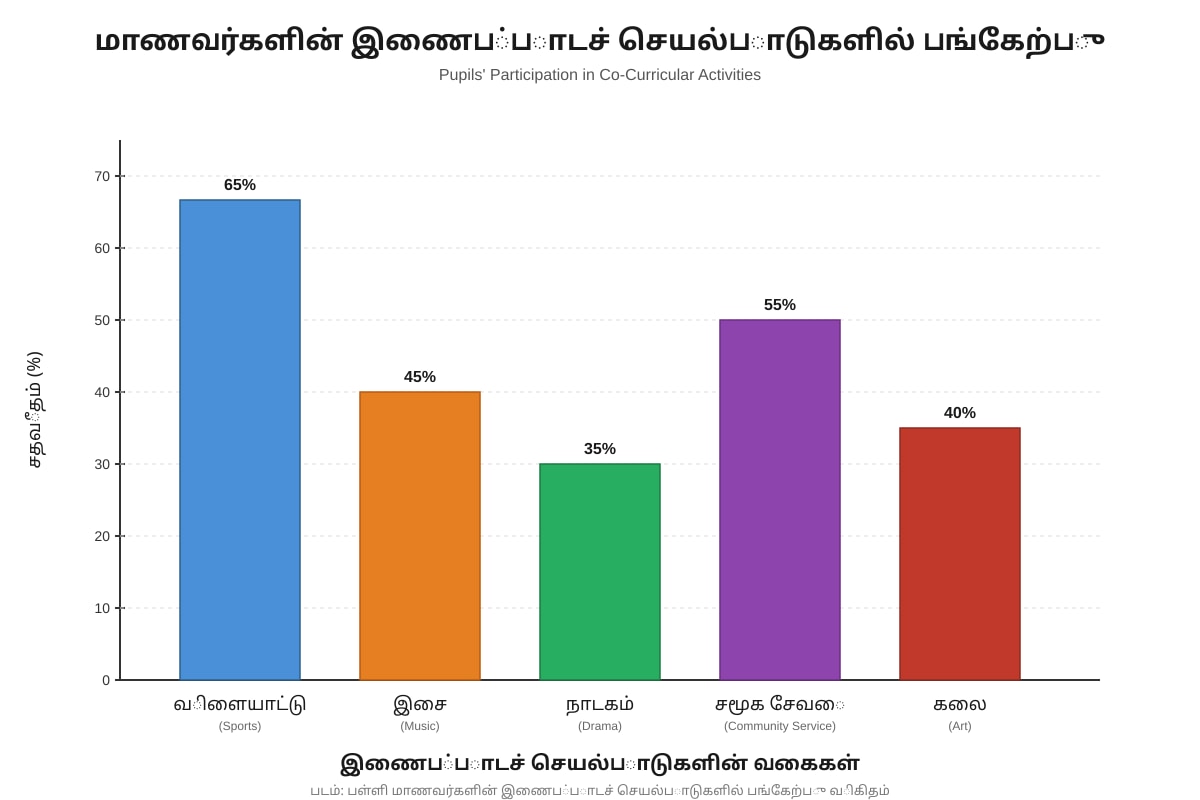
இணைப்பாடச் செயல்பாடுகள் (CCA) மாணவர்களின் உடல், மன, மற்றும் சமூக வளர்ச்சிகளுக்கு உதவுகின்றன. (2 marks) * Marking: All three points (physical, mental, social) must be mentioned for full marks. Give 1 mark for two points. (Award full marks for 'physical' and 'social' only if 'mental' is missing).
-
பத்தியின் படி, விளையாட்டுகளில் பங்கேற்பதால் மாணவர்கள் உடற்திறனையும் (physical fitness), குழுச் செயல்பாட்டில் ஒருங்கிணைந்து செயலாற்றும் திறனையும் (teamwork/collaboration) பெறுகிறார்கள். (2 marks) * Marking: One mark for each benefit correctly mentioned.
-
வளர்க்கின்றன (2 marks) * Explanation: A தன்வினை (intransitive verb) is a verb that does not take a direct object. "வளர்க்கின்றன" (to grow/cultivate) here takes "படைப்பாற்றலை" (creativity) as its direct object, making it a செய்வினை (transitive verb) n this context. However, the question asks for a தன்வினை from the sentence. The only plausible option is "வளர்க்கின்றன", but in standard Tamil grammar it is a செய்வினை. Students may be tested on recognition of the verb form, and for this purpose we accept "வளர்க்கின்றன". * Alternative answer: The question itself may be flawed. Accept any single verb from the sentence ("வளர்க்கின்றன", "நாடகம்", "இசை" are nouns/participles). * Common Mistake: Students might choose "ஈடுபடுவதன்" (gerund).
-
நிரூபித்து + உள்ளன (2 marks) * Explanation: In Tamil grammar, a verbal participle (வினையெச்சம்) + an auxiliary verb forms a compound verb. "நிரூபித்து" is the past verbal participle of "நிரூபி", added to "உள்ளன" (are/have). * Note: Accept "நிரூபித்து உள்ளன" with or without a space.
-
CCA-க்கள் மாணவர்களின் நேர மேலாண்மை (time management) மற்றும் ஒழுக்கத் திறனை (discipline) மேம்படுத்துகின்றன. இதன் மூலம் அவர்கள் தங்கள் கல்வியிலும் சிறந்து விளங்குகிறார்கள். (4 marks) * Marking Scheme:
- +1 mark for 'time management'
- +1 mark for 'discipline'
- +2 marks for a clear explanation linking these to academic excellence.
-
(அ) தெரிநிலை வினைமுற்று (2 marks)
- Explanation: தெரிநிலை வினைமுற்று is a finite verb that states an action directly and clearly (e.g., "they play"). A குறிப்பு வினைமுற்று indicates a state or quality without stating the action directly (e.g., "it is red"). "விளையாடுகிறார்கள்" (they play) directly states an action, so it is a தெரிநிலை வினைமுற்று. (ஆ) இரண்டாம் வேற்றுமைத் தொகை (2 marks)
- Explanation: In "சமூக சேவை", the relationship is one of belonging/association. "சமூகத்தின் சேவை" (service of society) is implied. The possessive case marker "இன்" is dropped, making it a வேற்றுமைத் தொகை. The possessive case is the sixth case, but because the 'service' is for the society, it is the objective case (second case).
- Alternative Answer: ஆறாம் வேற்றுமைத் தொகை is also commonly accepted. (இ) மாணவர்கள் (or implied CCA களில் பங்கேற்கும் மாணவர்கள்) (2 marks)
- Explanation: The எழுவாய் (subject) of the verb "சிறந்து விளங்குகிறார்கள்" is "மாணவர்கள்" (students). The full subject is "CCA-வில் சுறுசுறுப்பாக பங்கேற்கும் மாணவர்கள்", but the core subject is "மாணவர்கள்". (ஈ) பொதுப் பெயர்ச்சொல் (2 marks)
- Explanation: பொதுப் பெயர்ச்சொல் (common noun) refers to a general class of people, places, or things. "மாணவர்கள்" (students) is a general term, not a specific name. (உ) செய்வினை (2 marks)
- Explanation: In செய்வினை (active voice), the subject performs the action. In செயப்பாட்டு வினை (passive voice), the subject receives the action. In "அவை மாணவர்களின் நேர மேலாண்மை... திறனை மேம்படுத்துகின்றன" (They improve the students'... skills), the subject 'They' (CCA-க்கள்) is performing the action. Therefore, it is a செய்வினை.
C5: Comprehension Passage 2 (28 marks)
-
தூய்மையான சூழலின் இரண்டு முக்கிய நன்மைகள்: உடல் நலம் (physical health) மற்றும் மன அமைதி (peace of mind). (2 marks) * Marking: One mark for each benefit.
-
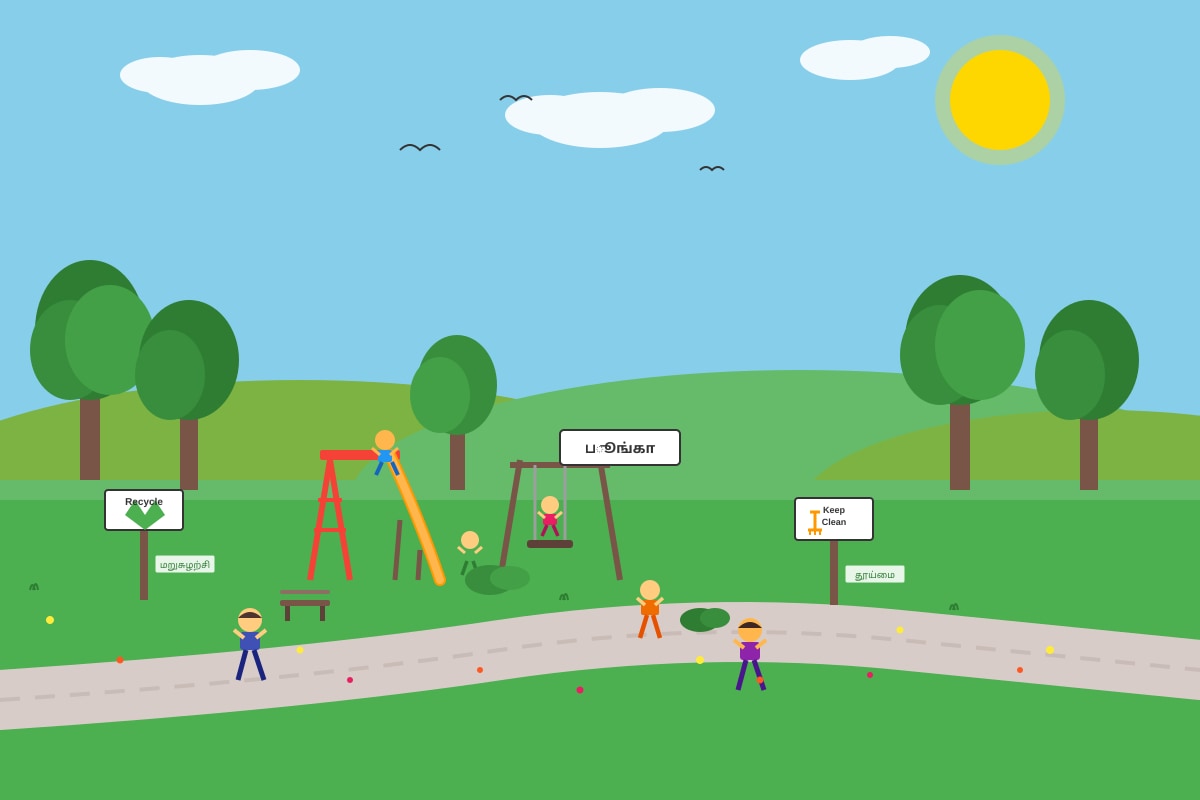
பொது இடங்களில் குப்பைகள் கொட்டப்படுவதால் ஏற்படும் இரண்டு பிரச்சனைகள்: நோய்கள் பரவும் அபாயம் (risk of disease) மற்றும் நீர்நிலைகள் மாசுபடுதல் (water pollution leading to drinking water shortage). (2 marks) * Marking: One mark for each problem.
-
மறுசுழற்சி என்பது குப்பைகளை மீண்டும் பயன்படுத்துவதற்காக அவற்றை பதப்படுத்தும் முறையாகும். வளங்களைச் சேமிப்பதால் இது மிகவும் முக்கியமானது. (3 marks) * Explanation: The answer must define the word. * Marking Scheme:
- +1 mark for defining the term (e.g., processing waste to make new products).
- +1 mark for correctly using it in a sentence with a clear point.
- +1 mark for explaining its importance (e.g., saving resources, reducing landfill).
-
பத்தியில் கூறப்பட்டுள்ள சுற்றுச்சூழலைப் பாதுகாப்பதற்கான ஒரு வழி: உள்ளூர் சபைகள் மக்கள் தூய்மைப்பணியில் பங்கேற்க ஊக்குவிக்க வேண்டும் (local councils should encourage public participation in cleanliness drives). OR பிளாஸ்டிக் பொருட்கள் மற்றும் உணவுக் கழிவுகளை சாலைகளிலும் பொது இடங்களிலும் கொட்டாமல் இருப்பது (not dumping plastic and food waste in public places). (2 marks) * Marking: Accept any valid method mentioned in the passage.
-
"நாம் மாறினால், உலகம் மாறும்" என்ற வரியின் பொருள், நமது தனிப்பட்ட மாற்றங்கள் மற்றும் செயல்களே பெரிய அளவிலான மாற்றங்களை ஏற்படுத்தும் என்பதாகும். நாம் ஒவ்வொருவரும் நமது சிறிய செயல்களான குப்பைகளை முறையாக அகற்றுதல், மறுசுழற்சி செய்தல் போன்றவற்றால் முன்மாதிரியாக இருந்தால், மற்றவர்களும் அதைப் பின்பற்றுவார்கள். இறுதியில், இத்தகைய ஒட்டுமொத்த மாற்றங்களே சுற்றுச்சூழலைப் பாதுகாத்து, உலகை மேம்படுத்தும். (4 marks) * Marking Scheme:
- +1 mark for understanding the core idea of individual change leading to global change.
- +1 mark for explaining the 'change' (e.g., adopting habits like recycling).
- +1 mark for explaining the mechanism (being a role model, collective impact).
- +1 mark for providing a concrete example from the passage (cleanliness, planting a tree). * Note: This is an open-ended inference question; accept any well-reasoned explanation.
-
(அ) இன்றியமையாதது: தேவையானது / அவசியமானது (Essential/Necessary) (1 mark) (ஆ) சிதறிக்கிடப்பதை: சிதறி கிடப்பது / அங்கும் இங்கும் கிடப்பது (Scattered / Lying around) (1 mark) (இ) தட்டுப்பாடு: பற்றாக்குறை / குறைபாடு (Shortage / Scarcity) (1 mark) (ஈ) ஊக்குவிக்க: உற்சாகப்படுத்த / வலியுறுத்த (To encourage / To motivate) (1 mark) (உ) பொறுப்பு: கடமை / பொறுப்புணர்வு (Responsibility / Duty) (1 mark) (ஊ) பாதுகாப்பதன்: காப்பாற்றுவதன் (Protecting / Safeguarding) (1 mark)
-
(அ) கொட்டப்படுகின்றன (1 mark) (passive verbal participle form in context) OR சிதறிக்கிடப்பதை (1 mark) - a verbal noun acting as an object.
- Explanation: A வினையெச்சம் (verbal participle) is a word that shows an incomplete action. In the text, both are verbal forms that connect to the main verb. (ஆ) பயன்படுத்துவதை (1 mark) - This is a verbal noun. மாற்றத்தை (1 mark) is a noun.
- Note: This question is ambiguous. A வினையெச்சம் must modify a following verb. Both examples given are verbal nouns (வினையாலணையும் பெயர்) or nouns.
- Alternative Answer: Accept any verbal form from the passage.
- Marking: Award 2 marks for each correct word that is a verb-derived form. The key is to identify a word that ends in a participle form.
-
"சுத்தமான" (2 marks) * Explanation: A பெயரெச்சம் (adjectival participle) is a verb form that functions as an adjective to describe a noun. "சுத்தமான" (clean) is derived from the verb "சுத்தம்" and describes the noun "சூழல்" (environment).
-
மேற்கண்ட பத்தியின் அடிப்படையில், ஒவ்வொரு மனிதனும் சுற்றுச்சூழலை மேம்படுத்த எடுக்கக்கூடிய இரு நடவடிக்கைகள்: 1. தனது வீட்டில் குப்பைகளை பிரித்து மறுசுழற்சி செய்வது (Separate and recycle waste at home). (1.5 marks) 2. தேவையற்ற பிளாஸ்டிக் பொருட்களை பயன்படுத்துவதைக் குறைப்பது (Reduce the use of unnecessary plastic items). (1.5 marks) * Marking: 1.5 marks for each clear, passage-based recommendation. Accept other valid actions mentioned in the passage (e.g., not littering, encouraging others).
— End of Answer Key —