From Real Exams Quiz
Secondary 4 Geography Human Geography Quiz
Free Sec 4 Geography Human Geography quiz, HY3 Exam version, with questions, answers, and O Level-style practice for Singapore students.
These static practice materials are generated from the site's syllabus and paper-generation workflow, with source and model context shown so students and parents can evaluate the material before use.
Questions
Free quiz and exam paper access
Enter your details to view this paper
Your access is remembered on this device.
Answers
Secondary 4 Geography Quiz - Human Geography (Answer Key)
Total Marks: 40
Topic: Human Geography
Section A: Data and Visual Interpretation
1. [3 marks]
Pie chart of tourist arrivals:
- Total = 820 + 340 + 190 + 150 = 1500 thousand
- Asia: (820/1500)×360° = 196.8° ≈ 197°
- Europe: (340/1500)×360° = 81.6° ≈ 82°
- Americas: (190/1500)×360° = 45.6° ≈ 46°
- Others: (150/1500)×360° = 36°
Mark breakdown: correct angles (1), accurate plot with protractor (1), title + legend (1).
Teaching: Pie angles must sum to 360°. Convert each share to a slice using proportion of total.
2. [2 marks]
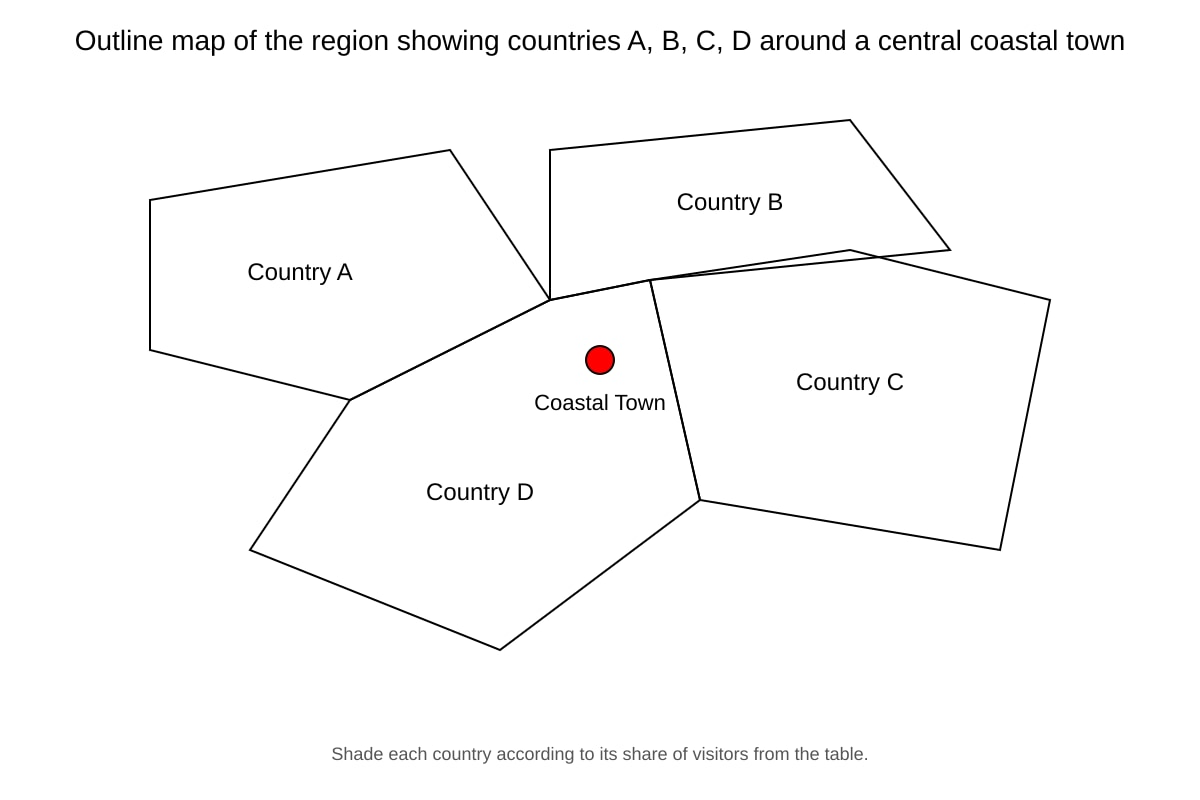
Choropleth: A darkest (40%), B medium (25%), C medium-light (20%), D lightest (15%).
Mark: correct shading intensity for 2 countries (1), all 4 correct (1).
Teaching: Choropleth uses shading to show data; darker = higher value. Do not mix up percentages with counts.
3. [2 marks]
Constructive waves (1 mark); characteristic: low height, gentle swash stronger than backwash (1 mark).
Teaching: Wide sandy beaches form from constructive waves depositing material.
4. [2 marks]
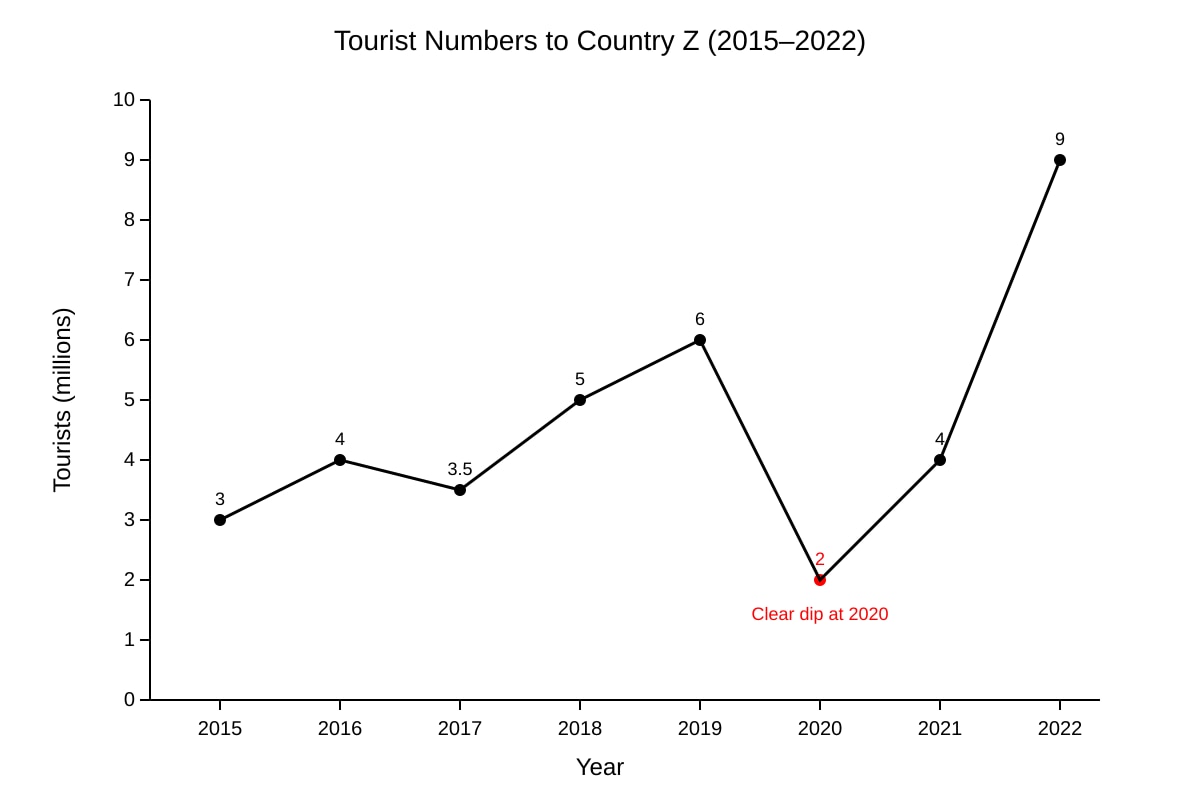
Overall increase from 3 to 9 million (1); sharp drop in 2020 then recovery (1).
Teaching: Describe general trend and anomalies using evidence from axes.
5. [3 marks]
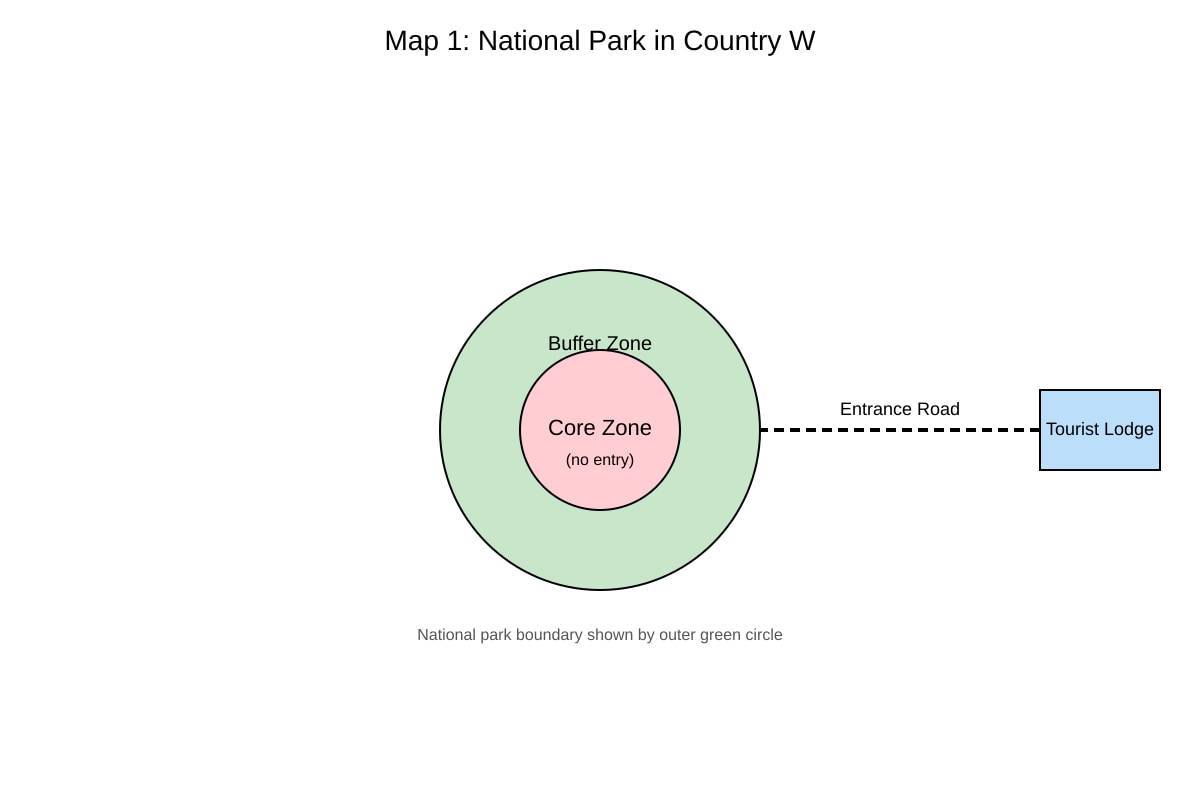
Core zone restricts entry protecting wildlife (1); buffer zone limits activity (1); lodge outside core reduces disturbance (1).
Teaching: Zoning separates sensitive areas from use, aiding conservation.
6. [2 marks]
(120/200)×100 = 60% (2 marks: 1 for method, 1 for answer).
Teaching: Percentage = (part/total)×100.
7. [1 mark]
Affordability / cheaper air travel (1).
Teaching: Ability to pay is a driver of tourism growth.
Section B: Structured Response
8. [4 marks]
(a) Employment: jobs in hotels, tours (2)
(b) Income: foreign exchange earnings (2)
Teaching: Economic impacts are money and jobs; use concrete examples.
9. [2 marks]
Consolidation, stagnation (2; 1 each).
Teaching: TALC order: exploration, involvement, development, consolidation, stagnation, decline/rejuvenation.
10. [3 marks]
Commodification of culture: traditions staged for tourists (1); loss of authenticity (1); cultural clashes (1).
Teaching: Social impacts affect people and heritage.
11. [3 marks]
Leakage (1); explanation: money leaves via foreign owners, little stays local (2).
Teaching: Leakage reduces benefit to host economy.
12. [2 marks]
Dependables prefer familiar, organised trips; Venturers seek novelty/risk (2 for clear contrast).
Teaching: Personality types affect destination choice.
13. [4 marks]
(a) Use renewable energy in resort (2)
(b) Limit building to buffer zone (2)
Teaching: Sustainability balances environment with tourism.
14. [4 marks]
e.g., Bali: rice fields converted to hotels (2); beach erosion from development (2).
Teaching: Name place, show environmental change with evidence.
Section C: Extended Response
15. [6 marks]
Benefits: jobs (1.5), infrastructure (1.5); Problems: leakage (1.5), cultural loss (1.5). Conclusion stance (0 hidden in balance).
Teaching: Evaluate with balanced points and a view.
16. [3 marks]
A retains: 5×0.4 = 1.6b. A retains more (3: 1 method each, 1 compare).
Teaching: Retained = earnings × (1 − leakage).
17. [4 marks]
Sustainable dev meets needs without compromising future (2); example: pedestrian zone reduces pollution (2).
Teaching: Link concept to neighbourhood action.
18. [2 marks]
Direct data from visitors (1); quantifiable (1).
Teaching: Primary data advantages.
19. [4 marks]
Ecotourism preserves culture (2); mass tourism erodes it (2).
Teaching: Compare by impact type.
20. [5 marks]
For: protect environment (2.5); Against: loss of income (2.5).
Teaching: Discuss both sides with reasons.