AI Generated Quiz
Secondary 4 English Comprehension Quiz
Free Sec 4 English Comprehension quiz, HY3 AI version, with questions, answers, and O Level-style practice for Singapore students.
These static practice materials are generated from the site's syllabus and paper-generation workflow, with source and model context shown so students and parents can evaluate the material before use.
Questions
Free quiz and exam paper access
Enter your details to view this paper
Your access is remembered on this device.
Answers
Secondary 4 English Quiz - Comprehension (Answer Key)
Total Marks: 30
Topic: Comprehension (syllabus-first, LLM-inferred templates)
Section A: Literal and Inferential Comprehension
Q1. (1 mark)
Answer: It suggests the roads were flooded / covered with deep water like rivers.
Teaching note: "Turned to rivers" is figurative; literally it means water made roads look like rivers. Student should infer flooding, not just "wet".
Q2. (1 mark)
Answer: Resigned / weary / dismayed (accept one).
Teaching note: Tone is attitude shown by word choice. "Never like this" after "bad floods before" shows he is surprised but worn out. Avoid "angry".
Q3. (2 marks)
Answer: It suggests she is anxious / fearful despite trying to appear calm. (1 mark for identifying feeling, 1 mark for explanation linking "smile not reaching eyes" to hidden worry)
Teaching note: A forced smile = pretending. Eyes show true emotion. Mother hides fear to comfort Mei.
Q4. (1 mark)
Answer: "Roads had turned to rivers" / "water rise" / "gust of wind drove rain" (any one).
Teaching note: Evidence must be from paragraph 1 and show severity.
Q5. (2 marks)
Answer: The short sentence creates abruptness / shock, highlighting sudden loss of power and increasing danger. (1 mark technique, 1 mark effect)
Teaching note: Short sentence after narrative builds tension; reader feels the sudden change.
Section B: Language Use and Effect
Q6. (1 mark)
Answer: He spoke quietly / to himself / grudgingly.
Teaching note: "Muttered" = low, unclear speech, often involuntary complaint.
Q7. (2 marks)
Answer: Contrast: words say "seen bad floods" (calm) but body "slumped shoulders" shows defeat. Effect: shows his real helplessness. (1+1)
Teaching note: Juxtaposing speech and posture reveals inner state.
Q8. (2 marks)
Answer: The contrast between spoken reassurance and "tight grip" shows she is frightened but hiding it. Effective because it reveals silent anxiety. (1+1)
Teaching note: Action speaks louder; physical detail contradicts words.
Q9. (1 mark)
Answer: Creates tension / surprise / finality.
Teaching note: Brevity = impact.
Q10. (2 marks)
Answer: (i) weary (ii) slumped (or "muttered", "never like this" acceptable if tied to defeat).
Teaching note: Words showing tiredness/defeat from para 1.
Section C: Comprehension and Language Analysis
Q11. (1 mark)
Answer: Phones control people / people are controlled by phones.
Teaching note: Saddle = rider controls horse; reversed here.
Q12. (2 marks)
Answer: Compares phone to rider, mankind to horse — shows passive submission. Effective as it vividly shows loss of control. (1+1)
Teaching note: Metaphor makes abstract dependence concrete.
Q13. (1 mark)
Answer: Frustrated / critical.
Teaching note: Teacher disappointed by distraction.
Q14. (2 marks)
Answer: She disapproves / is frustrated because students prioritise phone over learning. (1+1 explanation)
Teaching note: "Ping not lesson" shows misplaced attention.
Q15. (2 marks)
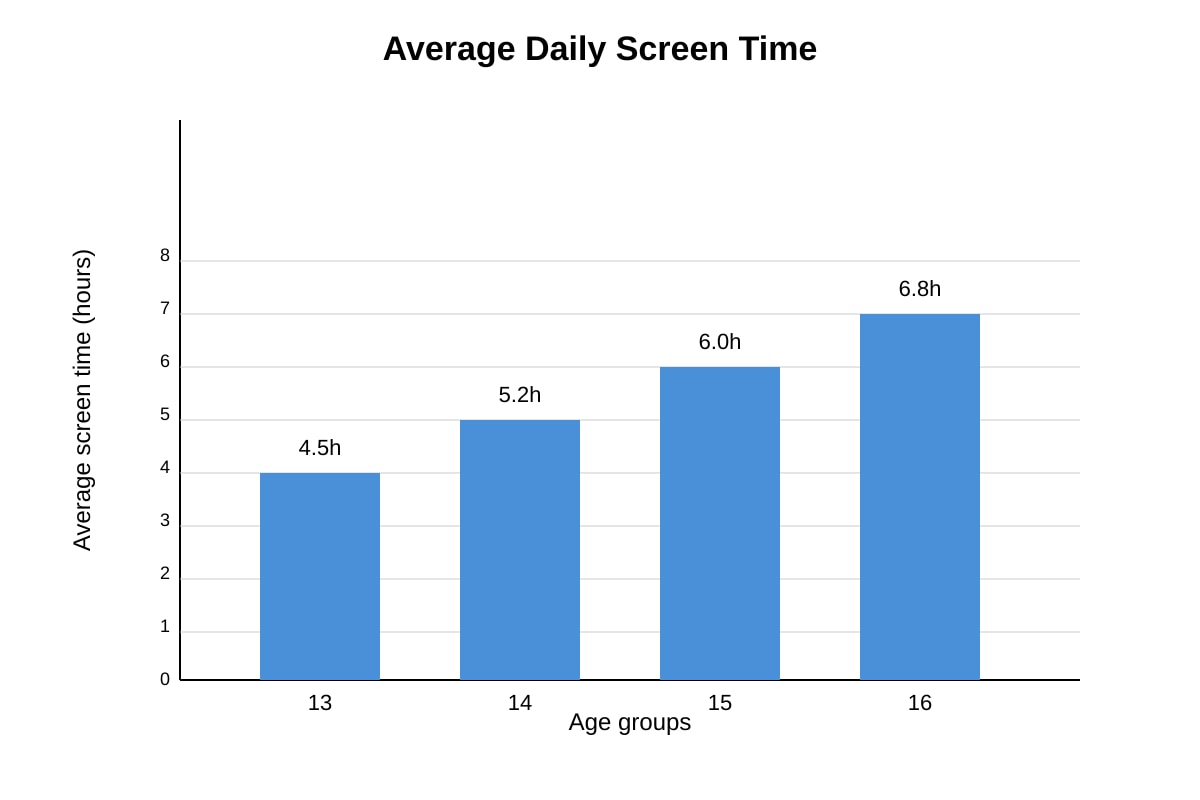
Answer: Screen time increases with age; e.g., 13 yrs 4.5h to 16 yrs 6.8h. (1 trend + 1 detail)
Teaching note: Read chart values; upward trend.
Q16. (1 mark)
Answer: "connects a lonely student to a friend across the world".
Teaching note: Positive evidence from para 2.
Q17. (2 marks)
Answer: Contrast shifts from negative to positive, showing balanced view; effect = reader sees both sides. (1+1)
Teaching note: "Yet" signals turn.
Q18. (2 marks)
Answer: "Tap" suggests brief, non-verbal, screen-based communication replacing talk. (1+1)
Teaching note: Verb choice shows change in behaviour.
Q19. (1 mark)
Answer: Harsh / cutting / angry.
Teaching note: "Sharp" modifies voice = severe tone.
Q20. (3 marks)
Answer: Negative: controls users (saddle metaphor), reduces talk (tap), distracts (teacher). Positive: connects lonely student. (3 points = 3 marks)
Teaching note: Need 2+ points from text; mark per valid point.