From Real Exams Quiz
Secondary 4 English Composition Situational Writing Quiz
Free Sec 4 English Situational Writing quiz, HY3 Exam version, with questions, answers, and O Level-style practice for Singapore students.
These static practice materials are generated from the site's syllabus and paper-generation workflow, with source and model context shown so students and parents can evaluate the material before use.
Questions
Free quiz and exam paper access
Enter your details to view this paper
Your access is remembered on this device.
Answers
Secondary 4 English Quiz - Composition Situational Writing (Answer Key)
Total Marks: 40
Duration: 50 minutes
Section A: Purpose, Audience & Context
1. Target audience: the canteen vendor (or stallholder). (1 mark)
Teaching note: Audience is the receiver of the text. Here the notice asks students to write to the vendor, so the vendor is the audience. Common mistake: saying "students" — students are the writer, not audience.
2. Purpose: to complain / report the broken equipment and request repair. (1 mark)
Teaching note: Purpose is the goal of writing. A complaint email aims to inform authority and seek action.
3. Context: informal, private; writer and receiver are friends; setting is social/personal. (1 mark)
Teaching note: Context includes relationship (friends) and situation (birthday, non-official).
4. Mode: spoken; Audience: school assembly (students and teachers). (2 marks, 1 each)
Teaching note: Speech = spoken mode. Assembly audience is the school population.
5. Because the teacher is authority figure and the report must be objective, clear and professional for assessment/record. (2 marks)
Teaching note: Formal factual tone shows respect and enables the teacher to use the report reliably. Casual tone reduces credibility.
Section B: Text-Type Features & Language Use
6. Three features: sender's address/name, date, salutation, body, closing, signature (any 3). (3 marks, 1 each)
Teaching note: Formal letters need identifiable structure so receiver knows who wrote and can reply.
7. B) Hi John, (1 mark)
Teaching note: Informal email uses first-name greeting. Others are formal.
8. Two details: e.g., cat description (colour/breed), last seen location, contact number, reward (any 2). (2 marks, 1 each)
Teaching note: Notice must contain identifying info from source visual.
9. "I demand" is rude/confrontational; teacher is authority; formal polite request is expected. (2 marks)
Teaching note: Modality "demand" shows no respect; situational writing needs appropriate register.
10. Text type: formal email (or letter) of invitation / request. (1 mark)
Teaching note: Writing to companies for participation = formal outbound request.
Section C: Planning & Evaluating a Task
11. Two content points: (a) name two new stalls e.g., sushi, juice bar; (b) reasons students want them e.g., variety, health. (2 marks, 1 each)
Teaching note: Brief explicitly asks for two stalls and explanation.
12. Tone: polite, formal-but-friendly (semi-formal). (1 mark)
Teaching note: Student council to manager = respectful but not distant.
13. Within limit shows task fulfilment; over/under may lose marks for development or irrelevance. (2 marks)
Teaching note: O-Level SW marked on fulfilling constraints; word count is part of rubric.
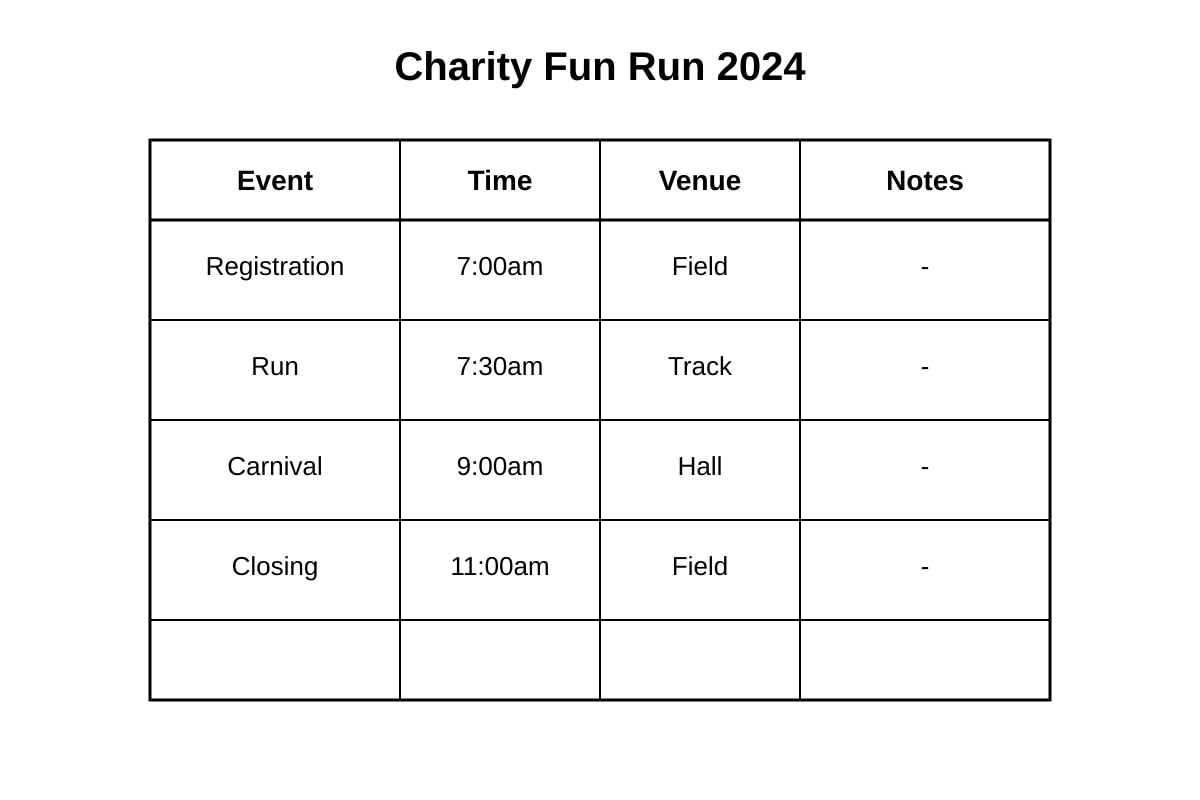
14. Three info: Registration 7:00am Field; Run 7:30am Track; Carnival 9:00am Hall (or Closing 11:00am Field). (3 marks, 1 each)
Teaching note: From table values: event/time/venue triples. Image placeholder must show titled table with those rows.
15. Audience: students of the school. (1 mark)
Teaching note: Notice to students about event.
16. Hook: e.g., "Did you know reading just 20 minutes a day boosts your brain?" (2 marks)
Teaching note: Spoken hook grabs attention; rhetorical question or stat works.
17. Purpose: to raise awareness / complain about noise; Audience: newspaper readers / editor. (2 marks, 1 each)
Teaching note: Letter to editor = public audience, persuasive purpose.
18. Wrong: serious complaint to Principal needs formal letter/email, not text message (too casual/unofficial). (2 marks)
Teaching note: Text message is informal; mismatch with context severity.
19. Two details: competition deadline, age category, submission email, prize (any 2). (2 marks, 1 each)
Teaching note: Entry form needs specifics from flyer.
20. Text type: reply letter/email; Tone: formal, apologetic/assuring. (2 marks, 1 each)
Teaching note: Councillor replying to resident = official, courteous.