AI Generated Exam Paper
Secondary 4 English Practice Paper 3
Free Sec 4 English Practice Paper 3, HY3 AI version, with questions, answers, and O Level-style practice for Singapore students.
These static practice materials are generated from the site's syllabus and paper-generation workflow, with source and model context shown so students and parents can evaluate the material before use.
Questions
Free quiz and exam paper access
Enter your details to view this paper
Your access is remembered on this device.
Answers
TuitionGoWhere Practice Paper — Answer Key (Version 3)
Subject: English
Level: Secondary 4
Total Marks: 50
Section A Answers (5 marks)
Q1. [1 mark]
Answer: Residents of the community / general public / Tampines residents.
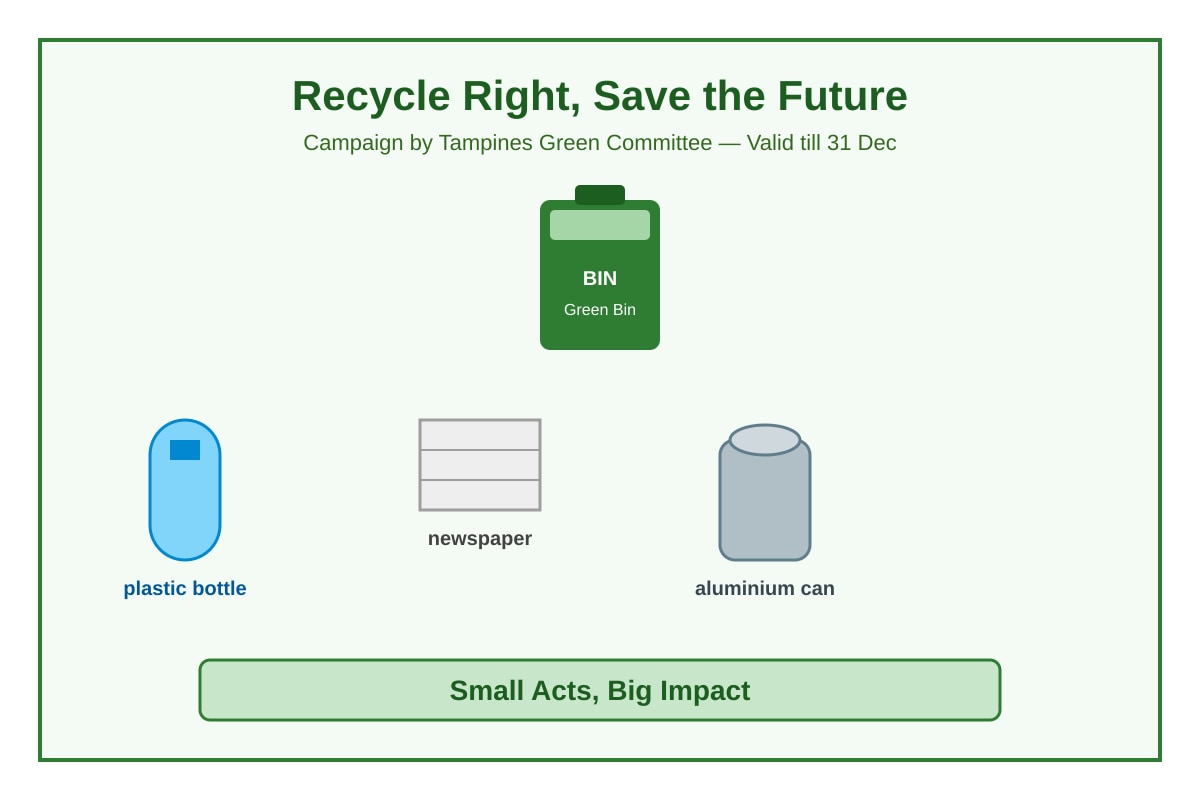
Teaching note: The poster is put up at a community club by the Tampines Green Committee. Target audience = people who live nearby or use the club. Common mistake: writing "students only" — poster does not specify age.
Q2. [2 marks]
Answer: A playground and a sheltered seating area. (1 mark each)
Teaching note: Scan Text 2 for "besides the stalls". Line states both facilities clearly. Marking: 1 mark per correct facility.
Q3. [1 mark]
Answer: Promotional / informative / positive / welcoming.
Teaching note: Newsletter uses "look forward to" — upbeat tone. Accept any single word showing neutral-positive informational tone.
Q4. [1 mark]
Answer: "affordable".
Teaching note: "Affordable" = not expensive. Student must pick the exact word from text.
Section B Answers (20 marks)
Q5. [2 marks]
Answer: She is determined / resilient / unwilling to give up. (1 mark for trait) Despite the storm and threat, she acts (steps in). (1 mark for evidence link)
Teaching note: Infer from action vs. mother's fear. Marking: 1 for attitude word, 1 for connecting to "stepped into storm".
Q6. [1 mark]
Answer: It suggests confusion / disorder / people bumping into each other.
Teaching note: "Collided" literally means crashed together; in context = messy scene.
Q7. [2 marks]
Answer: The repetition as a short sentence emphasises the delay and Mei's anxiety. (1) It makes the reader pause and feel her disappointment. (1)
Teaching note: Single-word repetition = stylistic emphasis. Common trap: saying "it tells us the coach is late" (literal, no effect).
Q8. [2 marks]
Answer: The mother is worried / pessimistic / fearful. (1) Whispering + "never make it" shows she doubts success. (1)
Teaching note: Tone from dialogue + verb "whispered". Marking: 1 trait, 1 textual reason.
Q9. [2 marks]
Answer: Any two of: "hammered", "waited three years", "threatened", "never make it" (contextual urgency). (1 each)
Teaching note: Identify words showing pressure. Accept "packed" if justified as hurried.
Q10. [1 mark]
Answer: Concerned / observant / casual caring.
Teaching note: Simple statement noting her state; tone is mild concern.
Q11. [3 marks]
Answer: Writer shows chaos (umbrellas, voices, frustration) around Mei but she stays focused (eyes fixed, moves forward). (1+1) Contrast highlights her calm determination amid disorder. (1)
Marking descriptors: 1 = identifies chaos, 1 = identifies Mei's calm, 1 = explains effect of contrast.
Q12. [2 marks]
Answer: "Knees weakened" is physical reaction showing strong relief. (1) It makes emotion vivid for reader. (1)
Teaching note: Body reaction = externalising feeling. Not literal weakness.
Q13. [2 marks]
Answer: Mr. Tan says panel will wait (line 14); Mei feels relief/smiles (15–16). (1 each)
Teaching note: Evidence must be from lines 12–16.
Q14. [1 mark]
Answer: Focused / determined / purposeful.
Teaching note: "Fixed on" = concentrated attention.
Q15. [2 marks]
Answer: After a stressful opening, the smile shows resolution / hope. (1) Short sentence gives closure and positive shift. (1)
Teaching note: Ending contrast with morning's negativity.
Section C Answers (25 marks)
Q16. [1 mark]
Answer: Line 1 states it offers "more than just a way to fill free time".
Teaching note: Direct textual evidence.
Q17. [2 marks]
Answer: (a) Admission officers value community commitment (line 6). (b) Consistent service proves maturity (line 7). (1 each)
Q18. [1 mark]
Answer: It suggests the interest was uncertain before; volunteering confirmed it.
Teaching note: "Confirm" = make sure / prove.
Q19. [2 marks]
Answer: Uses numbered points (Firstly, Secondly, Thirdly, Finally). (1) Each paragraph = one benefit. (1)
Teaching note: Structural organisation = listing.
Q20. [2 marks]
Answer: Reduces stress (10); decreases loneliness / more connected (11–12). (1 each)
Q21. [2 marks]
Answer: To conclude and recommend action. (1) "Therefore" shows result of earlier points. (1)
Teaching note: Final sentence = summation + call to action.
Q22. [1 mark]
Answer: "Loneliness" (line 12).
Teaching note: Means being apart from others.
Q23. [2 marks]
Answer: Shows patience as something discovered through action. (1) Makes abstract trait concrete via example. (1)
Teaching note: Metaphor not literal; illustrates growth.
Q24. [12 marks] Summary (80 words)
Expected content points (from lines 1–15):
- Builds character / empathy / responsibility (2–3)
- Discover patience (4)
- Strengthens uni applications (5)
- Officers value commitment (6)
- Proves maturity (7)
- Explore careers (8)
- Reduces stress (10)
- More connected / less lonely (11–12)
- Develops teamwork, communication, leadership (14)
- Useful for school/future jobs (15)
Marking: 1 mark per valid point (max 10) + 2 marks for own words & organisation (word count within 70–90).
Sample: Volunteering helps youth build character by teaching empathy, responsibility, and patience through helping others. It strengthens university applications as officers value commitment and it proves maturity, while letting students explore careers like medicine. It reduces stress and loneliness, increasing social connection. Youths also gain teamwork, communication, and leadership skills useful in school and future work. (78 words)
Total: 5 + 20 + 25 = 50 marks. ✓