AI Generated Exam Paper
Secondary 4 English Practice Paper 2
Free Sec 4 English Practice Paper 2, HY3 AI version, with questions, answers, and O Level-style practice for Singapore students.
These static practice materials are generated from the site's syllabus and paper-generation workflow, with source and model context shown so students and parents can evaluate the material before use.
Questions
TuitionGoWhere Practice Paper - English Secondary 4
TuitionGoWhere Practice Paper (AI) — Version 2 of 5
Subject: English
Level: Secondary 4
Paper: Practice Paper (Comprehension Focus)
Duration: 1 hr 50 min
Total Marks: 50
Name: ________________________
Class: ________
Date: ____________
Instructions:
- This practice paper is generated from syllabus-first and LLM-inferred templates. It is NOT derived from any official past-year paper and should be used for topical reinforcement only.
- Read all passages carefully before answering.
- Write your answers in the spaces provided.
- Section C includes an 80-word summary task.
- Use your own words where instructed.
Section A: Visual Text and Short Comprehension (5 marks)
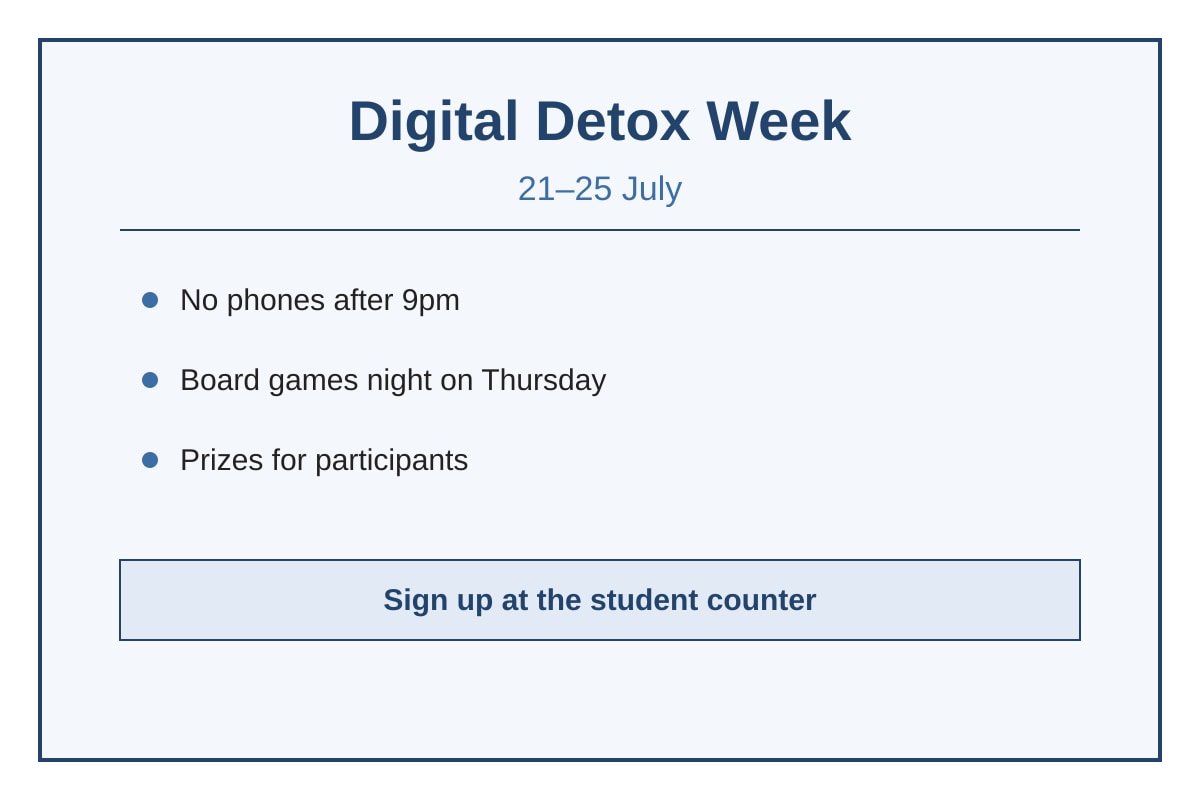
Read the poster below and answer Questions 1 to 5.
Image pending generation: source_image for Q1.
1. Who is the target audience of the poster? (1 mark)
2. What is the main purpose of the poster? (1 mark)
3. Find a word in the poster that suggests a reward is offered. (1 mark)
4. According to the poster, when must students stop using phones? (1 mark)
5. Give one reason why the school might organise this event. (1 mark)
Section B: Narrative Comprehension (20 marks)
Read the passage below and answer Questions 6 to 15.
(Passage — narrative recount)
(1) The rain hammered against the windows as Mr. Tan packed his last box. (2) He had taught at the school for thirty years, and now the empty walls seemed to stare back at him. (3) "I never thought it would end like this," he muttered. (4) His hands trembled slightly as he taped the box shut. (5) Outside, the students laughed unaware that their favourite teacher was leaving.
(6) "You're really going?" asked Siti, peering through the doorway. (7) Her eyes widened when she saw the boxes. (8) "But the science fair is next week!" (9) Mr. Tan forced a smile. (10) "You'll manage without me. You always do."
(11) He picked up the photograph of his first class. (12) The edges were yellow with age. (13) "They were just like you," he whispered. (14) Then he placed it gently in the box. (15) The rain slowed to a drizzle as he stepped into the corridor for the last time.
6. What is the tone of Mr. Tan's comment in line 3? (1 mark)
7. What does "the empty walls seemed to stare back at him" (line 2) suggest about Mr. Tan's feelings? (2 marks)
8. In line 4, what does the word "trembled" suggest about Mr. Tan's state? (1 mark)
9. Find two words in paragraph 1 (lines 1–5) that suggest sadness or loss. (2 marks)
(i) ________________________ (ii) ________________________
10. What does Siti's reaction in lines 6–8 reveal about her attitude towards Mr. Tan? (2 marks)
11. How does the writer create a contrast between Mr. Tan's mood and the students in line 5? (2 marks)
12. "You'll manage without me. You always do." (lines 10) How is this effective in showing Mr. Tan's character? (2 marks)
13. What is the effect of the short sentence "The rain slowed to a drizzle" (line 15)? (2 marks)
14. Explain the effectiveness of the metaphor in line 12: "The edges were yellow with age." (2 marks)
15. With reference to lines 11–14, what does Mr. Tan's treatment of the photograph suggest about his memories? (2 marks)
Section C: Non-Narrative Comprehension and Summary (25 marks)
Read the text below and answer Questions 16 to 20.
(Passage — non-narrative article on sleep)
(1) Teenagers need about eight to ten hours of sleep each night, yet most get far less. (2) Studies show that lack of sleep harms memory and concentration. (3) One reason is the use of screens late at night. (4) The blue light from phones delays the release of melatonin, the sleep hormone. (5) Another reason is anxiety about schoolwork, which keeps the mind active. (6) Schools can help by starting later and teaching sleep hygiene. (7) Parents should also limit device use at night. (8) Better sleep leads to improved mood and learning.
16. In line 4, what does "delays" suggest about the effect of blue light? (1 mark)
17. Give two reasons from the text why teenagers lack sleep. (2 marks)
(i) ________________________________________________________
(ii) ________________________________________________________
18. How does the writer use contrast in lines 1 and 2 to emphasise the problem? (2 marks)
19. Identify the tone of the writer's suggestion in line 6. (1 mark)
20. Summarise the main points about causes of poor sleep and how to improve it in 80 words. Use your own words. (19 marks)
(End of Paper)
Answers
TuitionGoWhere Practice Paper - English Secondary 4 (Answer Key)
Version 2 of 5 — AI-generated, not official past-year paper
Total Marks: 50
Section A: Visual Text (5 marks)
Q1. Target audience (1 mark)
Students of the school.
Teaching note: The poster mentions "students" and "sign up at the student counter", so the audience is clearly school students. Common mistake: writing "parents" — not supported by text.
Q2. Main purpose (1 mark)
To promote / encourage sign-ups for Digital Detox Week.
Teaching note: Purpose is inferred from title + sign-up call. Mark for "promote event" or "inform students".
Q3. Reward word (1 mark)
"Prizes"
Teaching note: Prizes = reward. Accept only a word from poster.
Q4. Phone stop time (1 mark)
After 9pm / 9pm.
Teaching note: Direct retrieval from bullet "No phones after 9pm".
Q5. Reason for event (1 mark)
e.g., To reduce phone use / improve student wellbeing.
Teaching note: Any sensible inference from "detox" context. 1 mark for plausible reason.
Section B: Narrative (20 marks)
Q6. Tone line 3 (1 mark)
Resigned / wistful / regretful.
Teaching note: "I never thought it would end like this" shows acceptance of unwanted end. Not "angry".
Q7. Line 2 suggestion (2 marks)
- 1 mark: He feels lonely / abandoned by the leaving.
- 1 mark: Personification shows walls "staring" = he feels watched / uneasy in emptiness.
Teaching note: Link technique to feeling.
Q8. "Trembled" (1 mark)
He was nervous / emotional / unsteady.
Teaching note: Physical sign of emotion.
Q9. Two words (2 marks)
empty (1), stared (1) OR leaving (1) — any two indicating loss.
Teaching note: From lines 1–5 only.
Q10. Siti attitude (2 marks)
- Surprised / shocked (1)
- Cares about him / values him (1) from "favourite teacher".
Teaching note: Use evidence "favourite teacher".
Q11. Contrast (2 marks)
- Mr. Tan sad/leaving vs students laughing/unaware (1)
- Highlights isolation / irony of departure (1).
Teaching note: Contrast = mood vs external.
Q12. Effectiveness (2 marks)
- Shows confidence in students (1)
- Shows selflessness / acceptance (1).
Teaching note: Character via dialogue.
Q13. Short sentence effect (2 marks)
- Calm after tension (1)
- Mirrors his peaceful exit (1).
Teaching note: Structure mirrors mood.
Q14. Metaphor effectiveness (2 marks)
- "Yellow with age" shows passage of time (1)
- Makes photo living relic = precious memory (1).
Teaching note: Literal colour as time symbol.
Q15. Photograph treatment (2 marks)
- He treasures past (1)
- Gentle placing = respectful memory (1).
Teaching note: Action shows inner value.
Section C: Non-Narrative + Summary (25 marks)
Q16. "Delays" (1 mark)
Slows down / postpones sleep hormone release.
Teaching note: Delay = make later.
Q17. Two reasons (2 marks)
(i) Screen use at night (1) (ii) Anxiety about school (1).
Teaching note: From lines 3,5.
Q18. Contrast lines 1–2 (2 marks)
- Need (8–10h) vs reality (far less) (1)
- Shows gap = problem scale (1).
Teaching note: Contrast need/actual.
Q19. Tone line 6 (1 mark)
Suggestive / advisory / practical.
Teaching note: Suggestion not command.
Q20. Summary 80 words (19 marks)
Mark scheme:
- Content: 8 marks (4 causes/help points x 2)
Causes: screens/blue light; anxiety. Help: later start; parent limits. - Use of own words: 5 marks
- Organisation/length: 6 marks (80 words ±10)
Expected content points: Teenagers sleep too little. Screens' blue light cuts melatonin. Stress from studies wakes mind. Schools should begin later and teach hygiene. Families must curb night devices. Result: better mood and learning.
Teaching note: Count words; deduct if copied. Show student model: "Adolescents often suffer sleep loss. Phone light reduces sleep chemical; worry over homework keeps brains busy. Institutions ought to delay openings and coach rest habits, while guardians restrict gadgets. This boosts wellness and study." (49 words — expand to 80 with linking.)
Free quiz and exam paper access
Enter your details to view this paper
Your access is remembered on this device.