From Real Exams Exam Paper
Secondary 4 English Preliminary Examination Paper 3
Free Sec 4 English Prelim Paper 3, HY3 Exam version, with questions, answers, and O Level-style practice for Singapore students.
These static practice materials are generated from the site's syllabus and paper-generation workflow, with source and model context shown so students and parents can evaluate the material before use.
Questions
Free quiz and exam paper access
Enter your details to view this paper
Your access is remembered on this device.
Answers
TuitionGoWhere Practice Paper - English Secondary 4 (PRELIM) Answer Key (Version 3)
Total Marks: 50
Section A (5 marks)
Q1 [1] Library.
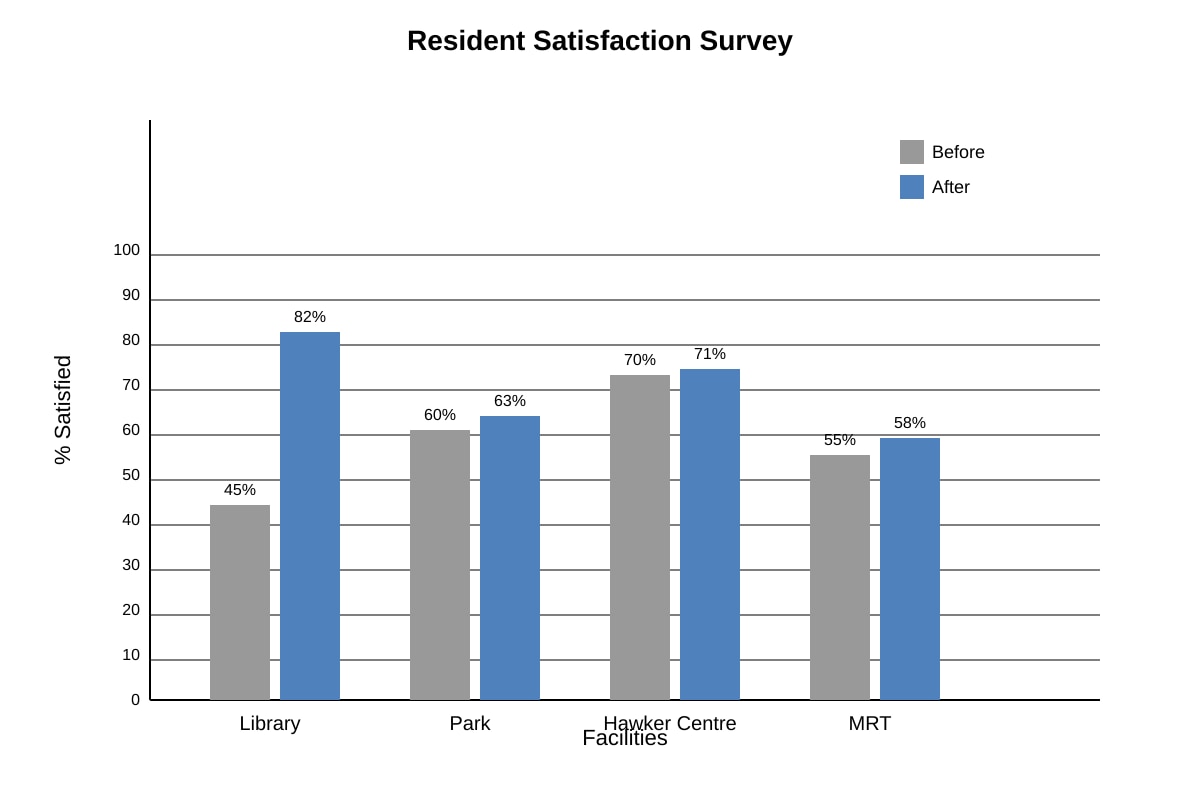
Teaching note: From the chart, Library satisfaction rose from 45% to 82% (+37 points), the largest jump among facilities. Compare bars: Park +3, Hawker +1, MRT +3.
Q2 [1] It suggests the library is for students or people who need quiet to study.
Note: "quiet study rooms" implies users need concentration, not just leisure reading.
Q3 [1] "A survey by the Town Council showed that 8 in 10 residents want more such spaces." (or any evidence of community support)
Mark: 1 mark for relevant evidence from Text 1.
Q4 [1] It makes the support feel concrete and relatable; a fraction is easier for readers to picture than a percentage.
Note: Effect = clarity / reader connection.
Q5 [1] Residents of the town / local community.
Note: Text 1 is a community notice; target audience is locals.
Section B (20 marks)
Q6 [1] Uncertain / hesitant / sad.
Note: Whisper + question shows uncertainty. Do not accept "angry".
Q7 [1] He was withdrawn / uncommunicative / emotionally distant.
Note: Not replying shows trait; inference required.
Q8 [1] "hammered" (or "hammered the roof").
Mark: 1 mark for word showing violence.
Q9 [2] The long sentence gives his reassurance; the short sentence abruptly cuts it with Siti's doubt. This contrast highlights the gap between his words and her experience, making his promise seem empty.
Marking: 1 mark contrast identified, 1 mark effect explained.
Q10 [2] The simile compares the flickering light to a dying candle, suggesting Siti's mood is weak and fading. It shows her hope is dim, like the light.
Marking: 1 mark comparison explained, 1 mark link to mood.
Q11 [2] (i) She asks "You're leaving again?" showing surprise/worry; (ii) her voice is "barely above a whisper" showing sadness; (iii) she turns away from him. Any two.
Mark: 1 mark each detail.
Q12 [1] Done on purpose / careful / slow and intentional.
Note: In context, "slow, deliberate pull" = controlled action.
Q13 [2] The wind is given human aggression ("grabbed", "without mercy"), reflecting a hostile, tense atmosphere that mirrors Siti's emotion.
Marking: 1 mark personification identified, 1 mark atmosphere link.
Q14 [2] Siti would say she feels sad and abandoned because he leaves without reply and has broken promises before. She is anxious about his absence before exams.
Marking: 1 mark feeling, 1 mark evidence from lines 1–4.
Q15 [1] (1) "The rain hammered the roof as Siti watched her brother pack his bag." (opening sets scene) OR overall purpose = show sibling departure tension. Accept opening sentence as frame.
Q16 [1] "I'll be back before the exams" – a specific promise to reduce her worry.
Q17 [2] "Hammered" is louder and more violent than "hit", suggesting the rain is heavy and oppressive, reflecting Siti's heavy mood.
Marking: 1 mark word effect, 1 mark mood link.
Q18 [1] Calm / controlled / detached (from slow zip action).
Q19 [1] It implies the light is weak / failing / unstable.
Q20 [2] She recalls hearing the promise "three times before" and turns away, showing she expects it to be broken.
Marking: 1 mark memory evidence, 1 mark action evidence.
Section C (25 marks)
Q21 [2] (i) Teens need 8 hours for memory consolidation; (ii) later-start schools report better test results.
Mark: 1 mark each.
Q22 [1] Dismissive / critical / informal.
Note: Tone shows writer disagrees with students.
Q23 [2] It contrasts scientific evidence with parental tradition, showing the debate is balanced and unresolved.
Marking: 1 mark contrast, 1 mark effect.
Q24 [1] "debate continues" / "Yet" / "often argue".
Q25 [2] It gives factual support that more sleep (later start) improves results, backing the writer's claim.
Marking: 1 mark link, 1 mark explanation.
Q26 [2] (i) Research/student view: sleep needed; (ii) Parent view: early starts build discipline.
Mark: 1 mark each.
Q27 [1] Storing / strengthening memories.
Q28 [2] "Yet" signals contrast, shifting from research to opposing parent view, making the argument balanced.
Marking: 1 mark function, 1 mark effect.
Q29 [2] A parent would say early starts teach discipline and prepare students for life, even if tiring.
Marking: 1 mark view, 1 mark explanation from Text 4.
Q30 [1] "This debate continues as more schools review their timetables." (summary of purpose)
Q31 [10] Summary (80 words) Model points: Sleep not wasted; teens need 8h for memory; later-start schools get better results; parents say early builds discipline; schools reviewing timetables. Marking descriptors: 7–10: own words, all points, ~80 words. 5–6: mostly own words, most points. 0–4: copied / missing points. Sample: Sleep is not wasted for teens who need eight hours for memory. Later-start schools show better results. However, parents argue early starts build discipline. Schools are reviewing timetables as the debate continues. (42 words; student expands to 80.)
Total: 50 marks