AI Generated Quiz
Secondary 4 Combined Science Physics Summary Quiz
Free Sec 4 Comb Sci Phy Summary quiz, HY3 AI version, with questions, answers, and O Level-style practice for Singapore students.
These static practice materials are generated from the site's syllabus and paper-generation workflow, with source and model context shown so students and parents can evaluate the material before use.
Questions
Free quiz and exam paper access
Enter your details to view this paper
Your access is remembered on this device.
Answers
Secondary 4 Combined Science Physics Quiz - Summary (Answer Key)
Total Marks: 40
Topic: Summary (syllabus-first, AI-generated from Stage 4 templates; not claimed as past-year derived)
Section A Answers (Q1–5)
Q1. [1 mark]
Answer: m/s² (or metre per second squared).
Teaching note: Acceleration is change in velocity per unit time. SI unit is derived from m/s divided by s → m/s². Common mistake: writing m/s (speed unit).
Q2. [2 marks]
Answer: 15 m/s.
Working:
average speed = total distance / total time
= 120 m / 8.0 s = 15 m/s.
Mark breakdown: 1 mark for correct formula, 1 mark for correct answer with unit.
Q3. [2 marks]
Answer: 2 m/s².
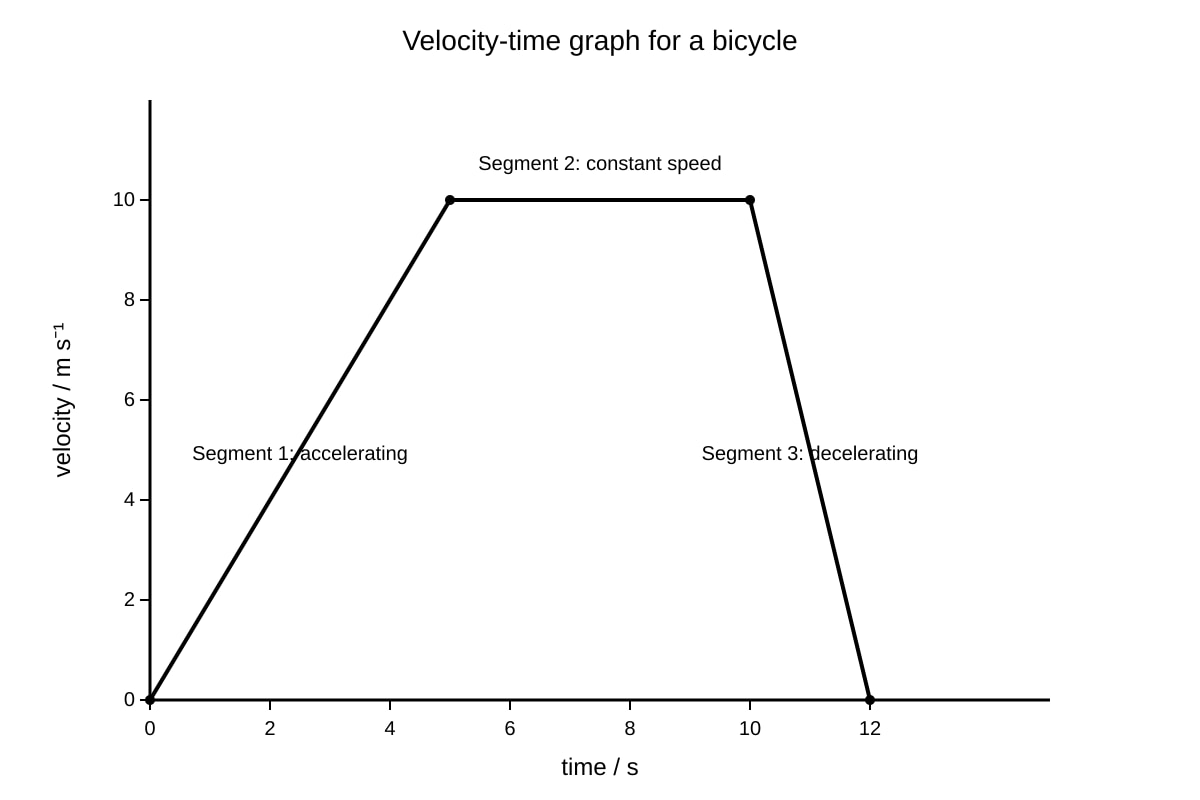
Working from graph (Q3-fig1):
acceleration = gradient = Δv/Δt = (10 – 0) / (5 – 0) = 2 m/s².
Mark breakdown: 1 mark for using gradient, 1 mark for answer. Note: graph shows straight line from 0 to 5 s reaching 10 m/s.
Q4. [2 marks]
Answer: 15 N backwards (opposite to motion).
Reasoning: Constant speed → acceleration = 0 → net force = 0 (Newton’s First Law). Thus friction = applied force = 15 N, acting opposite to motion.
Mark breakdown: 1 mark size, 1 mark direction/justification.
Q5. [2 marks]
Answer: A scalar has magnitude only (no direction). Example: mass / speed / distance / time.
Mark breakdown: 1 mark definition, 1 mark example.
Section B Answers (Q6–10)
Q6. [3 marks]
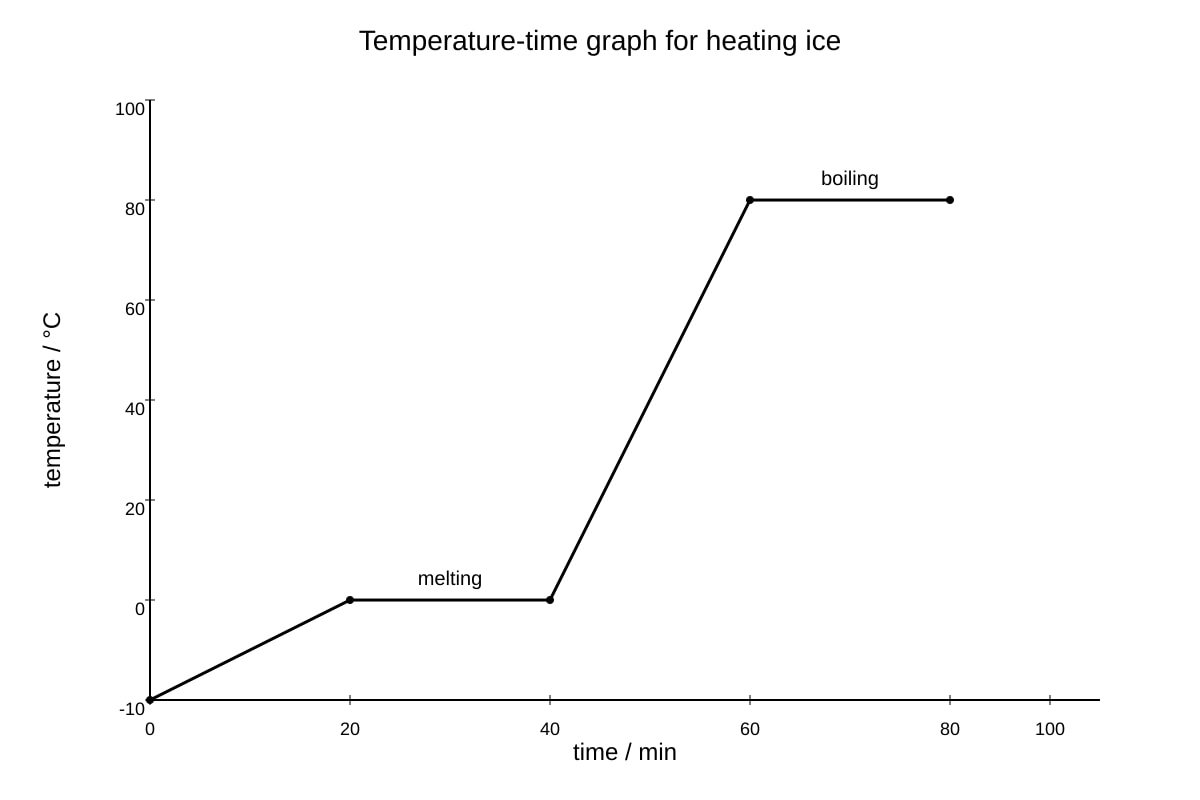
Answer: At 0°C plateau, ice melts. Particles gain energy but temperature constant; energy breaks bonds, particles move from fixed to freer arrangement; average kinetic energy unchanged.
Mark breakdown: 1 mark state change, 1 mark energy to bonds not KE, 1 mark particle arrangement change. Based on Q6-fig1 plateau at 0°C.
Q7. [1 mark]
Answer: Radiation.
Q8. [2 marks]
Answer: Conduction; factor: material conductivity / length / cross-section / temperature difference.
Mark breakdown: 1 mark process, 1 mark factor.
Q9. [2 marks]
Answer: Oscillations perpendicular to direction of travel; example: light / water waves.
Mark breakdown: 1 mark property, 1 mark example.
Q10. [2 marks]
Answer: Speed decreases; direction bends towards normal.
Mark breakdown: 1 mark each.
Section C Answers (Q11–15)
Q11. [2 marks]
Answer: 4.0 Ω.
Working: R = V/I = 12 / 3.0 = 4.0 Ω.
Mark breakdown: 1 mark formula, 1 mark answer.
Q12. [2 marks]
Answer: 12 W.
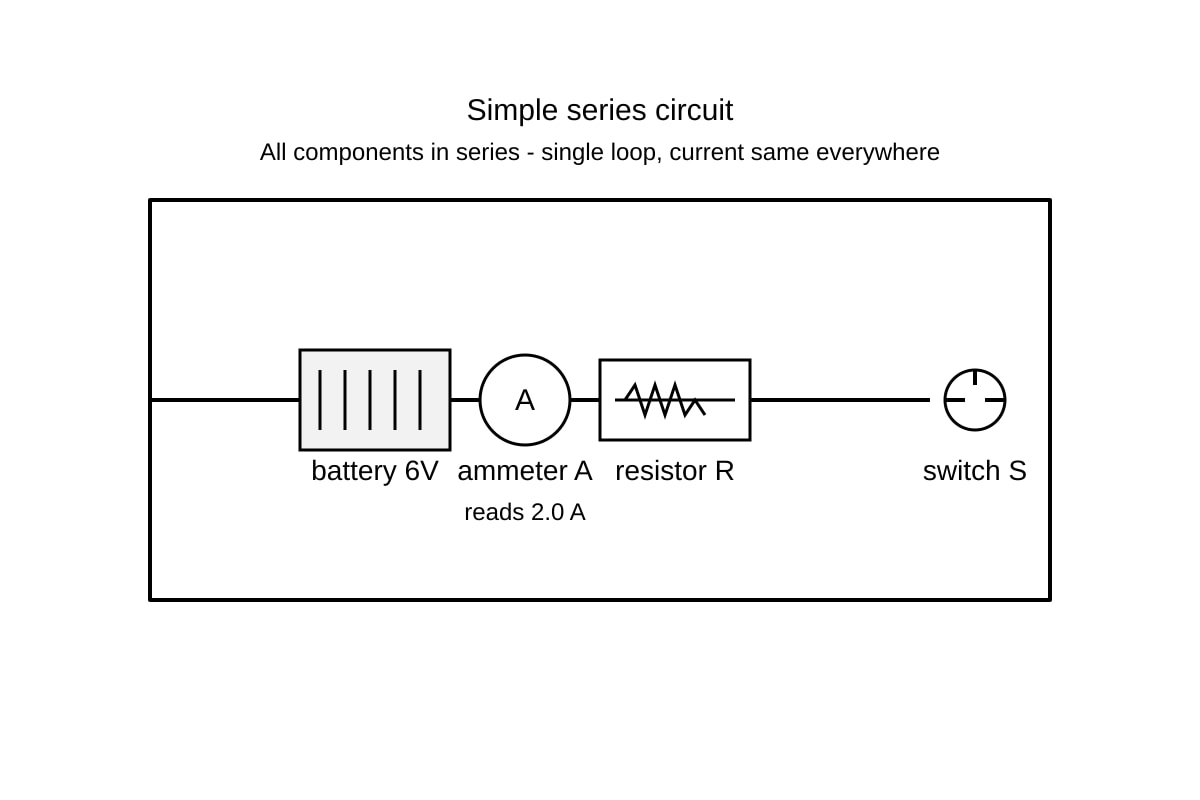
Working from Q12-fig1: P = V × I = 6 × 2.0 = 12 W.
Mark breakdown: 1 mark formula, 1 mark answer.
Q13. [1 mark]
Answer: To break circuit if current too high (overload protection).
Q14. [1 mark]
Answer: Increase current / more turns / iron core.
Q15. [2 marks]
Answer: 24 V.
Working: V_s/V_p = N_s/N_p → V_s = 12 × (200/100) = 24 V.
Mark breakdown: 1 mark ratio, 1 mark answer.
Section D Answers (Q16–20)
Q16. [2 marks]
Answer: 60 J.
Working: ΔGPE = mgh = 2.0 × 10 × 3.0 = 60 J.
Mark breakdown: 1 mark substitution, 1 mark answer.
Q17. [2 marks]
Answer: Kinetic energy → thermal energy (in brakes/tyres/road).
Mark breakdown: 1 mark KE loss, 1 mark thermal gain.
Q18. [1 mark]
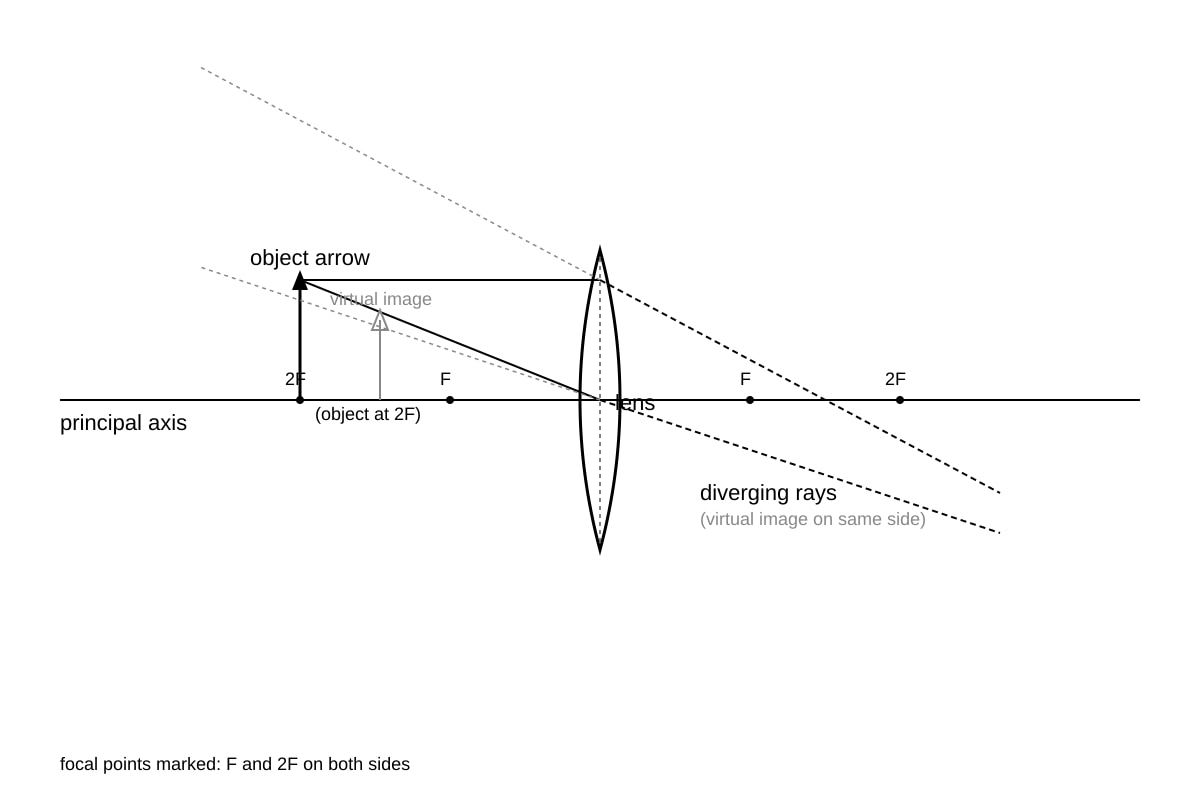
Answer: diverges as if from focal point (or appears to come from focal point). Based on Q18-fig1.
Q19. [3 marks]
Answer: Thermal equilibrium = same temperature; thermometer must exchange heat until same temp; reading then shows object’s true temp; early reading wrong due to nonequilibrium.
Mark breakdown: 1 mark definition, 1 mark process, 1 mark consequence.
Q20. [4 marks]
Answer: Initially weight > air resistance, accelerates. As speed rises, air resistance increases. Eventually air resistance = weight, net force 0, constant terminal velocity.
Mark breakdown: 1 mark initial forces, 1 mark resistance increases with speed, 1 mark equality at terminal, 1 mark constant velocity result.