AI Generated Exam Paper
Secondary 4 Combined Science Physics Practice Paper 4
Free Sec 4 Comb Sci Phy Practice Paper 4, HY3 AI version, with questions, answers, and O Level-style practice for Singapore students.
These static practice materials are generated from the site's syllabus and paper-generation workflow, with source and model context shown so students and parents can evaluate the material before use.
Questions
Free quiz and exam paper access
Enter your details to view this paper
Your access is remembered on this device.
Answers
TuitionGoWhere Practice Paper — Combined Science Physics Secondary 4 (Version 4) Answer Key
Subject: Combined Science Physics
Level: Secondary 4
Paper: Practice Paper (Summary Revision)
Total Marks: 65
Section A: Measurement, Kinematics and Dynamics
1. [1 mark]
Actual length = 152.4 cm – 0.2 cm = 152.2 cm.
Teaching note: Length measured with a rule = difference between end readings. Common mistake: using the larger reading only.
2. [2 marks]
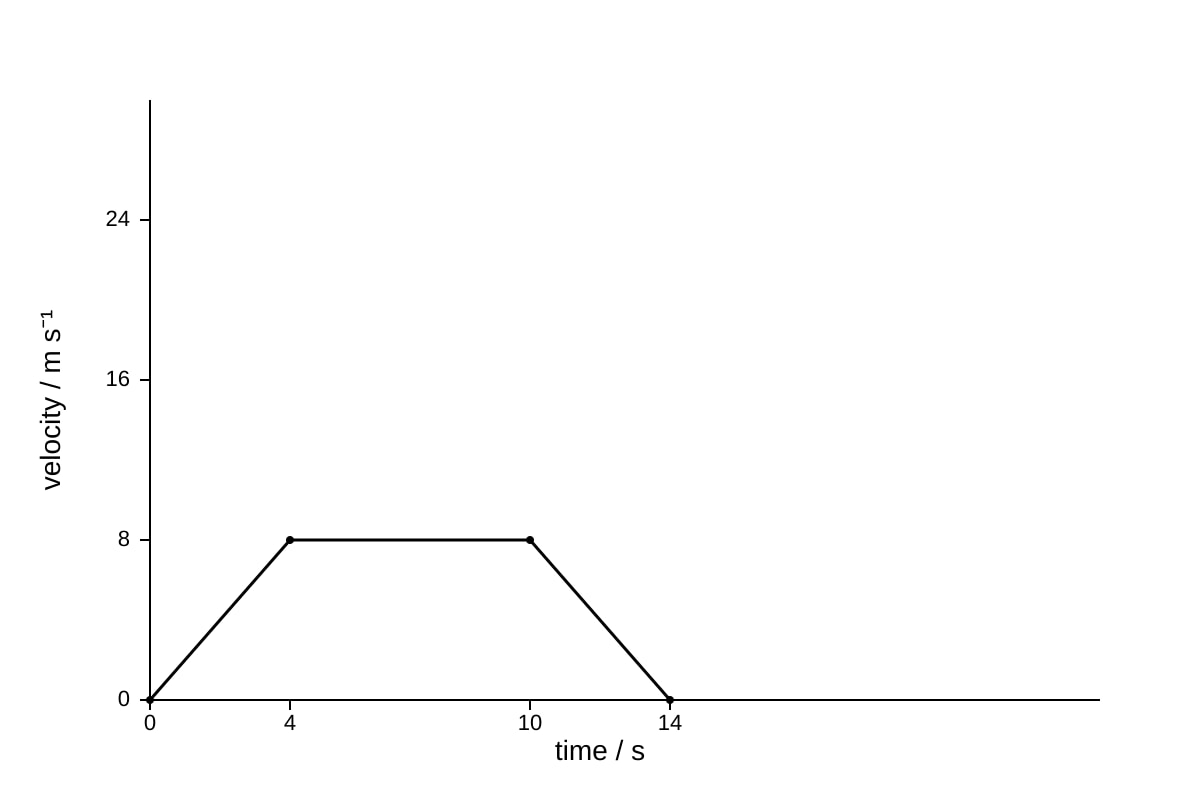
Acceleration = gradient of v–t graph from 0 to 4 s
= (8 – 0) / (4 – 0) = 2 m s⁻².
[1 mark for correct substitution, 1 mark for answer with unit]
Teaching note: Acceleration is change in velocity over time. From image, line rises from (0,0) to (4,8).
3. [2 marks]
Frictional force = 12 N, opposite to direction of motion.
[1 for size, 1 for direction]
Teaching note: Constant speed → net force zero (Newton’s First Law). Thus friction equals applied force and opposes motion.
4. [3 marks]
- Initially weight > air resistance, so resultant downward force causes acceleration. [1]
- As speed increases, air resistance increases. [1]
- Eventually air resistance = weight; resultant force = 0, acceleration = 0 (terminal velocity). [1]
Teaching note: Acceleration decreases as opposing force grows until balance.
5. [2 marks]
Total distance = 120 + 80 = 200 km.
Total time = 2 + 1 = 3 h.
Average speed = 200 / 3 = 66.7 km/h (or 67 km/h).
[1 for total dist/time, 1 for answer]
Section B: Thermal Physics and Waves
6. [3 marks]
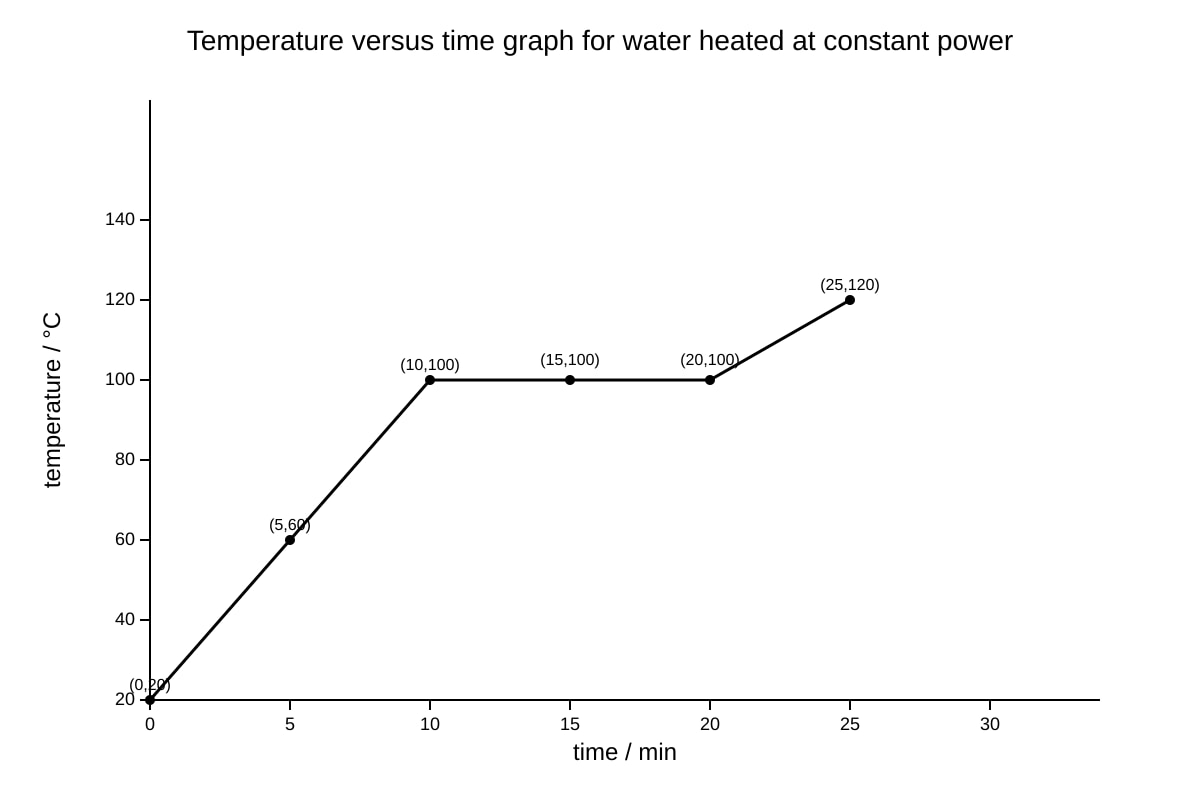
- Particles gain heat energy but temperature stays constant. [1]
- Energy breaks bonds; particles vibrate more and start to move from fixed positions. [1]
- Arrangement changes from ordered (solid) to less ordered (liquid) while average kinetic energy unchanged. [1]
Teaching note: Melting is a state change; energy is latent heat, not kinetic.
7. [2 marks]
- Water boils at 100 °C; added energy is used for latent heat of vaporisation, not raising temperature. [1]
- Temperature stays constant until all water becomes steam. [1]
8. [2 marks]
Example: boiling water in a pot — hot water rises, cool water sinks, forming convection current. [1 for example, 1 for description]
Teaching note: Convection needs fluid movement due to density change.
9. [2 marks]
Speed decreases; direction bends towards the normal. [1+1]
Teaching note: Glass is denser; light slows and refracts toward normal entering optically denser medium.
10. [2 marks]
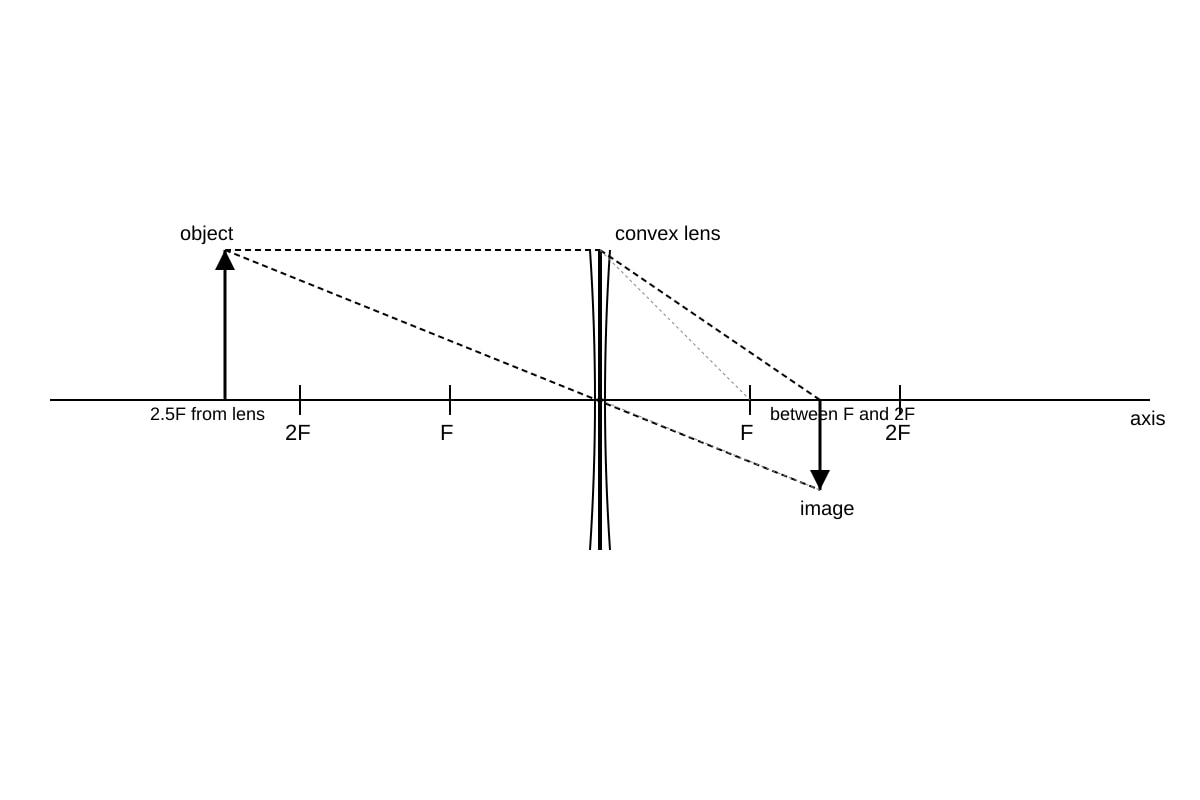
Image is inverted and diminished (smaller than object). [1 each]
From placeholder: object beyond 2F gives real, inverted, diminished image between F and 2F.
Section C: Electricity, Magnetism and Summary Synthesis
11. [2 marks]
Circuit: cell/battery symbol — switch symbol — lamp symbol — back to cell, all in series. [2 for correct series symbols]
Teaching note: Practical household lamp circuit is series with switch.
12. [2 marks]
R = V / I = 240 / 4 = 60 Ω. [1 method, 1 answer]
13. [2 marks]
1/R_total = 1/6 + 1/3 = 1/6 + 2/6 = 3/6 = 1/2
R_total = 2 Ω. [1 method, 1 answer]
14. [1 mark]
A fuse melts and breaks the circuit if current exceeds safe value, preventing fire/overheat.
15. [2 marks]
Current in coil produces magnetic field; iron nail becomes induced magnet. [1+1]
16. [2 marks]
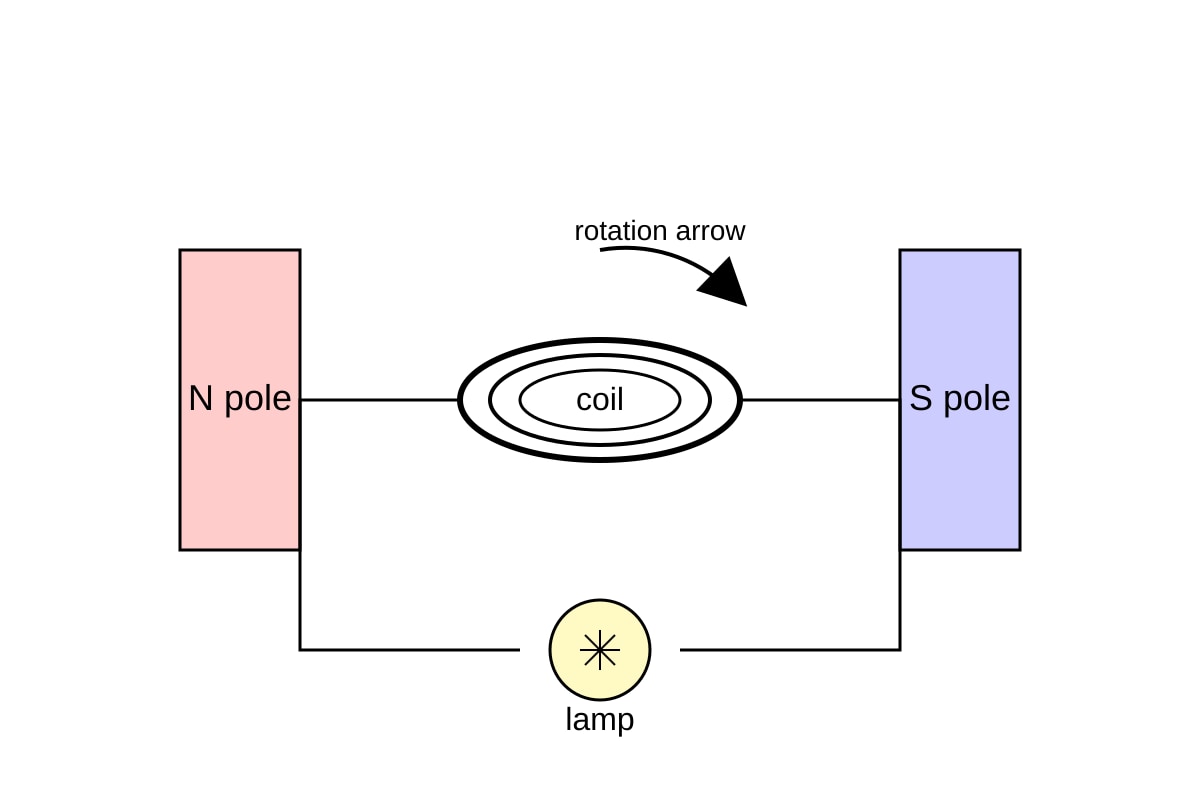
Principle: electromagnetic induction. [1]
Increase e.m.f. by faster rotation / stronger magnet / more turns. [1]
17. [2 marks]
R_total = 4 + 8 = 12 Ω.
I = V / R = 12 / 12 = 1.0 A. [1 method, 1 answer]
18. [2 marks]
Infrared use: remote control / thermal imaging. [1]
UV danger: skin cancer / eye damage. [1]
19. [3 marks]
- Object at rest can have balanced forces (correct). [1]
- Moving object can also have balanced forces if at constant velocity (Newton’s First Law). [1]
- Unbalanced forces cause acceleration, not motion itself. [1]
20. [3 marks]
Energy needed: Q = mcΔT = 1.0 × 4200 × (100–20) = 336 000 J. [1]
Power = 500 W = 500 J/s.
Time = Q / P = 336 000 / 500 = 672 s (or 11.2 min). [1 method, 1 answer]
Teaching note: Assuming no heat loss gives minimum time.
Total Marks: 65 — matches paper.