From Real Exams Exam Paper
Secondary 4 Combined Science Physics Preliminary Examination Paper 2
Free Sec 4 Comb Sci Phy Prelim Paper 2, HY3 Exam version, with questions, answers, and O Level-style practice for Singapore students.
These static practice materials are generated from the site's syllabus and paper-generation workflow, with source and model context shown so students and parents can evaluate the material before use.
Questions
TuitionGoWhere Practice Paper - Combined Science Physics Secondary 4 (PRELIM)
School: TuitionGoWhere Secondary School (AI)
Subject: Combined Science Physics
Level: Secondary 4
Paper: Practice Paper (PRELIM) Version 2
Duration: 1 hour 15 minutes
Total Marks: 65
Name: ___________________________
Class: ____________
Date: ____________
Instructions
- Answer all questions in the spaces provided.
- Show all working clearly where calculation is required.
- Use SI units unless otherwise stated.
- For diagram questions, draw using a ruler and pencil.
Section A: Kinematics & Forces (22 marks)
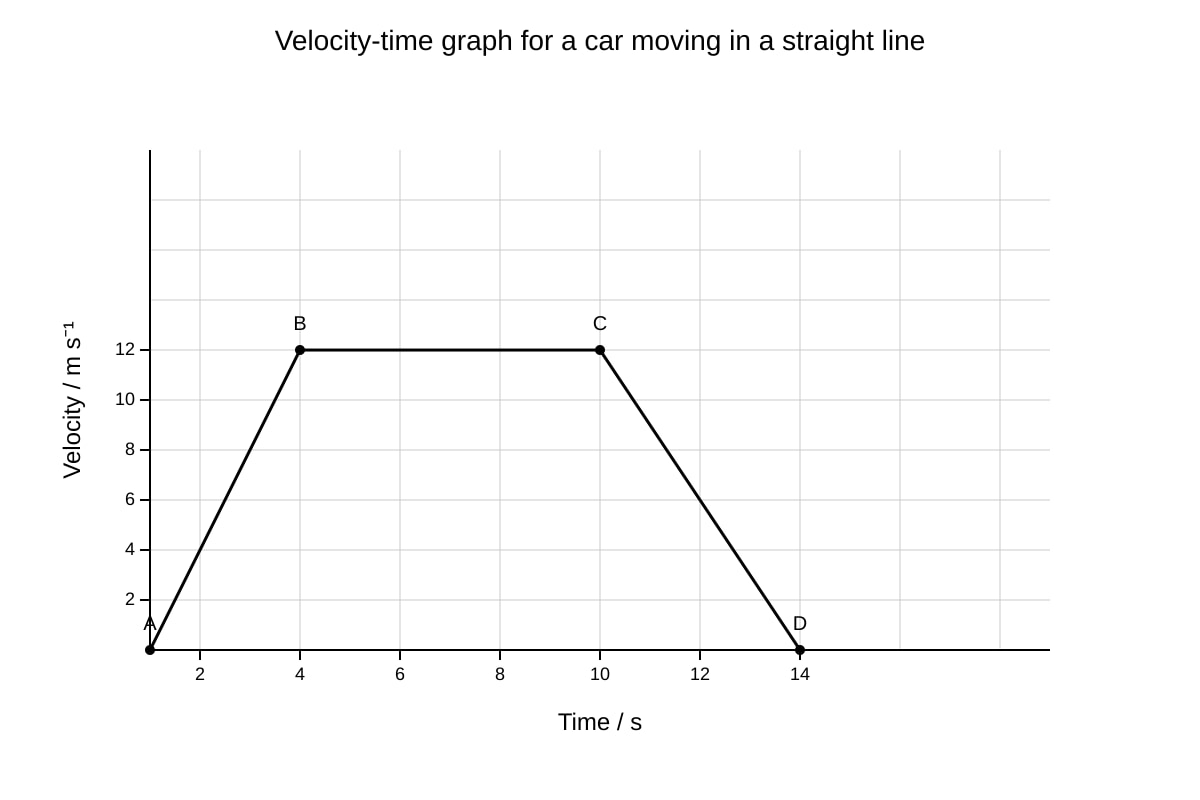
1. A car travels along a straight road. The graph below shows its velocity over time.
Image pending generation: graph for Q1.
State the magnitude of the acceleration of the car between point B and point C. [1]
2. Using the same graph in Question 1, calculate the average speed of the car for the whole journey from A to D. [2]
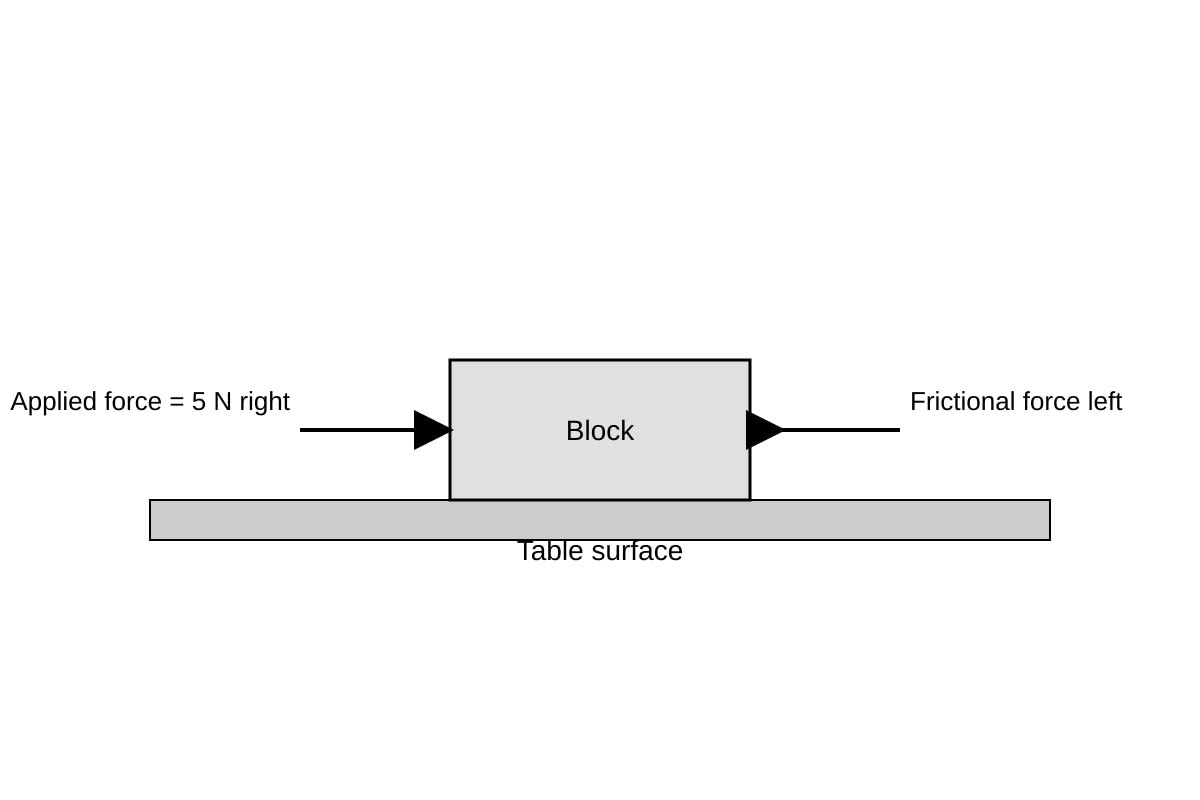
3. A wooden block is pushed across a table at constant speed. The diagram shows the horizontal forces acting on it.
Image pending generation: diagram for Q3.
Which statement is correct?
A. The net force is 5 N to the right.
B. The frictional force is 0 N.
C. The applied force equals the frictional force.
D. The block is accelerating. [1]
4. A block is pulled along a rough horizontal floor at constant speed by a force of 8 N.
(i) State the size of the frictional force acting on the block. [1]
(ii) Explain how you obtain your answer. [1]
5. A shuttlecock is dropped from rest. Air resistance acts upwards as it falls.
State what happens to the acceleration of the shuttlecock as its speed increases. [1]
6. A runner completes a 200 m race in 25 s. Calculate her average speed. [2]
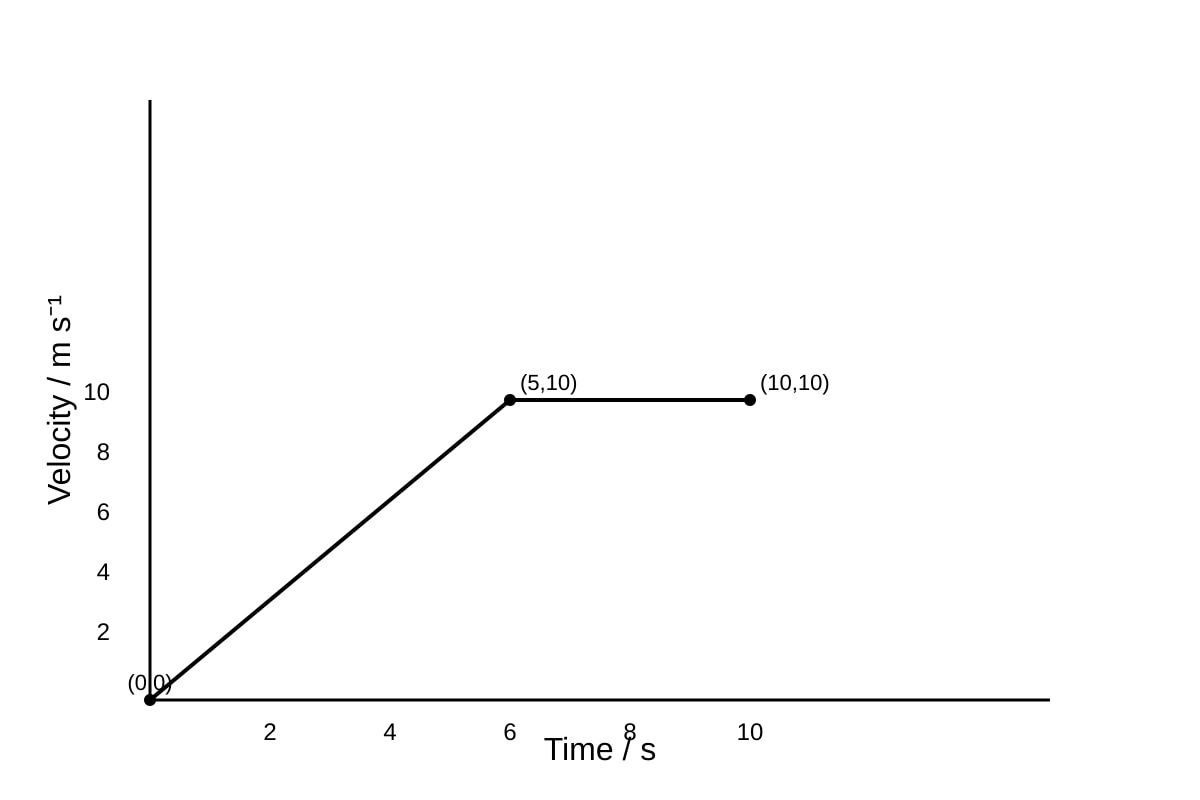
7. The diagram shows a velocity-time graph of a bicycle.
Image pending generation: graph for Q7.
Calculate the acceleration of the bicycle between 0 s and 5 s. [2]
8. A car of mass 1000 kg accelerates at 2 m s⁻². Calculate the net force acting on it. [2]
Section B: Thermal Physics & Energy (22 marks)
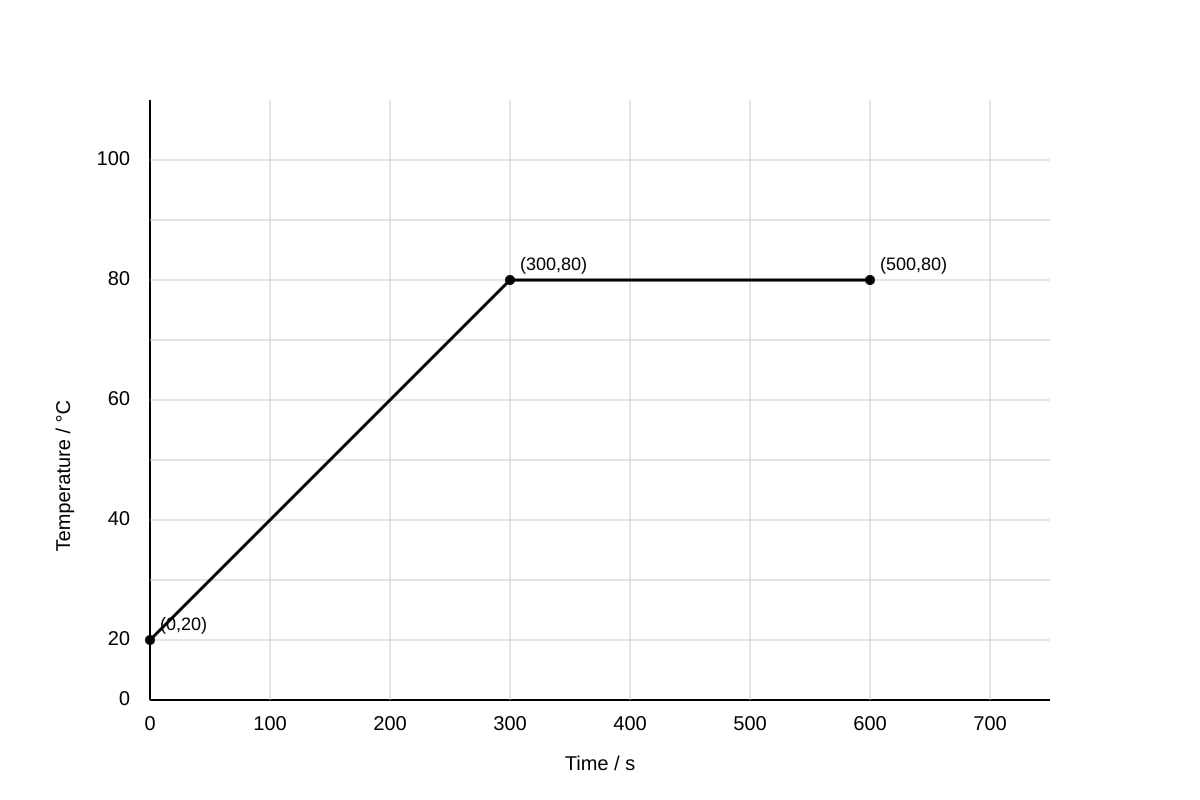
9. A 500 W immersion heater heats 0.40 kg of water. The temperature-time graph is shown.
Image pending generation: graph for Q9.
State the temperature of the water at 400 s. [1]
10. Using the graph in Question 9, calculate the energy supplied by the heater in the first 300 s. [2]
11. Describe, in terms of movement and arrangement of particles, what happens when water boils at 100 °C. [3]
12. A 2 kg block is lifted vertically by 3 m. Calculate the gain in gravitational potential energy. (g = 10 m s⁻²) [2]
13. A kettle uses 240 kJ to boil water and 180 kJ reaches the water. Calculate the efficiency. [2]
14. Explain why a metal spoon left in hot soup becomes warm at the handle. [2]
15. State one difference between conduction and convection. [1]
16. A lamp rated 60 W is used for 10 minutes. Calculate the energy transferred. [2]
17. The specific heat capacity of water is 4200 J kg⁻¹ °C⁻¹. Calculate the energy needed to raise 0.50 kg of water from 20 °C to 80 °C. [3]
Section C: Waves, Electricity & Magnetism (21 marks)
18. A ray of light strikes a plane mirror at 30° to the normal. State the angle of reflection. [1]
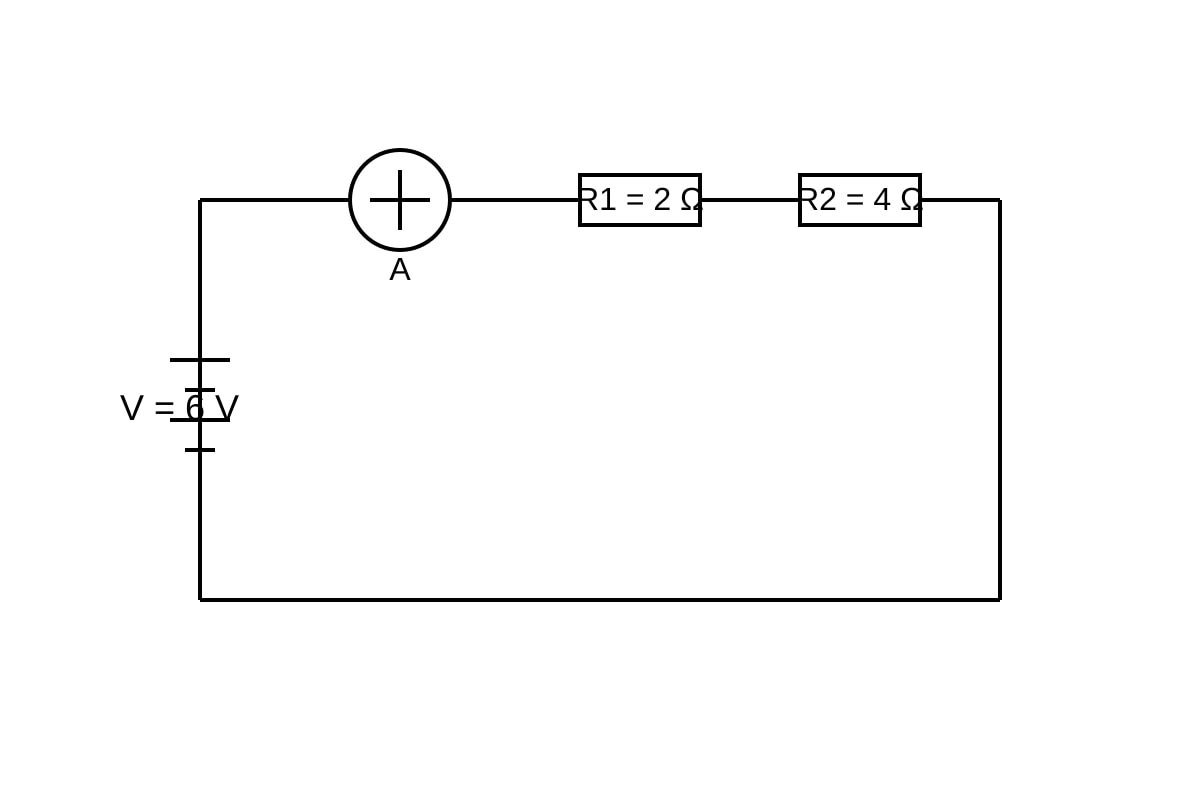
19. The diagram shows a circuit with a 6 V battery and two resistors.
Image pending generation: circuit for Q19.
Calculate the current in the circuit. [2]
20. A kitchen hood uses a fan switched by a relay. Explain why a relay is useful in this household circuit. [2]
21. State the part of the electromagnetic spectrum used in cooking food in a microwave oven. [1]
22. A transformer has 100 turns on the primary and 200 turns on the secondary. The input voltage is 12 V. Calculate the output voltage. [2]
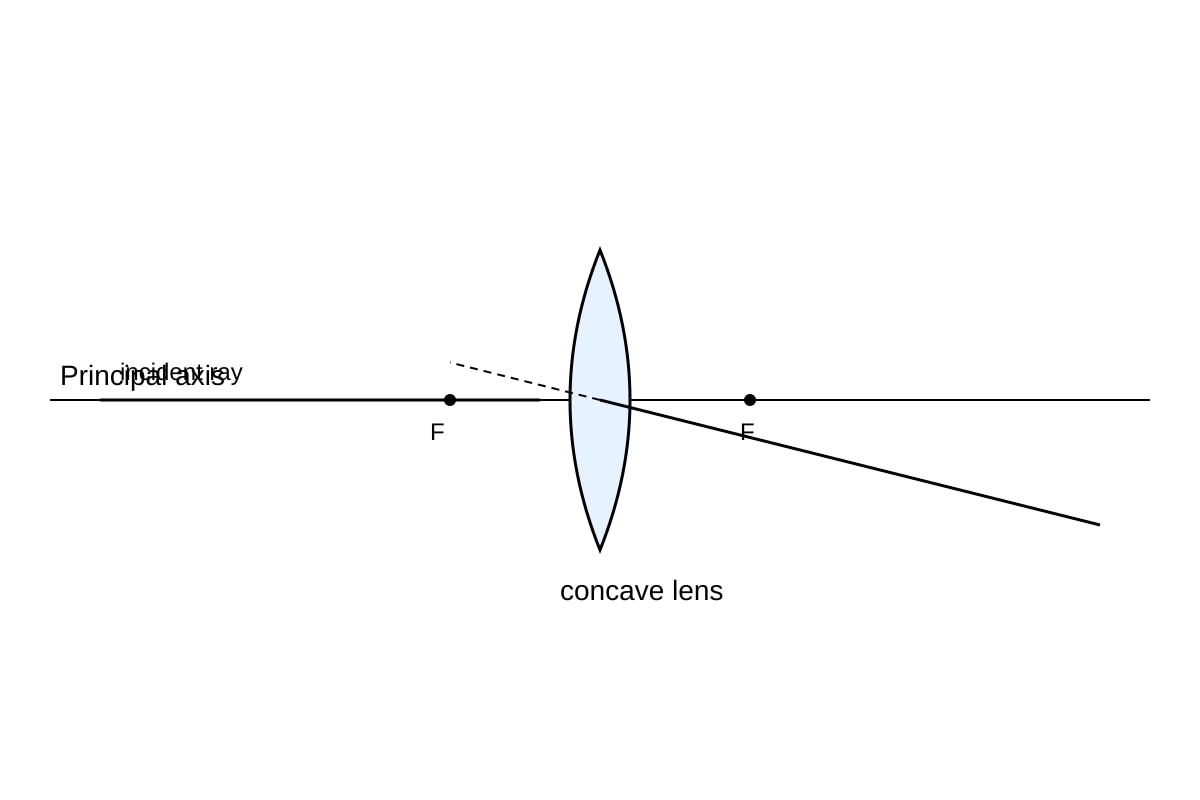
23. Complete the ray diagram to show how a concave lens diverges a parallel ray.
Image pending generation: diagram for Q23.
Draw the refracted ray. [2]
24. A magnet is pushed into a coil connected to a galvanometer. State what is observed and explain. [3]
25. Two resistors of 6 Ω and 3 Ω are connected in parallel to a 9 V supply. Calculate the total current. [3]
Section A Total: 22 marks
Section B Total: 22 marks
Section C Total: 21 marks
Total: 65 marks
Answers
TuitionGoWhere Practice Paper - Combined Science Physics Secondary 4 (PRELIM) Version 2: Answer Key
Section A: Kinematics & Forces (22 marks)
Q1. 0 m s⁻² [1]
Teaching note: Between B (4,12) and C (10,12), velocity is constant at 12 m s⁻¹. Acceleration = gradient of v–t graph = (12−12)/(10−4) = 0. Magnitude is 0 m s⁻². Common mistake: stating 12 m s⁻² (confusing velocity with acceleration).
Q2. Total distance = area under graph = triangle (0–4s) + rectangle (4–10s) + triangle (10–14s)
= ½×4×12 + 6×12 + ½×4×12 = 24 + 72 + 24 = 120 m [1]
Total time = 14 s [0.5]
Average speed = 120/14 = 8.57 ≈ 8.6 m s⁻¹ [0.5]
Full: average speed = total distance / total time = 120/14 = 8.6 m s⁻¹. Mark breakdown: 1 for distance, 1 for correct division.
Q3. C [1]
At constant speed, a = 0, net force = 0, so applied = friction. A, B, D wrong.
Q4. (i) 8 N [1]
(ii) At constant speed, acceleration = 0 so net force = 0; friction balances applied force, thus friction = 8 N. [1]
Q5. Acceleration decreases (towards zero) as air resistance increases with speed. [1]
Q6. average speed = 200/25 = 8.0 m s⁻¹ [2: 1 for 200/25, 1 for answer]
Q7. a = (10−0)/(5−0) = 2 m s⁻² [2: 1 formula/sub, 1 answer]
Q8. F = ma = 1000 × 2 = 2000 N [2: 1 calc, 1 unit/answer]
Section B: Thermal Physics & Energy (22 marks)
Q9. 80 °C [1] (plateau from 300 s to 500 s)
Q10. E = P t = 500 × 300 = 150 000 J = 150 kJ [2: 1 formula, 1 answer]
Q11. [3: 1 movement, 1 arrangement, 1 state change]
Particles gain energy and move faster; arrangement becomes less ordered as bonds break; liquid becomes gas with large gaps between particles.
Q12. GPE = mgh = 2 × 10 × 3 = 60 J [2]
Q13. efficiency = (180/240) × 100% = 75% [2]
Q14. Conduction transfers heat through the metal by free electrons and vibrating ions from hot end to handle. [2]
Q15. Conduction needs matter/solids; convection needs fluid movement/currents. [1]
Q16. E = P t = 60 × (10×60) = 36 000 J = 36 kJ [2]
Q17. Q = mcΔT = 0.50 × 4200 × (80−20) = 0.50×4200×60 = 126 000 J [3: 1 formula, 1 sub, 1 answer]
Section C: Waves, Electricity & Magnetism (21 marks)
Q18. 30° [1] (law of reflection)
Q19. R_total = 2+4 = 6 Ω; I = V/R = 6/6 = 1.0 A [2: 1 total R, 1 current]
Q20. Relay allows low-current circuit to switch high-current appliance safely / isolates user from mains. [2]
Q21. Microwaves [1]
Q22. V_s/V_p = N_s/N_p → V_s = 12 × 200/100 = 24 V [2]
Q23. Ray diverges as if from focal point on left; draw dashed line to F. [2 for correct diverging ray]
Q24. Galvanometer deflects [1]; EM induction produces current [1]; as magnet moves, flux changes [1]. [3]
Q25. 1/R = 1/6 + 1/3 = 1/2 → R = 2 Ω; I = 9/2 = 4.5 A [3: 1 parallel calc, 1 total R, 1 current]
Total: 65 marks
Free quiz and exam paper access
Enter your details to view this paper
Your access is remembered on this device.