AI Generated Quiz
Secondary 4 Combined Science Biology Human Physiology Quiz
Free Sec 4 Comb Sci Bio Human Physiology quiz, HY3 AI version, with questions, answers, and O Level-style practice for Singapore students.
These static practice materials are generated from the site's syllabus and paper-generation workflow, with source and model context shown so students and parents can evaluate the material before use.
Questions
Free quiz and exam paper access
Enter your details to view this paper
Your access is remembered on this device.
Answers
Secondary 4 Combined Science Biology Quiz - Human Physiology (Answer Key)
Total Marks: 40
Topic: Human Physiology
Note: Content generated from LLM-inferred syllabus-first templates (Stage 4/5). Past-paper evidence for Human Physiology was moderate; this quiz is NOT claimed to be exam-derived.
Section A Answers
Q1. [1 mark] Diffusion
Teaching note: Oxygen moves from alveoli (high concentration) to capillary blood (low concentration) by diffusion, a passive process needing no energy.
Q2. [1 mark] Breaks down starch into maltose / sugars.
Teaching note: Amylase is a carbohydrase; it hydrolyses starch (polysaccharide) to maltose (disaccharide) in mouth and small intestine.
Q3. [1 mark] Pulmonary vein
Teaching note: The pulmonary vein is the only vein carrying oxygenated blood; it returns blood from lungs to left atrium.
Q4. [1 mark] Liver
Teaching note: Deamination of amino acids in liver produces ammonia → converted to urea.
Q5. [1 mark] Anaerobic respiration
Teaching note: In low oxygen, muscle cells respire anaerobically producing lactic acid and ATP.
Q6. [2 marks] Secretes insulin (which lowers blood glucose) / secretes glucagon (raises blood glucose).
Marking: 1 mark for pancreas role, 1 for naming hormone + effect.
Teaching note: Pancreas is an endocrine gland with islets of Langerhans; insulin promotes glucose uptake.
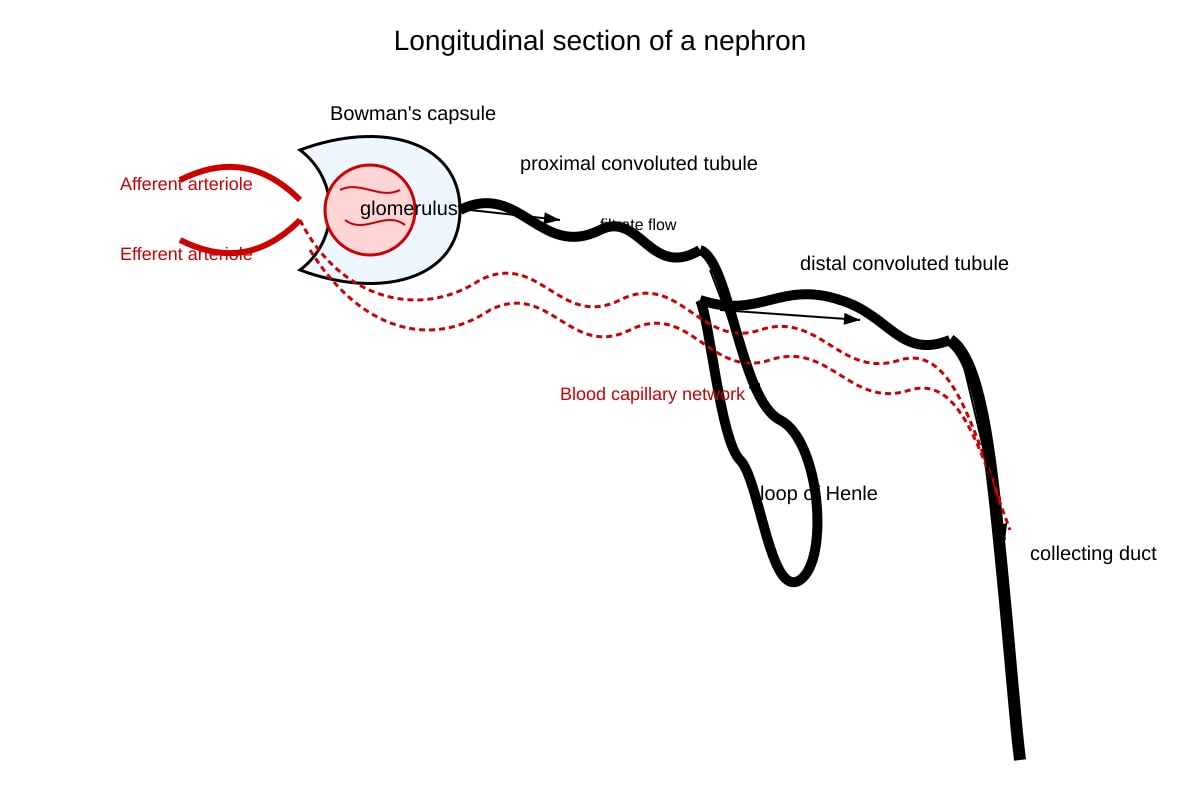
Q7. [1 mark] Nephron (or Bowman's capsule / glomerulus)
Teaching note: Filtration occurs in renal corpuscle (glomerulus + Bowman's capsule).
Q8. [1 mark] Carbon dioxide
Teaching note: CO₂ diffuses from blood to alveoli to be exhaled.
Section B Answers
Q9. [3 marks]
- Long villi and microvilli increase surface area [1]
- Thin wall (one cell thick) for short diffusion distance [1]
- Rich blood capillary network to carry away absorbed food [1]
Teaching note: Adaptations follow surface-area-to-volume and diffusion principles.
Q10. [2 marks]
- More space for haemoglobin [1]
- Carries more oxygen [1]
Teaching note: Mature mammalian RBC eject nucleus to maximise haemoglobin capacity.
Q11. [2 marks]
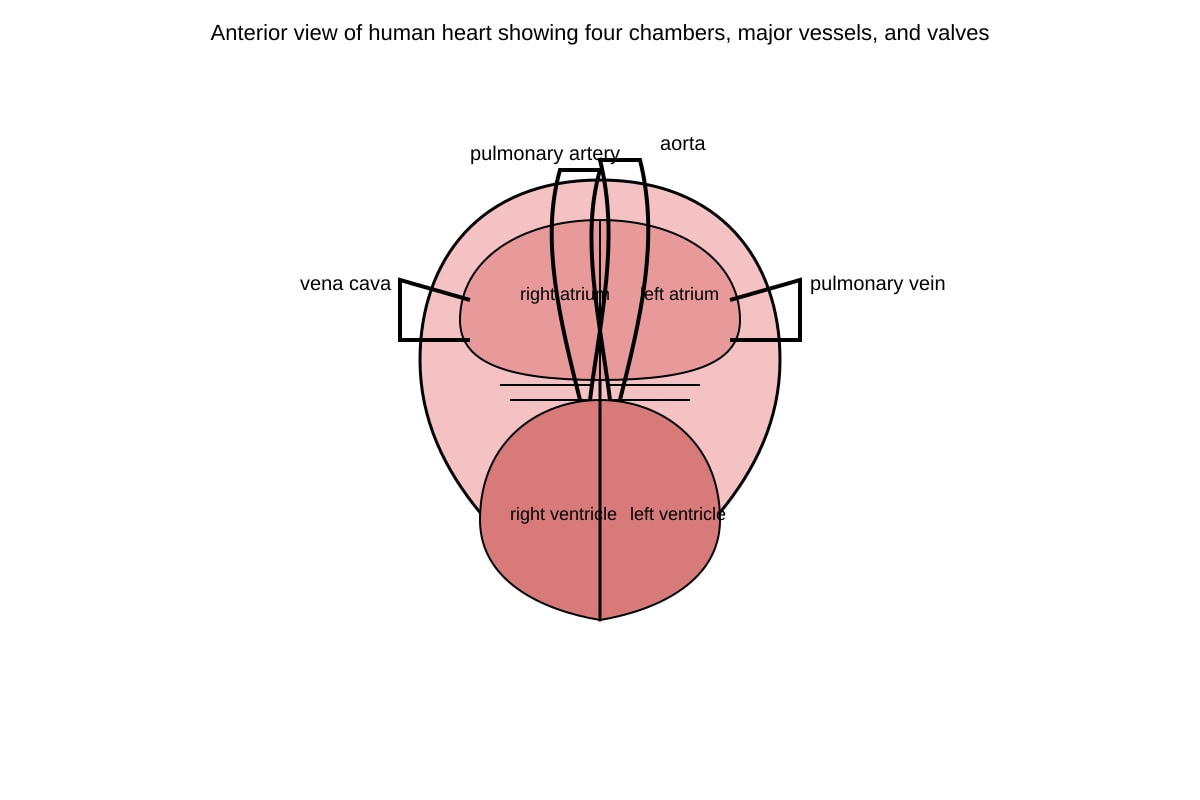
- X = left ventricle [1]
- Y (pulmonary artery) = deoxygenated [1]
Teaching note: Left ventricle has thick wall to pump to body; pulmonary artery carries deoxygenated blood to lungs (exception: artery carries deoxygenated).
Q12. [4 marks]
- Blood glucose rises after meal [1]
- Pancreas detects and secretes insulin [1]
- Insulin promotes glucose uptake by liver/muscle cells and conversion to glycogen [1]
- Blood glucose returns to normal [1]
Teaching note: Negative feedback loop; contrast with glucagon if low.
Q13. [3 marks]
Muscle cell → capillary → vena cava → right atrium → right ventricle → pulmonary artery → lung alveoli → exhaled.
[1 mark each for correct sequence in 3 logical steps; full 3 for naming muscle capillary, heart chambers/vessels, alveoli]
Teaching note: CO₂ travels reverse of O₂ path; diffuses down gradient.
Q14. [2 marks]
- Separates oxygenated and deoxygenated blood [1]
- Allows higher pressure delivery to body / efficient supply [1]
Teaching note: Pulmonary and systemic circuits; birds/mammals only.
Section C Answers
Q15. [3 marks]
- Skeletal muscle has 2500, skin has 200 mitochondria [1 for data]
- Muscle cells need high ATP for contraction [1]
- Skin cells lower metabolic demand so fewer mitochondria [1]
Teaching note: Structure–function; mitochondrion = site of aerobic respiration.
Q16. [3 marks]
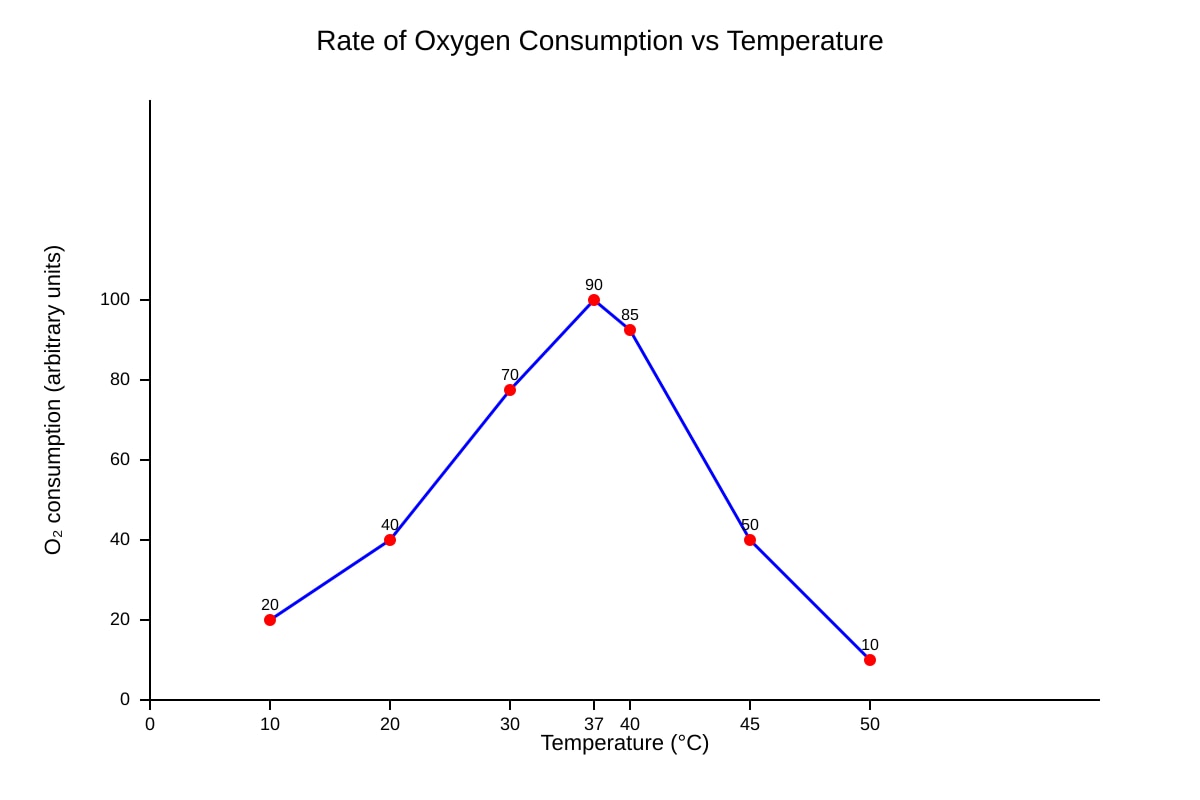
- Highest at 37°C [1]
- Above 40°C enzymes (e.g. cytochrome) denature [1]
- Reduced active sites slow respiration [1]
Teaching note: Human enzymes optimum ~37°C; denaturation is permanent shape change.
Q17. [4 marks]
Percentage increase = (140 – 70) / 70 × 100 = 100% [2 marks: 1 for correct subtraction/division, 1 for ×100 and answer]
Explanation:
- Muscles need more O₂ and ATP during exercise [1]
- Faster circulation delivers O₂ and removes CO₂ [1]
Teaching note: Formula: % change = (final – initial)/initial × 100.
Q18. [4 marks]
- Ultrafiltration at Bowman's capsule / glomerulus [1]
- Reabsorption: glucose, amino acids, salts actively transported from tubule to capillary [1]
- Water reabsorbed by osmosis [1]
- Occurs in proximal tubule mainly [1]
Teaching note: Selective reabsorption maintains homeostasis.
Q19. [4 marks]
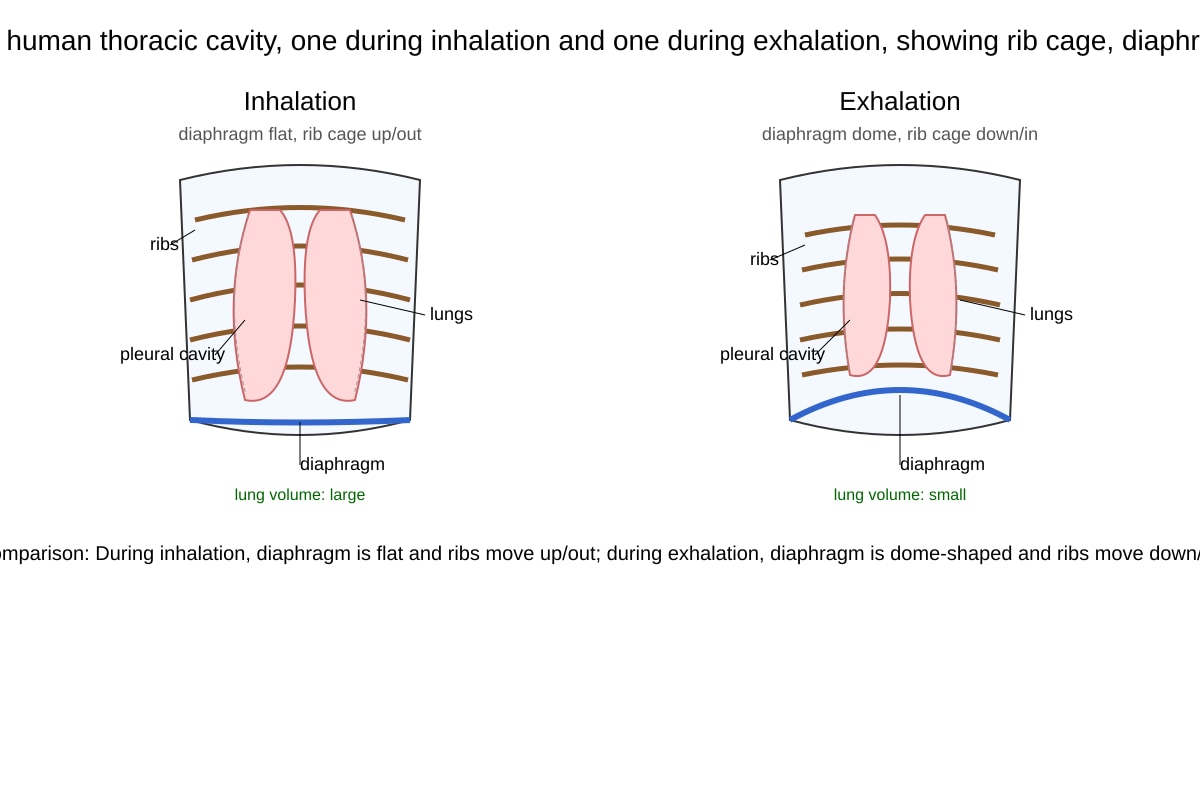
- Diaphragm contracts and flattens [1]
- Ribs move up and out [1]
- Thoracic volume increases, pressure drops below atmospheric [1]
- Air flows in down pressure gradient [1]
Teaching note: Boyle's law applied to ventilation.
Q20. [3 marks]
- Proteins are needed to make enzymes (proteins) [1]
- Low protein → fewer enzymes synthesised [1]
- Digestion less efficient [1]
Teaching note: Enzymes are globular proteins; deficiency impairs metabolism.