AI Generated Quiz
Secondary 4 Combined Science Biology Ecology Quiz
Free Sec 4 Comb Sci Bio Ecology quiz, HY3 AI version, with questions, answers, and O Level-style practice for Singapore students.
These static practice materials are generated from the site's syllabus and paper-generation workflow, with source and model context shown so students and parents can evaluate the material before use.
Questions
Secondary 4 Combined Science Biology Quiz - Ecology
TuitionGoWhere Practice Quiz (AI)
Version: 1 of 5
Subject: Combined Science Biology
Level: Secondary 4
Topic: Ecology
Duration: 45 minutes
Total Marks: 40
Name: ________________________
Class: ____________
Date: ____________
Score: ____________
Instructions:
- This quiz contains 20 questions on Ecology.
- Section A: Questions 1–8 (short answer / recall, 1–2 marks each)
- Section B: Questions 9–14 (data / diagram interpretation, 2–3 marks each)
- Section C: Questions 15–20 (structured explanation, 3–5 marks each)
- Write your answers in the spaces provided. Use clear scientific terms.
- Note: This quiz is generated from syllabus-first LLM templates. Past-paper evidence for Ecology at Sec 4 Combined Science Bio is weak; content is useful but not claimed as exam-derived.
Section A (Questions 1–8)
1. [1 mark] State the term used for a community of living organisms together with their non-living environment.
2. [1 mark] Name the process by which energy enters most ecosystems on Earth.
3. [1 mark] Define a food chain in one sentence.
4. [2 marks] State two abiotic components of a pond ecosystem.
(a) ________________________________________________________
(b) ________________________________________________________
5. [1 mark] What is the position of an organism in a food chain called?
6. [2 marks] Name two biotic factors that can affect the population size of rabbits in a grassland.
(a) ________________________________________________________
(b) ________________________________________________________
7. [1 mark] State the main greenhouse gas involved in the carbon cycle that is released by respiration.
8. [2 marks] Give one human activity that reduces biodiversity and one that increases it.
Reduced by: ________________________________________________________
Increased by: ________________________________________________________
Section B (Questions 9–14)
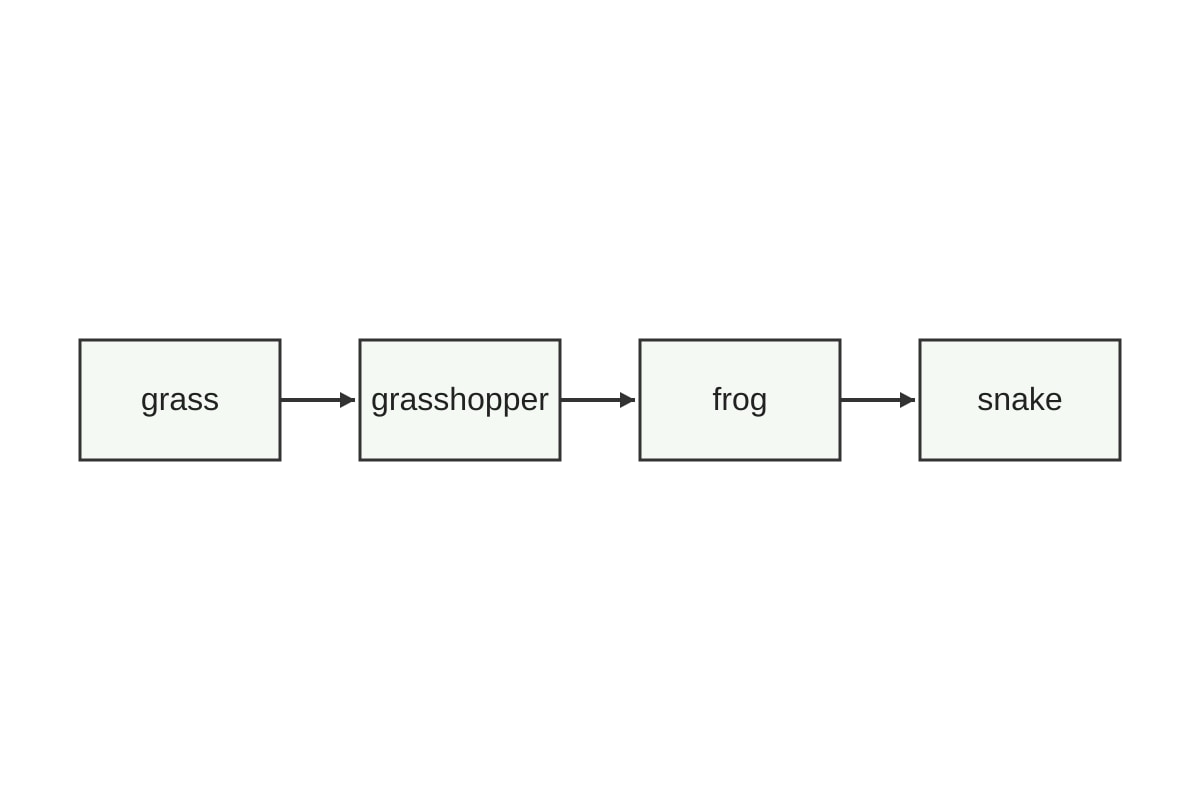
9. [2 marks] The diagram below shows a simple food chain.
Image pending generation: diagram for Q9.
State the trophic level of the frog. ________________________________________________________
10. [3 marks] A student recorded the number of organisms in a field.
| Organism | Number |
|---|---|
| Grass | 5000 |
| Mice | 200 |
| Snakes | 10 |
Explain why the number of snakes is much smaller than the number of grass plants.
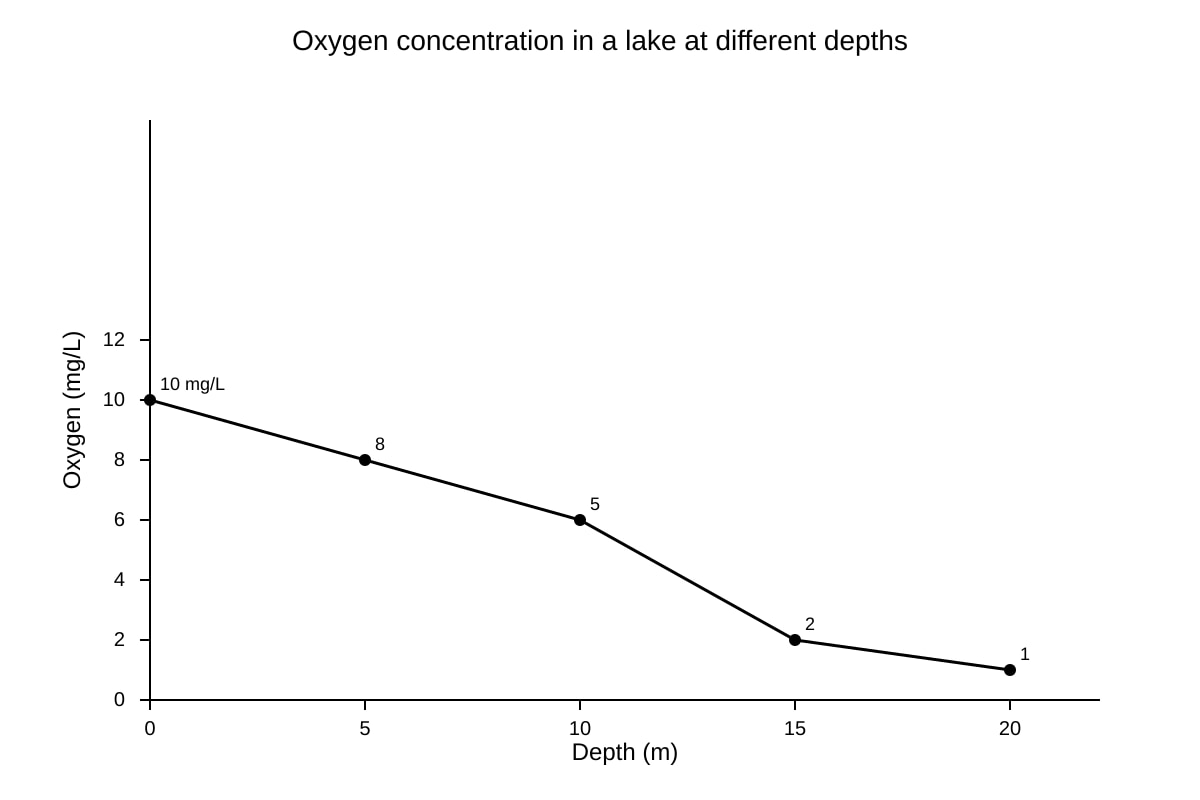
11. [2 marks] The graph shows oxygen concentration in a lake at different depths.
Image pending generation: graph for Q11.
Describe the trend and suggest one reason for it.
Trend: ________________________________________________________
Reason: ________________________________________________________
12. [3 marks] The carbon cycle includes several processes. Name the process that removes carbon dioxide from the atmosphere and the process that returns it via burning.
Removes: ________________________________________________________
Returns via burning: ________________________________________________________
Explain briefly how the removal process works: ________________________________________________________
13. [2 marks] A polluted river has low biodiversity. State two possible pollutants and their effects.
(a) ________________________________________________________
(b) ________________________________________________________
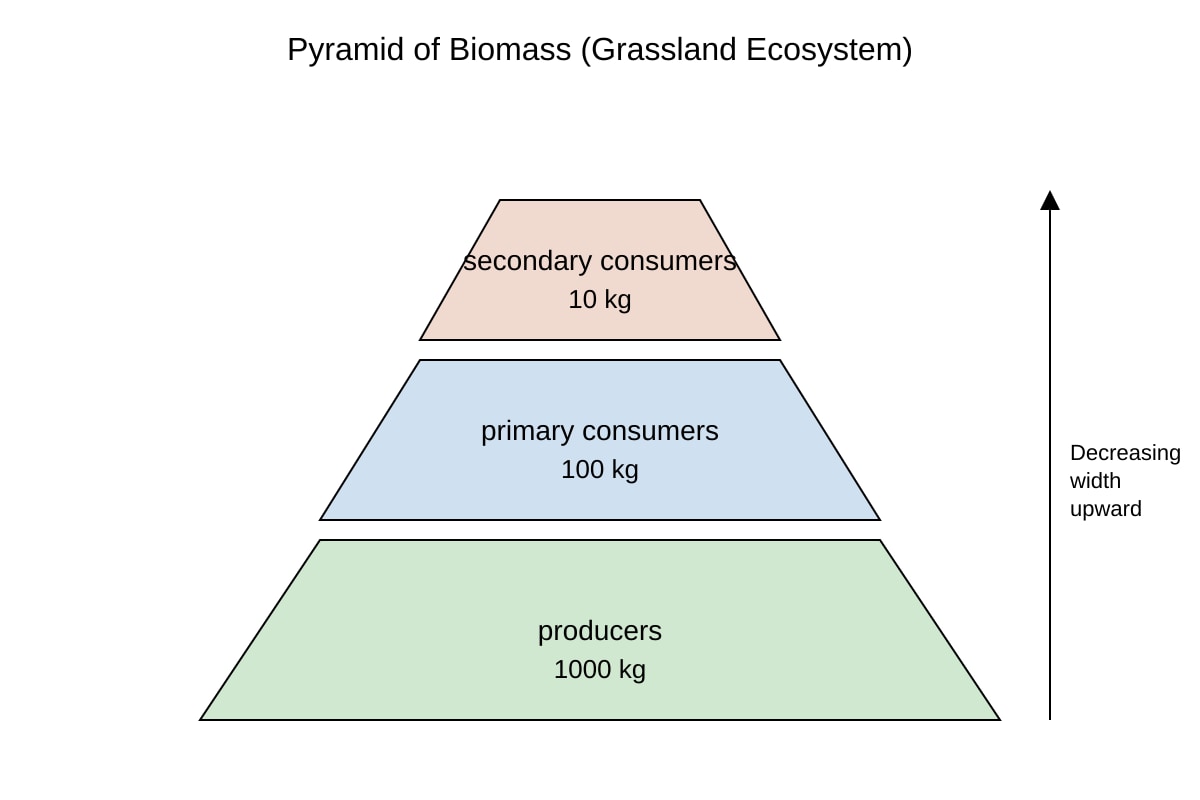
14. [3 marks] The diagram shows a pyramid of biomass for a grassland ecosystem.
Image pending generation: diagram for Q14.
Calculate the percentage of biomass transferred from producers to primary consumers. Show your working.
Working: ________________________________________________________
Answer: ________________________________________________________
Section C (Questions 15–20)
15. [3 marks] Explain how deforestation can lead to a decrease in carbon dioxide absorption and an increase in atmospheric carbon dioxide.
16. [4 marks] Describe how nitrogen enters the ecosystem and becomes available to plants. Include two processes and the organisms involved.
17. [4 marks] A pond ecosystem suffers from eutrophication after fertiliser runoff. Explain the sequence of events that leads to fish death.
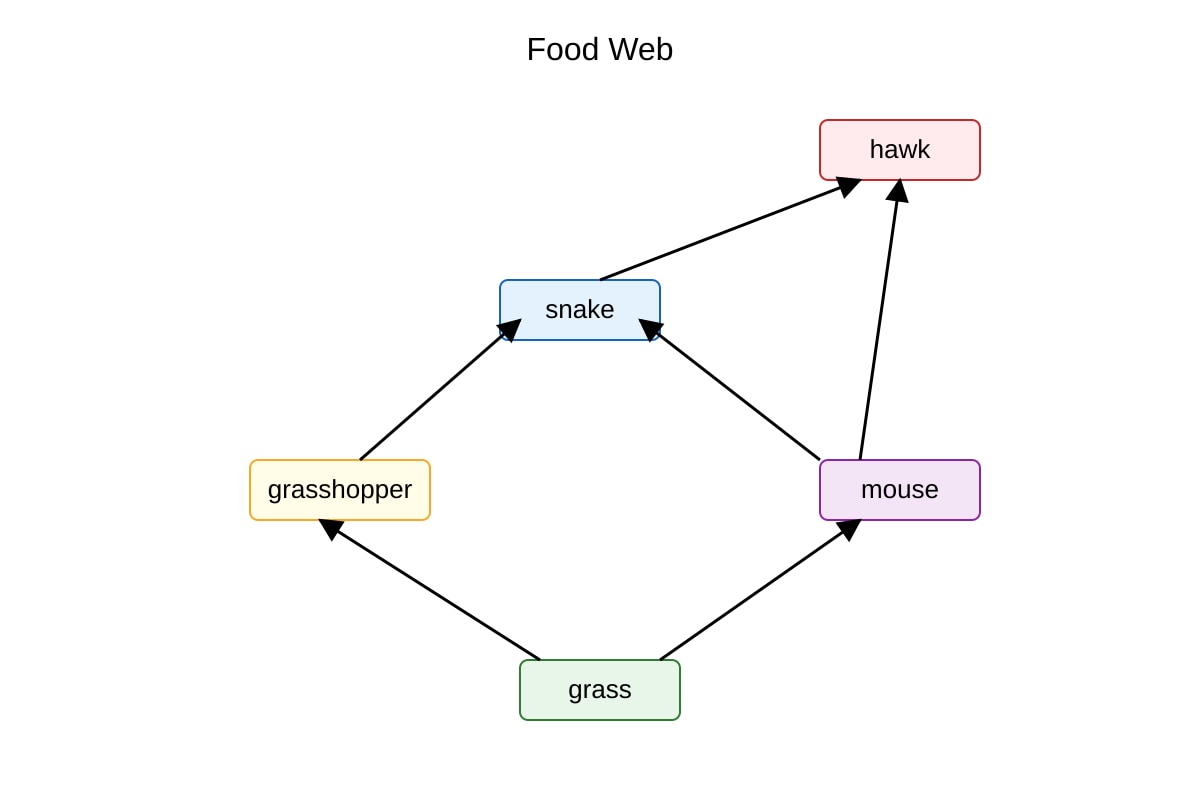
18. [5 marks] The food web below includes hawks, snakes, mice, grasshoppers, and grass.
Image pending generation: diagram for Q18.
If grasshopper population falls sharply, predict the effect on hawks and explain your reasoning (2 marks for prediction, 3 marks for reasoning).
Prediction: ________________________________________________________
Reasoning: ________________________________________________________
19. [3 marks] Suggest two reasons why conservation of mangrove forests is important for biodiversity and people.
(a) ________________________________________________________
(b) ________________________________________________________
20. [5 marks] Compare the water cycle and carbon cycle in terms of (i) main reservoir, (ii) key process moving the substance, (iii) human impact. Use a small table or bullet points.
Answers
Secondary 4 Combined Science Biology Quiz - Ecology (Answer Key)
Version: 1 of 5
Topic: Ecology
Total Marks: 40
Teaching notes included for each item. Ecology past-paper evidence was weak; answers are syllabus-aligned.
1. [1 mark] Ecosystem.
Teaching note: An ecosystem = all living (biotic) things + non-living (abiotic) things in an area interacting.
2. [1 mark] Photosynthesis.
Teaching note: Sunlight is captured by producers via photosynthesis; almost all food energy starts here.
3. [1 mark] A food chain is a linear sequence showing how energy and nutrients pass from producers to consumers.
Accept: "series of organisms each eaten by the next".
4. [2 marks] Any two: water, sunlight, temperature, dissolved oxygen, soil minerals, pH. (1 mark each)
Common mistake: listing plants/animals (these are biotic).
5. [1 mark] Trophic level.
Teaching note: Trophic = feeding position (1st = producer, 2nd = primary consumer…).
6. [2 marks] Any two biotic factors: predators (e.g., foxes), competition from other herbivores, disease, availability of food plants. (1 mark each)
7. [1 mark] Carbon dioxide (CO2).
Teaching note: Respiration in plants, animals, microbes releases CO2.
8. [2 marks] Reduced by: deforestation / pollution / urbanisation. Increased by: setting up nature reserves / reforestation. (1 mark each)
9. [2 marks] Secondary consumer.
Marking: 1 mark for "consumer", 1 mark for "secondary" (grass=producer, grasshopper=primary, frog=secondary).
10. [3 marks]
- Energy is lost at each trophic level (respiration, heat), so fewer organisms can be supported at higher levels. (1)
- Biomass decreases up the chain; snakes need to eat many mice which eat much grass. (1)
- Pyramid of numbers/biomass concept. (1)
11. [2 marks] Trend: oxygen decreases with depth. (1) Reason: less light → less photosynthesis by algae; decomposition uses oxygen. (1)
12. [3 marks] Removes: photosynthesis. (1) Returns via burning: combustion / burning of fossil fuels. (1) Explanation: plants take in CO2 and use sunlight to make glucose and O2. (1)
13. [2 marks] (a) Sewage → lowers oxygen, kills organisms. (b) Chemical waste → toxic, reduces species. (1 each)
14. [3 marks] Working: (100÷1000)×100=10%. (2 for working, 1 for answer) Answer: 10%.
15. [3 marks]
- Fewer trees → less photosynthesis → less CO2 absorbed. (1)
- Burning/cutting releases stored carbon as CO2. (1)
- Overall atmospheric CO2 rises. (1)
16. [4 marks]
- Nitrogen gas (N2) fixed by bacteria (Rhizobium in roots / Azotobacter in soil) into nitrates. (2)
- Nitrification by soil bacteria converts ammonia to nitrites then nitrates. (1)
- Plants absorb nitrates via roots. (1)
17. [4 marks]
- Fertilisers add nitrates → algal bloom. (1)
- Algae die, bacteria decompose them using O2. (1)
- Dissolved oxygen drops. (1)
- Fish suffocate / die. (1)
18. [5 marks]
Prediction: Hawk population may decrease slightly but not collapse. (2)
Reasoning: Hawks eat both snakes and mice; loss of grasshopper affects snakes and mice, but hawks have alternative food (mouse/snake). (3: mention food web not chain, alternative prey, indirect effect)
19. [3 marks] (a) Habitat for many species (nursery for fish). (b) Protect coast from erosion / store carbon. (any 2, 1.5 each)
20. [5 marks]
(i) Water: oceans; Carbon: atmosphere/rocks. (1+1)
(ii) Water: evaporation & precipitation; Carbon: photosynthesis & respiration. (1+1)
(iii) Human impact: dams/deforestation vs burning fossil fuels. (1)
Free quiz and exam paper access
Enter your details to view this paper
Your access is remembered on this device.