AI Generated Quiz
Secondary 4 Combined Science Biology Cells Biomolecules Quiz
Free Sec 4 Comb Sci Bio Cells Biomolecules quiz, HY3 AI version, with questions, answers, and O Level-style practice for Singapore students.
These static practice materials are generated from the site's syllabus and paper-generation workflow, with source and model context shown so students and parents can evaluate the material before use.
Questions
Free quiz and exam paper access
Enter your details to view this paper
Your access is remembered on this device.
Answers
Secondary 4 Combined Science Biology Quiz - Cells Biomolecules (Answer Key)
Total Marks: 40
Topic: Cells Biomolecules
Note: This quiz is syllabus-first content generated from LLM-inferred templates. It is not claimed to be derived from past-year exam papers.
Q1. [1 mark]
Answer: Diffusion
Teaching note: Oxygen moves from alveolar air (high concentration) to blood and then to muscle tissue fluid and cell (lower concentration) by diffusion, a passive process requiring no energy. Common mistake: naming "respiration" or "blood vessel" instead of the process.
Q2. [1 mark]
Answer: Mitochondrion (plural: mitochondria)
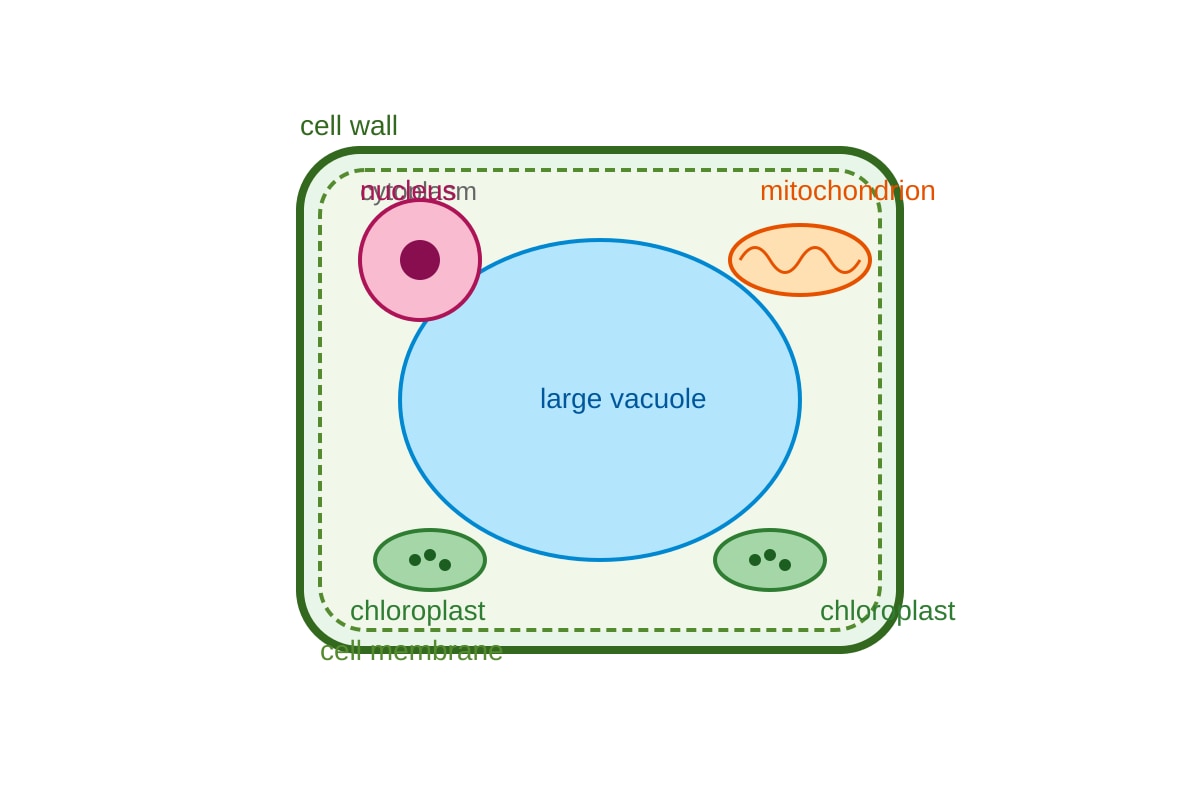
Teaching note: Mitochondria are the sites of aerobic respiration where ATP is produced. Do not confuse with chloroplast (plant photosynthesis).
Q3. [1 mark]
Answer: Plant cell
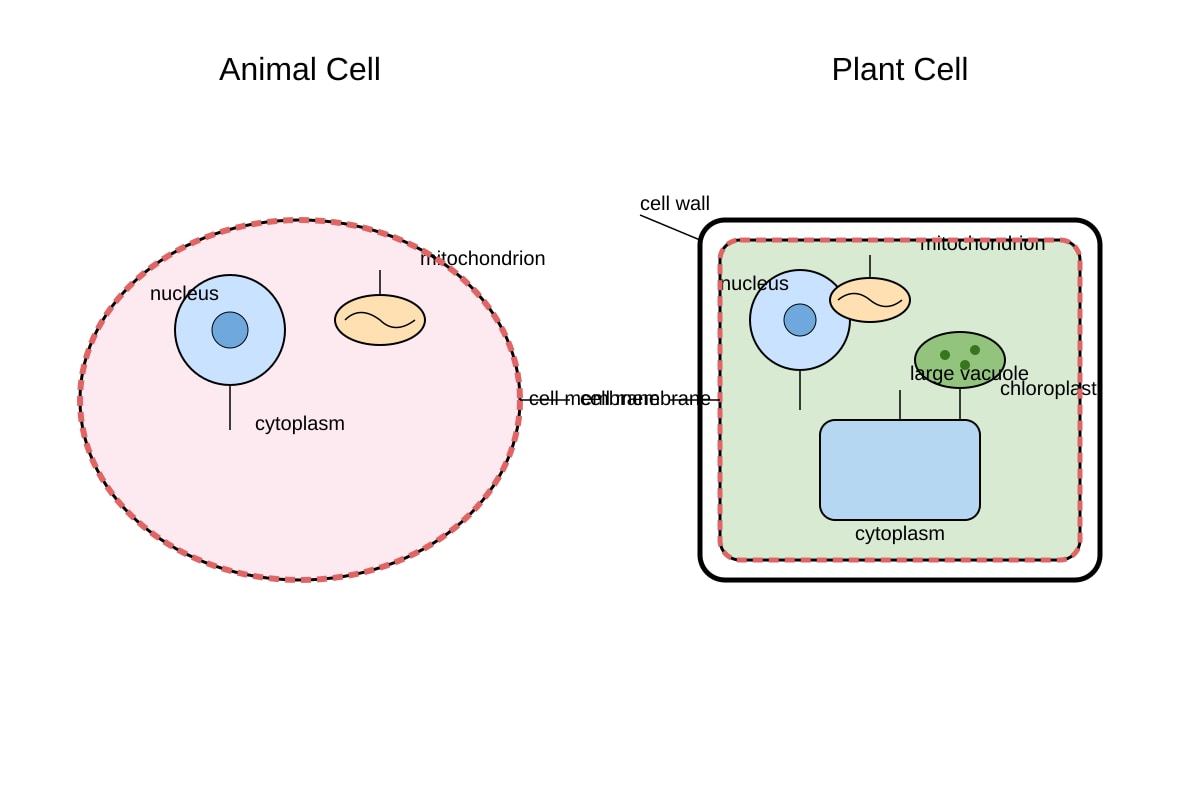
Teaching note: Cell wall + chloroplasts + large central vacuole are defining features of plant cells, not animal cells.
Q4. [1 mark]
Answer: Diffusion does not require energy / active transport requires energy (ATP).
(Any one correct difference.)
Teaching note: Diffusion is passive down a gradient; active transport is against gradient using ATP.
Q5. [1 mark]
Answer: Cell membrane
Teaching note: The cell membrane (plasma membrane) controls entry/exit. In the placeholder diagram it is the line inside the cell wall.
Q6. [1 mark]
Answer: Osmosis
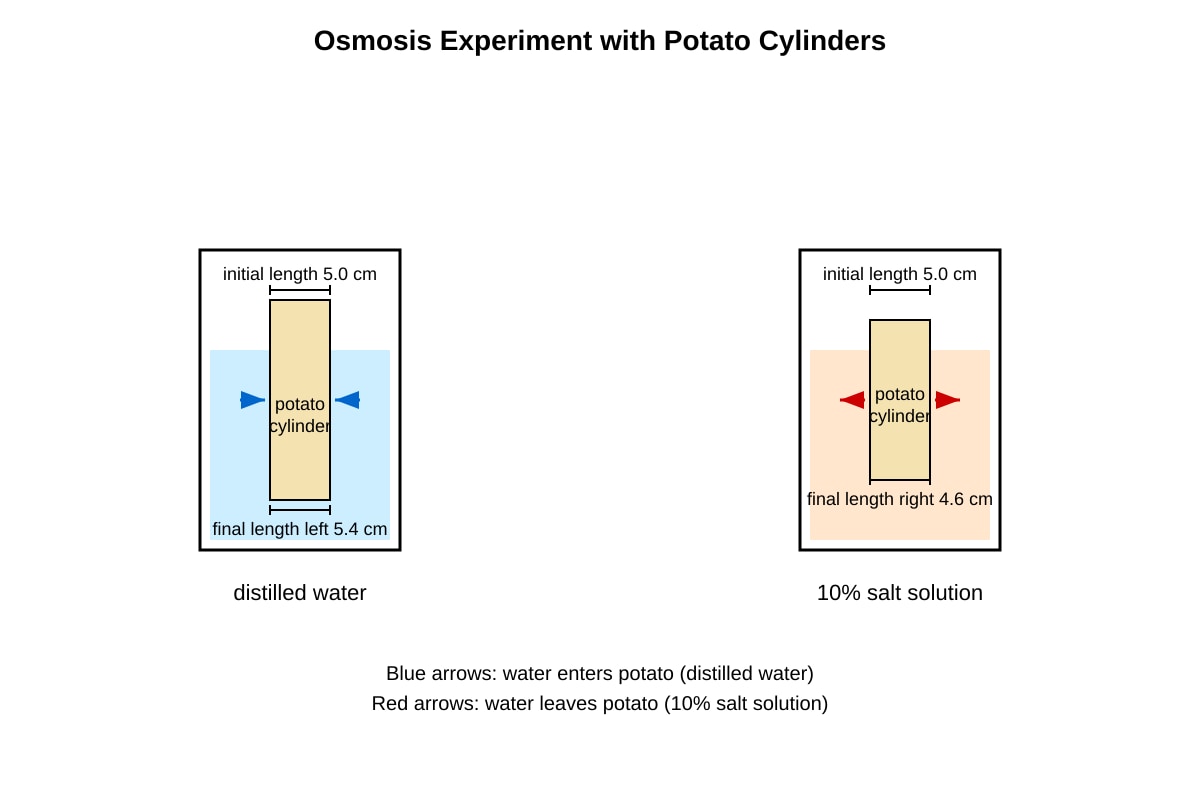
Teaching note: Osmosis is diffusion of water across a partially permeable membrane. Water potential gradient is key.
Q7. [1 mark]
Answer: More space for haemoglobin to carry oxygen.
Teaching note: Lack of nucleus increases internal volume for haemoglobin, improving oxygen transport efficiency.
Q8. [2 marks]
Answer: Skeletal muscle cells contract actively and need large amounts of ATP; therefore they have more mitochondria for aerobic respiration. Skin epithelial cells have lower energy demand for protection, so fewer mitochondria.
Marking: 1 mark for linking muscle to high energy need; 1 mark for contrast with skin function.
Q9. [2 marks]
Answer: Active transport; energy from ATP (respiration).
Marking: 1 mark process, 1 mark energy source.
Q10. [3 marks]
Answer: Selectively permeable means the membrane allows some substances to pass but not others. Example 1: Oxygen (small, non-polar) diffuses freely through phospholipid bilayer. Example 2: Glucose (large/polar) needs carrier protein and cannot freely pass.
Marking: 1 mark definition, 1 mark example 1, 1 mark example 2.
Q11. [2 marks]
Working:
Initial length = 5.0 cm
Final length in salt = 4.6 cm
Change = 4.6 – 5.0 = –0.4 cm
Percentage change = (–0.4 / 5.0) × 100 = –8%
Answer: –8% (or 8% decrease)
Marking: 1 mark for correct subtraction, 1 mark for correct percentage and sign.
Q12. [2 marks]
Answer: The long thin extension increases surface area for absorption of water and minerals from soil.
Marking: 1 mark increased SA, 1 mark link to absorption.
Q13. [3 marks]
Answer: Pancreatic secretory cells synthesise and secrete proteins (enzymes), requiring many ribosomes for translation. Adipose cells mainly store fat and have low protein synthesis demand, so fewer ribosomes.
Marking: 1 mark pancreas function, 1 mark ribosome role, 1 mark adipose contrast.
Q14. [2 marks]
Answer: Any two: concentration gradient, temperature, membrane surface area, thickness of membrane, size of molecule.
Marking: 1 mark each.
Q15. [6 marks]
Answer steps:
- Inhaled O₂ enters alveoli (1)
- Diffuses across alveolar epithelium into pulmonary capillary blood (1)
- Binds to haemoglobin in red blood cells (1)
- Transported via pulmonary vein → left atrium → left ventricle → aorta → coronary artery (1)
- Diffuses from capillary into heart muscle tissue fluid (1)
- Diffuses across cell membrane into mitochondrion for respiration (1)
Teaching note: Must name structures and processes. Common trap: stopping at lung or blood.
Q16. [4 marks]
Answer: Process = facilitated diffusion through carrier protein down gradient (2 marks). Factors: concentration gradient steepness, number of carrier proteins, temperature (any two = 2 marks).
Teaching note: No ATP used because down gradient.
Q17. [2 marks]
Answer: Cell wall and chloroplast (or large vacuole). Any two correct = 2 marks.
Teaching note: Animal cells lack these three.
Q18. [3 marks]
Answer: Charged ions are polar and cannot pass through hydrophobic phospholipid core (1). They need channel or carrier proteins (1). Without proteins, membrane would be impermeable to Na⁺, preventing essential signalling/transport (1).
Q19. [3 marks]
Answer: Active transport (1). Substance enters against concentration gradient (from 10 to 2 inside, yet continues inward when internal > external) (1), requiring ATP (1).
Q20. [4 marks]
Answer: Inner membrane folded into cristae increases surface area for electron transport chain (2). Matrix contains enzymes for Krebs cycle (1). Double membrane separates compartments for proton gradient (1).
Teaching note: Structure supports ATP production efficiency.