From Real Exams Quiz
Secondary 4 Combined Science Biology Human Physiology Quiz
Free Sec 4 Comb Sci Bio Human Physiology quiz, HY3 Exam version, with questions, answers, and O Level-style practice for Singapore students.
These static practice materials are generated from the site's syllabus and paper-generation workflow, with source and model context shown so students and parents can evaluate the material before use.
Questions

Free quiz and exam paper access
Enter your details to view this paper
Your access is remembered on this device.
Answers
Answer Key: Secondary 4 Combined Science Biology Quiz - Human Physiology
Total Marks: 40
Topic: Human Physiology
Section A: Nutrients, Enzymes and Digestion
1. [1 mark]
Answer: Any one of: growth and repair of tissues / making enzymes / making hormones / energy (less common).
Teaching note: Proteins are made of amino acids and used to build body structures and functional molecules.
Common mistake: Stating "energy only" without other functions is acceptable but carbohydrate/fat is primary energy.
2. [2 marks]
Answer: Enzyme: pepsin (1); Organ: stomach (1).
Teaching note: Pepsin works in acidic pH ~2 to digest proteins; secreted by gastric glands in stomach.
Marking: 1 for enzyme, 1 for organ.
3. [1 mark]
Answer: Small intestine.
Teaching note: Villi and microvilli in small intestine give large surface area for absorption.
Based on Q3-fig1: organ labelled small intestine is correct.
4. [2 marks]
Answer: Enzymes speed up chemical reactions in the body (1) without being used up / denatured permanently (1).
Teaching note: Catalyst = speeds reaction, not changed. Biological = produced by living cells.
Marking: 1 for speeds up reaction, 1 for not consumed / specific.
5. [3 marks]
Answer: Starch → amylase in mouth/small intestine breaks to maltose (1); maltase breaks maltose to glucose (1); glucose absorbed by villi into blood (1).
Teaching note: Salivary amylase and pancreatic amylase act on starch; disaccharidase on brush border.
Marking: 1 each step.
Section B: Transport in Humans
6. [1 mark]
Answer: Diffusion.
Teaching note: O₂ moves from high (alveoli) to low (blood/cell) concentration passively.
7. [1 mark]
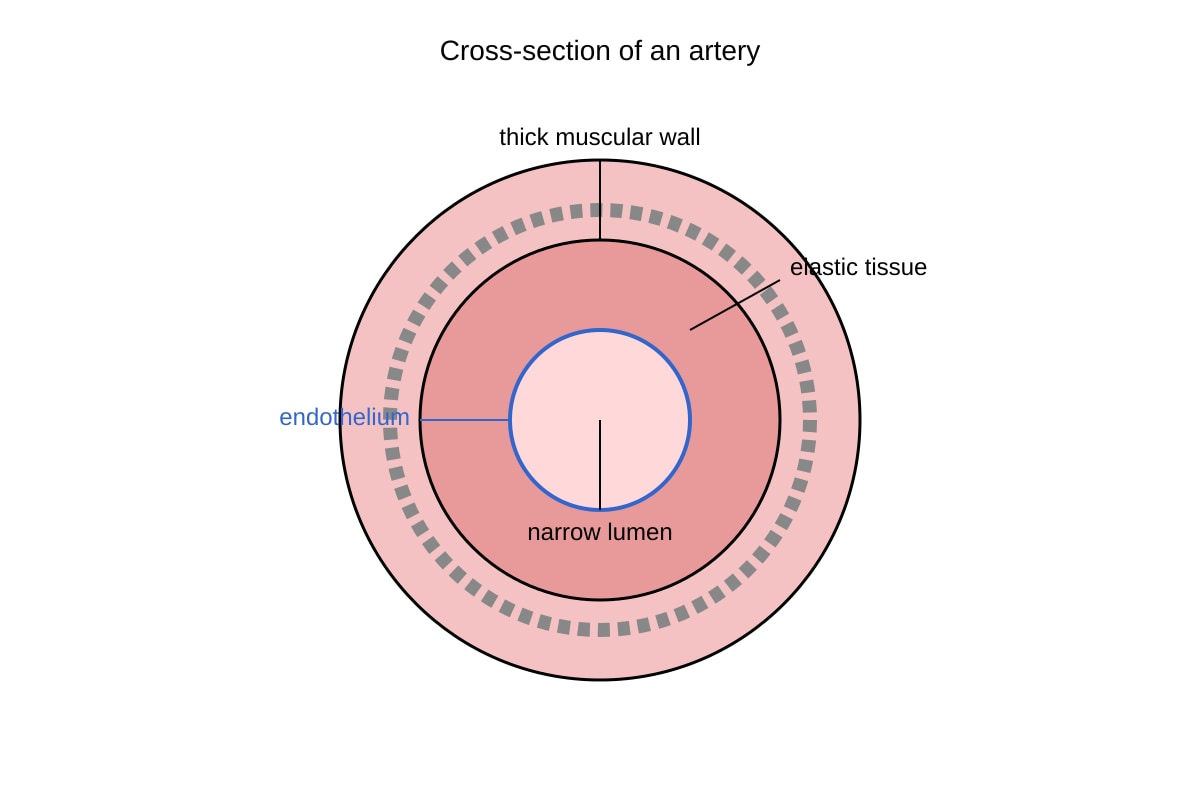
Answer: Artery.
Based on Q7-fig1: thick wall, narrow lumen, no valve = artery.
8. [2 marks]
Answer: Muscle cells need more ATP for contraction (1); mitochondria produce ATP via respiration so more are present (1).
Teaching note: Link structure to function; red blood cell has 0 because no nucleus/mitochondria.
9. [6 marks]
Answer:
- Inhaled O₂ enters alveoli (1)
- Diffuses across alveolar wall into capillary blood (1)
- Binds haemoglobin in RBC (1)
- Transported via pulmonary vein → left atrium → left ventricle → aorta → coronary artery (2 for pathway)
- Diffuses from capillary to heart muscle cell (1)
Marking: 1 per named structure/process, total 6.
10. [1 mark]
Answer: Prevent backflow of blood.
Teaching note: Valves ensure one-way flow.
Section C: Respiration and Excretion
11. [2 marks]
Answer: glucose + oxygen → carbon dioxide + water + energy
(1 for reactants, 1 for products)
Teaching note: Aerobic uses O₂, releases CO₂.
12. [1 mark]
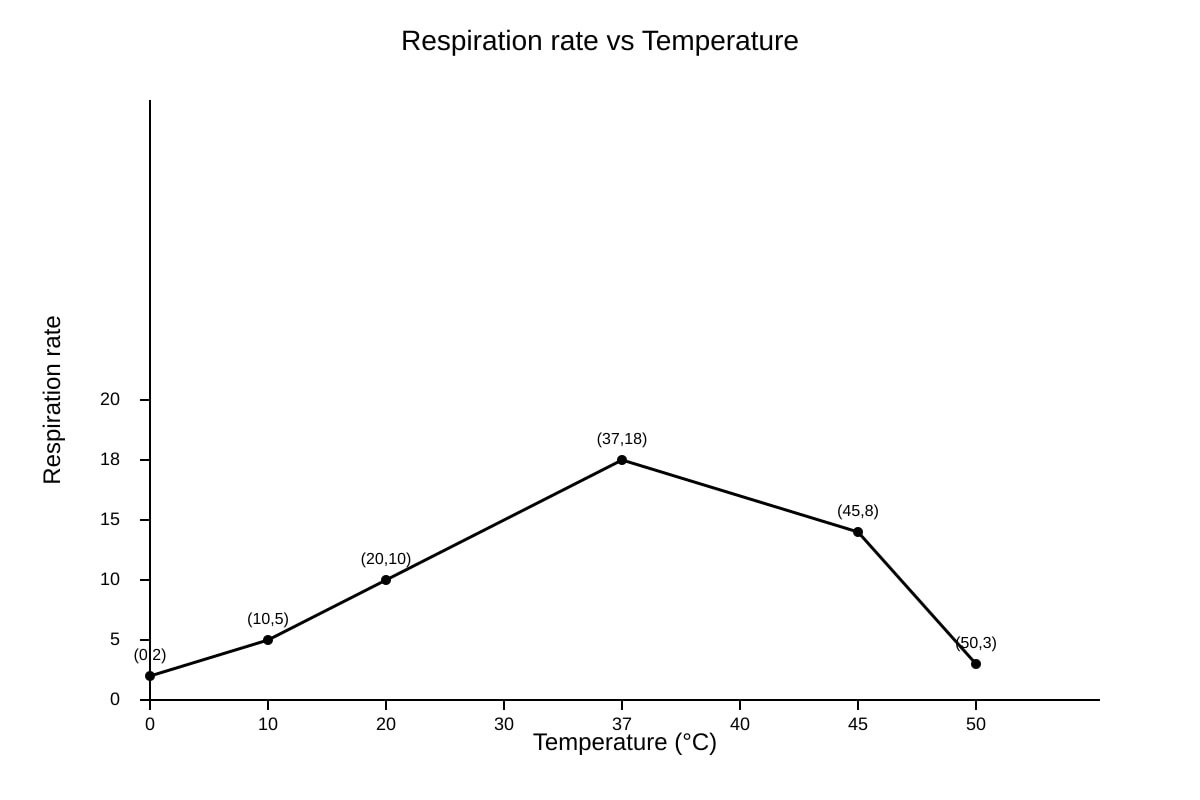
Answer: 37°C.
Based on Q12-fig1: peak at 37°C.
13. [2 marks]
Answer: High temperature denatures enzyme (1); respiration slows as enzymes inactive (1).
Teaching note: Yeast enzymes optimal ~37°C.
14. [1 mark]
Answer: Kidney.
Teaching note: Urea from liver, filtered by kidney.
15. [3 marks]
Answer: Filters blood (1); removes urea and excess salts/water (1); forms urine (1).
Teaching note: Nephron functions.
Section D: Coordination and Regulation
16. [1 mark]
Answer: Insulin.
17. [2 marks]
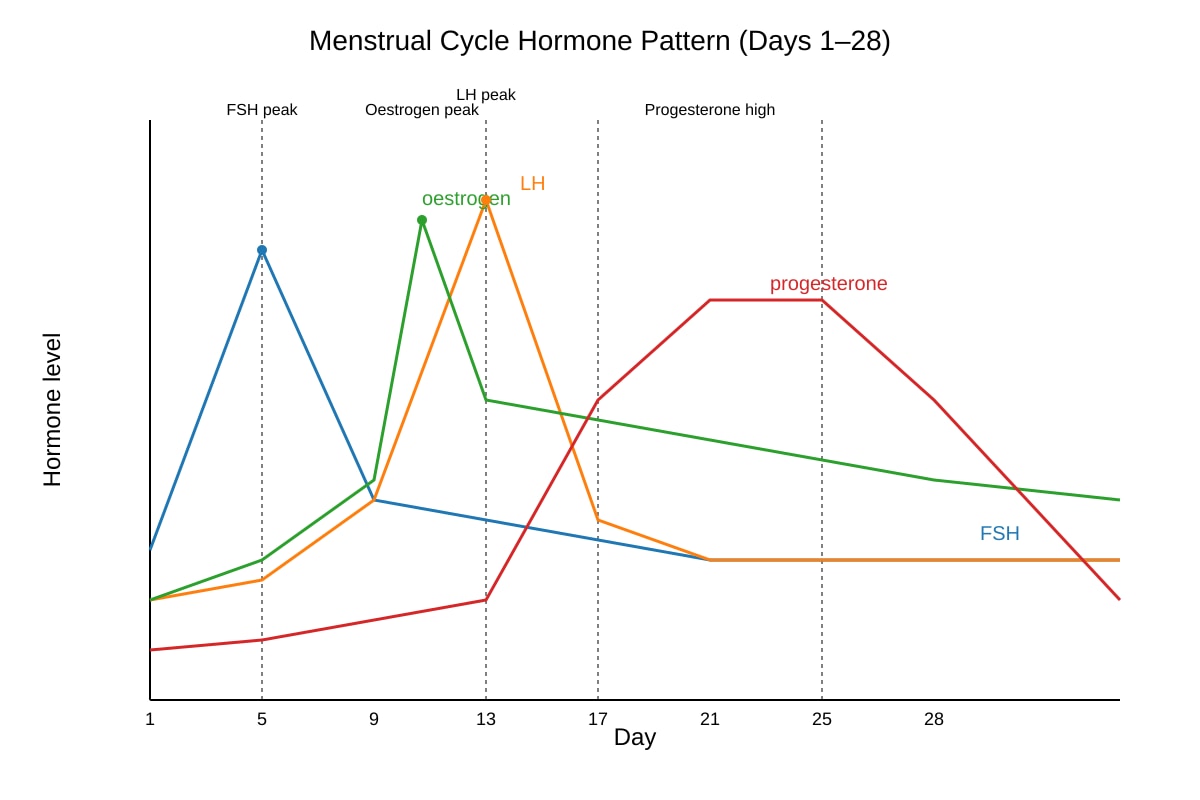
Answer: Day 14 (1); LH (1).
Based on Q17-fig1: LH peak at day 14 triggers ovulation.
18. [2 marks]
Answer: Insufficient insulin (1) so glucose not taken into cells (1).
Teaching note: Type 1 lack insulin, Type 2 resistant.
19. [3 marks]
Answer: Sweating (1); vasodilation (1); hair lies flat (1).
Teaching note: Increase heat loss.
20. [3 marks]
Answer: Glucose rises after meal (1); pancreas secretes insulin (1); liver stores glucose as glycogen lowering blood level (1).
Teaching note: Negative feedback reverses change.