From Real Exams Quiz
Secondary 4 Combined Science Biology Ecology Quiz
Free Sec 4 Comb Sci Bio Ecology quiz, HY3 Exam version, with questions, answers, and O Level-style practice for Singapore students.
These static practice materials are generated from the site's syllabus and paper-generation workflow, with source and model context shown so students and parents can evaluate the material before use.
Questions
Free quiz and exam paper access
Enter your details to view this paper
Your access is remembered on this device.
Answers
Secondary 4 Combined Science Biology Quiz - Ecology (Answer Key)
Total Marks: 40
Topic: Ecology
Section A Answers (1–10)
1. [1 mark]
Answer: Any one abiotic component e.g. water, sunlight, temperature, dissolved oxygen, soil.
Teaching note: Abiotic means non-living. A pond ecosystem includes water (abiotic) and fish (biotic).
Common mistake: Naming a living organism (e.g., fish) → not abiotic.
2. [1 mark]
Answer: Photosynthesis.
Teaching note: Producers (plants/algae) use sunlight in photosynthesis to make glucose, capturing solar energy.
3. [1 mark]
Answer: A food chain is a linear sequence showing how energy and nutrients pass from producer to successive consumers.
Teaching note: E.g., grass → grasshopper → frog. It shows feeding relationships.
4. [1 mark]
Answer: Primary consumer (or herbivore).
Teaching note: Grasshopper eats grass (producer), so it is first-level consumer.
5. [2 marks]
Answer: (a) Bacteria / fungi; role: break down dead organic matter into simple nutrients. (b) Earthworm / mushroom; role: decompose and recycle nutrients to soil.
Marking: 1 mark each example+role.
Teaching note: Decomposers return carbon and minerals to the cycle.
6. [1 mark]
Answer: Carbon dioxide ().
Teaching note: Respiration in decomposers: .
7. [2 marks]
Answer: Bioaccumulation causes toxin concentration to increase at each trophic level (1). Top predators eat many prey and accumulate highest dose (1).
Teaching note: e.g., DDT in eagles causes thin eggshells.
8. [1 mark]
Answer: Deforestation / urbanisation / pollution / overfishing.
Teaching note: These destroy habitats.
9. [2 marks]
Answer:
Marking: 1 for reactants, 1 for products correct.
Teaching note: Glucose stores energy; oxygen is by-product.
10. [2 marks]
Answer: Rainforest has stable warmth, high rainfall, more niches (1); desert has extreme drought and temperature limiting life (1).
Teaching note: Biodiversity = variety of species.
Section B Answers (11–15)
11. [3 marks]
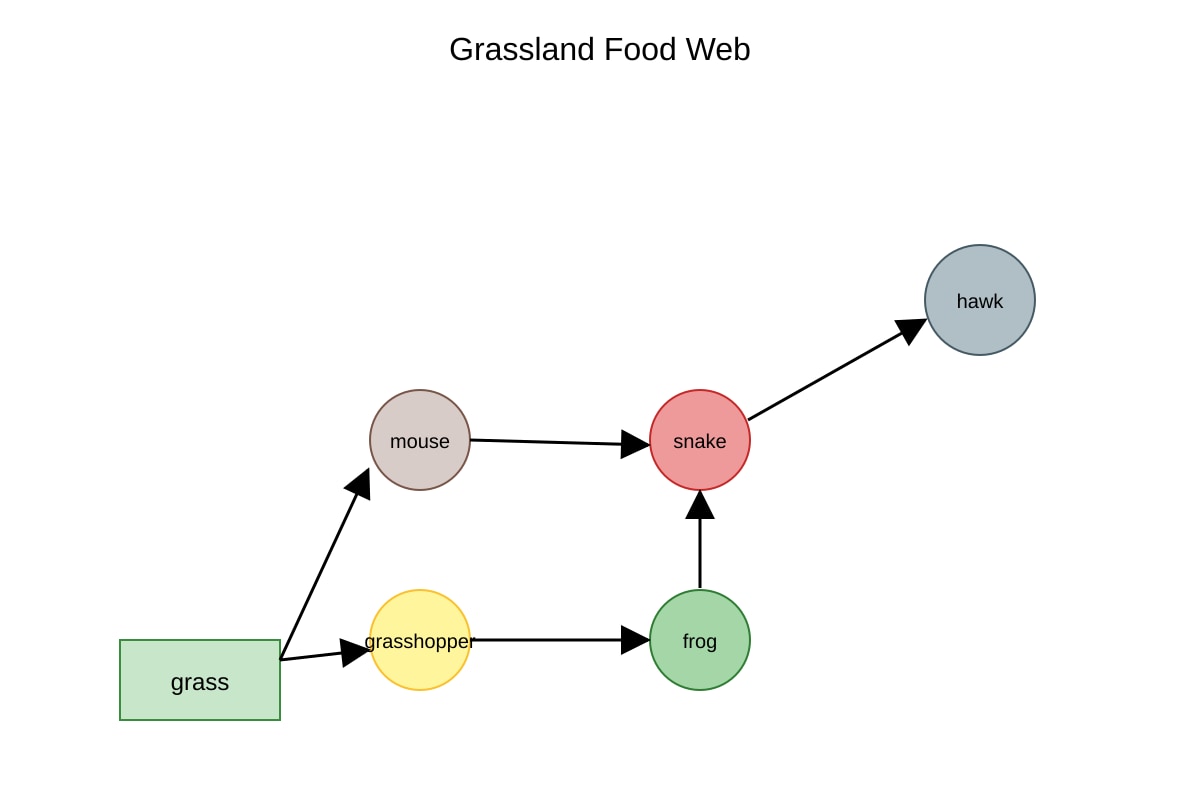
(a) [1] grass
(b) [1] 2 (grasshopper, mouse)
(c) [1] frog or snake
Teaching note: Producer makes own food. Primary consumers eat producer. Secondary eat primary.
12. [3 marks]
(a) [1] Habitat A (forest)
(b) [2] Forest has more layers/plants providing more habitats and food; field is open with less variety.
Marking: 1 for reason linked to structure, 1 for example.
13. [3 marks]
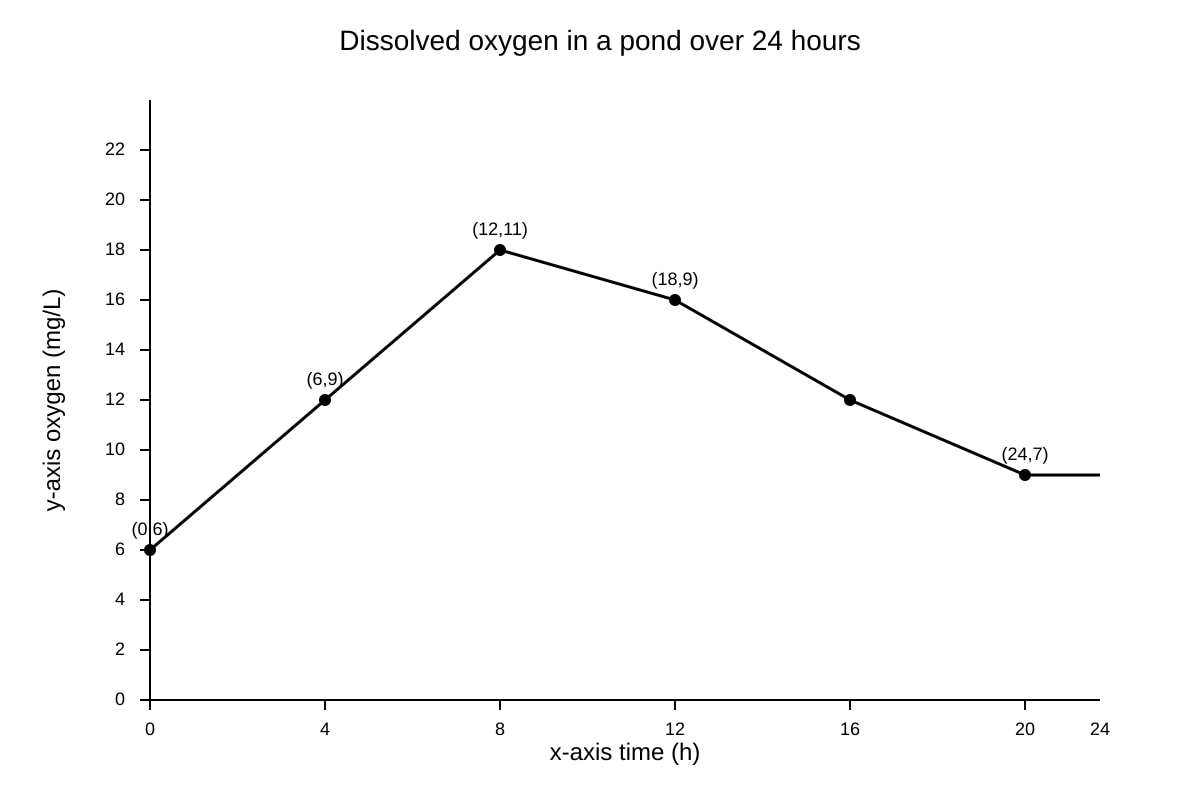
(a) [1] 12:00
(b) [2] Daylight drives photosynthesis in pond plants releasing (1); at night respiration uses lowering it (1).
Teaching note: Net oxygen = photosynthesis − respiration.
14. [2 marks]
(a) Reduces transpiration → less rainfall
(b) Increases runoff → less infiltration
Marking: 1 each.
15. [3 marks]
(a) [1] Pyramid drawn with base 1200, mid 180, top 25.
(b) [2] Energy lost as heat at each transfer (10% rule) (1); less biomass supported at higher levels (1).
Section C Answers (16–20)
16. [4 marks]
Answer: Sunlight → producers via photosynthesis (1) → primary consumers eat producers (1) → secondary/carnivore eats primary (1) → energy lost as heat at each step (1).
Teaching note: Only ~10% transferred; rest lost.
17. [4 marks]
Answer: Nitrogen gas fixed by rhizobium/lightning to nitrates (1); plants absorb nitrates (1); animals eat plants (1); decomposers return ammonia, nitrifying bacteria convert to nitrates (1).
Teaching note: Denitrifiers return to air.
18. [4 marks]
Answer: Fertilisers add nitrates → algal bloom (1) → blocks light, algae die (1) → decomposers multiply using (1) → fish suffocate (1).
19. [4 marks]
Answer: (1) Protected reserves e.g. national park stops habitat loss (2 marks: method+example). (2) Breeding programmes e.g. captive pandas (2 marks).
Marking: 2 per method with example.
20. [4 marks]
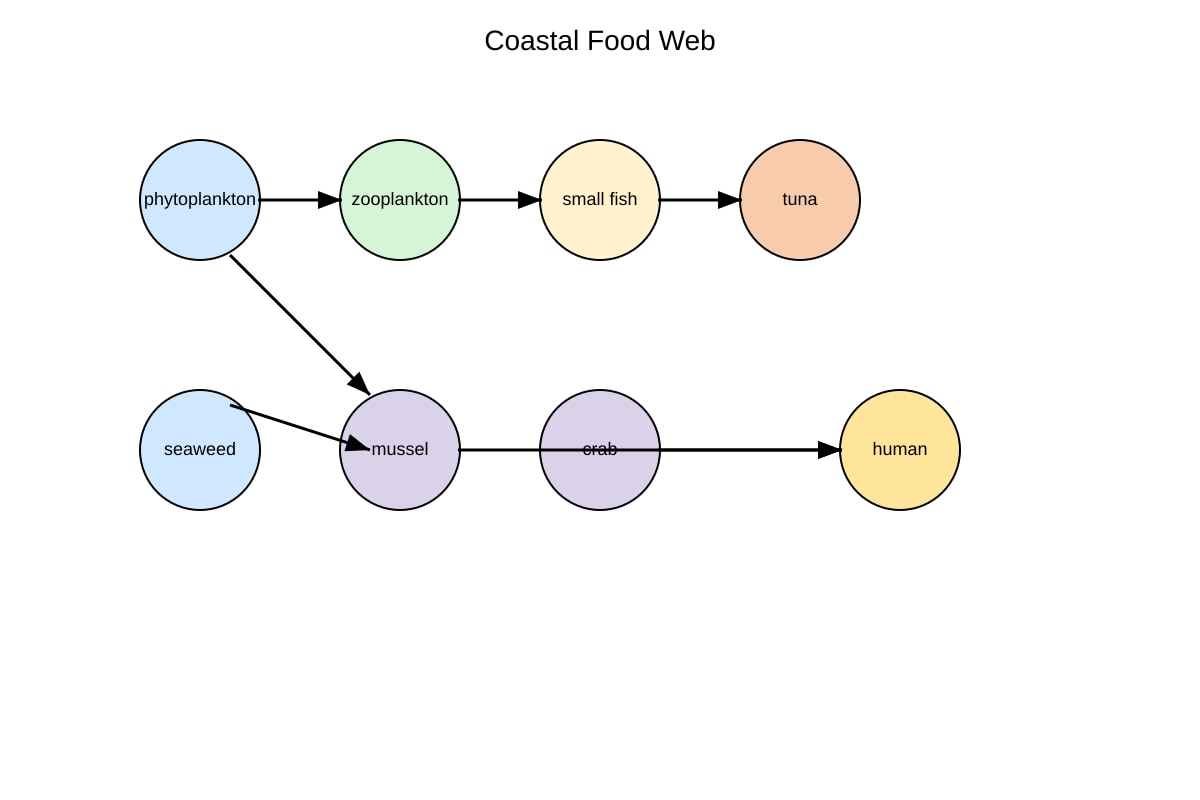
Answer: Effect 1: Small fish increase (no tuna predation) (1) → zooplankton decrease (1). Effect 2: Humans shift to more mussels/crab (1) → mussel/crab decline (1).
Teaching note: Trophic cascade from removing top predator.