AI Generated Exam Paper
Secondary 4 Combined Science Biology Practice Paper 4
Free Sec 4 Comb Sci Bio Practice Paper 4, HY3 AI version, with questions, answers, and O Level-style practice for Singapore students.
These static practice materials are generated from the site's syllabus and paper-generation workflow, with source and model context shown so students and parents can evaluate the material before use.
Questions
Free quiz and exam paper access
Enter your details to view this paper
Your access is remembered on this device.
Answers
TuitionGoWhere Practice Paper — Answer Key (Version 4)
Subject: Combined Science Biology | Level: Secondary 4 | Topic: Cells Biomolecules
Section A (16 marks)
Q1 [1 mark]
- Answer: Diffusion
- Teaching note: Oxygen moves from high concentration in alveoli to low concentration in muscle tissue fluid by diffusion, a passive process. Common mistake: writing "active transport" or naming "mitochondria".
Q2 [1 mark]
- Answer: Mitochondrion (plural: mitochondria)
- Teaching note: Aerobic respiration occurs in mitochondria, producing ATP. Mark for naming organelle only.
Q3 [1 mark]
- Answer: Cell wall is rigid / made of cellulose; cell membrane is flexible / partially permeable. (Any one correct difference)
- Teaching note: Plant cell wall gives shape and support; animal cell membrane controls entry.
Q4 [1 mark]
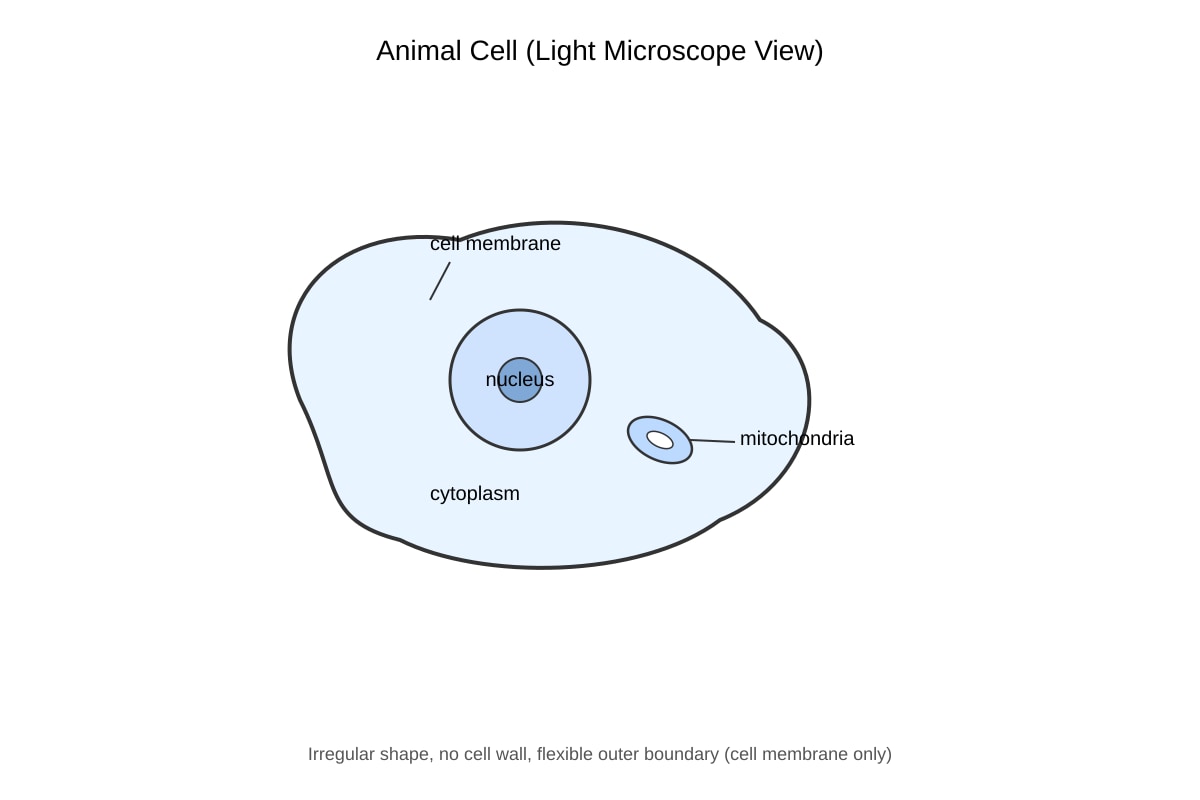
- Answer: Animal cell
- Teaching note: Diagram shows no cell wall, irregular shape, membrane-bound nucleus → animal cell. Do not accept "bacteria".
Q5 [1 mark]
- Answer: Osmosis
- Teaching note: Osmosis is diffusion of water through partially permeable membrane. No energy needed.
Q6 [1 mark]
- Answer: Protein
- Teaching note: Proteins are polymers of amino acids; used for enzymes, structure.
Q7 [1 mark]
- Answer: To make more space for haemoglobin / to carry more oxygen.
- Teaching note: Mature red blood cells lose nucleus to maximise haemoglobin. Common trap: "it does not need DNA".
Q8 [1 mark]
- Answer: Protein synthesis
- Teaching note: Ribosomes are sites of translation; link mRNA to amino acid chain.
Section B (27 marks)
Q9 [4 marks]
- Answer: Glucose moves by facilitated diffusion through carrier proteins down its concentration gradient. [1]
- Factors: (i) concentration gradient steepness [1]; (ii) temperature (higher = faster molecular motion) [1]; (iii) number of carrier proteins [1].
- Teaching note: Facilitated diffusion is passive, needs protein but no ATP. Trap: confusing with active transport. Mark breakdown: process 1, each factor 1.
Q10 [3 marks]
- Answer: Skeletal muscle cells contract actively and need large amounts of ATP [1]; mitochondria produce ATP via respiration [1]; skin cells have lower energy demand so fewer mitochondria [1].
- Teaching note: Structure–function link. Table shows 2500 vs 200. Mark: comparison 1, reason ATP 1, link 1.
Q11 [2 marks]
- Answer: Sperm cell needs energy to swim to egg [1]; mitochondria provide ATP for flagellum movement [1].
- Teaching note: High mobility = high mitochondria.
Q12 [6 marks]
- Answer: Oxygen enters alveoli in lungs [1] → diffuses across alveolar epithelium into blood capillary [1] → binds haemoglobin in red blood cell [1] → pumped via pulmonary vein to left atrium → left ventricle → aorta → coronary artery [1] → diffuses from capillary to heart muscle tissue fluid [1] → into heart muscle cell mitochondrion [1].
- Teaching note: Name 6+ structures. No active transport. Mark: each step 1.
Q13 [3 marks]
- Answer: Diffusion [1]. No energy because movement is down concentration gradient [1] and is passive [1].
- Teaching note: CO₂ high in tissue, low in blood → diffuses out.
Q14 [2 marks]
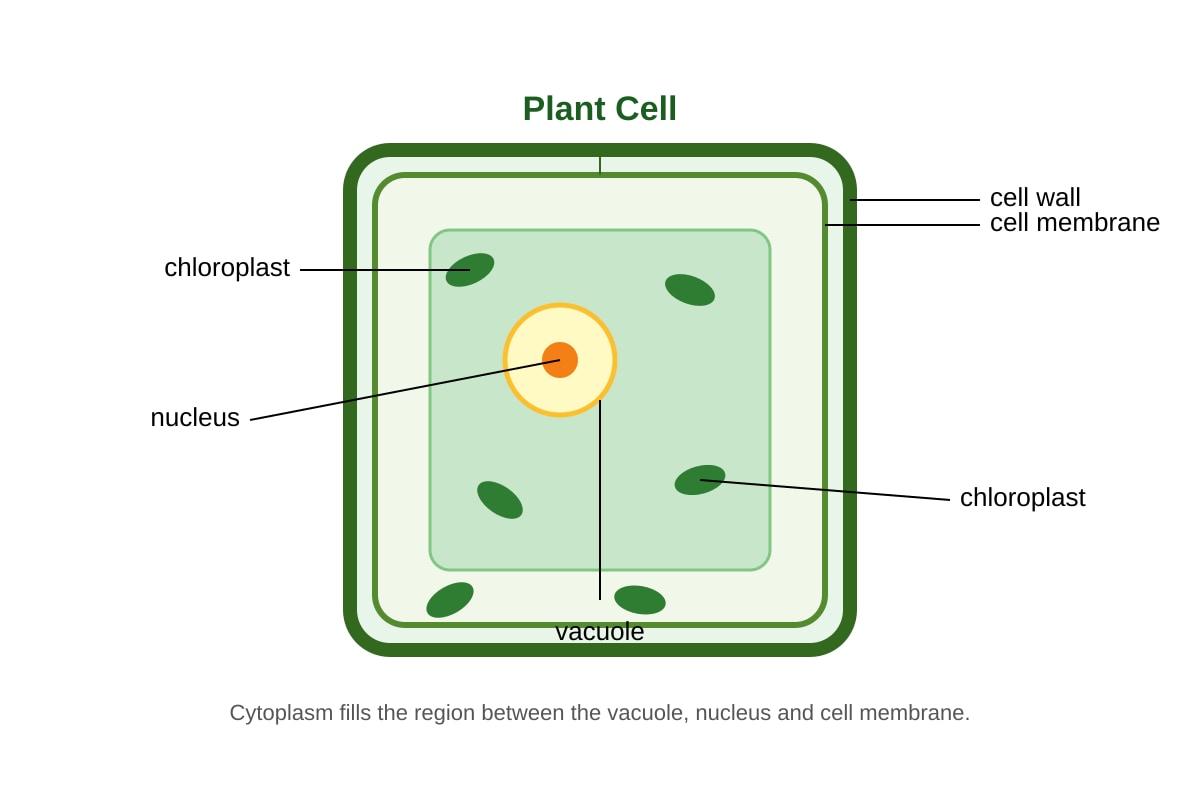
- Answer: Cell wall and chloroplast (or large vacuole) [1 each, max 2].
- Teaching note: From diagram labels. Animal cells lack these.
Q15 [3 marks]
- Answer: Animal cell shrinks (crenates) [1]; plant cell becomes plasmolysed (membrane pulls from wall) [1] because water leaves by osmosis [1].
- Teaching note: Hypertonic solution → water out. Plant wall prevents full collapse.
Section C (22 marks)
Q16 [5 marks]
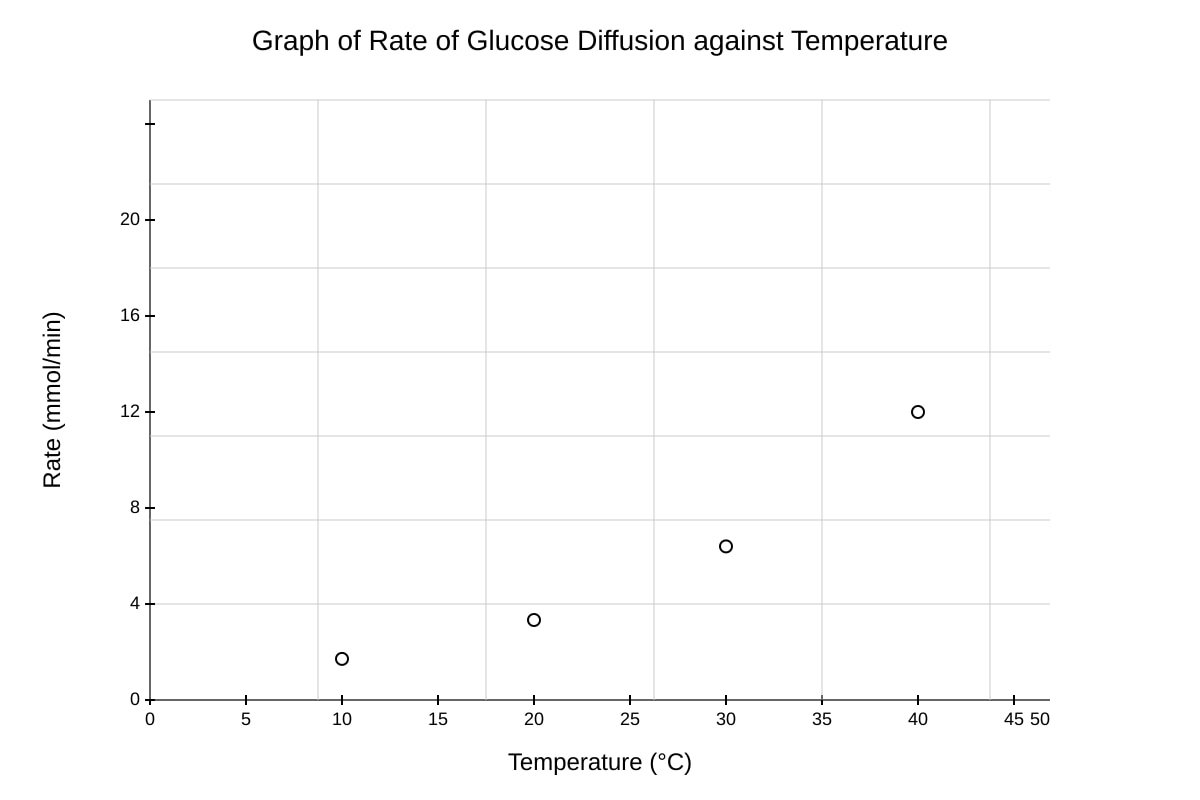
- Answer: Graph plotted with 4 points and axis labelled [2]. Relationship: rate increases with temperature [1]; roughly exponential / non-linear [1]; due to higher kinetic energy [1].
- Teaching note: Plot (10,2.1)(20,4.0)(30,7.8)(40,15.2). Mark: graph 2, trend 1, shape 1, reason 1.
Q17 [4 marks]
- Answer: Membrane is phospholipid bilayer [1]; hydrophobic core blocks ions/large molecules [1]; proteins act as channels/carriers for selected passage [1]; controls by selective permeability [1].
- Teaching note: Fluid mosaic model. No mark for "thin layer" alone.
Q18 [4 marks]
- Answer: Shade plant has more chloroplasts to capture limited light [2]; bright-light plant needs fewer as light abundant [2].
- Teaching note: Adaptation. 40 vs 15. Mark: observation 1, explanation 3 split.
Q19 [5 marks]
- Answer: Soil water enters root hair by osmosis [1] → through cytoplasm via symplast or apoplast [1] → crosses endodermis [1] → into xylem vessel [1] → water pulled by transpiration stream [1].
- Teaching note: Name structures. Passive except root pressure.
Q20 [4 marks]
- Answer: Carbohydrate – cellulose in cell wall / glucose energy [1]; Protein – channel in membrane / enzyme [1]; Lipid – phospholipid bilayer of membrane [1]; (any one function each) [1 total for clarity].
- Teaching note: Link each to structure. Mark 1 per biomolecule.
Total = 65 marks. All section subtotals verified.