AI Generated Exam Paper
Secondary 4 Combined Science Biology Practice Paper 2
Free Sec 4 Comb Sci Bio Practice Paper 2, HY3 AI version, with questions, answers, and O Level-style practice for Singapore students.
These static practice materials are generated from the site's syllabus and paper-generation workflow, with source and model context shown so students and parents can evaluate the material before use.
Questions
Free quiz and exam paper access
Enter your details to view this paper
Your access is remembered on this device.
Answers
TuitionGoWhere Practice Paper — Answer Key (Version 2)
Subject: Combined Science Biology
Level: Secondary 4
Topic: Cells & Biomolecules
Total Marks: 40
Section A (12 marks)
1. [1 mark] Diffusion.
Teaching note: Oxygen moves from high concentration in alveoli to low concentration in muscle tissue fluid by diffusion, a passive process needing no energy.
2. [1 mark] Mitochondrion (or mitochondria).
Teaching note: Mitochondria are the sites of aerobic respiration where ATP is produced.
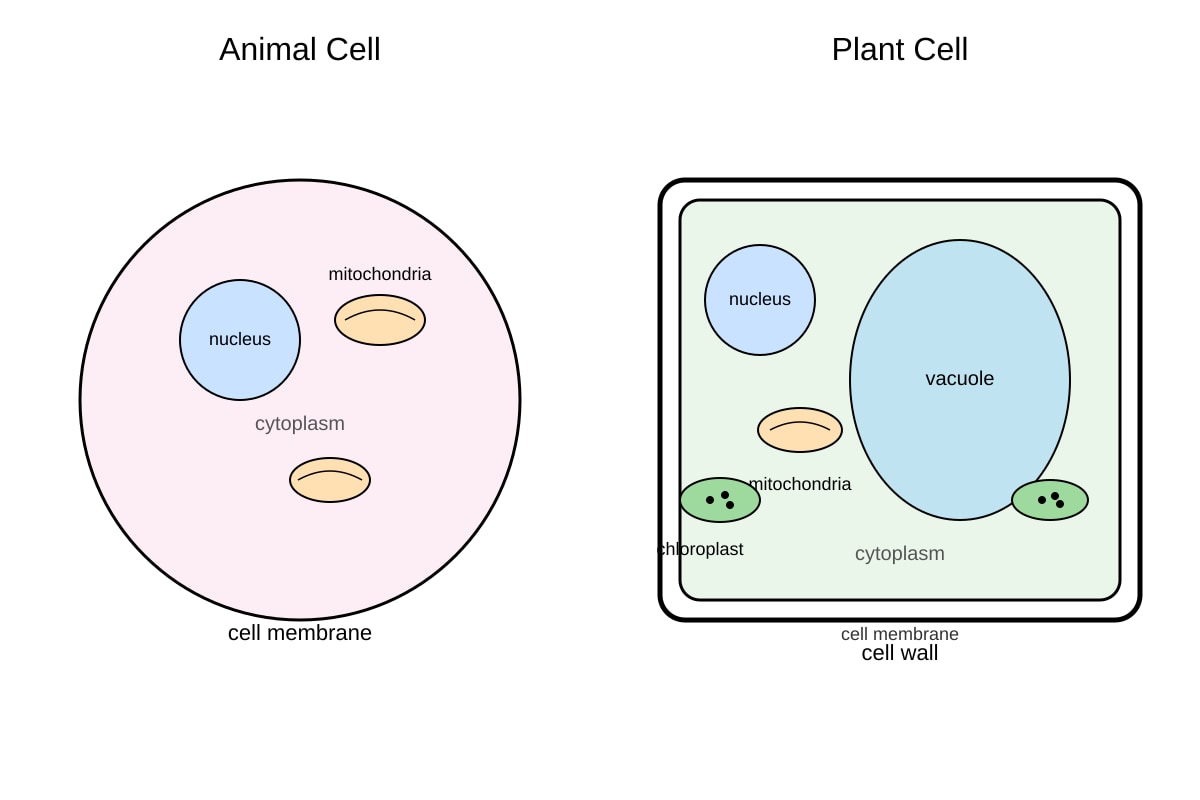
3. [1 mark] Any one correct difference, e.g., "Plant cell has a cell wall; animal cell does not." / "Plant cell has chloroplasts; animal cell does not."
Marking: Accept other valid structural differences (large vacuole, shape).
4. [1 mark] Animal cell.
Teaching note: Presence of nucleus and mitochondria but no cell wall indicates an animal cell (could be generic animal cell, not red blood cell due to nucleus).
5. [1 mark] Osmosis.
Teaching note: Osmosis is the net movement of water across a partially permeable membrane down a water potential gradient.
6. [1 mark] Cellulose.
Teaching note: Plant cell walls are made mainly of cellulose, a polysaccharide providing rigidity.
Section B (16 marks)
7. [2 marks]
- Skeletal muscle cells require large amounts of ATP for contraction. [1]
- They therefore have more mitochondria to carry out aerobic respiration and produce energy. [1]
Teaching note: Link structure (many mitochondria) to function (high energy need).
8. [2 marks]
- Red blood cells have no mitochondria so they do not use the oxygen they carry for their own respiration. [1]
- This allows them to transport maximum oxygen to tissues. [1]
Common mistake: Saying they "do not need energy" – they do, but produce ATP by glycolysis only.
9. [4 marks]
- Process: Facilitated diffusion (or active transport if context implies low glucose in intestine – but standard is facilitated diffusion down gradient after digestion). [1] Glucose moves through carrier proteins in the membrane.
- Factor 1: Concentration gradient – steeper gradient increases rate. [1]
- Factor 2: Number of carrier proteins / temperature (higher temp = faster molecular motion). [1]
- (Additional clarity) No energy needed for facilitated diffusion; if active, energy from ATP. [1]
Teaching note: Intestinal epithelial cells absorb glucose via co-transport (active) but simplified facilitated diffusion acceptable at this level if stated as down gradient.
10. [2 marks]
- Cell wall [1]
- Chloroplast [1] (or large vacuole acceptable if diagram shows; but question asks two organelles only in plant)
Based on placeholder: Diagram must show cell wall and chloroplasts in plant cell only.
11. [3 marks]
- Long thin extension (root hair) increases surface area for absorption. [1]
- Thin cell wall and membrane allow easy passage of water/minerals. [1]
- Many mitochondria provide energy for active transport of minerals. [1]
12. [2 marks]
- The cell will shrink (lose water by osmosis). [1]
- Water moves out to the region of lower water potential (higher solute concentration). [1]
13. [1 mark]
Increase = 28 mm – 12 mm = 16 mm.
Working: .
14. [2 marks]
- Higher temperature gives particles more kinetic energy. [1]
- Molecules move faster, so diffusion distance is greater in same time. [1]
Section C (12 marks)
15. [6 marks]
- Oxygen inhaled into alveoli of lung. [1]
- Diffuses across alveolar epithelium and capillary wall into blood plasma. [1]
- Enters red blood cell, binds to haemoglobin. [1]
- Transported via pulmonary vein → left atrium → left ventricle → aorta → coronary artery. [1]
- Diffuses from capillary into heart muscle tissue fluid. [1]
- Diffuses across cell membrane into mitochondrion for respiration. [1]
Teaching note: Must name structures and processes; omission of any step loses mark.
16. [3 marks]
- Active transport requires energy (ATP); diffusion does not. [1]
- Active transport moves substances against concentration gradient; diffusion is down gradient. [1]
- Both are membrane transport processes. [1] (or other valid comparison point)
17. [2 marks]
- Pancreatic cells secrete enzymes which are proteins. [1]
- Ribosomes are the site of protein synthesis, so many ribosomes are needed. [1]
18. [2 marks]
- Contractile vacuole activity decreases (or cell shrinks). [1]
- In salty water (lower water potential), water leaves amoeba by osmosis, less excess water to pump out. [1]
19. [2 marks]
- Phospholipid bilayer blocks large/polar molecules. [1]
- Channel/carrier proteins allow specific molecules through. [1]
20. [2 marks]
- Incorrect. [1]
- Proteins are synthesised at ribosomes using instructions from DNA in nucleus; ribosomes are the site of assembly. [1]
Total: 40 marks. Paper internally timed for 1h with review buffer.