AI Generated Exam Paper
Secondary 4 Combined Science Biology Practice Paper 1
Free Sec 4 Comb Sci Bio Practice Paper 1, HY3 AI version, with questions, answers, and O Level-style practice for Singapore students.
These static practice materials are generated from the site's syllabus and paper-generation workflow, with source and model context shown so students and parents can evaluate the material before use.
Questions
Free quiz and exam paper access
Enter your details to view this paper
Your access is remembered on this device.
Answers
TuitionGoWhere Practice Paper — Combined Science Biology Secondary 4 (Answers)
Version: 1 of 5
Topic: Cells Biomolecules
Total Marks: 40
Section A Answers
1. Diffusion [1]
Teaching note: Oxygen moves from high concentration in alveoli to low concentration in muscle tissue fluid by diffusion, a passive process needing no energy.
2. Mitochondrion (or mitochondria) [1]
Teaching note: Aerobic respiration releases energy as ATP and occurs in the mitochondria, the "powerhouse" of the cell.
3. Cell wall is made of cellulose and is rigid; cell membrane is made of phospholipid and protein and is flexible. [1]
Accept any one clear difference.
Teaching note: Plant cells have a rigid cellulose wall outside the membrane for support; animal cells lack this.
4. Protein [1]
Teaching note: Proteins are polymers of amino acids linked by peptide bonds.
5. Osmosis [1]
Teaching note: Osmosis is passive movement of water across a partially permeable membrane down a water potential gradient.
6. Animal cell [1]
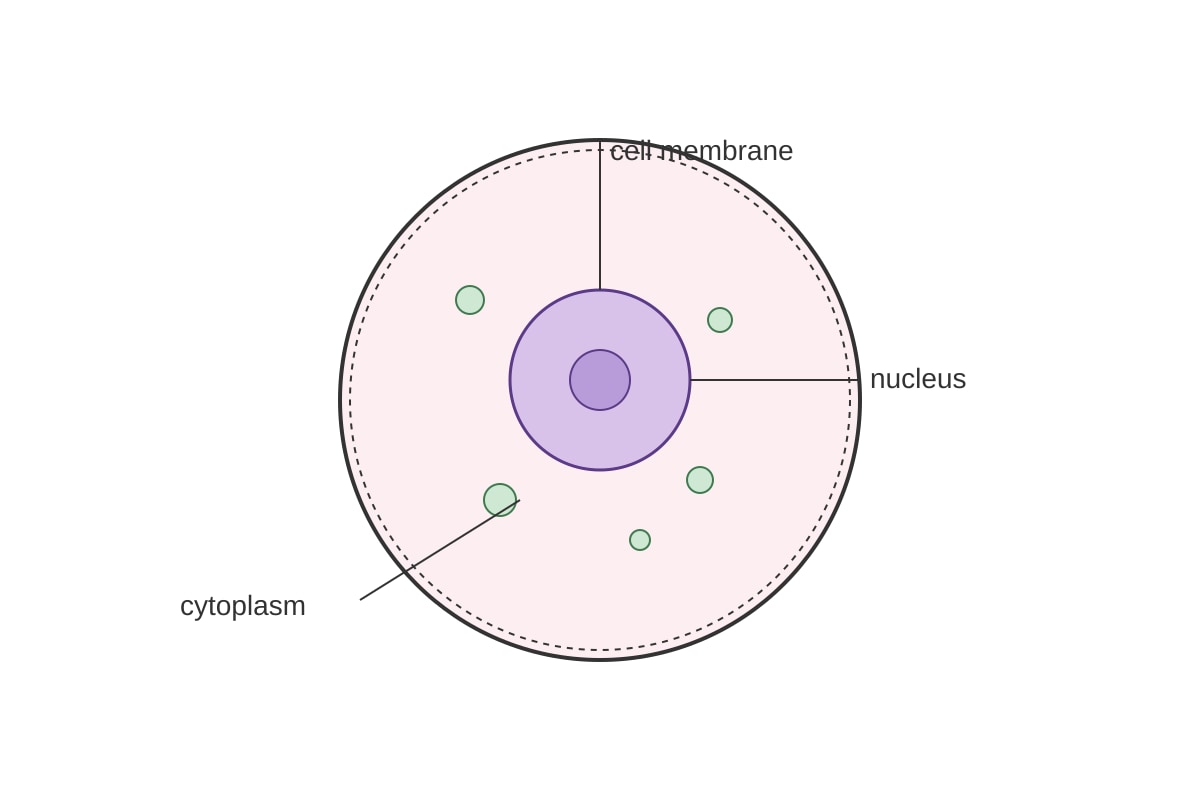
Teaching note: The diagram shows no cell wall and a nucleus, typical of an animal cell.
7. Starch [1]
Teaching note: Plants store excess glucose as starch in leaves, stems and roots.
8. Facilitated diffusion [1]
Teaching note: Glucose uses carrier proteins but moves down its gradient without energy, so it is facilitated diffusion.
Section B Answers
9. [2]
- Skeletal muscle cells contract to move the body and need large amounts of ATP. [1]
- Mitochondria produce ATP by respiration, so more mitochondria are present where energy demand is high. [1]
Marking: 1 mark for link to energy need, 1 mark for mitochondria–ATP link.
10. [3]
- Glucose moves by facilitated diffusion through carrier proteins. [1]
- It moves down its concentration gradient from intestine to blood. [1]
- Factor: higher glucose concentration gradient increases rate; or more carriers increase rate. [1]
Teaching note: Facilitated diffusion is passive; carriers help large molecules cross.
11. [2]
- Made of cellulose, rigid and strong. [1]
- Supports plant, keeps shape, prevents bursting in water. [1]
12. [2]
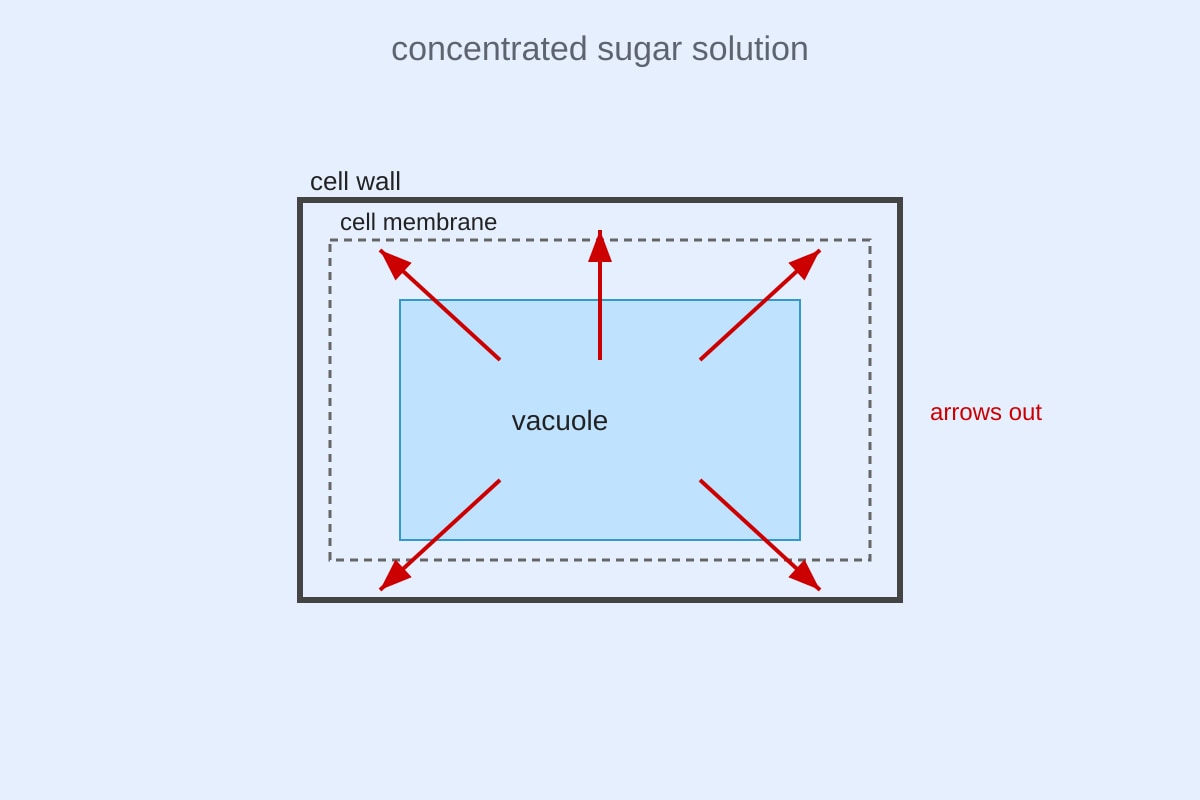
- Cell becomes plasmolysed (membrane pulls from wall). [1]
- Water leaves vacuole by osmosis to the stronger sugar solution outside. [1]
13. [2]
- Carbohydrate (e.g., glucose) — energy source. [1]
- Fat (lipid) — energy store / insulation. [1]
Accept starch, glycogen for carbohydrate.
14. [2]
- Liver cells make many proteins (e.g., enzymes). [1]
- Ribosomes synthesise proteins, so more are needed than in fat storage cells. [1]
15. [2]
- Test A: reducing sugar (glucose). [1]
- Test B: protein. [1]
Benedict's brick red = reducing sugar; Biuret purple = protein.
Section C Answers
16. [4]
- Oxygen enters alveoli in lungs. [1]
- Diffuses across alveolar wall into capillary blood. [1]
- Binds haemoglobin, transported via pulmonary vein → left atrium → left ventricle → aorta → coronary artery. [1]
- Diffuses into heart muscle cell mitochondrion. [1]
Marking: 1 mark per clear stage with structure named.
17. [4]
(a) Hypertonic solution. [1]
(b) Animal cell loses water by osmosis, shrinks (crenates). [2]
(c) Plant cell becomes plasmolysed, not burst. [1]
18. [3]
- Diffusion: passive, no energy, high to low concentration. [1.5]
- Active transport: needs energy (ATP), low to high concentration. [1.5]
19. [4]
(a) Food A or C (high protein); reason: protein builds muscle. [2]
(b) 10 + 30 + 25 = 65 g. [1]
(c) Energy reserve / insulation / protect organs. [1]
20. [3]
- Correct: enzymes are proteins and speed up reactions. [1.5]
- Correct: enzymes are not used up / not changed permanently. [1.5]