From Real Exams Exam Paper
Secondary 4 Combined Science Biology Preliminary Examination Paper 5
Free Sec 4 Comb Sci Bio Prelim Paper 5, HY3 Exam version, with questions, answers, and O Level-style practice for Singapore students.
These static practice materials are generated from the site's syllabus and paper-generation workflow, with source and model context shown so students and parents can evaluate the material before use.
Questions
Free quiz and exam paper access
Enter your details to view this paper
Your access is remembered on this device.
Answers
TuitionGoWhere Exam Practice (AI) — Preliminary Practice Paper
Combined Science Biology (5088) — Secondary 4
Answer Key (Version 5 of 5)
Total Marks: 65
Section A Answers
1. [1 mark]
Answer: Diffusion
Teaching note: Oxygen moves from high concentration in air/surroundings to lower concentration in the muscle cell down a concentration gradient. No energy needed. Common trap: naming "respiration" or "mitochondrion" — these are not transport processes.
2. [2 marks total]
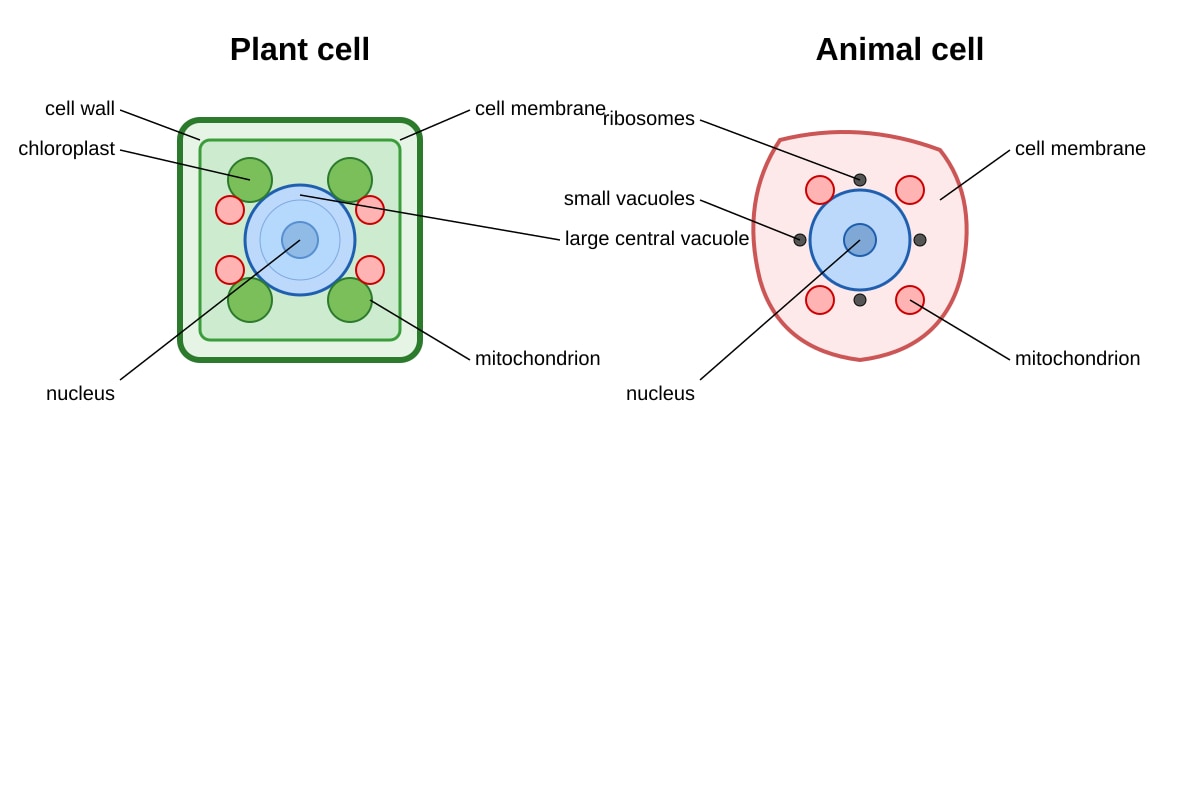
(a) [1] Cell wall / chloroplast / large central vacuole (any one).
(b) [1] Site of aerobic respiration / produces ATP (energy).
Teaching note: Plant cells have cell wall and chloroplasts; animal cells do not. Mitochondria release energy from glucose.
3. [2 marks]
Answer: Muscle cells contract and require large amounts of ATP; mitochondria produce ATP via aerobic respiration, so more mitochondria are needed to meet high energy demand.
Marking: 1 mark for linking muscle function to energy need, 1 mark for mitochondria–ATP link.
4. [1 mark]
Answer: Diffusion does not require energy / active transport requires energy (or: diffusion is down gradient, active transport against gradient).
Teaching note: Diffusion is passive; active transport uses ATP.
5. [2 marks]
Answer: The cell swells and may burst (lysis); process is osmosis.
Marking: 1 mark process (osmosis), 1 mark outcome (swell/burst).
6. [1 mark]
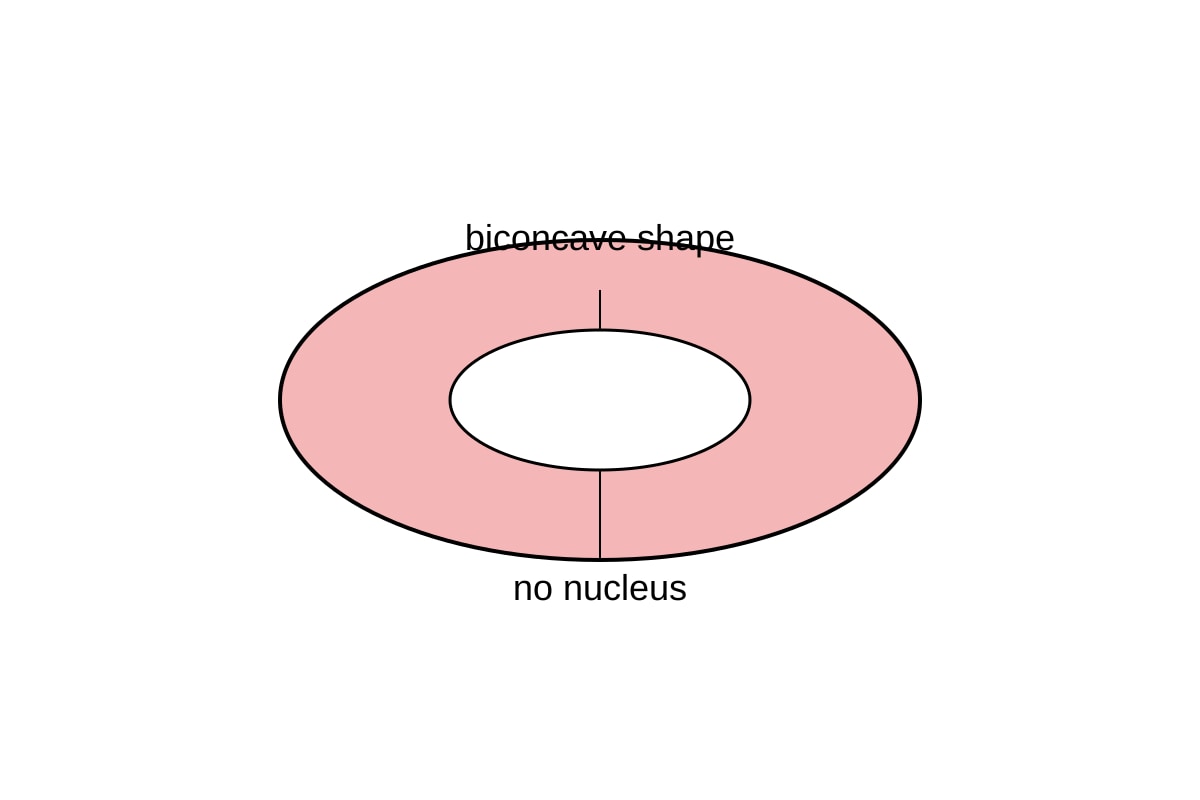
Answer: Red blood cell (erythrocyte).
Teaching note: Biconcave and no nucleus are key features.
7. [1 mark]
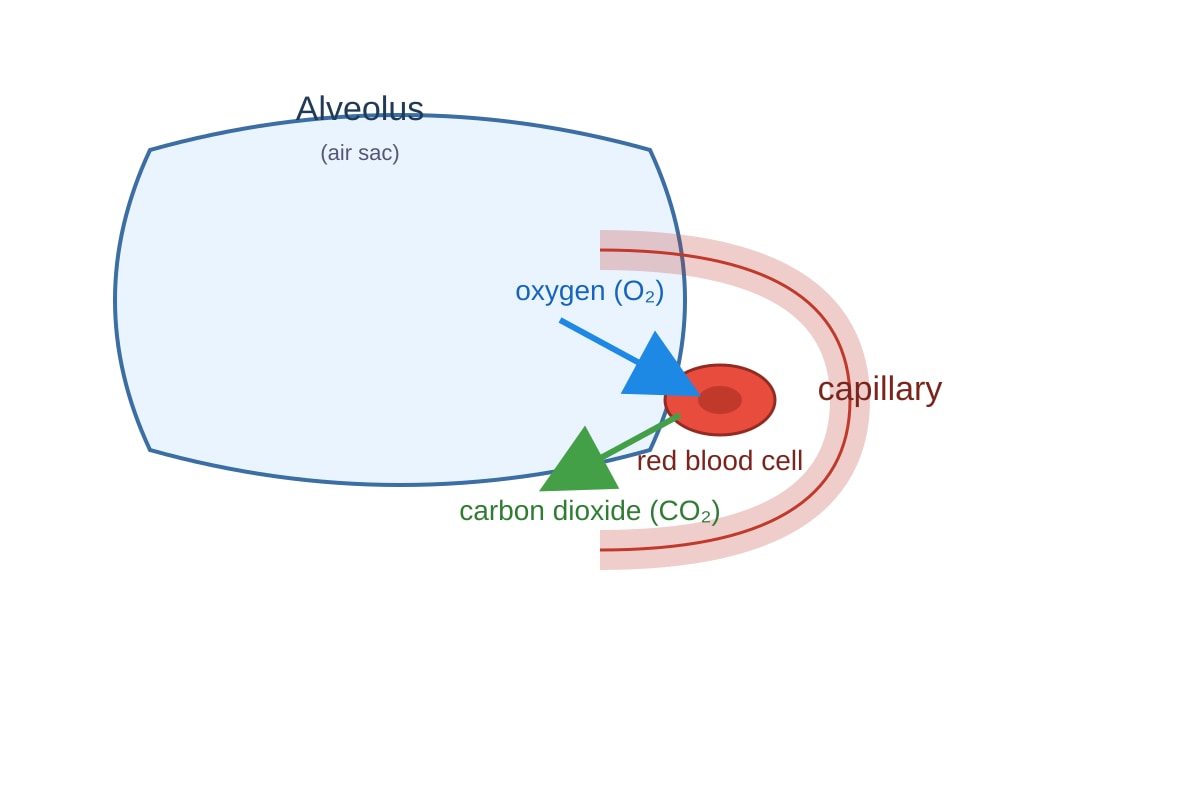
Answer: Carbon dioxide (CO₂).
8. [1 mark]
Answer: Osmosis.
9. [2 marks]
Answer: Sperm cells swim using flagellum and need energy (ATP) for movement; mitochondria provide ATP.
Marking: 1 mark for energy need, 1 mark for mitochondria role.
10. [2 marks]
Answer: None (A–D are all eukaryotic). Bacterial cell would lack a nucleus; all listed have nucleus except C which lacks nucleus but also lacks cell wall — not bacterial. Accept: "none, because bacteria lack a nucleus and proper organelles; C lacks nucleus but is likely red blood cell".
Marking: 1 mark identification (none), 1 mark reason.
11. [1 mark]
Answer: Active transport.
12. [1 mark]
Answer: Cell membrane (plasma membrane).
13. [2 marks]
Answer: Leaf cells carry out photosynthesis and contain chloroplasts with chlorophyll; root cells are underground, receive no light, do not photosynthesise, so no chloroplasts.
Marking: 1 mark leaf function, 1 mark root condition.
14. [1 mark]
Answer: It allows some substances to pass but not others (small/non-polar pass, large/polar blocked).
Section B Answers
15. [5 marks total]
(a) [2] % change = ((6.2 − 5.0) / 5.0) × 100 = (1.2 / 5.0) × 100 = 24%.
Working: final − initial = 1.2 g; divide by 5.0; ×100.
(b) [1] 0.4 mol/dm³ (no change in mass).
(c) [2] As sucrose concentration increases, final mass decreases; water leaves cell by osmosis; at 0.0–0.2 mass gains, at 0.4 no change, above 0.4 loss.
Marking: 1 trend stated, 1 reasoning osmosis.
16. [4 marks total]
(a) [1] Diffusion.
(b) [1] Thin wall / large surface area / moist lining.
(c) [2] Oxygen concentration is higher in alveolus than blood, so diffuses down gradient into blood.
Marking: 1 gradient, 1 direction reason.
17. [2 marks]
Answer: Pancreatic cell synthesises and secretes proteins (enzymes); ribosomes are site of protein synthesis, so more are needed.
Marking: 1 protein synthesis link, 1 ribosome function.
18. [3 marks total]
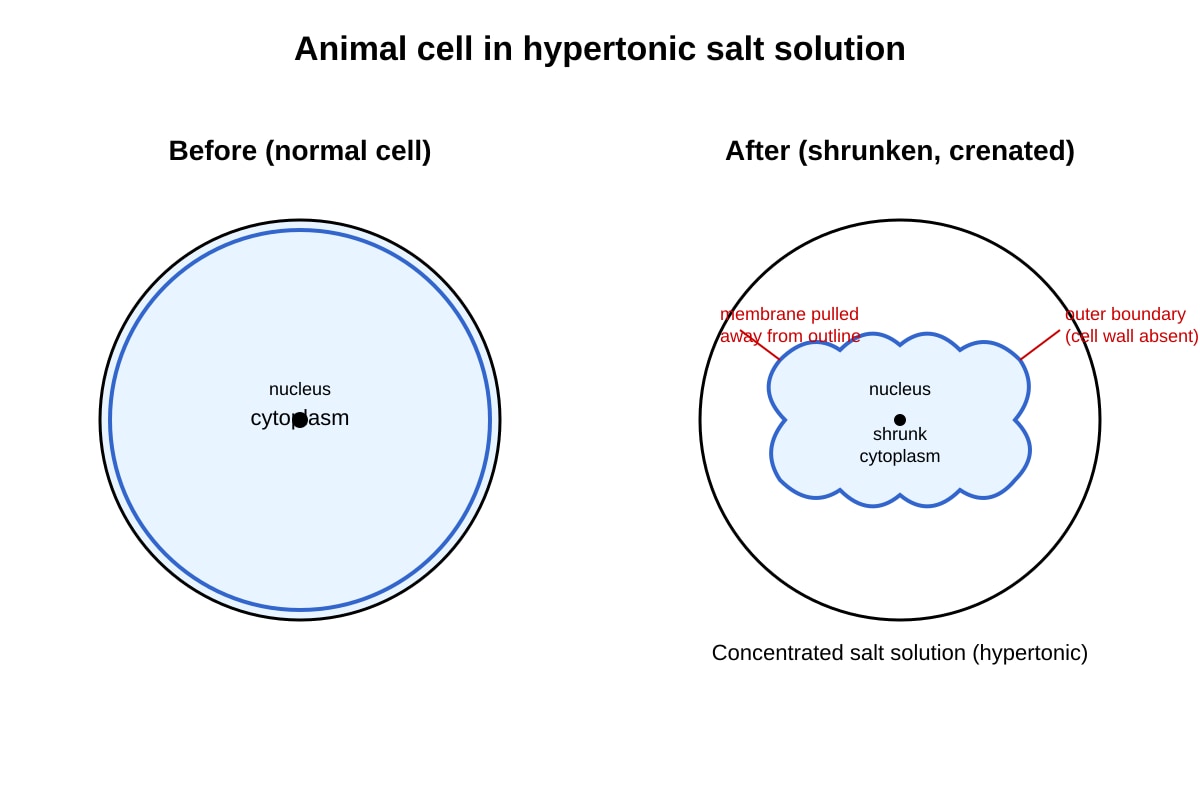
(a) [1] Osmosis.
(b) [2] Salt solution has lower water potential than cell cytoplasm; water leaves cell by osmosis, causing shrinkage (crenation).
Marking: 1 water potential, 1 outcome.
Section C Answers
19. [6 marks]
Answer pathway:
- Inhaled O₂ enters alveoli (1)
- Diffuses across alveolar epithelium into capillary blood (1)
- Binds haemoglobin in red blood cell (1)
- Transported via pulmonary vein → left atrium → left ventricle → aorta → leg artery (1)
- Released in leg muscle capillary, diffuses into tissue fluid (1)
- Diffuses across muscle cell membrane into mitochondrion (1)
Teaching note: Must name structures and processes; omitting any loses mark.
20. [9 marks total]
(a) [2] Diffusion is movement of particles from region of high concentration to low concentration down a gradient, without energy.
(b) [3] Membrane is phospholipid bilayer; small non-polar O₂ diffuses through lipid layer; starch is large/polar, cannot pass without protein channel/active transport.
Marking: 1 bilayer, 1 O₂ passes, 1 starch blocked.
(c) [2] Student is wrong; active transport uses ATP to move against gradient.
(d) [2] Soil mineral concentration often lower than root cell; active transport needed to accumulate ions.
Total: 65 marks