From Real Exams Exam Paper

Secondary 4 Combined Science Biology Preliminary Examination Paper 4

Free Exam-Derived DeepSeek V4 Pro Secondary 4 Combined Science Biology Preliminary Examination Paper 4 practice paper with questions and answers for Singapore students. This page is rendered as a direct URL so the questions and answers can be discovered without pressing in-page buttons.

These static practice materials are generated from the site's syllabus and paper-generation workflow, with source and model context shown so students and parents can evaluate the material before use.

Secondary 4 Combined Science Biology From Real Exams Generated by DeepSeek V4 Pro Updated 2026-06-03

Questions

<!-- TuitionGoWhere generation metadata: stage=3-1; model=deepseek/deepseek-v4-pro; model_label=DeepSeek V4 Pro; generated=2026-05-29; Sources: Stage 2-1 real exam-derived templates and Stage 2-2 exam-enriched syllabus. -->

TuitionGoWhere Practice Paper - Combined Science Biology Secondary 4

TuitionGoWhere Secondary School (AI)

PRELIMINARY EXAMINATION Version 4

Subject:Combined Science Biology (5087/5088)
Level:Secondary 4
Paper:Biology Theory
Duration:1 hour 15 minutes
Total Marks:65

Name: _________________________

Class: _________________________

Date: _________________________


Instructions to Candidates

  1. This paper consists of three sections: Section A, Section B, and Section C.
  2. Answer all questions in the spaces provided.
  3. Write your name, class, and date in the spaces above.
  4. The number of marks is given in brackets [ ] at the end of each question or part question.
  5. You are advised to spend about 15 minutes on Section A, 30 minutes on Section B, and 30 minutes on Section C.
  6. You may use a calculator.

Section A: Multiple Choice (10 marks)

Answer all questions in this section. Circle the letter of the correct answer.

1. Which organelle is responsible for producing ATP through aerobic respiration?

A. Ribosome B. Nucleus C. Mitochondrion D. Chloroplast

[1 mark]


2. The diagram below shows a red blood cell placed in a concentrated salt solution.

Which of the following describes the net movement of water and the resulting change in the cell?

Net movement of waterCell appearance
AInto the cellSwells and bursts
BOut of the cellShrinks and becomes crenated
CInto the cellRemains unchanged
DOut of the cellSwells and bursts

[1 mark]


3. Which process is responsible for the movement of oxygen from the alveoli into the blood capillaries?

A. Active transport B. Osmosis C. Diffusion D. Phagocytosis

[1 mark]


4. A student observed two cell types under a microscope. Cell P contained many mitochondria, while Cell Q contained very few mitochondria. Which of the following correctly identifies Cell P and Cell Q?

Cell PCell Q
ASperm cellRed blood cell
BMuscle cellSkin cell
CNerve cellMuscle cell
DSkin cellSperm cell

[1 mark]


5. The table below shows the number of mitochondria in four different cell types.

Cell typeNumber of mitochondria per cell
W2500
X0
Y1200
Z300

Which cell type is most likely a mature red blood cell?

A. W B. X C. Y D. Z

[1 mark]


6. Which of the following is a correct word equation for photosynthesis?

A. Glucose + oxygen → carbon dioxide + water B. Carbon dioxide + water → glucose + oxygen C. Glucose + carbon dioxide → oxygen + water D. Oxygen + water → glucose + carbon dioxide

[1 mark]


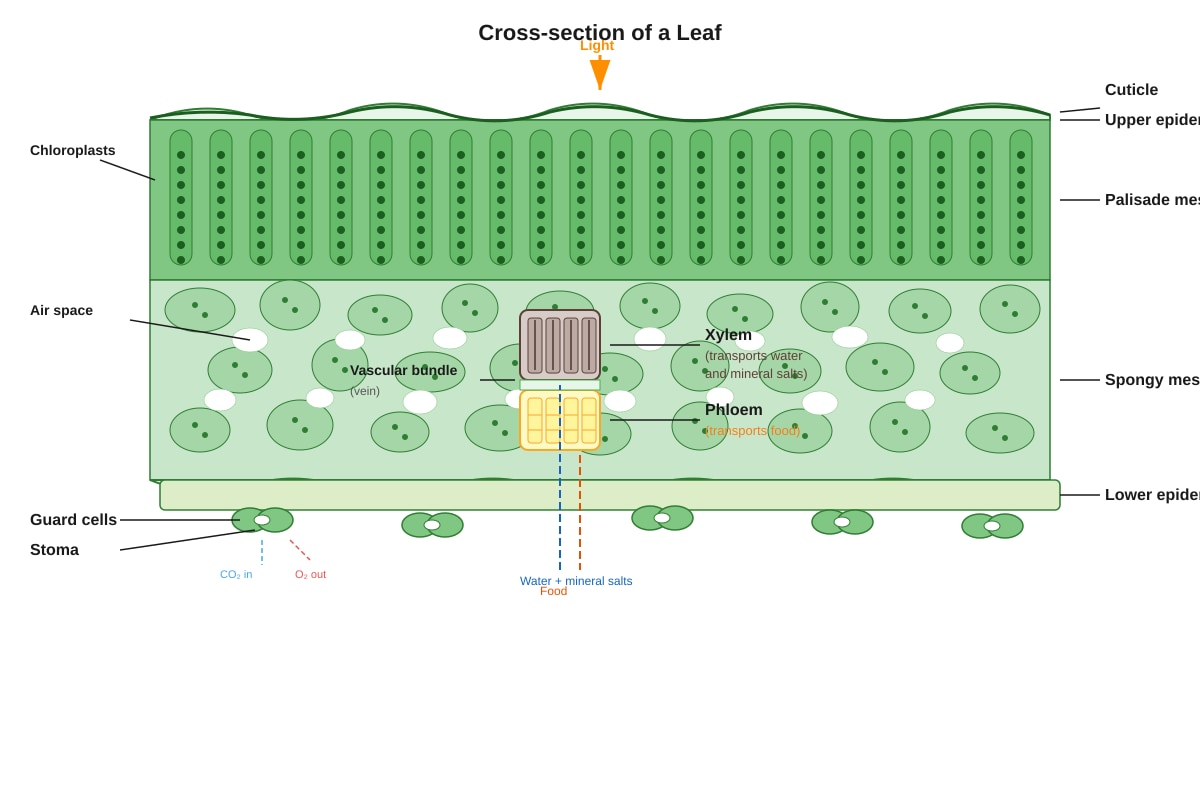
7. The diagram shows a cross-section of a leaf.

In which layer would you expect to find the highest concentration of chloroplasts?

A. Upper epidermis B. Palisade mesophyll C. Spongy mesophyll D. Lower epidermis

[1 mark]


8. Bile salts play an important role in digestion. What is their primary function?

A. Breaking down proteins into amino acids B. Emulsifying fats to increase surface area C. Neutralising stomach acid D. Absorbing glucose into the blood

[1 mark]


9. Which hormone is primarily responsible for maintaining the thickened uterine lining during the second half of the menstrual cycle?

A. Oestrogen B. Insulin C. Progesterone D. Glucagon

[1 mark]


10. A plant was grown in a sealed container. After 5 days, the rate of photosynthesis decreased significantly. What is the most likely explanation?

A. The temperature increased B. Oxygen concentration increased C. Carbon dioxide concentration decreased D. Light intensity increased

[1 mark]


Section B: Structured Questions (30 marks)

Answer all questions in this section. Write your answers in the spaces provided.


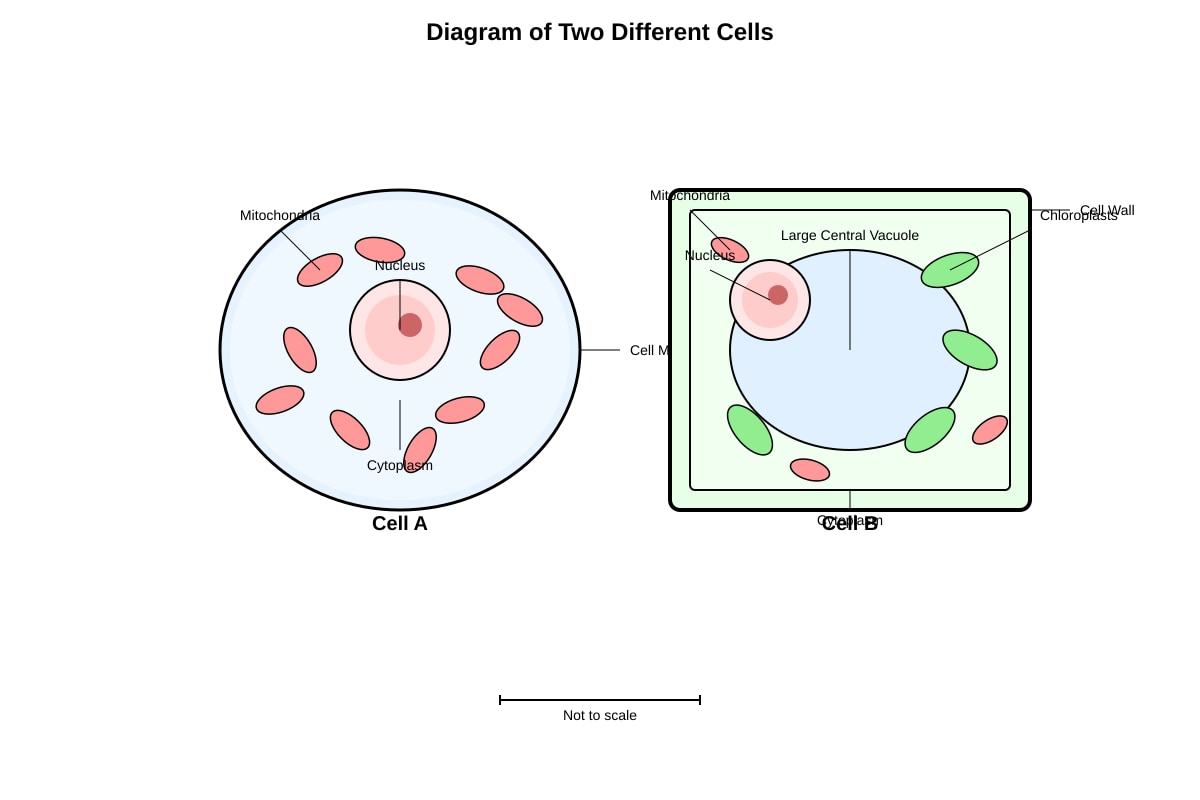
11. The diagram below shows two different cells, A and B, as seen under a light microscope.

[Diagram: Cell A is a typical animal cell with nucleus, cytoplasm, cell membrane, and numerous mitochondria. Cell B is a plant cell with cell wall, large central vacuole, chloroplasts, nucleus, and fewer mitochondria.]

(a) Identify cell A and cell B. [2 marks]

Cell A: _________________________

Cell B: _________________________

(b) State one structural feature present in cell B that is absent in cell A. [1 mark]


(c) Cell A contains many mitochondria. Explain why this cell requires a large number of mitochondria. [2 marks]


(d) Cell B contains chloroplasts. State the process that occurs in chloroplasts and write the word equation for this process. [2 marks]

Process: _________________________

Word equation: _________________________________________________

[Total: 7 marks]


12. The table below shows the number of mitochondria found in three different human cell types.

Cell typeNumber of mitochondria per cell
Muscle cell3000
Skin cell200
Red blood cell0

(a) Explain why muscle cells contain many more mitochondria than skin cells. [2 marks]


(b) Explain why mature red blood cells contain no mitochondria. [2 marks]


(c) State the process by which oxygen reaches the mitochondria inside a muscle cell from the surrounding tissue fluid. [1 mark]


[Total: 5 marks]


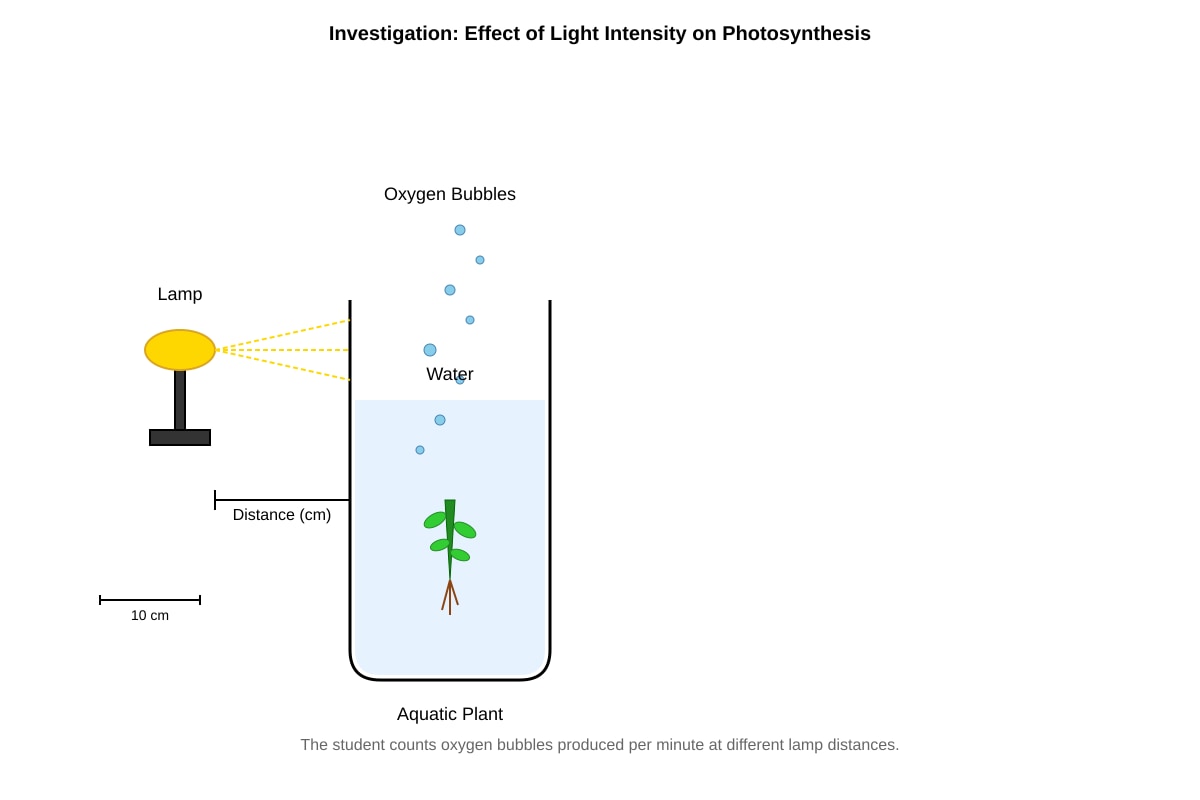
13. A student investigated the effect of light intensity on the rate of photosynthesis in an aquatic plant. The apparatus was set up as shown below.

[Diagram: Aquatic plant in a beaker of water, with a lamp placed at varying distances. Oxygen bubbles are collected and counted.]

The student counted the number of oxygen bubbles produced per minute at different distances of the lamp from the plant. The results are shown in the table.

Distance of lamp (cm)Number of bubbles per minute
1045
2038
3028
4015
505

(a) State the relationship between the distance of the lamp and the rate of photosynthesis. [1 mark]


(b) Explain why the rate of photosynthesis decreases as the lamp is moved further away. [2 marks]


(c) Name two other factors, apart from light intensity, that could limit the rate of photosynthesis in this investigation. [2 marks]


(d) Suggest why the student used an aquatic plant rather than a terrestrial plant for this investigation. [1 mark]


[Total: 6 marks]


14. The diagram below shows part of the human digestive system.

[Diagram: Stomach, liver, gall bladder, pancreas, small intestine labelled with letters P, Q, R, S, T.]

(a) Identify the structures labelled P, Q, and R. [3 marks]

P: _________________________

Q: _________________________

R: _________________________

(b) Structure Q produces bile. Describe the role of bile salts in the digestion of fats. [2 marks]


(c) Structure R produces digestive enzymes. Name one enzyme produced by structure R and state the substrate it acts on. [2 marks]

Enzyme: _________________________

Substrate: _________________________

[Total: 7 marks]


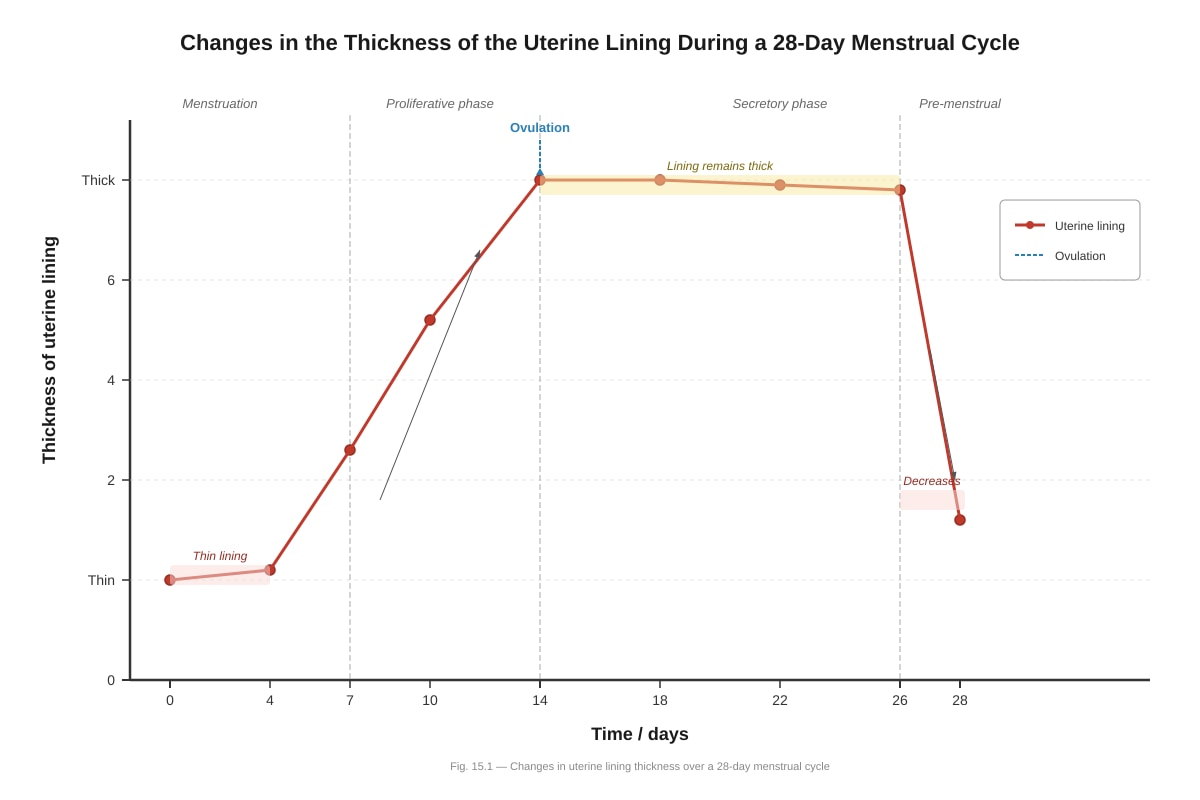
15. The graph below shows changes in the thickness of the uterine lining during a 28-day menstrual cycle.

[Graph: X-axis shows days 0-28, Y-axis shows thickness of uterine lining. Lining is thin at day 0-5, thickens from day 5-14, remains thick from day 14-26, then decreases from day 26-28.]

(a) Describe the changes in the thickness of the uterine lining from day 0 to day 14. [2 marks]


(b) Name the hormone responsible for the thickening of the uterine lining during days 5 to 14. [1 mark]


(c) Name the hormone responsible for maintaining the thickened uterine lining during days 14 to 26. [1 mark]


(d) Explain what happens to the uterine lining if fertilisation does not occur. [1 mark]


[Total: 5 marks]


Section C: Free Response Questions (25 marks)

Answer all questions in this section. Write your answers in the spaces provided. The quality of written communication will be assessed in questions marked with an asterisk (*).


16.* Describe in detail how a molecule of oxygen present in the air breathed into the lungs reaches a muscle cell in the leg. Name the structures involved in the pathway. [6 marks]


[Total: 6 marks]


17.* Describe and explain the role of hormones in maintaining a relatively constant blood glucose concentration in the human body. [7 marks]


[Total: 7 marks]


18. The diagram below shows a cross-section of a leaf from a flowering plant.

[Diagram: Cross-section showing upper epidermis, palisade mesophyll, spongy mesophyll, lower epidermis, guard cells, stomata, xylem, phloem.]

(a) Describe and explain the distribution of chloroplasts in the palisade mesophyll layer and the spongy mesophyll layer. [3 marks]


(b) Explain how the structure of the spongy mesophyll layer facilitates gas exchange. [2 marks]


(c) State the function of the guard cells and explain how they regulate gas exchange. [2 marks]


[Total: 7 marks]


19. Scientists are investigating "carbon farming," where large quantities of fast-growing plants are cultivated to absorb and store carbon dioxide from the atmosphere. Using your knowledge of photosynthesis and ecosystems, explain the potential benefits and limitations of this approach in reducing atmospheric carbon dioxide levels. [5 marks]


[Total: 5 marks]


END OF PAPER


This paper was generated by TuitionGoWhere AI for practice purposes. Version 4.

Answers

<!-- TuitionGoWhere generation metadata: stage=3-1; model=deepseek/deepseek-v4-pro; model_label=DeepSeek V4 Pro; generated=2026-05-29; Sources: Stage 2-1 real exam-derived templates and Stage 2-2 exam-enriched syllabus. -->

TuitionGoWhere Practice Paper - Combined Science Biology Secondary 4

ANSWER KEY AND MARKING SCHEME

PRELIMINARY EXAMINATION - Version 4

Total Marks: 65


Section A: Multiple Choice (10 marks)

QuestionAnswerMark
1C[1]
2B[1]
3C[1]
4B[1]
5B[1]
6B[1]
7B[1]
8B[1]
9C[1]
10C[1]

Total: 10 marks


Section B: Structured Questions (30 marks)

Question 11 (7 marks)

(a) [2 marks]

  • Cell A: Animal cell / Muscle cell / Cheek cell [1]
  • Cell B: Plant cell / Leaf cell / Palisade cell [1]

(b) [1 mark]

  • Any one of: Cell wall / Chloroplasts / Large central vacuole [1]

(c) [2 marks]

  • Mitochondria are the site of aerobic respiration / produce ATP (energy) [1]
  • Cell A (animal/muscle cell) requires large amounts of energy for contraction / movement / metabolic activities [1]

(d) [2 marks]

  • Process: Photosynthesis [1]
  • Word equation: Carbon dioxide + water → glucose + oxygen (in the presence of light and chlorophyll) [1]
    • Award [1] for correct reactants and products; condition (light/chlorophyll) not required but acceptable

Question 12 (5 marks)

(a) [2 marks]

  • Muscle cells require more energy/ATP for contraction [1]
  • Mitochondria are the site of aerobic respiration where ATP is produced; therefore muscle cells have more mitochondria to meet higher energy demands [1]

(b) [2 marks]

  • Mature red blood cells lack a nucleus and most organelles [1]
  • They rely on anaerobic respiration for energy / They transport oxygen rather than consume it for their own respiration / Lack of mitochondria maximises space for haemoglobin to carry oxygen [1]

(c) [1 mark]

  • Diffusion [1]

Question 13 (6 marks)

(a) [1 mark]

  • As the distance of the lamp increases, the rate of photosynthesis decreases / There is an inverse relationship between lamp distance and rate of photosynthesis [1]

(b) [2 marks]

  • As the lamp is moved further away, light intensity reaching the plant decreases [1]
  • Light is required for the light-dependent reactions of photosynthesis; lower light intensity reduces the rate of photosynthesis [1]

(c) [2 marks]

  • Any two of: Carbon dioxide concentration / Temperature / Availability of water [1 each, max 2]

(d) [1 mark]

  • Aquatic plants produce oxygen bubbles that can be easily seen and counted / Oxygen production can be directly observed and measured in water [1]

Question 14 (7 marks)

(a) [3 marks]

  • P: Stomach [1]
  • Q: Liver [1]
  • R: Pancreas [1]

(b) [2 marks]

  • Bile salts emulsify fats / break large fat droplets into smaller droplets [1]
  • This increases the surface area for lipase enzyme action, speeding up fat digestion [1]

(c) [2 marks]

  • Enzyme: Any one of: Pancreatic amylase / Trypsin / Pancreatic lipase [1]
  • Substrate: Starch (for amylase) / Protein (for trypsin) / Fats/lipids (for lipase) [1]
    • Substrate must match the named enzyme

Question 15 (5 marks)

(a) [2 marks]

  • Day 0 to 5: Uterine lining is thin / shed during menstruation [1]
  • Day 5 to 14: Uterine lining thickens / proliferates / builds up [1]

(b) [1 mark]

  • Oestrogen [1]

(c) [1 mark]

  • Progesterone [1]

(d) [1 mark]

  • The uterine lining breaks down and is shed during menstruation / Progesterone levels drop, causing the lining to break down [1]

Section C: Free Response Questions (25 marks)

Question 16 (6 marks)

Marking guidance: Award marks for each correct step in the pathway. The answer must include named structures and processes.

MarkExpected content
[1]Oxygen enters the lungs during inhalation and reaches the alveoli
[1]Oxygen diffuses across the alveolar epithelium into the blood capillaries (down a concentration gradient)
[1]Oxygen binds to haemoglobin in red blood cells
[1]Oxygenated blood travels via the pulmonary vein to the left atrium, then left ventricle
[1]Blood is pumped out of the left ventricle via the aorta to arteries leading to the leg muscle
[1]Oxygen diffuses from the blood capillaries into the tissue fluid, then across the muscle cell membrane into the mitochondria

Accept any six correct, sequential steps with named structures. Award partial marks for incomplete but correct descriptions.


Question 17 (7 marks)

Marking guidance: This is a quality of written communication (QWC) question. Award marks for scientific content and clarity of explanation.

MarkExpected content
[1]Blood glucose concentration must be maintained within a narrow range (homeostasis)
[1]When blood glucose is high (e.g., after a meal), the pancreas detects this change
[1]Beta cells in the islets of Langerhans secrete insulin into the blood
[1]Insulin stimulates liver and muscle cells to take up glucose and convert it to glycogen for storage; this lowers blood glucose
[1]When blood glucose is low (e.g., during fasting), alpha cells in the pancreas secrete glucagon
[1]Glucagon stimulates the liver to break down glycogen into glucose and release it into the blood; this raises blood glucose
[1]This is an example of negative feedback; the system responds to restore normal blood glucose levels

Award marks for correct hormone names, source, target tissues, and effects. Accept references to adipose tissue for glucose uptake.


Question 18 (7 marks)

(a) [3 marks]

  • Palisade mesophyll: Contains many chloroplasts / high concentration of chloroplasts [1]
  • Explanation: Palisade cells are located near the upper leaf surface and receive the most direct sunlight; more chloroplasts maximise light absorption for photosynthesis [1]
  • Spongy mesophyll: Contains fewer chloroplasts / lower concentration of chloroplasts [1]
  • Explanation: Spongy mesophyll receives less direct light; the cells are loosely packed with air spaces to facilitate gas exchange rather than maximise photosynthesis [1]
    • Award up to [3] for complete description and explanation of both layers

(b) [2 marks]

  • Spongy mesophyll cells are loosely packed with large intercellular air spaces [1]
  • These air spaces allow rapid diffusion of carbon dioxide from the stomata to the photosynthetic cells and oxygen from the photosynthetic cells to the stomata [1]

(c) [2 marks]

  • Guard cells control the opening and closing of stomata [1]
  • When guard cells are turgid (full of water), the stomata open, allowing gas exchange (CO₂ in, O₂ out); when guard cells are flaccid, the stomata close, reducing water loss [1]

Question 19 (5 marks)

Marking guidance: Award marks for balanced discussion of benefits and limitations.

MarkExpected content
[1]Benefit: Plants absorb carbon dioxide during photosynthesis and convert it into glucose and other organic compounds
[1]Benefit: Carbon is stored in plant biomass (stems, leaves, roots) for the lifetime of the plant, reducing atmospheric CO₂
[1]Limitation: If plants are burned or decompose, the stored carbon is released back into the atmosphere as CO₂
[1]Limitation: Large-scale carbon farming may require significant land area, potentially competing with food production or reducing natural habitats/biodiversity
[1]Limitation: The rate of carbon absorption depends on factors such as light intensity, temperature, and water availability; growth may be limited in some environments

Accept any other valid benefits or limitations. Award marks for clear, reasoned arguments linking photosynthesis and carbon cycling to the carbon farming concept.


END OF ANSWER KEY

Total marks: 65