From Real Exams Exam Paper
Secondary 4 Combined Science Biology Preliminary Examination Paper 3
Free Sec 4 Comb Sci Bio Prelim Paper 3, HY3 Exam version, with questions, answers, and O Level-style practice for Singapore students.
These static practice materials are generated from the site's syllabus and paper-generation workflow, with source and model context shown so students and parents can evaluate the material before use.
Questions
Free quiz and exam paper access
Enter your details to view this paper
Your access is remembered on this device.
Answers
TuitionGoWhere Exam Practice (AI) — PRELIM Practice Paper Answers
Combined Science Biology Secondary 4 — Version 3
Marking Scheme and Teaching Notes
Section A
1. [1 mark]
Answer: Diffusion
Teaching: Oxygen moves from high concentration in alveoli to low concentration in muscle tissue fluid and then cell, down a gradient, no energy needed. Common trap: writing "respiration" (that is a process using oxygen, not transport).
2. [2 marks]
Answer: Muscle cells have most mitochondria because they need most ATP for contraction; liver cells need moderate ATP for metabolism; skin cells low energy demand so few mitochondria.
Marking: 1 mark for linking count to energy/ATP demand, 1 mark for correct cell-specific reason.
Teaching: Mitochondria are sites of aerobic respiration producing ATP. More active cells = more mitochondria.
3. [2 marks]
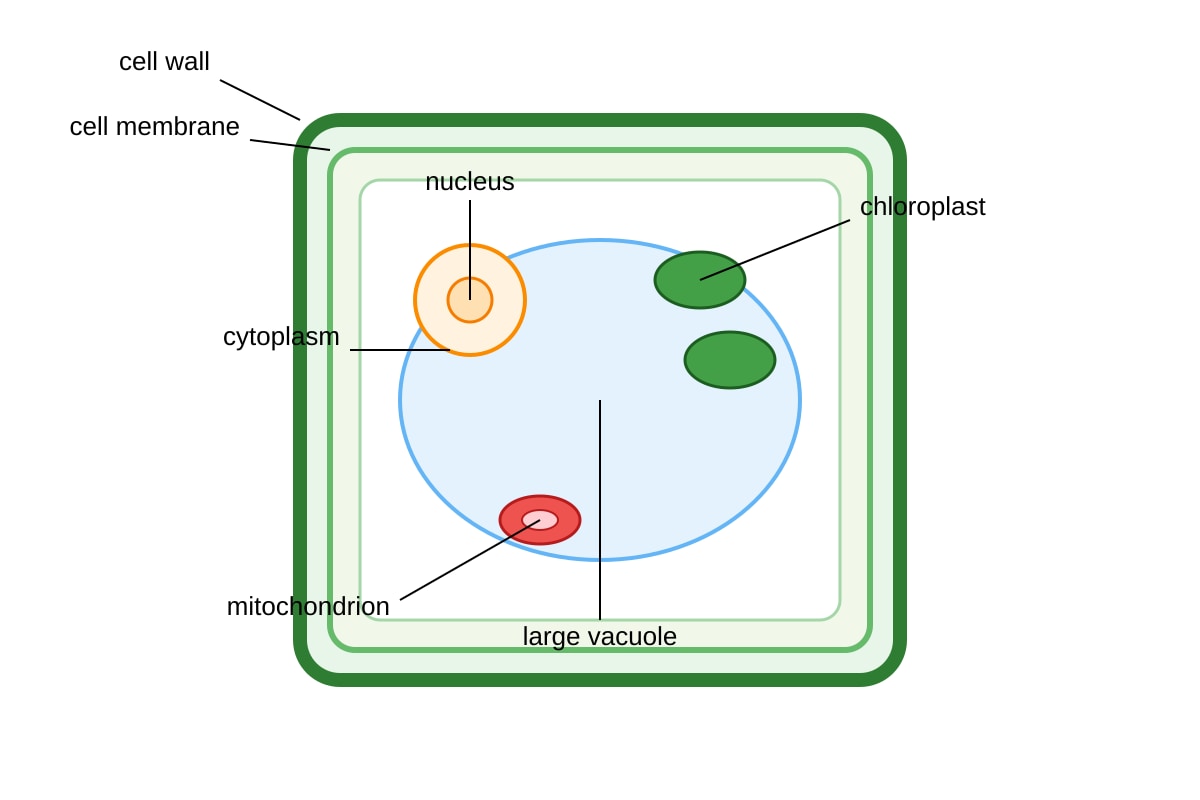
(a) [1] Chloroplast (or cell wall/vacuole acceptable as plant-only).
(b) [1] Photosynthesis (for chloroplast) / support (cell wall) / storage (vacuole).
Teaching: Plant cells have chloroplasts for making food, animal cells do not.
4. [2 marks]
Answer: To make more space for haemoglobin / to carry more oxygen.
Marking: 1 for space, 1 for oxygen-carrying link.
Teaching: No nucleus means biconcave shape and more internal volume for haemoglobin.
5. [1 mark]
Answer: Diffusion
Teaching: CO₂ is produced by respiration, high in cell, diffuses to capillary blood down gradient.
6. [2 marks]
A: Cell wall [1]
B: Chloroplast [1]
Teaching: From placeholder, A is rigid outer layer, B is green oval organelle. Do not confuse with cell membrane.
7. [1 mark]
Answer: Diffusion does not require energy; active transport requires energy (ATP).
Teaching: Any valid single difference accepted.
8. [2 marks]
Answer: It is likely a protein-synthesising cell (e.g., pancreatic cell) because ribosomes make proteins.
Marking: 1 for protein synthesis, 1 for link to ribosomes.
9. [1 mark]
Answer: Oxygen
Teaching: Alveoli have high O₂, blood low O₂ after deoxygenated return.
10. [2 marks]
Answer: Root hair cells are underground, no light, no photosynthesis, so no chloroplasts; leaf palisade cells are exposed to light and photosynthesise, so many chloroplasts.
Marking: 1 each for root and leaf reason.
11. [1 mark]
Answer: Osmosis
Teaching: Water across partially permeable membrane, special case of diffusion.
12. [2 marks]
(a) [1] Red blood cell
(b) [1] Biconcave shape increases surface area for gas exchange / allows squeeze through capillaries.
13. [2 marks]
Answer: Sperm cell needs energy to swim to egg; mitochondria provide ATP via respiration.
Marking: 1 for energy need, 1 for mitochondria function.
14. [2 marks]
Answer: Made of phospholipid bilayer with embedded proteins; proteins form channels/pumps allowing selective passage.
Marking: 1 structure, 1 function link.
Section B
15. [5 marks]
(a) [1] Pancreatic cell
(b) [2] It secretes proteins (enzymes); ribosomes assemble proteins, so high count supports function.
(c) [2] Neurones transmit impulses needing ATP; fat cells store energy, low metabolism, fewer mitochondria.
16. [4 marks]
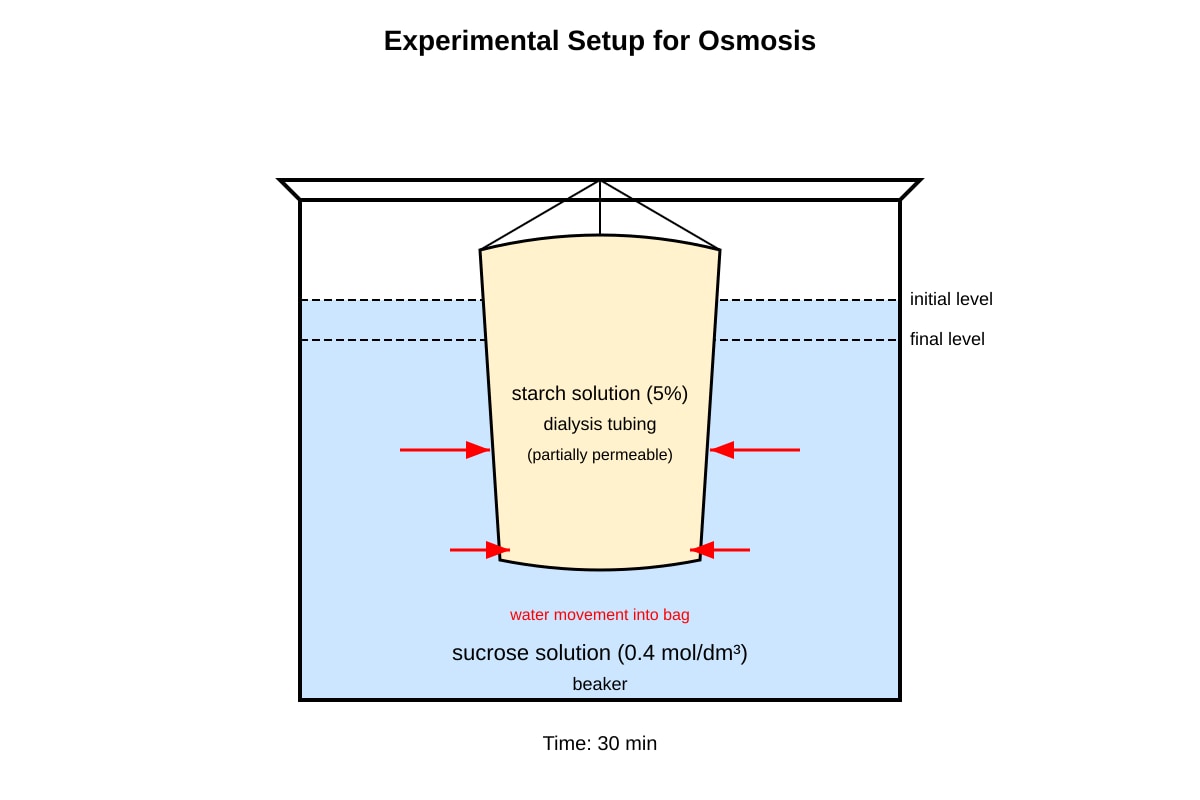
(a) [1] Osmosis
(b) [3] Bag has starch (low water potential) vs sucrose outside (higher water potential); water moves into bag by osmosis; volume rises.
Marking: 1 water potential diff, 1 process, 1 result.
17. [3 marks]
(a) [2] X: Plant cell; Y: Animal cell
(b) [1] Break down worn-out organelles / digest materials.
18. [2 marks]
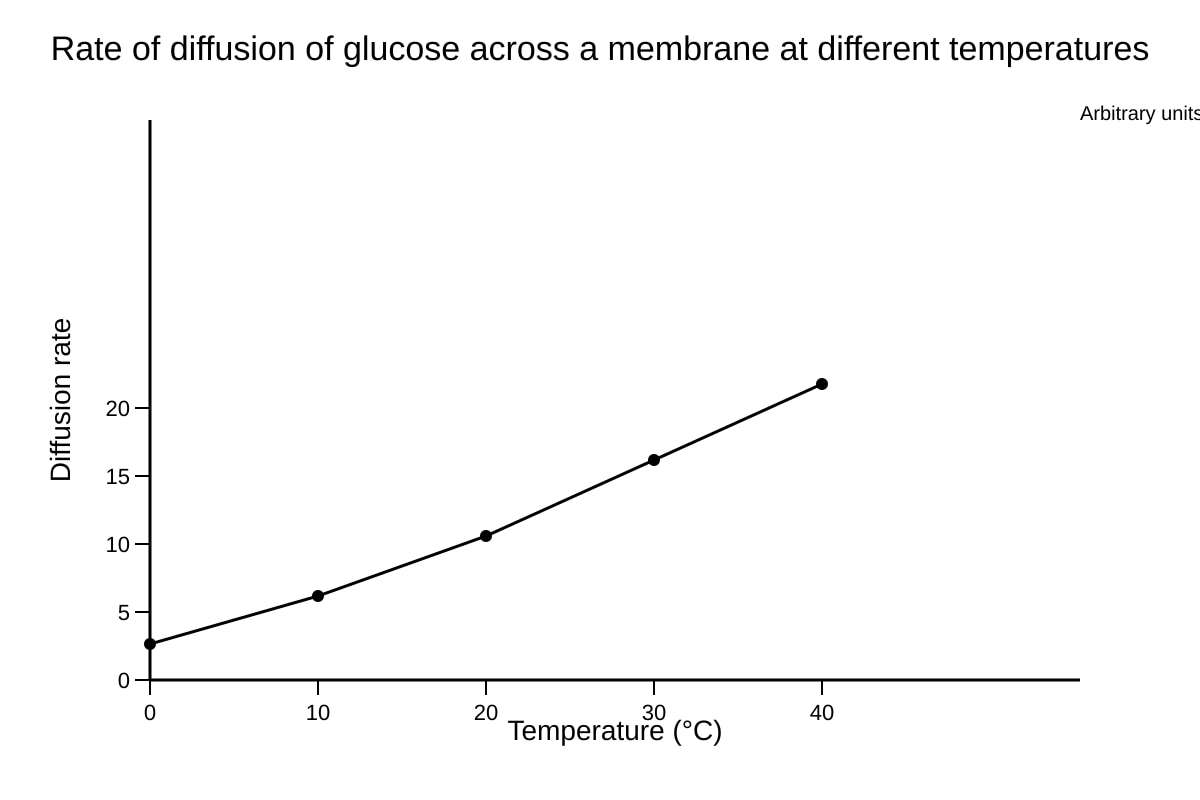
Answer: Diffusion rate increases as temperature rises; positive correlation.
Marking: 1 trend, 1 correlation term.
Section C
19. [6 marks]
Answer:
- Inhaled O₂ into alveolus [1]
- Diffuses across alveolar epithelium to capillary [1]
- Binds haemoglobin in RBC [1]
- Flows pulmonary vein → left atrium → left ventricle → aorta → coronary artery [2]
- Diffuses capillary → heart muscle cell membrane → mitochondrion [1]
Teaching: Must name structures and processes; no active transport.
20. [9 marks]
(a) [1] Molecules made by living cells (e.g., carbohydrates, proteins).
(b) [3] Any three: carbohydrates, lipids, proteins, nucleic acids. (1 each)
(c) [5] Phospholipid bilayer hydrophobic core blocks polar molecules; protein channels/pumps allow specific biomolecules; selective permeability controls entry/exit; maintains internal environment.
Marking: 2 structure, 3 function link.
Total: 65 marks