From Real Exams Exam Paper
Secondary 4 Combined Science Biology Preliminary Examination Paper 2
Free Sec 4 Comb Sci Bio Prelim Paper 2, HY3 Exam version, with questions, answers, and O Level-style practice for Singapore students.
These static practice materials are generated from the site's syllabus and paper-generation workflow, with source and model context shown so students and parents can evaluate the material before use.
Questions
Free quiz and exam paper access
Enter your details to view this paper
Your access is remembered on this device.
Answers
TuitionGoWhere Exam Practice (AI) — PRELIM Practice Paper
Combined Science Biology Secondary 4 — Version 2: Answer Key
Total Marks: 65
Section A: 28 marks
Section B: 22 marks
Section C: 15 marks
Section A Answers
1. [1 mark]
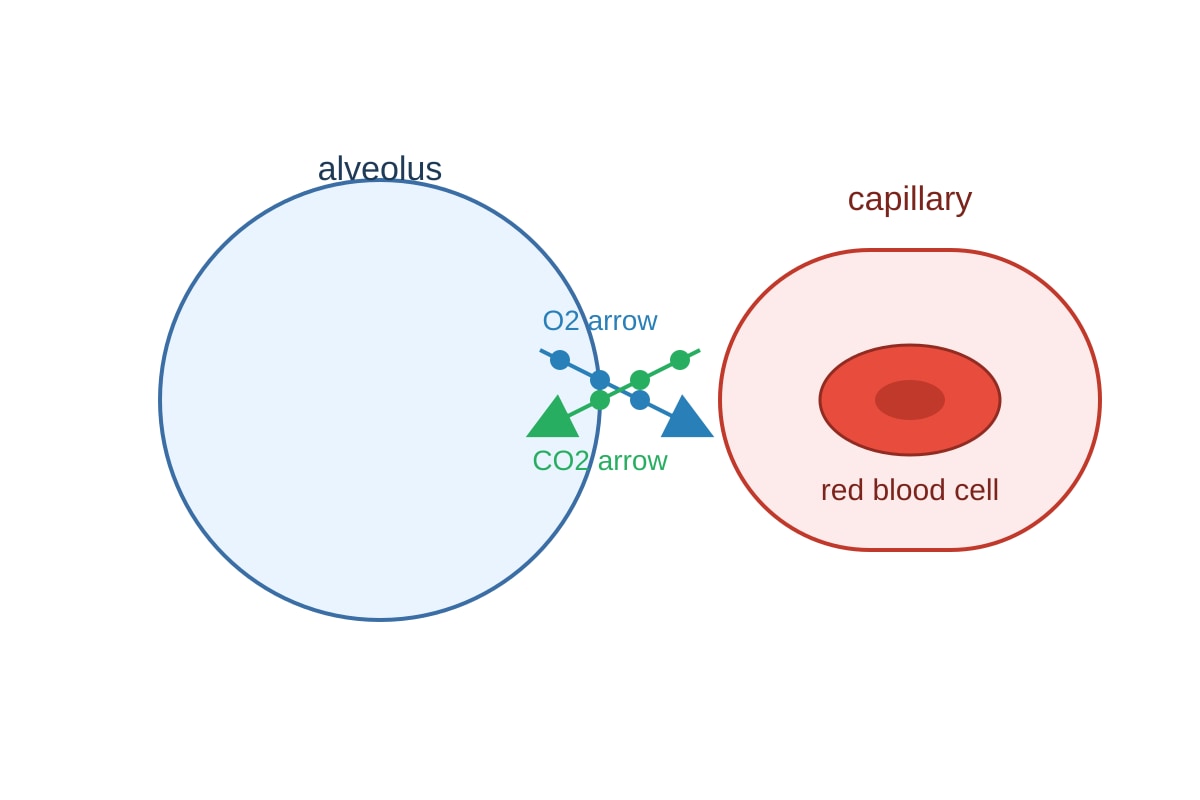
Answer: Diffusion
Teaching note: Oxygen moves from high concentration in the lungs/alveoli to lower concentration in the blood and then the muscle cell by diffusion. It is passive (no energy needed). Common mistake: writing "active transport" or naming a structure instead of the process.
2. [2 marks]
Answer: Muscle cells have more mitochondria (3000 vs 200) because they require more ATP for contraction; skin cells have lower energy demand so fewer mitochondria.
Mark breakdown: 1 mark for stating muscle has higher count and skin lower; 1 mark for linking to energy/ATP need.
Teaching note: Mitochondria are sites of aerobic respiration producing ATP. More active cells need more ATP, thus more mitochondria.
3. [2 marks]
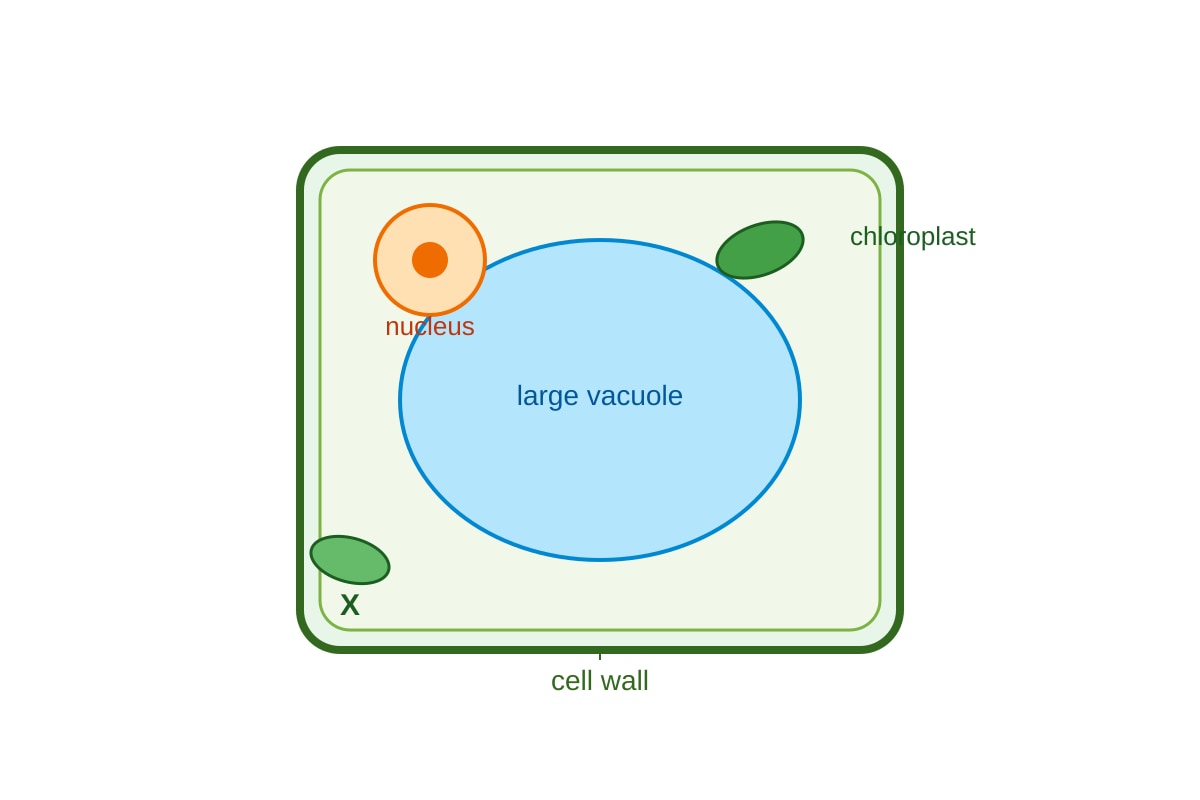
(a) [1] Chloroplast
(b) [1] Photosynthesis / makes food (glucose) using light energy.
Teaching note: From the <image_placeholder> Q3-fig1, X is the green oval = chloroplast. Function is conversion of light energy to chemical energy.
4. [2 marks]
Answer: Red blood cells lose nucleus to create more space for haemoglobin to carry oxygen; liver cells need nucleus to control cell activities (e.g., protein synthesis, metabolism).
Mark breakdown: 1 mark each for correct reason for each cell type.
5. [1 mark]
Answer: Diffusion does not require energy; active transport requires energy (ATP). OR diffusion is down gradient, active transport against gradient.
Teaching note: Key distinction for membrane transport.
6. [1 mark]
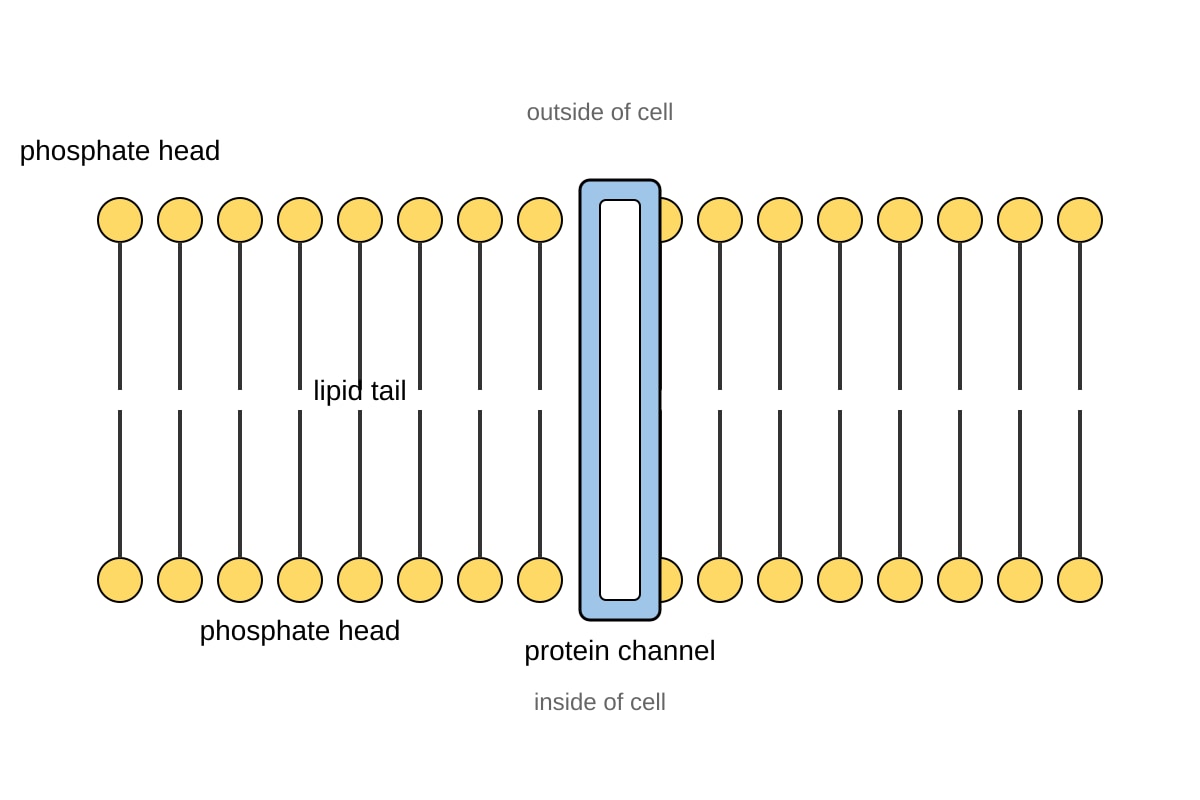
Answer: Protein channel (or channel protein).
Teaching note: From Q6-fig1, the spanning protein is the channel allowing selected molecules through the bilayer.
7. [2 marks]
Answer: Incorrect. Correct: Osmosis is the diffusion of water from a region of HIGH water potential to a region of LOW water potential (or from dilute to concentrated solution).
Mark breakdown: 1 mark identifying wrong; 1 mark correct statement.
8. [2 marks]
Answer: During S phase, DNA is replicated so chromosome number stays same but DNA content doubles; skin cell is in G1 (unreplicated).
Mark breakdown: 1 mark for S phase replication; 1 mark comparing to skin cell G1.
9. [1 mark]
Answer: Active transport.
Teaching note: Against concentration gradient requires ATP.
10. [1 mark]
Answer: Carbon dioxide.
Teaching note: At night no photosynthesis; respiration releases CO₂ to atmosphere.
11. [2 marks]
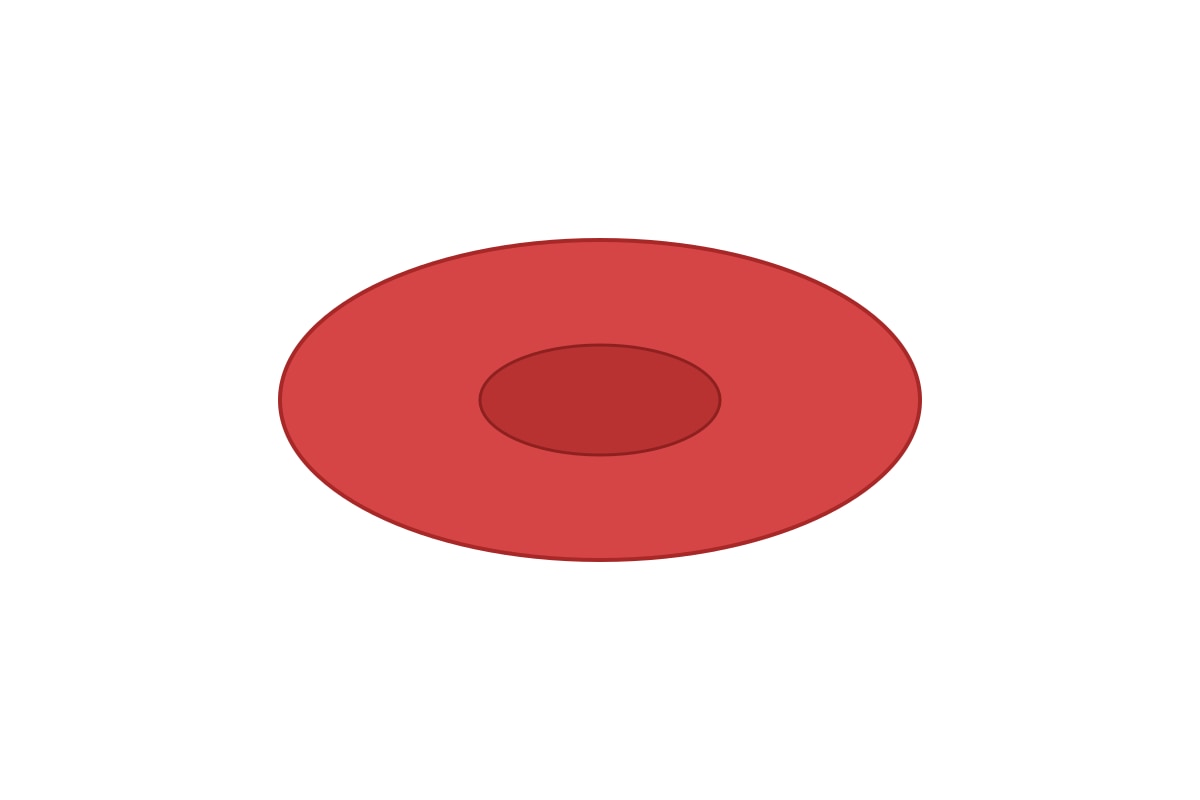
(a) [1] Red blood cell (erythrocyte).
(b) [1] Biconcave shape / no nucleus (either from diagram).
Teaching note: Q11-fig1 shows biconcave non-nucleated red-tinted cell.
12. [2 marks]
Answer: Ribosomes are sites of protein synthesis; many ribosomes mean the cell synthesises large amounts of protein.
Mark breakdown: 1 mark function, 1 mark inference.
13. [1 mark]
Answer: Osmosis.
14. [2 marks]
Answer: Long thin extension increases surface area for absorption of water and minerals from soil.
Mark breakdown: 1 mark increase SA, 1 mark link to absorption.
Section B Answers
15. [4 marks]
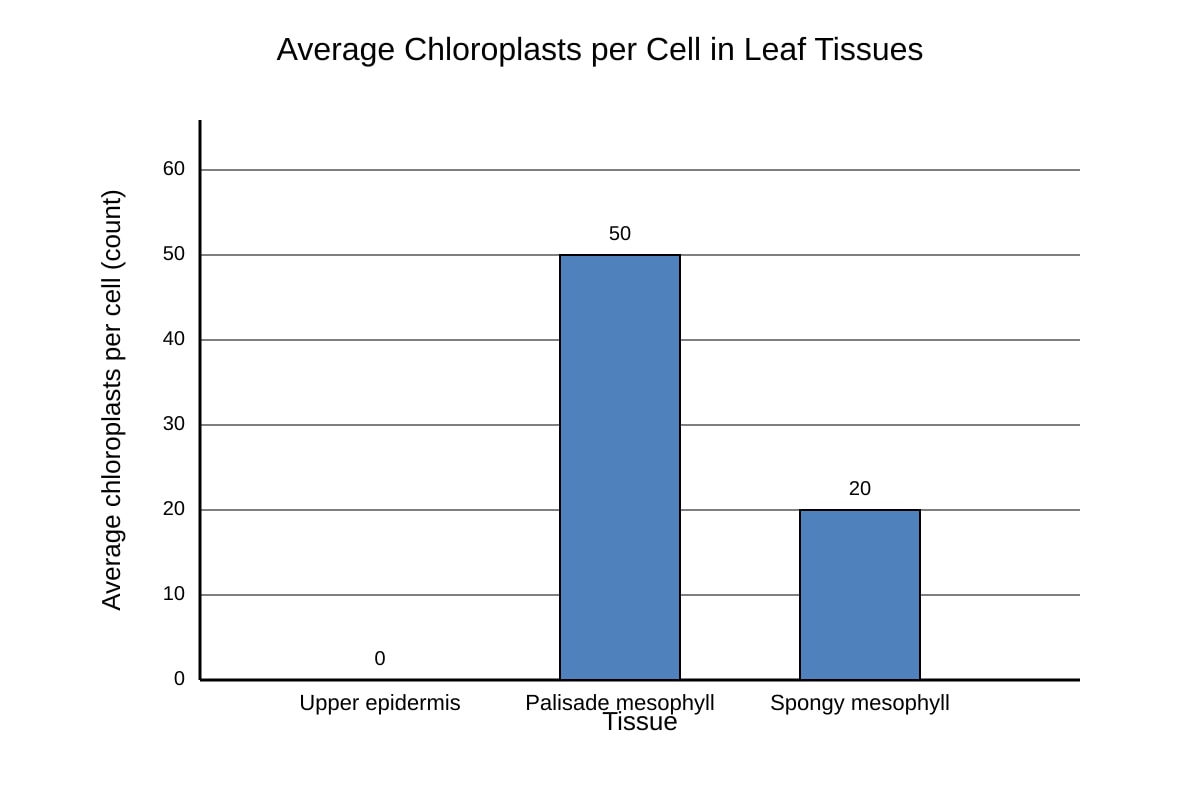
(a) [1] Palisade mesophyll.
(b) [3] Palisade has ~50 chloroplasts because it is the main photosynthetic layer receiving most light; spongy has ~20 as it also photosynthesises but with more air spaces for gas exchange, less packed with chloroplasts. Upper epidermis has 0 as it is transparent, not for photosynthesis.
Mark breakdown: 1 mark tissue comparison, 2 marks functional explanation.
16. [4 marks]
(a) [2] Pancreatic cell; very many ribosomes and it secretes proteins (enzymes).
(b) [2] Bacteria are prokaryotes; they do not have membrane-bound organelles like mitochondria; they respire using cell membrane.
Mark breakdown: 1+1 each part.
17. [3 marks]
Answer: Oxygen diffuses from alveolus (high pO₂) across alveolar epithelium and capillary wall into plasma then into red blood cell; binds haemoglobin.
Mark breakdown: 1 mark diffusion, 1 mark crossing barriers, 1 mark into RBC/binding.
18. [2 marks]
Answer: Net water movement is OUT of the cell (from solution -200 to cell -500? Wait: water moves from higher ψ to lower ψ; solution is -200 (higher) to cell -500 (lower) → INTO cell). Correct: into the cell.
Teaching note: Water potential more negative = lower. So -200 > -500, net into cell. Common mistake: reversing direction.
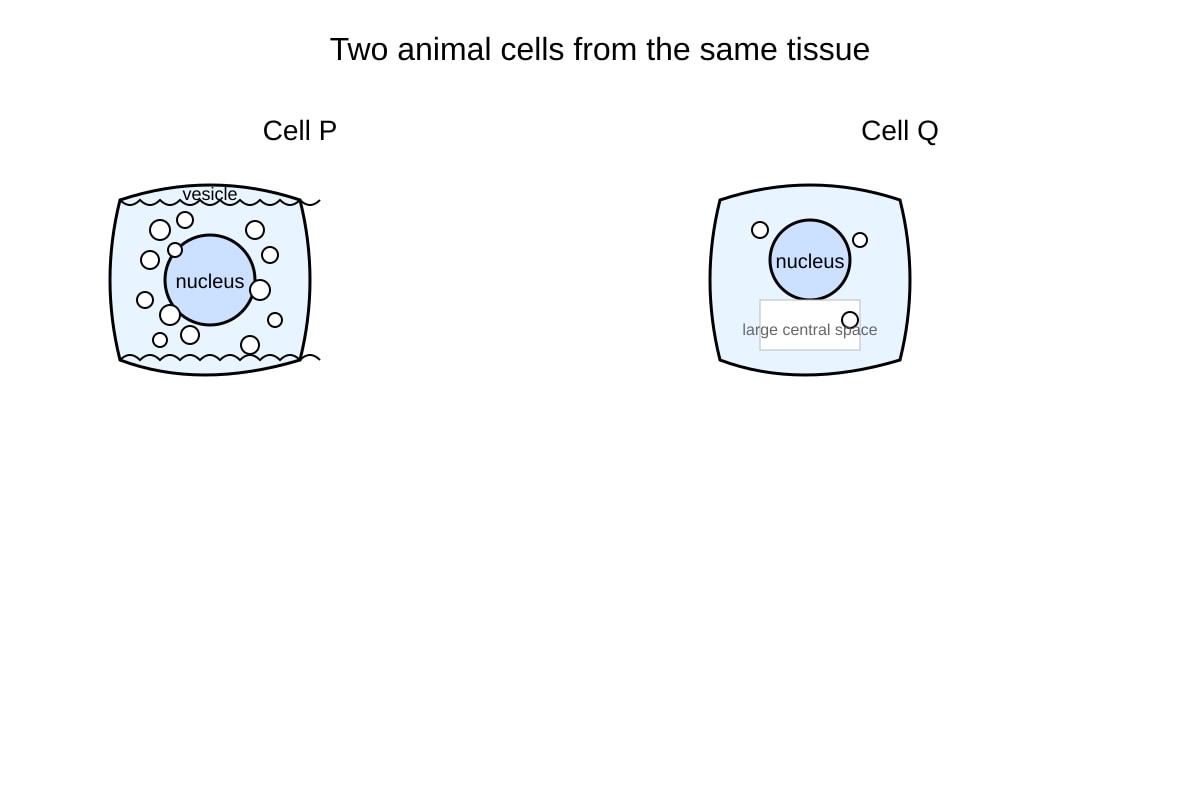
19. [2 marks]
Answer: Cell P is likely secretory/active in transport; more vesicles for storing/transporting materials.
Mark breakdown: 1 mark observation, 1 mark function link.
Section C Answers
20. [15 marks]
Answer (full pathway):
- Inhaled air enters trachea → bronchi → bronchioles → alveoli (lung). [2]
- O₂ diffuses across alveolar epithelium and capillary endothelium into blood plasma. [3]
- O₂ binds haemoglobin in red blood cells in pulmonary capillary. [2]
- Blood leaves lung via pulmonary vein → left atrium → left ventricle → aorta → femoral artery → leg capillary. [4]
- O₂ diffuses from capillary into tissue fluid then into muscle cell membrane → mitochondrion. [4]
Mark descriptors:
- Named structures (alveoli, capillary, heart chambers, arteries) = up to 6 marks
- Processes (diffusion, binding, transport) = up to 5 marks
- Correct sequence and leg specificity = 4 marks
Teaching note: Must show continuous route and passive diffusion at exchange sites; no active transport for O₂ entry.
End of Answer Key