From Real Exams Exam Paper
Secondary 4 Combined Science Biology Preliminary Examination Paper 1
Free Sec 4 Comb Sci Bio Prelim Paper 1, HY3 Exam version, with questions, answers, and O Level-style practice for Singapore students.
These static practice materials are generated from the site's syllabus and paper-generation workflow, with source and model context shown so students and parents can evaluate the material before use.
Questions
TuitionGoWhere Exam Practice (AI) — PRELIM Practice Paper
Combined Science Biology Secondary 4 — Cells & Biomolecules (Version 1)
School: TuitionGoWhere Secondary School (AI)
Subject: Combined Science Biology
Level: Secondary 4
Paper: PRELIM Practice Paper (Version 1 of 5)
Duration: 1 hour 15 minutes
Total Marks: 65
Name: ___________________________
Class: ____________
Date: ____________
Instructions:
- Answer all questions in the spaces provided.
- Use blue or black pen.
- Show all working where calculation is required.
- Diagrams are not drawn to scale unless stated.
Section A: Short Answer and Recall (Questions 1–8) [16 marks]
1. State the process by which oxygen from the surroundings reaches a muscle cell. [1]
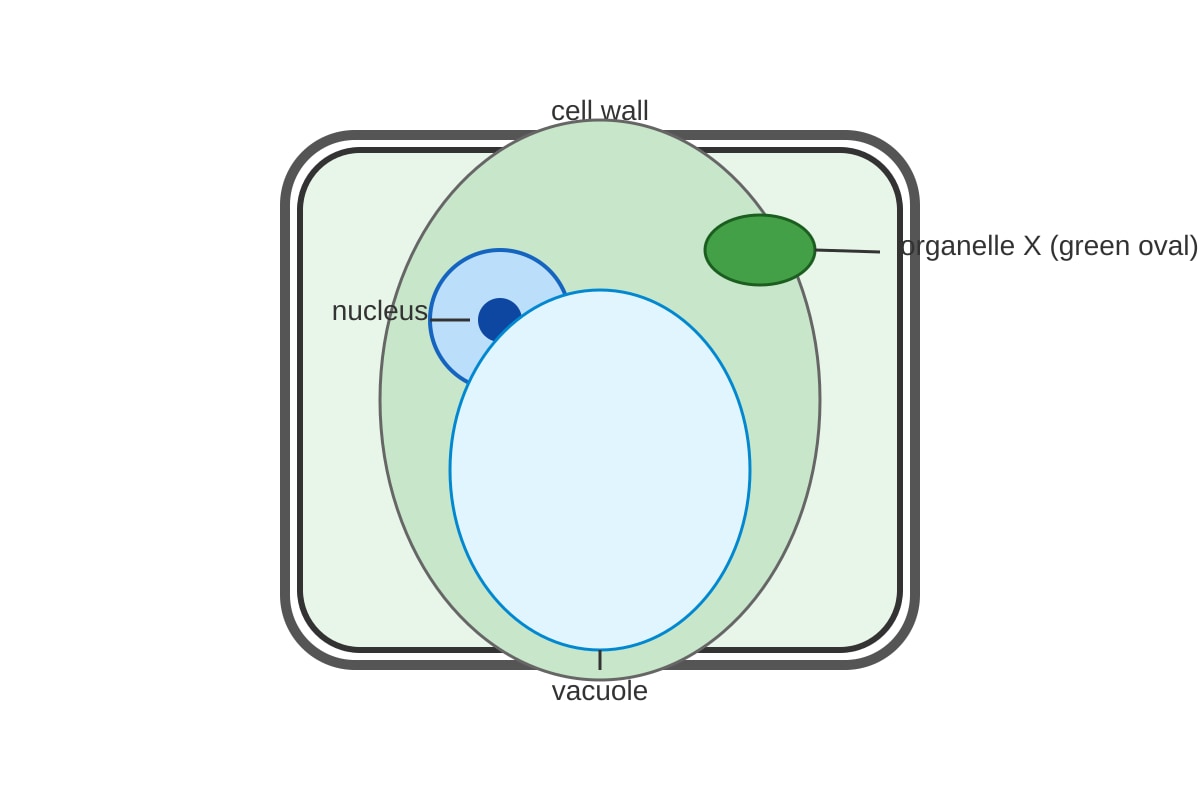
2. Name the organelle labelled X in the plant cell diagram below. [1]
Image pending generation: diagram for Q2.
3. State one difference between diffusion and active transport. [1]
4. Name the gas that diffuses out of a human cell during respiration. [1]
5. A red blood cell lacks a nucleus. State one other organelle that is absent in a mature mammalian red blood cell. [1]
6. State the term for the movement of water molecules from a region of high water potential to low water potential across a partially permeable membrane. [1]
7. Name the cell type that contains a large number of mitochondria for energy production during contraction. [1]
8. State the substance in a cell membrane that controls which molecules can pass through it. [1]
Section B: Structured Response and Data Interpretation (Questions 9–15) [27 marks]
9. Table 1 shows the number of mitochondria in three cell types.
| Cell type | Number of mitochondria per cell |
|---|---|
| Skin cell | 200 |
| Liver cell | 1500 |
| Muscle cell | 3000 |
(a) State which cell type has the highest number of mitochondria. [1]
(b) Explain why the muscle cell has more mitochondria than the skin cell. [2]
(a) _______________________________________________________
(b) _______________________________________________________
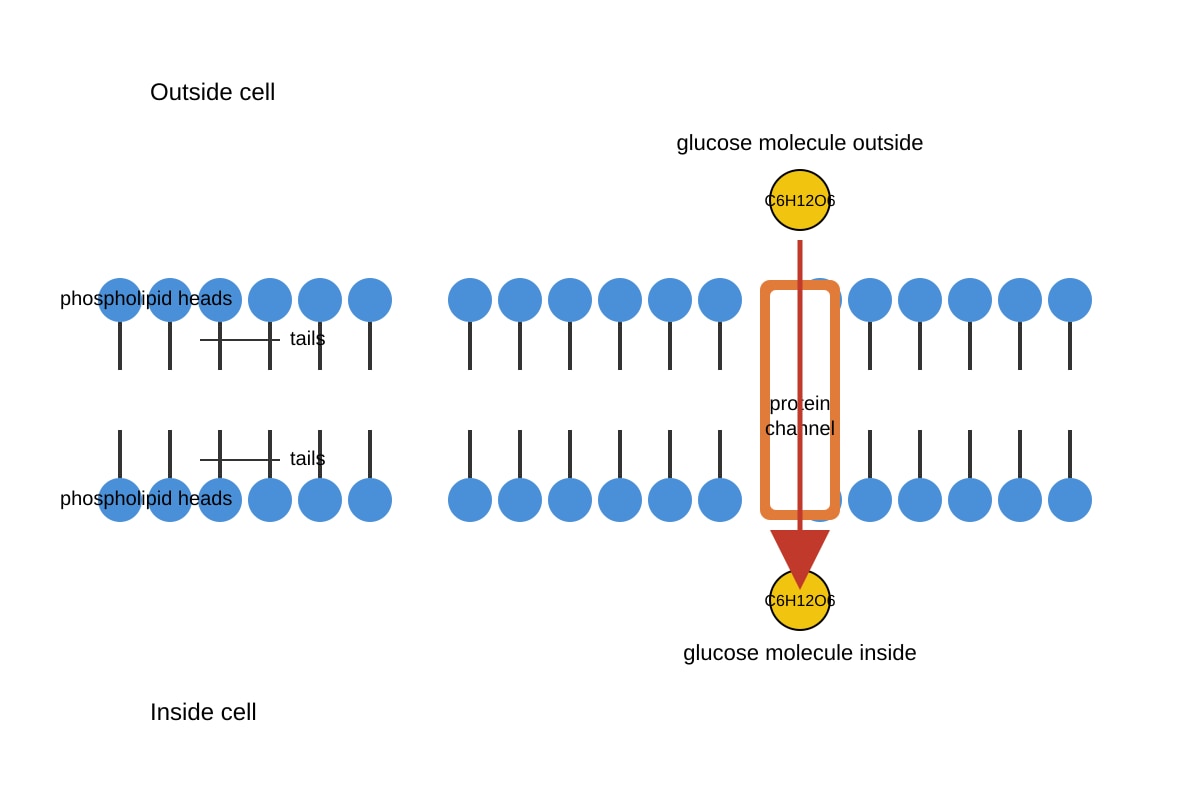
10. The diagram below shows a section of a cell membrane.
Image pending generation: diagram for Q10.
(a) Name the structure labelled as the protein channel. [1]
(b) State whether the movement of glucose through this channel is diffusion, osmosis, or active transport if no energy is used. [1]
(c) Suggest why glucose cannot pass directly through the phospholipid bilayer. [2]
(a) ___________________________
(b) ___________________________
(c) _______________________________________________________
11. Describe how a molecule of oxygen breathed into the lungs reaches a cell in the heart muscle. Name the structures involved. [6]
12. (a) Define osmosis in terms of water potential. [2]
(b) A plant cell is placed in pure water. State what happens to the cell after some time. [1]
(a) _______________________________________________________
(b) _______________________________________________________
13. The table below shows the relative number of ribosomes in two cell types.
| Cell type | Ribosomes per cell |
|---|---|
| Pancreatic cell (protein secretion) | High |
| Fat storage cell | Low |
Suggest why the pancreatic cell has more ribosomes than the fat storage cell. [2]
14. (a) State the process by which carbon dioxide moves from a liver cell to the blood capillary. [1]
(b) Explain why this process does not require energy. [2]
(a) ___________________________
(b) _______________________________________________________
15. A student observed an unknown cell under a microscope and recorded: "Has a cell wall, chloroplasts, and a large vacuole."
(a) Identify the cell. [1]
(b) State one function of the chloroplasts present. [1]
(c) State why the large vacuole helps the plant cell. [1]
(a) ___________________________
(b) ___________________________
(c) _______________________________________________________
Section C: Extended Application (Questions 16–20) [22 marks]
16. Compare the organelle distribution between a bacterial cell and a typical animal cell. Your answer should include at least two differences. [4]
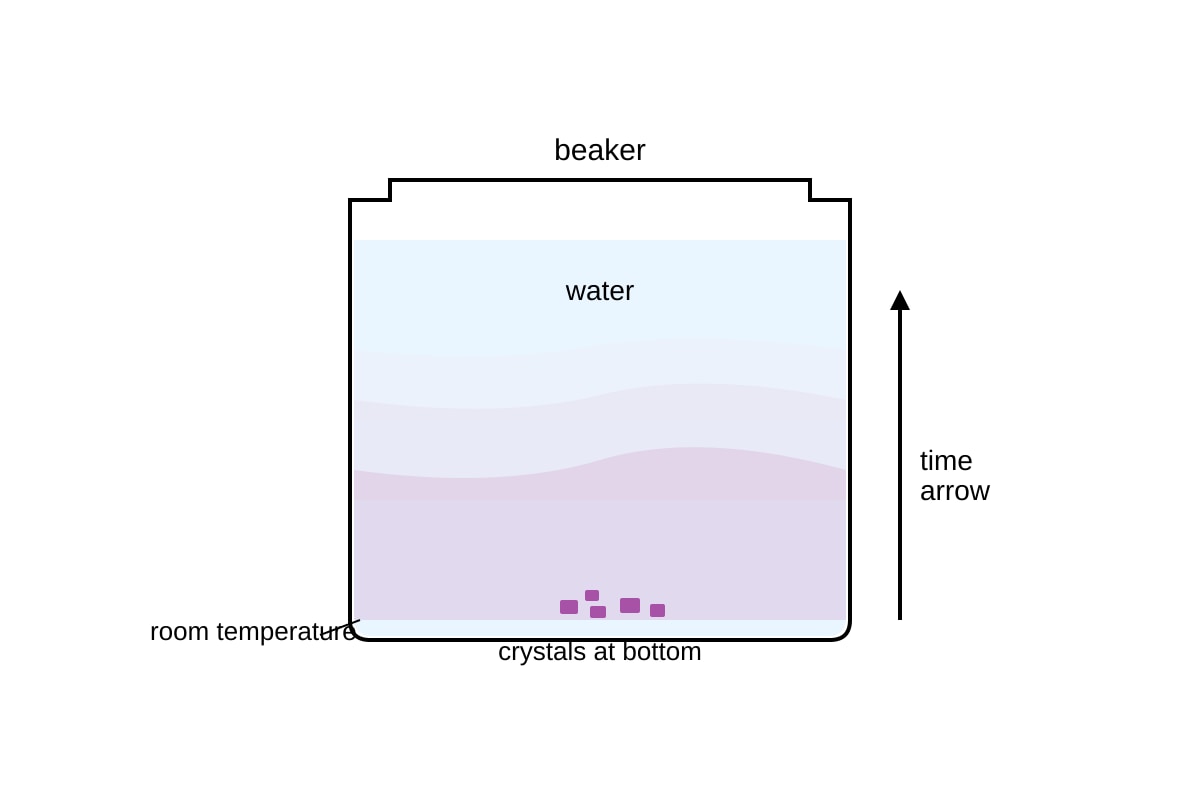
17. The figure below shows an experimental setup for investigating diffusion of potassium manganate(VII) crystals in water.
Image pending generation: experimental_setup for Q17.
(a) State the process shown. [1]
(b) Explain why the colour spreads without stirring. [2]
(c) Predict what happens if the beaker is heated. [1]
(a) ___________________________
(b) _______________________________________________________
(c) ___________________________
18. A cell membrane is described as "selectively permeable".
(a) Explain what is meant by selectively permeable. [2]
(b) Give one example of a molecule that passes freely and one that needs a protein channel. [2]
(a) _______________________________________________________
(b) _______________________________________________________
19. Describe the pathway of a carbon dioxide molecule produced in a muscle cell until it leaves the body through the lungs. Name structures involved. [6]
20. The table shows organelle counts in four cell types.
| Cell type | Mitochondria | Chloroplasts | Nucleus |
|---|---|---|---|
| Leaf palisade | 50 | 30 | Yes |
| Root hair | 100 | 0 | Yes |
| Red blood | 0 | 0 | No |
| Sperm | 20 | 0 | Yes |
(a) Which cell listed has no mitochondria? [1]
(b) Explain why the root hair cell has chloroplasts but the leaf palisade has more. [3]
(c) Suggest why the red blood cell has no nucleus. [1]
(a) ___________________________
(b) _______________________________________________________
(c) ___________________________
End of Paper
Answers
TuitionGoWhere Exam Practice (AI) — PRELIM Practice Paper Answer Key
Combined Science Biology Secondary 4 — Cells & Biomolecules (Version 1)
Total Marks: 65
Section A (16 marks)
1. [1 mark]
Answer: Diffusion
Teaching note: Oxygen moves from high concentration in alveoli to low concentration in muscle tissue fluid by diffusion, a passive process. Common mistake: naming "respiration" or "blood transport" instead of the process.
2. [1 mark]
Answer: Chloroplast
Teaching note: The green oval organelle in plant cells is the chloroplast, site of photosynthesis. Based on Q2-fig1, label X points to green oval distinct from nucleus/vacuole.
3. [1 mark]
Answer: Diffusion does not require energy / active transport requires energy (ATP).
Teaching note: Key difference — diffusion is passive down gradient; active transport uses carrier proteins and ATP.
4. [1 mark]
Answer: Carbon dioxide
Teaching note: Respiration produces CO₂ which diffuses out of cells to blood then lungs.
5. [1 mark]
Answer: Mitochondria (or other e.g. endoplasmic reticulum)
Teaching note: Mature mammalian RBC loses nucleus and mitochondria to maximise haemoglobin space.
6. [1 mark]
Answer: Osmosis
Teaching note: Osmosis is water diffusion across partially permeable membrane.
7. [1 mark]
Answer: Muscle cell
Teaching note: Muscle cells contract using ATP from many mitochondria.
8. [1 mark]
Answer: Protein (channel/carrier protein) or phospholipid bilayer with proteins
Teaching note: Membrane proteins regulate selective permeability.
Section B (27 marks)
9. [3 marks]
(a) [1] Muscle cell
(b) [2] Muscle cells contract and need large amounts of ATP; mitochondria produce ATP via respiration, so more mitochondria are present. Skin cells are less active and need less energy.
Marking: 1 for identifying higher demand, 1 for linking to ATP production.
10. [4 marks]
(a) [1] Channel protein / transport protein
(b) [1] Diffusion (facilitated diffusion)
(c) [2] Glucose is large and polar/water-soluble; phospholipid bilayer core is hydrophobic, so glucose cannot pass directly and needs a channel.
Marking: 1 for size/polarity, 1 for hydrophobic barrier.
11. [6 marks]
Answer: Oxygen enters alveoli in lungs → diffuses across alveolar epithelium into blood capillary → binds haemoglobin in RBC → transported via pulmonary vein to left atrium → left ventricle → aorta → coronary artery → heart muscle capillary → diffuses into tissue fluid → across cell membrane into mitochondrion.
Marking descriptors: 1 mark per major named structure/process (alveoli, diffusion, RBC/haemoglobin, heart chambers/vessel, capillary, cell mitochondrion). Max 6.
12. [3 marks]
(a) [2] Osmosis is net movement of water molecules from region of higher water potential to lower water potential through partially permeable membrane.
(b) [1] Becomes turgid (water enters, vacuole swells).
Marking: definition 2 marks (water potential + membrane).
13. [2 marks]
Answer: Pancreatic cells secrete proteins (enzymes); ribosomes synthesise proteins, so more ribosomes needed. Fat cells store lipids, less protein synthesis.
Marking: 1 for protein synthesis link, 1 for contrast.
14. [3 marks]
(a) [1] Diffusion
(b) [2] CO₂ is higher in cell than blood; moves down concentration gradient passively, no ATP needed.
Marking: gradient 1, passive 1.
15. [3 marks]
(a) [1] Plant cell
(b) [1] Photosynthesis
(c) [1] Maintains turgor / stores water
Marking: each correct statement 1 mark.
Section C (22 marks)
16. [4 marks]
Answer: Bacterial cell has no membrane-bound nucleus (naked DNA) and no mitochondria; animal cell has nucleus and mitochondria. Also bacteria have ribosomes smaller (70S).
Marking: 2 differences × 2 marks (statement + explanation).
17. [4 marks]
(a) [1] Diffusion
(b) [2] Particles move randomly; crystal molecules collide with water and spread from high to low concentration.
(c) [1] Spreads faster (more kinetic energy).
Marking: (b) 1 random motion, 1 gradient.
18. [4 marks]
(a) [2] Allows some molecules through but not others based on size/charge.
(b) [2] Free: oxygen / water; needs channel: glucose / ion.
Marking: definition 2, example pair 2.
19. [6 marks]
Answer: CO₂ from mitochondrion → diffuses into tissue fluid → capillary → RBC (as bicarbonate/ dissolved) → vena cava → right atrium → right ventricle → pulmonary artery → lung capillary → alveoli → exhaled.
Marking: 1 per structure/process up to 6.
20. [5 marks]
(a) [1] Red blood
(b) [3] Root hair has few chloroplasts as underground no light; leaf palisade has more for photosynthesis in light.
(c) [1] More space for haemoglobin / flexibility.
Marking: (b) 1 light, 1 function, 1 comparison.
Total = 16 + 27 + 22 = 65 marks
Free quiz and exam paper access
Enter your details to view this paper
Your access is remembered on this device.