From Real Exams Exam Paper
Secondary 3 Tamil Semestral Assessment 2 (End of Year) Paper 4
Free Sec 3 Tamil SA2 Paper 4, Kimi2.6 Exam version, with questions, answers, and O Level-style practice for Singapore students.
These static practice materials are generated from the site's syllabus and paper-generation workflow, with source and model context shown so students and parents can evaluate the material before use.
Questions
Free quiz and exam paper access
Enter your details to view this paper
Your access is remembered on this device.
Answers
TuitionGoWhere Practice Paper - Secondary 3 Tamil
SA2 Practice Paper 4 of 5 — Answer Key and Marking Scheme
Total Marks: 60
Section A: Language Usage and Grammar [10 marks]
Q1. புணர்ச்சி வகை: அக்காரக் குறுக்கம் (அல்லது: ஆக்கார எக்கரப் புணர்ச்சி/அகர ஆக்காரப் புணர்ச்சி)
Answer: அக்காரக் குறுக்கம் / புணர்ச்சி (அல்லது: அகரம் குறுகி ஆகாரமாக மாறும் புணர்ச்சி)
[1 mark]
Teaching notes: In this sandhi (புணர்ச்சி) type, when a word ending in 'ர்' (like மலர்) joins with a word beginning with 'அ' (like அரம்பை), the initial 'அ' of the second word drops out, and the 'ர்' doubles to form 'ர்ர'. This is called அக்காரக் குறுக்கம் because the 'அ' (அக்காரம்) gets shortened/killed. The visual should show the transformation: மலர் + அரம்பை → மலர் + ரம்பை → மலரரம்பை.
Common mistake: Students may answer "ஆக்காரப் புணர்ச்சி" generically without specifying the shortening phenomenon.
Q2. ஈற்றுக்குற்று வகை: இடைச்சொல் விகுதி (அல்லது: இடைஞ்சொல்)
Answer: இடைச்சொல் விகுதி / இடைஞ்சொல்லால் ஈற்றுக்குற்றம் (அல்லது: இணைப்பு இடைச்சொல் "மாலையில்")
[1 mark]
Teaching notes: The sentence uses semicolon to join two independent clauses with related content. In Tamil grammar, the connector or the repeated element structure shows இடைச்சொல் (particle/connective) usage. The time marker "மாலையில்" functions as a connective temporal frame.
Q3. வினையடை
Answer: ஆ) வினையடை
[1 mark]
Teaching notes: "அழகாக" (beautifully) describes HOW the song was ( existed/was heard), modifying the quality of the verb/state. It answers the question "எப்படி?" (how?).
- பெயரடை = adjective (modifies noun)
- வினையடை = adverb (modifies verb) ✓
- இடைச்சொல் = particle (grammatical function word)
- உரிச்சொல் = suffix/clitic
Common mistake: Students confuse adjectives and adverbs when the form looks similar. "அழகான பாடல்" would be பெயரடை because it modifies the noun பாடல்.
Q4. மாற்றுக்கூற்று (Passive to Active / Voice change)
Answer: ஒன்று இரண்டு சாத்தியமான விடைகள்:
Option 1 (Active to Passive): "மழை பெய்ததால் விளையாட்டு ரத்து செய்யப்பட்டது" already passive; so change to active: "மழை பெய்ததால் அதிகாரிகள் விளையாட்டை ரத்து செய்தனர்."
Option 2 (Alternative structure): "விளையாட்டு மழை பெய்ததால் ரத்து செய்யப்பட்டது" → "மழை பெய்தமையால் விளையாட்டு ரத்தானது."
[1 mark]
Teaching notes: மாற்றுக்கூற்று involves changing grammatical voice or structure while keeping meaning. The original is passive voice (செயப்பாடு), so converting to active voice (செய்வினை) or altering the subject-object relationship is expected. Any grammatically correct transformation accepting the causal relationship preserves the mark.
Q5. ஆ) எழுதுவர்
Answer: ஆ) எழுதுவர்
[1 mark]
Teaching notes: "நாளை" (tomorrow) indicates future time. The verb needs future tense plural form.
- எழுது = root/bare verb (not conjugated for tense here)
- எழுதுவர் = future tense, third person plural / honorific ("will write") ✓
- எழுதினர் = past tense ("wrote")
Subject "மாணவர்கள்" is plural, and "நாளை" demands future tense.
Common mistake: Students may select past tense by focusing on the subject ending or not noticing the time marker.
Q6. இலக்கணப் பிழை: "நாலு" → "நான்கு"
Answer: பிழை: "நாலு" → சரி: "நான்கு" (or: "நாலு" is colloquial/நடைமுறை usage; standard/நுண்மொழி form is "நான்கு")
[1 mark]
Teaching notes: Tamil grammar distinguishes between நடைமுறை மொழி (spoken/colloquial) and நுண்மொழி (written/standard). In formal writing, numbers must use standard forms:
- நாலு → நான்கு
- ஒன்று, இரண்டு, மூன்று, நான்கு, ஐந்து...
The verb "இருக்கின்றன" is correctly formed plural, so only the numeral is wrong.
Q7. இறந்தகாலம் (Past tense)
Answer: இறந்தகாலம் (சென்ற காலம் / past tense)
[1 mark]
Teaching notes: The verb ending "-ஆன்" indicates third person singular masculine past tense. The suffix pattern:
- -ஆன் = past, 3rd person, masculine singular
- -ஆள் = past, 3rd person, feminine singular
- -ஆர் = past, 3rd person, honorific/plural
"padi-t-t-ān" = படி + த் + த் + ஆன், with tense marker -த்- doubled and past person suffix.
Q8. உவமை உருபு: "போன்றது"
Answer: "போன்றது" (அல்லது: உவமை உருபு = போன்ற, போல், மாதிரி, போன்று)
[1 mark]
Teaching notes: உவமைணை (simile) requires a உவமை உருபு (comparative particle). "மலர் போன்றது" = "like a flower." The standard உவமை உருபுகள் are:
- போல், போன்ற, போன்றது, மாதிரி, மயிர் (poetic), என (in comparisons)
"போன்றது" functions as the finite verb form completing the sentence structure.
Q9. இரட்டைத்தனம்
Answer: "அவன் படித்தான்" → "அவன் படித்துக் கொண்டான்" (அல்லது: "அவன் படித்துவிட்டான்" — but best: "அவன் படித்துக் கொண்டிருந்தான்" or "அவன் படித்துக் கொண்டான்")
[1 mark]
Teaching notes: இரட்டைத்தனம் (durative/completive aspect) uses auxiliary verbs to show completed or ongoing action. Common auxiliaries:
- கொள் = self-benefactive/durative ("studied [for oneself]")
- விடு = completive ("finished studying")
- இரு = progressive ("was studying")
- போடு = intensive
"படித்துக் கொண்டான்" = studied (and retained/benefited). The hyphen and infinitive -இ need attention: படித்து + கொண்டான்.
Q10. பலுக்கை எழுத்துக்கள்: ற, ய, ல
Answer: பலுக்கைகள் (hard/strong consonants): ற, ய (in அறிவியல்) Actually: ற (retroflex r), ய (in "விய" — but wait, let me re-analyze)
Correct: In "அ-றி-வி-ய-ல்":
- ற = வல்லினம் (hard, alveolar/retroflex r)
- The sequence வி-ய-ல்: after ய, no special change; after வி, no impact.
Wait — re-examining: The word is "அறிவியல்" = a-ṟi-vi-yal.
Hard letters (வல்லினம்): க், ச், ட், த், ப், ற் Soft letters (மெல்லினம்): ங், ஞ், ண், ந், ம், ன் Medium (இடையினம்): ய், ர், ல், வ், ழ், ள்
So checking each consonant's effect:
- அறி: ற is வல்லினம், so preceding vowel gets strong pronunciation, and if followed by vowel-initial, changes இ to இ (no visible change at word boundary)
- வி: வ is இடையினம்
- ய: ய is இடையினம்
- ல்: ல் is இடையினம்
The question asks for பலுக்கை எழுத்துக்கள் = letters that cause hardening. In "அறிவியல்", the ற causes the strong pronunciation of the following இ. Actually பலுக்கை refers to the consonant's hardening effect in context.
Revised best answer: ற (it hardens the following syllable; வல்லினம் எழுத்து)
Or if asking which letters are pronounced hard: ற is the only வல்லினம் in this word.
[1 mark]
Teaching notes: பலுக்கை = hard/strong pronunciation. The six வல்லினம் letters are: க், ச், ட், த், ப், ற். In "அறிவியல்", only ற் belongs to this category. The இ after ற gets hard pronunciation due to வல்லின நெடில்.
Section A Total: 10 marks
Section B: Comprehension and Textual Analysis [30 marks]
Q11. "கான்கிரீட் காடுகள்" — எதைக் குறிக்கிறது? [2 marks]
Answer structure:
| Marks | Content |
|---|---|
| 1 mark | Identification: நகரங்களில் உள்ள உயரமான கட்டிடங்கள் / HDB flats / urban high-rise buildings / cityscape dominated by concrete structures |
| 1 mark | Explanation of metaphor: natural forests replaced by man-made concrete towers; implies loss of green space; ironic use of "காடுகள்" (forests) for artificial structures |
Model answer: "கான்கிரீட் காடுகள்" என்பது நகரங்களில் ஒரே உயரத்தில் அடுக்கமாகக் கட்டப்பட்டுள்ள கான்கிரீட் கட்டிடங்களைக் குறிக்கிறது. [1] இயற்கைக் காடுகளைப் போல அடர்ந்து நிற்கும் இக்கட்டிடங்கள், மரங்களுக்குப் பதிலாக கான்கிரீட்டால் ஆனவை; இது இயற்கை இழப்பின் விமர்சனமாகும். [1]
Teaching notes: This is a metaphor (உருவகம்), not literal. The word "காடுகள்" normally means forests (positive, natural), but paired with "கான்கிரீட்" creates irony. Students must identify both the literal referent and the figurative critique.
Q12. தமிழ்ச் சமூகத்தைப் பற்றிய கருத்து [3 marks]
Answer structure:
| Marks | Content |
|---|---|
| 1 mark | Core criticism: Tamil community in Singapore is culturally rich but environmentally backward / "சுற்றுச்சூழல் சிந்தனையில் பின்தங்கியிருக்கிறது" |
| 1 mark | Evidence from text: "கலாச்சாரச் செழுமையோடு வாழ்ந்தாலும்" — despite cultural prosperity |
| 1 mark | Implication: gap between cultural preservation and environmental awareness; need for holistic progress |
Model answer: கூற்றாளர் சிங்கப்பூர் தமிழ்ச் சமூகம் கலாச்சார ரீதியாக வளமாக இருந்தாலும், சுற்றுச்சூழல் விழிப்புணர்வில் பின்தங்கியுள்ளது என்று குற்றம் சாட்டுகிறார். [1] "கலாச்சாரச் செழுமையோடு வாழ்ந்தாலும்" என்ற சான்று இந்த முரண்பாட்டைக் காட்டுகிறது. [1] இதன் பொருள், மொழியும் கலாச்சாரமும் காக்கப்படும் போது, இயற்கையும் காக்கப்பட வேண்டும் என்ற சமநிலையான வளர்ச்சி தேவை. [1]
Q13. "மட்டும் போதாது" — காரணம் [2 marks]
Answer structure:
| Marks | Content |
|---|---|
| 1 mark | Slogans are superficial/ritualistic; don't create deep understanding |
| 1 mark | Need scientific basis (அறிவியல் அடிப்படை) AND cultural connection (பண்பாட்டு இணைப்பு) |
Model answer: முழக்கங்கள் மட்டும் மேலோட்டமான விழிப்புணர்வைத் தருகின்றன; ஆழமான சிந்தனையை உருவாக்காது. [1] அறிவியல் காரணங்களையும், தமிழ் பண்பாட்டுடன் இயற்கையின் தொடர்பையும் புரிய வைக்க வேண்டும். [1]
Q14. இலக்கியக் குறிப்பின் நோக்கம் [2 marks]
| Marks | Content |
|---|---|
| 1 mark | Show Tamil literary heritage contains rich nature descriptions |
| 1 mark | Prove environmental consciousness is embedded in Tamil culture, not foreign; bridge tradition-modernity gap |
Model answer: தமிழ் இலக்கியங்களில் இயற்கை வர்ணனைகள் ஏராளமாக உள்ளன என்று நிரூபிக்க. [1] சுற்றுச்சூழல் காத்தல் புதிய கருத்தல்ல; நம் பாரம்பரியத்தின் அங்கம் என்று இளைய தலைமுறைக்குக் காட்ட. [1]
Q15. மையக்கருத்து சுருக்கம் [3 marks]
Marking descriptors:
| Marks | Standard |
|---|---|
| 3 marks | Accurate, complete, concise (within 50 words); covers: ancestral nature harmony, modern disconnect, need for Tamil-environmental education synthesis |
| 2 marks | Mostly accurate, minor omission, slightly over word limit |
| 1 mark | Partial understanding, tangential, or significantly over limit |
| 0 marks | Irrelevant or misunderstanding |
Model answer (46 words): முன்னோரின் இயற்கை நேசம் இன்று நகர்மயமாகி விட்டது. சிங்கப்பூர் தமிழர்கள் கலாச்சாரத்தில் வல்லவராயினும் சுற்றுச்சூழலில் அக்கறை குறைவு. தமிழ் இலக்கியங்கள் வழி இயற்கை கல்வியை இளையோருக்குக் கொடுக்க வேண்டும்.
Q16. இரு தலைமுறைகளின் முரண்பாடு [3 marks]
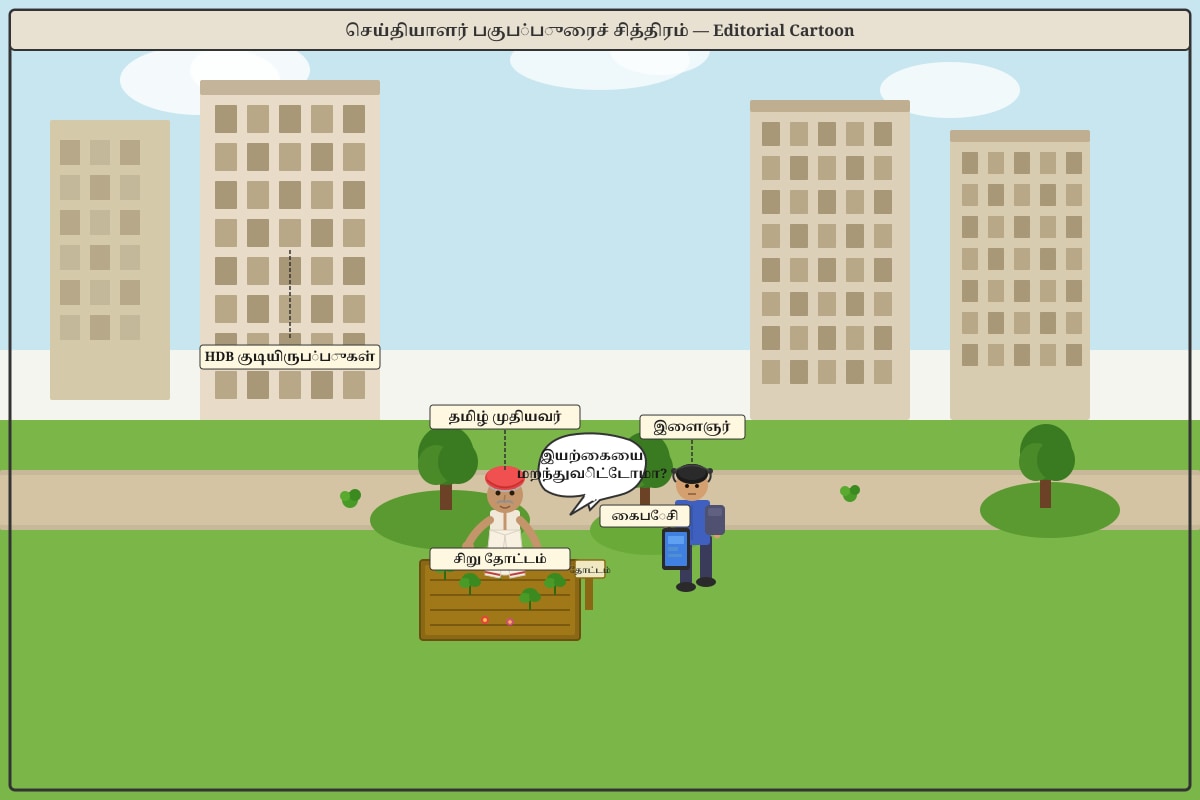
From image: elderly Tamil man gardening vs. youth on phone walking past
| Marks | Content |
|---|---|
| 1 mark | Elder generation: connected to nature, manual labor, patience, green practices |
| 1 mark | Young generation: technology-absorbed, urban-paced, nature-disconnected |
| 1 mark | Specific visual evidence: small garden plot vs. smartphone; traditional attire vs. casual modern dress; attention to plants vs. attention to screen |
Model answer: முதியவர் சிறு தோட்டத்தில் நேரடியாக இயற்கையோடு தொடர்பு கொள்கிறார்; [1] இளைஞர் கைபேசியில் மூழ்கி அதைக் கடந்துசெல்கிறார். [1] இது பாரம்பரிய இயற்கை அக்கறைக்கும் நவீன தொழில்நுட்ப வெறிப்புக்கும் இடையேயான இடைவெளியைக் காட்டுகிறது. [1]
Q17. கைபேசியின் குறியீட்டு அர்த்தம் [2 marks]
| Marks | Content |
|---|---|
| 1 mark | Symbol of modern distraction/technology addiction/虚拟 connectedness |
| 1 mark | Contrast with physical, tactile nature experience; virtual world displaces real world |
Model answer: கைபேசி நவீன தொழில்நுட்ப வியாதியின் குறியீடு. [1] இதன் மூலம் இளைஞர் உண்மையான உலகைக் கண்டுகொள்ளாமல் செயற்கைத் தொடர்புகளில் மூழ்கியுள்ளனர் என்பதைக் காட்டுகிறது. [1]
Q18. முதியவரின் செயல் குறிப்பிடத்தக்கது [3 marks]
| Marks | Content |
|---|---|
| 1 mark | Perseverance: maintains nature practice despite urban constraints |
| 1 mark | Cultural transmission: embodies traditional Tamil-agricultural values |
| 1 mark | Critical contrast/lesson: possible model, not just nostalgia; shows agency not passivity |
Model answer: நகரக் கட்டுப்பாடுகளுக்குள் இயற்கையை வளர்க்கும் அவரின் தனிமனித முயற்சி முக்கியம். [1] இது தமிழ் வேளாண் மரபின் தொடர்ச்சி. [1] இளைய தலைமுறைக்கு அல்லது சுற்றுச்சூழல் அதிகாரிகளுக்கு எதிர்கால செயல்திட்டங்களுக்கு மாதிரியாக அமையும். [1]
Q19. தலைப்பு மற்றும் நிரூபணம் [3 marks]
| Marks | Content |
|---|---|
| 1 mark | Original, apt Tamil title (not generic) |
| 1 mark | Explanation of title's relevance to image content |
| 1 mark | Explanation of title's thematic depth |
Model answer example: தலைப்பு: "இரண்டு உலகங்கள் — ஒரு தோட்டத்தின் இருபக்கங்கள்" [1]
நிரூபணம்: "இரண்டு உலகங்கள்" என்பது இயற்கையுணர்வுடன் வாழும் முதியவரின் உலகம், தொழில்நுட்ப உலகில் மூழ்கிய இளைஞரின் உலகம் என இரு தலைமுறைகளைக் குறிக்கிறது. [1] "ஒரு தோட்டம்" சிறிய இடம் என்றாலும் பெரிய சமூகப் பிரிவின் சின்னமாகிறது. [1]
Q20. சித்திரத்தின் செய்தி [4 marks]
| Marks | Content |
|---|---|
| 1 mark | Multi-generational dialogue needed, not isolation |
| 1 mark | Technology-nature balance required |
| 1 mark | Urban planning should incorporate green spaces for all |
| 1 mark | Tamil identity needs environmental dimension for completeness |
Model answer: முதியவரின் அனுபவத்தையும் இளைஞரின் தொழில்நுட்ப ஆற்றலையும் இணைக்க வேண்டும். [1] கைபேசியை இயற்கை கண்காணிப்புக்குப் பயன்படுத்தலாம். [1] HDB வாழ்விடங்களில் சமூகத் தோட்டங்களை அதிகரிக்க வேண்டும். [1] சுற்றுச்சூழல் பாதுகாப்பு தமிழ் அடையாளத்தின் புதிய அங்கமாக வளர வேண்டும். [1]
Section B Total: 30 marks
Section C: Composition and Extended Response [20 marks]
Q21a. "தமிழ் மொழியும் சுற்றுச்சூழல் கல்வியும்"
OR
Q21b. "மழை இல்லாத மூன்றாம் ஆண்டு... கிராமம் விட்டுக் கிராமம் சென்றோம்..."
Marking descriptors (generic for both options):
| Band | Marks | Content | Organisation | Language |
|---|---|---|---|---|
| A | 18–20 | Excellent engagement with topic; original insights; sustained relevance | Clear introduction, development, conclusion; coherent paragraphing; effective transitions | Highly accurate; varied sentence structures; rich vocabulary; appropriate register |
| B | 14–17 | Good understanding; relevant points; some development | Generally well-organised; logical flow; minor lapses in cohesion | Generally accurate; some variety; occasional errors don't impede meaning |
| C | 10–13 | Satisfactory; basic relevance; limited development | Simple structure; some organisation; paragraphs present but may lack focus | Basic accuracy; limited variety; errors may distract; vocabulary adequate |
| D | 6–9 | Weak relevance; tangential; underdeveloped | Poor organisation; hard to follow; minimal paragraphing | Frequent errors; limited vocabulary; meaning often obscured |
| E | 1–5 | Very little relevance; off-topic or severely under-length | No coherent structure | Threshold intelligibility; mother-tongue interference heavy |
Specific content guidance:
For Q21a (Expository):
- Expected points: Tamil vocabulary for flora/fauna; traditional ecological knowledge in சங்க இலக்கியம்; modern environmental education challenges in Tamil; curriculum integration proposals; community initiatives; personal/family practices.
- Strong responses cite: புறநானூறு water poems, திருக்குறள் on resources, local Singapore Tamil green movements.
For Q21b (Narrative):
- Expected elements: drought setting; migration journey; emotional/family dynamics; survival challenges; possible resolution (finding water/community aid/return); reflection on climate change.
- Strong responses show: environmental cause of migration; intergenerational perspective; specific Tamil cultural details (புயல் வழிபாடு, வேண்டுதல்); Singaporean/Tamil Nadu hybrid context possible.
Section C Total: 20 marks
Grand Total: 60 marks
[End of Answer Key]