From Real Exams Exam Paper
Secondary 3 Tamil Semestral Assessment 2 (End of Year) Paper 1
Free Sec 3 Tamil SA2 Paper 1, Kimi2.6 Exam version, with questions, answers, and O Level-style practice for Singapore students.
These static practice materials are generated from the site's syllabus and paper-generation workflow, with source and model context shown so students and parents can evaluate the material before use.
Questions
Free quiz and exam paper access
Enter your details to view this paper
Your access is remembered on this device.
Answers
TuitionGoWhere Exam Practice - Tamil Secondary 3 SA2
Answer Key and Marking Scheme
Version: 1 of 5
Total Marks: 80
Section A: Language Use and Grammar (20 marks)
Question 1 (2 marks)
| Grammatical Component | Tamil Term | Word(s) from Sentence |
|---|---|---|
| Subject | எச்சம் | மாணவர்கள் |
| Predicate | வாக்கியா | நூலகத்தில் அமைதியாகப் படிக்கின்றனர் |
Marking guidance: 1 mark for each correct identification. The subject is the actor (மாணவர்கள் — "the students"); the predicate contains the action and circumstances (படிக்கின்றனர் — "read/study" with adverbial phrase). Common error: Students may identify only "படிக்கின்றனர்" as predicate; accept this but best answer includes full predicate phrase.
Teaching note: In Tamil grammar, the எச்சம் (eccam) is who/what performs the action; the வாக்கியா (vākkiyā) is what is said about the subject, always containing the finite verb.
Question 2 (2 marks)
Corrected sentence:
"அவனும் அவளும் பள்ளிக்கூடத்திற்கு நடந்து செல்கின்றனர்."
Or: "அவனும் அவளும் பள்ளிக்கூடத்திற்கு நடந்து செல்கிறார்கள்."
Marking guidance: 1 mark for changing verb ending to plural form (செல்கின்றனர்/செல்கிறார்கள்); 1 mark for maintaining compound subject structure. The error is எதுகைநிலை (concord) — singular verb செல்கிறாள் does not agree with compound subject அவனும் அவளும் (two people, requiring plural verb).
Common mistake: Students may change to "செல்கிறான்" (only masculine singular) — this loses both marks as it still shows concord failure.
Question 3 (2 marks)
Correct indirect speech:
வளர்ப்புரையாளர் நாளை மழை பெய்யும் என்று கூறினார்.
Or more formally:
வளர்ப்புரையாளர் அன்று மறுநாள் மழை பெய்யும் என்று கூறினார்.
Marking guidance: 1 mark for removing quotation marks and changing reporting structure; 1 mark for appropriate tense/time expression adjustment (நாளை → may remain or change to அன்று/மறுநாளு).
Teaching note: In Tamil மறைமுகப்பேச்சு, the first person shifts if needed, and temporal deictics (நாளை, இன்று, இங்கு) typically adjust to the reporter's perspective. The verb கூறினார் remains past tense.
Question 4 (3 marks)
4(a) (2 marks)
The demonstrative pronoun is "இந்த" (this). [1 mark]
It refers to the Cauvery river (காவிரி நதி), specifically the water mentioned in the previous clause. [1 mark]
Teaching note: சுட்டுப்பெயரெச்சம் (cuṭṭuppeyareccam = demonstrative adjective/pronoun) points to something nearby in context. "இந்த நதியின் நீர்" — "இந்த" points back to காவிரி நதி just mentioned. Students who identify "அது" from earlier sentences lose marks as it is not demonstrative.
4(b) (1 mark)
Simple past tense (இறந்தகாலம் / எதிர்காலத்தின் இறந்தகாலம் — "had been/used to be" sense of enduring state).
The suffix -இயது indicates past tense, neuter singular agreement with the subject (implied: "it" referring to the river's role).
Question 5 (2 marks)
Passive voice:
"பாடம் மாணவனால் எழுதப்பட்டது."
Or more formally:
"பாடம் மாணவனால் எழுதப்பட்டது."
Marking guidance: 1 mark for correct subject change (patient becoming subject); 1 mark for passive verb formation (எழுதப்பட்டது = எழுது + அப்ப் + ட்ட + து).
Teaching note: Tamil செயப்பாட்டுவினை requires: (1) agent in instrumental case (-ஆல்), (2) passive suffix -அப்பு/இக்கப்படு attached to verb stem, (3) patient becomes grammatical subject.
Question 6 (3 marks)
| Aspect | Answer |
|---|---|
| Two things compared | முகம் (face) — மலர் (flower) [0.5 mark] |
| Shared quality | Blooming/beautiful appearance (மலர்ந்த தோற்றம், அழகு) [0.5 mark] |
| Why effective | Creates vivid visual imagery; suggests natural, radiant beauty rather than artificial decoration; the smile is compared to a flower opening, implying genuineness and warmth [2 marks] |
Marking breakdown: 1 mark for identification of comparands; 2 marks for analysis of effectiveness (must go beyond "it is nice" to discuss imagery, cultural connotations of மலர் in Tamil aesthetics, emotional resonance).
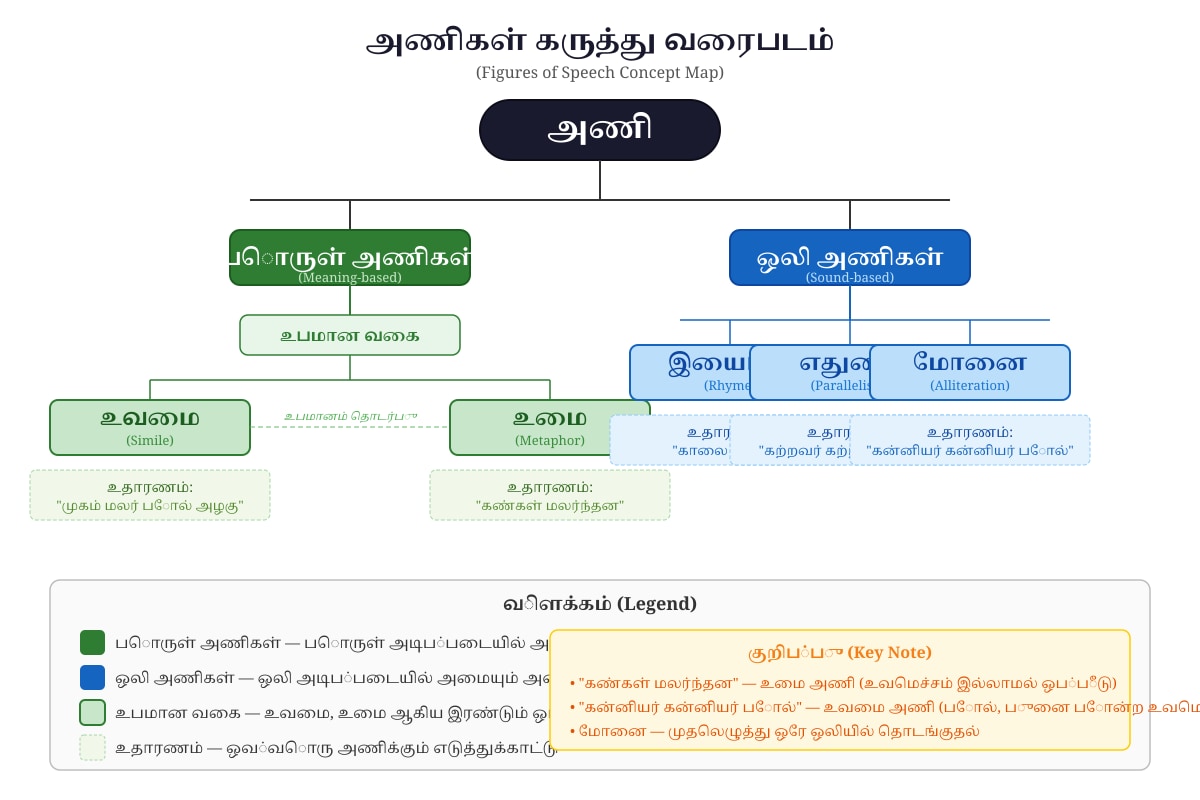
Teaching note: உவமை (uvamai = simile) requires overt comparison marker போல்/போன்ற/என etc. Here "முகம் போல்" explicitly marks the comparison. The effectiveness lies in the உவமானம் (standard of comparison) being culturally resonant — flowers symbolize auspiciousness and natural beauty in Tamil tradition.
Question 7 (2 marks)
| Verb (வினைச்சொல்) | Nominal Form (பெயர்ச்சொல்) |
|---|---|
| நடத்து | நடத்தை / நடத்தல் |
| வருக | வரவு / வருகை |
Marking guidance: 1 mark each. Accept any valid nominal form. Most common: நடத்தை (conduct/behaviour), வரவு (arrival/coming) or வருகை (visit).
Teaching note: Tamil பெயரெச்சம் (verbal noun/peyareccam) is formed by adding nominal suffixes: -அ/இ/உ/ஐ/ல்/து/வு etc. to verb stem. The -வு pattern (வருக → வரவு) is most productive; -ஐ pattern (வருகை) indicates action noun.
Question 8 (2 marks)
Error: Gender disagreement (பால்பிரிவு பிழை). அவர் is honorific/respectful pronoun (gender-neutral, often for elders/superiors), but அழகானவன் is masculine specific (-அன் suffix). [1 mark]
Explanation: When using அவர் (respectful), the predicate should use honorific form அழகானவர் or neutral அழகானவை (rare), or restructure to avoid gender marking: மிகவும் அழகானவர் or அழகு மிக்கவர். [1 mark]
Alternative accepted answer: If student identifies this as mixing of அவன் (informal he) level with அவர் level, award marks for sociolinguistic awareness.
Question 9 (2 marks)
(i) உமை (uṟmai = metaphor/identification) [1 mark]
Reasoning: "கண்கள் மலர்ந்தன" states eyes are flowers (blooming), without explicit comparison marker. The eyes become flowers directly — characteristic of metaphor where the subject is the compared object.
(ii) உவமை (uvamai = simile) [1 mark]
Reasoning: "கன்னியர் போல்" contains explicit comparison marker போல் — "like a maiden." This is definitive of simile.
Common confusion: Students often mix these. Key distinction: உவமை has உவமை உருபு (marker: போல், போன்ற, என)explicit; உமை has உருபு இல்லாமல் direct identification.
Question 10 (2 marks)
Acceptable translation:
"அரசாங்கம் சுற்றுச்சூழலைப் பாதுகாப்பதற்கான புதிய நடவடிக்கைகளை அறிவித்தது."
Or more formally:
"சுற்றுச்சூழலைக் காக்க புதிய நடைமுறைகளை அரசு வெளியிட்டது."
Marking guidance: 1 mark for correct government subject (அரசாங்கம்/அரசு); 1 mark for formal register and accurate rendering of "announced measures to protect." Deduct for informal verb choices (சொன்னது instead of அறிவித்தது).
Section B: Comprehension and Textual Analysis (30 marks)
Question 11 (3 marks)
Answer structure:
The "dual responsibilities" are: [1 mark for identification]
- Preserving traditional competence: Learning to speak and write Tamil correctly (சரியாகப் பேசவும் எழுதவும் கற்றுக்கொள்வது)
- Developing digital literacy: Using digital tools effectively (டிஜிட்டல் கருவிகளை திறமையாகப் பயன்படுத்துவது) [1 mark for both elements]
Evidence requirement: The author states these are "காலத்தின் கட்டாயம்" (imperative of the time) and a "கடமை" (duty) of every Tamil student. [1 mark for quotation/reference]
Teaching note: The phrase இரட்டையான பொறுப்புகள் functions as the topic sentence for the paragraph's argument. Students should recognise this structural role — the author sets up a balanced obligation before concluding with unified responsibility.
Question 12 (3 marks)
Two changes (must identify both for full marks):
-
Use of electronic guides/navigation tools (மின்னணு வழிகாட்டிகள்) — technology-mediated learning rather than purely teacher-directed [1.5 marks]
-
Use of visualisation equipment and internet resources (காட்சிப்படுத்தும் கருவிகள், இணைய வளங்கள்) — multimodal, resource-rich learning environment [1.5 marks]
Alternative acceptable: Reference to moving from traditional print to digital media if specifically tied to Singapore school context in passage.
Teaching note: The paragraph uses எமது பள்ளிகளில் (in our schools) to anchor this in Singapore context. Students must extract specific technology types, not just state "technology is used."
Question 13 (4 marks)
13(a) (1 mark)
Opportunity: Any one from:
- Tamil literary works now available in websites, e-books, museum technology [0.5]
- Students learn Tamil using electronic tools [0.5]
- Cultural values transmitted to new generation through technology [0.5]
13(b) (3 marks)
| Challenge | Why Significant |
|---|---|
| Teaching grammatical rules to computer programs is complex [0.5] | Tamil's rich grammatical structure doesn't map easily to computational logic; limits AI development for Tamil [1] |
| Visual distinctions between Tamil characters are subtle/complex [0.5] | OCR and automatic recognition become error-prone; affects digitisation quality [1] |
Alternative second challenge: Agglutinative morphology creates infinite combinatorial possibilities, overwhelming rule-based systems. [1 mark equivalent if well-explained]
Question 14 (4 marks)
Structural analysis mark scheme:
| Element | Analysis | Marks |
|---|---|---|
| Opening paragraph (1) | Establishes broad context: education-technology nexus globally, then narrows to Tamil specifically. The phrase "தன்னைத் தகவமைத்துக் கொண்டுள்ளது" sets up the adaptation theme that runs through. | 1 |
| Progression (2–4) | Paragraph 2: Positive example (Singapore schools). Paragraph 3: Pivot to challenges. Paragraph 4: Synthesis to student responsibility. This problem-solution-responsibility arc creates logical momentum. | 2 |
| Conclusion (5) | Shifts to future projection, uses "எதிர்காலம்" (future) to broaden scope; imperative tone "இளைய தலைமுறையின் கடமை" returns to Paragraph 4's "கடமை" creating ring structure. | 1 |
**Award full marks only for analysis that connects structure to persuasive purpose — the author builds credibility through balanced treatment before calling to action.
Question 15 (4 marks)
15(a) (2 marks)
Underlying assumption: The younger generation will successfully integrate aesthetic appreciation (மொழியின் அழகு) with technological capability (தொழில்நுட்பத்தின் வலிமை). [1 mark]
Second-order assumption: This integration is sufficient condition for Tamil to achieve global status; other factors (political, economic, demographic) are assumed non-critical. [1 mark]
Teaching note: Assumption = unstated premise necessary for conclusion. The author doesn't prove young people can/will do this; nor that it guarantees global standing.
15(b) (2 marks)
Agree perspective: [1 mark for position + evidence]
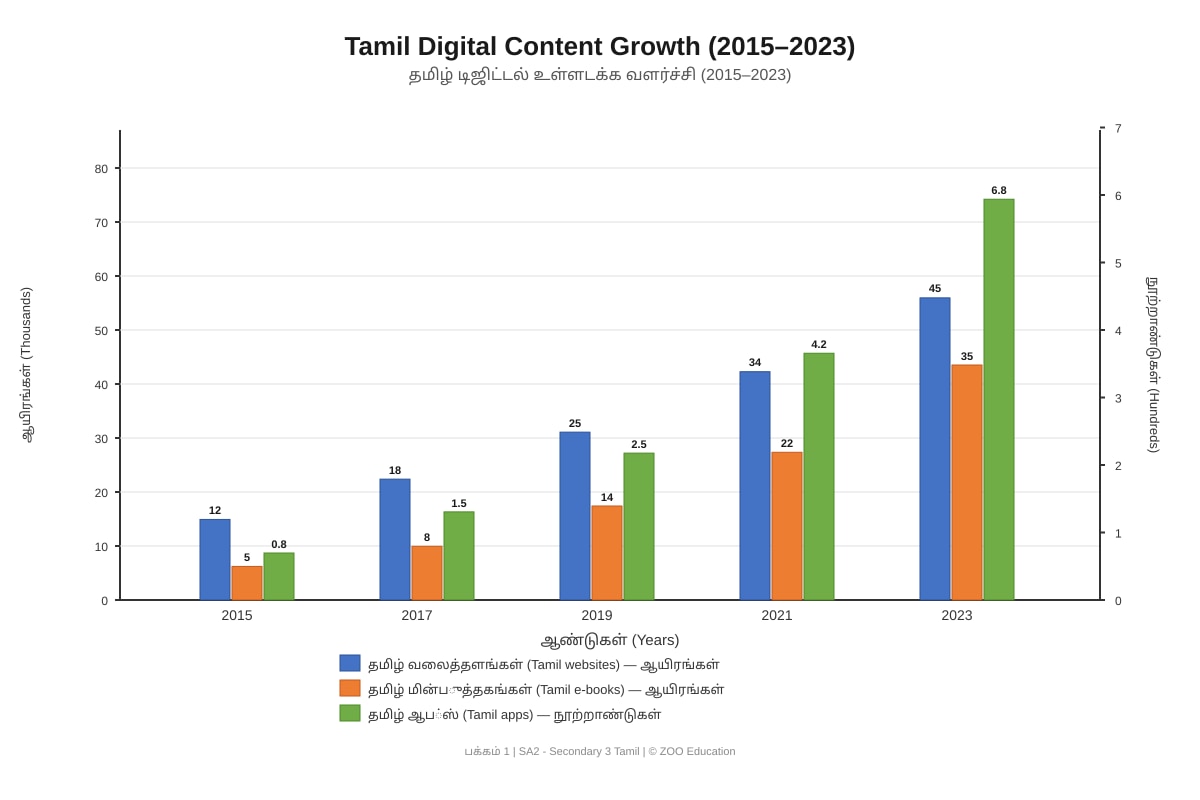
- Passage evidence: Singapore schools already show successful integration; digital growth data (chart) supports optimism
- Own knowledge: Tamil is classical language with UNESCO status; digital initiatives like Tamil Virtual Academy exist
Disagree/qualified perspective: [1 mark for position + evidence]
- Global language status requires economic/political power, not just cultural preservation
- Other Indian languages (Hindi, Bengali) have larger speaker bases and more institutional support
- Risk: technology may accelerate shift to English-medium communication
Full marks for balanced evaluation that recognises author's idealism while grounding in realistic constraints.
Question 16 (4 marks)
16(a) (2 marks)
Working:
2015 Tamil e-books: 5 thousand
2023 Tamil e-books: 35 thousand
Increase = 35 − 5 = 30 thousand
Percentage increase = (30 / 5) × 100 = 600% [1 mark working, 1 mark answer]
Common error: Using 35 as base → (30/35)×100 = 85.7% INCORRECT (expects "increase from" original value).
16(b) (2 marks)
Exponential growth indication: Data shows accelerating rate (not linear). [0.5]
Category analysis (example: Tamil apps):
- 2015: 800 apps → 2023: 6,800 apps
- Growth factor: 8.5× in 8 years, with especially rapid 2019–2023 acceleration
- Suggests mobile-first consumption of Tamil content; developers responding to demand; Tamil entering app economy space previously dominated by major languages [1.5]
Alternative: Tamil e-books (7× growth) suggests publishing digitisation; Tamil websites (3.75×) suggests slower but steady institutional web presence.
Question 17 (4 marks)
| Tone Feature | Paragraph 3 | Paragraph 5 | Effect |
|---|---|---|---|
| Vocabulary | "சவால்கள்" (challenges), "சிக்கலான" (complex), "புதிராக" (puzzling) | "உறுதியாக" (firmly), "பிடிக்கும்" (will seize) | Contrast creates credibility through balance |
| Verb mood | Problem-stating: "பாதித்துள்ளன" (have affected), "அமைகின்றன" (are proving) | Future-projecting: "இணைக்கும்" (will join), "பிடிக்கும்" (will seize) | Progression from present difficulty to future resolution |
| Contribution to effectiveness | The contrast prevents naïve optimism; acknowledges real obstacles before calling to action, making the final call more persuasive to informed readers. | [2 marks for analysis of effectiveness] |
Full marks for analysis that recognises this as dialectical structure — thesis (tech good) → antithesis (but challenges) → synthesis (youth will overcome).
Question 18 (4 marks)
Feature 1: Agglutinative morphology (பொருந்து இயல்பு) [2 marks]
Tamil adds multiple suffixes to root: நடக்க+இ+ற்+உ+இ+ற்+ஆன்+ஆர் (he who caused to walk). Each suffix carries grammatical meaning (tense, person, voice, causative). Computational systems must:
- Parse potentially unbounded morphological combinations
- Apply rules for allomorphy (sound changes at morpheme boundaries: க→க், ச→த் etc.)
- Handle homophony where same surface form represents different grammatical structures
Feature 2: Complex sandhi (சந்தி) rules at word boundaries [2 marks]
Tamil சந்தி requires sound changes when words combine: மரம் + இல் → மரத்தில் (tree + in → in the tree, with consonant insertion). For computation:
- Rules are context-sensitive (depend on following sound, not just preceding)
- Exceptions exist for loanwords, proper names, dialectal variation
- Compound words involve recursive sandhi application
Alternative acceptable: Writing system — 247 characters (12 vowels, 18 consonants × combinations), visually similar shapes (ந/ன/ண; ர/ற), requiring sophisticated OCR beyond Latin-script norms.
Section C: Essay Writing (30 marks)
Question 19: Marking Descriptors (30 marks)
Content (10 marks)
| Band | Marks | Descriptor |
|---|---|---|
| Excellent | 9–10 | Sophisticated treatment of all three prompts (families/schools, technology, community); nuanced understanding of Singapore Tamil context; specific examples from local experience; balanced evaluation of "young generation alone" claim |
| Good | 7–8 | Covers all three areas with relevant examples; clear position on the statement; some depth but may lack nuance in one area |
| Adequate | 5–6 | Addresses at least two prompts; examples general rather than Singapore-specific; position stated but underdeveloped |
| Limited | 3–4 | Relevant but superficial treatment; heavy reliance on assertion; examples sparse or generic |
| Very limited | 1–2 | Off-topic or incoherent; minimal relevant content |
Organisation (8 marks)
| Band | Marks | Descriptor |
|---|---|---|
| Excellent | 7–8 | Clear introduction with thesis; paragraphing supports argument progression; effective transitions; strong conclusion that synthesises |
| Good | 5–6 | Generally clear structure; some effective transitions; conclusion present but may repeat rather than synthesise |
| Adequate | 3–4 | Basic introduction-body-conclusion; paragraphs sometimes lack unity; transitions mechanical |
| Limited | 1–2 | Weak or no discernible structure; ideas jumbled |
Language (7 marks)
| Band | Marks | Descriptor |
|---|---|---|
| Excellent | 6–7 | Fluent, varied Tamil; effective vocabulary; complex sentences handled well; errors rare and minor |
| Good | 4–5 | Generally accurate; some variety; occasional errors don't impede communication |
| Adequate | 3 | Simple but accurate; limited variety; errors more frequent but meaning clear |
| Limited | 1–2 | Basic vocabulary; frequent errors; some incomprehensibility |
Mechanics (5 marks)
| Band | Marks | Descriptor |
|---|---|---|
| Excellent | 5 | Excellent spelling (Tamil script accuracy); appropriate punctuation; clean presentation |
| Good | 3–4 | Minor spelling/-script errors; generally appropriate punctuation |
| Limited | 1–2 | Frequent spelling errors; punctuation problems affect readability |
Question 20: Marking Descriptors (30 marks)
[Ssame marking framework as Q19, with content descriptors adapted:]
Content (10 marks)
| Band | Marks | Descriptor |
|---|---|---|
| Excellent | 9–10 | Sophisticated examples from Tamil culture and at least one other; thorough treatment of benefits and risks; genuine balance leading to nuanced conclusion; not simplistic "agree/disagree" |
| Good | 7–8 | Good range of examples; clear treatment of both sides; conclusion may lean predictable |
| Adequate | 5–6 | Some examples; both sides mentioned but one underdeveloped; conclusion present |
| Limited | 3–4 | Examples few or only one culture; unbalanced treatment; weak conclusion |
| Very limited | 1–2 | Minimal relevant content; fails to address "to what extent" |
Sample essay plan for Question 19 (illustrative, not exhaustive):
Thesis: The statement is partially valid but overstated — youth are necessary but not sufficient; intergenerational collaboration is essential.
Paragraph 1: Introduction — Challenge the "மட்டுமே" (alone) absolutism; acknowledge youth centrality.
Paragraph 2: Families — Home language policy, parental modelling; counter-argument: without family foundation, school efforts fail.
Paragraph 3: Schools — Structured Tamil curriculum, bilingual policy; technology integration as enabler but not replacer.
Paragraph 4: Community — Temples, cultural associations, media (Truth, Vasantham); elders as repositories of knowledge.
Paragraph 5: Technology — Double-edged: enables access but risks superficial learning; requires guided use.
Paragraph 6: Conclusion — Synthesis: youth as conduit, not sole agents; success requires institutional ecosystem.
Sample essay plan for Question 20 (illustrative):
Thesis: Largely agree — rejection of technology is ** nostalgic preservationism** that paradoxically hastens decline; but technology must be culturally guided, not market-driven.
Paragraph 1: Introduction — Define terms; cultural preservation requires living tradition, not museumification.
Paragraph 2: Tamil examples — Digital archives of Sangam literature; virtual temple tours; kathakali/ bharatanatyam digital pedagogy.
Paragraph 3: Other culture — Maori language apps, Welsh digital revitalization; comparable strategies.
Paragraph 4: Risks — Commodification (Deepavali reduced to shopping); algorithmic flattening of regional variation; youth distraction from depth.
Paragraph 5: Balanced approach — Technology as tool, not replacement; human curators essential; community control over digital narratives.
Paragraph 6: Conclusion — "காப்பதற்காக" (for preservation) cannot mean "நிராகரிக்க" (reject); integrate with critical consciousness.
Mark Allocation Summary
| Section | Marks |
|---|---|
| A | 20 |
| B | 30 |
| C | 30 |
| Total | 80 |