AI Generated Quiz
Secondary 3 Social Studies Essay Explanation Quiz
Free Sec 3 Social Studies Essay Explanation quiz, HY3 AI version, with questions, answers, and O Level-style practice for Singapore students.
These static practice materials are generated from the site's syllabus and paper-generation workflow, with source and model context shown so students and parents can evaluate the material before use.
Questions
Free quiz and exam paper access
Enter your details to view this paper
Your access is remembered on this device.
Answers
Secondary 3 Social Studies Quiz - Essay Explanation (Answer Key)
Total Marks: 40
Topic: Essay Explanation (syllabus-first, not exam-derived)
Section A: Answers 1–5
1. [2 marks] Citizenship means the legal status of being a member of a country with rights and obligations, and also involves active participation in society.
Teaching note: Define both legal status (e.g., right to vote, duty to obey laws) and active citizenship (e.g., community involvement). Award 1 mark for legal status, 1 mark for active participation.
2. [1 mark] One function: Makes and passes laws. (Also accept: implements/enforces laws; interprets and applies laws.)
Teaching note: Direct recall from syllabus functions of government.
3. [2 marks] Trade-offs refer to the balancing of competing interests where a policy benefits some but costs others; every decision involves sacrifice of one option for another.
Teaching note: 1 mark for "balancing competing interests", 1 mark for example or elaboration of cost-benefit.
4. [1 mark] Race / ethnicity / religion / socioeconomic status / nationality. (Any one.)
Teaching note: From factors shaping identity in Issue 2.
5. [2 marks] Assimilation is when minorities adopt the majority culture and lose distinct identity; integration is mutual adaptation where groups keep their identities while participating in society.
Teaching note: 1 mark each for clear contrast.
Section B: Answers 6–10
6. [3 marks] The government makes and enforces laws to (1) maintain law and order, (2) protect citizens' rights and safety, (3) provide a stable framework for society to function.
Marking: 1 mark per valid reason. Explain that without laws, conflicts would rise and social well-being suffers.
7. [3 marks] Challenges: (1) Differing needs and interests among groups; (2) Competing demands for limited resources. (Also accept unequal sharing of costs.)
Marking: 1.5 marks each. Teaching: Show that "good" is subjective and resources are finite.
8. [3 marks] Active citizenship strengthens social compact by (1) building trust between people and state, (2) meeting community needs through volunteering, (3) giving citizens a stake in national outcomes.
Marking: 1 mark per point. Example: grassroots organisations help implement policies.
9. [3 marks] Cultural exchange benefits society by (1) increasing appreciation of differences, (2) reducing prejudice, (3) creating richer community life.
Marking: 1 mark per point. Link to harmony in diversity.
10. [3 marks] Challenge: High cost to government may lead to higher taxes or budget cuts elsewhere; some may become dependent and not self-reliance.
Marking: 1 mark for cost, 1 for tax/budget, 1 for dependency issue. Syllabus: government-financed approach challenges.
Section C: Answers 11–20
11. [4 marks] Meritocracy means rewards based on ability and effort. Government provides opportunities for all by (1) funding education access regardless of background, (2) scholarships for talented poor students, (3) fair hiring in public sector, (4) skills training for workers.
Marking descriptors: 1 mark per developed point. Connect to "stake for everyone".
12. [4 marks] Harmony needs deliberate effort because (1) competition for resources can cause tension, (2) stereotypes lead to prejudice, (3) differing values may clash, (4) need policies + individual action.
Marking: 1 mark per reason with explanation. Use Issue 2 content.
13. [4 marks] Citizens: recycle, join clean-up drives. Government: makes green laws, provides infrastructure. Together: consult via feedback channels, co-create solutions.
Marking: 2 marks for citizen role, 2 for government role with example.
14. [4 marks] Trade-off: low-income get financial relief (benefit) but middle class bears higher tax (cost); society gains equity but some lose disposable income.
Marking: 2 marks for identifying benefit side, 2 for cost side. Show balancing concept.
15. [4 marks] Integration policy allows mutual adaptation: (1) national events can include all traditions, (2) no group forced to abandon culture, (3) dialogue platforms. This reduces feeling of ignore.
Marking: 1 mark per point from extract.
16. [4 marks] Good leadership needed because (1) anticipates change, (2) makes fair trade-offs, (3) inspires trust, (4) stays relevant to needs.
Marking: 1 mark per principle explained.
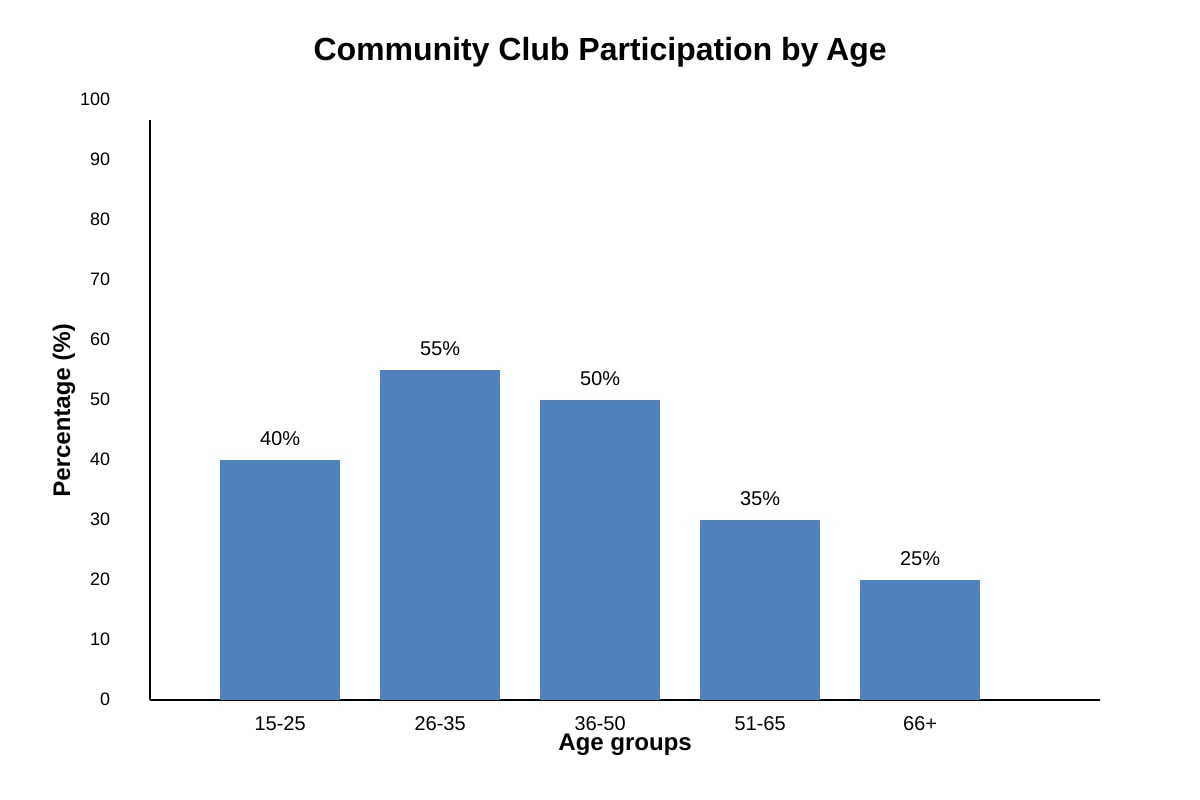
17. [4 marks] Reason: Elderly (66+) may have mobility issues or less awareness of clubs; they may prefer traditional gatherings. Chart shows 25% only.
Marking: 2 marks for valid reason, 2 for referencing data. Expected visual: bar lowest at 66+.
18. [4 marks] Stereotyping assumes all in group same; can cause discrimination (e.g., thinking one race lazy). This breaks trust and harmony.
Marking: 2 for concept, 2 for example.
19. [4 marks] Opportunity: foreign investment jobs. Challenge: job loss to cheaper overseas labour.
Marking: 2 each. Syllabus Issue 3.
20. [4 marks] Evaluate: Not agree fully. Citizens have rights/responsibilities; government may not know local needs; participation improves democracy. But government has expertise. Balanced view with explanation.
Marking: 2 for position, 2 for reasoned explanation using citizenship concept.