AI Generated Exam Paper
Secondary 3 Social Studies Practice Paper 3
Free Sec 3 Social Studies Practice Paper 3, HY3 AI version, with questions, answers, and O Level-style practice for Singapore students.
These static practice materials are generated from the site's syllabus and paper-generation workflow, with source and model context shown so students and parents can evaluate the material before use.
Questions
TuitionGoWhere Practice Paper - Social Studies Secondary 3
TuitionGoWhere Practice Paper (AI) — Version 3
Subject: Social Studies
Level: Secondary 3
Paper: Practice Paper (Source Based Skills)
Duration: 1 hour 15 minutes
Total Marks: 40
Name:
Class:
Date:
Instructions:
- This practice paper tests Source Based Skills for Secondary 3 Social Studies.
- Read all sources carefully before answering.
- Section A: 10 compulsory short questions (1 mark each).
- Section B: 5 source-based questions (2 marks each).
- Section C: 5 source-based questions (2 marks each, with subparts).
- Write your answers in the spaces provided.
- This paper is syllabus-first generated content; not derived from past-year exams.
Section A: Source Comprehension (10 marks)
Answer all questions. 1 mark each.
Source A:
"Citizenship in Singapore includes both rights and responsibilities. While citizens enjoy security and public services, they are expected to obey laws and participate in community life." — Adapted from Social Studies syllabus, Issue 1.
-
Based on Source A, state one right of a citizen.
-
Based on Source A, state one responsibility of a citizen.
Source B:
A poster shows people of different races planting trees together. Caption: "Many races, one community."
-
What type of diversity is shown in Source B?
-
Give one benefit of the activity in Source B.
Source C:
Table: Singapore imports over 90% of its food. Local farms produce the rest.
| Source of food | Percentage |
|---|---|
| Imports | 90% |
| Local farms | 10% |
-
According to Source C, what percentage of food is locally produced?
-
Why might this reliance on imports be a challenge?
Source D:
"Globalisation allows ideas to spread quickly but also creates competition for local jobs." — News article, 2023.
-
State one positive effect of globalisation from Source D.
-
State one negative effect of globalisation from Source D.
Source E:
A cartoon shows a large figure labelled "Government" and small figures labelled "Citizens" building a house labelled "Society".
-
Who are shown working together in Source E?
-
What does the house labelled "Society" suggest they are building?
Section B: Source Analysis (10 marks)
Answer all questions. 2 marks each.
Source F:
Extract from a speech: "To achieve harmony, the government uses integration, not assimilation, so that different groups keep their culture while living together."
-
Explain what is meant by "integration" in Source F. Use the extract. (2m)
-
Why might assimilation be rejected according to the syllabus? (2m)
Source G:
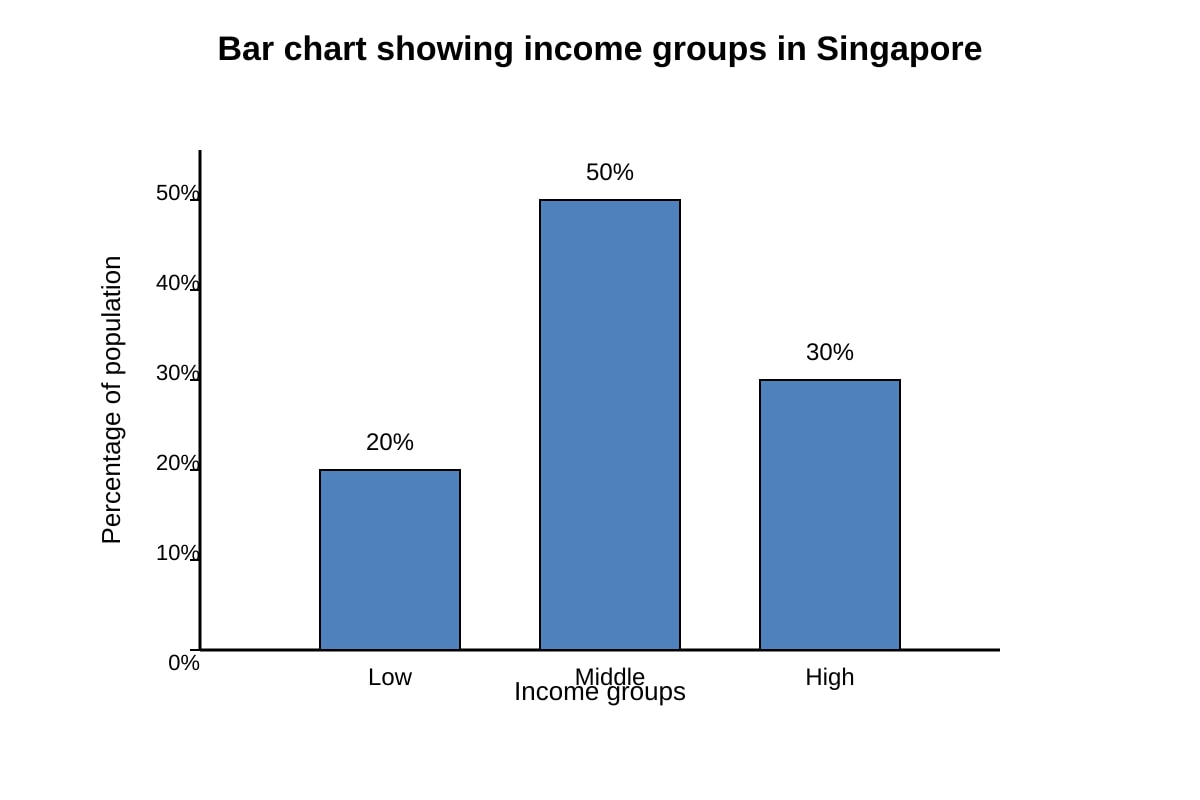
Image pending generation: chart for Q13.
- Using Source G, describe the distribution of income groups. (2m)
Source H:
"A trade-off occurs when a policy helps one group but costs another." — Syllabus note.
- Give an example of a trade-off in governance using the note. (2m)
Source I:
Letter: "We should help the poor through government welfare, but families must also take responsibility."
- Identify two groups mentioned as having a role in helping the poor. (2m)
Section C: Applied Source Skills (20 marks)
Answer all questions. Subparts as marked.
Source J:
Poster: "Be an active citizen — join a community clean-up!" Picture of volunteers.
- (a) What message does Source J give? (1m)
(b) How does this reflect citizenship in Issue 1? (1m)
Source K:
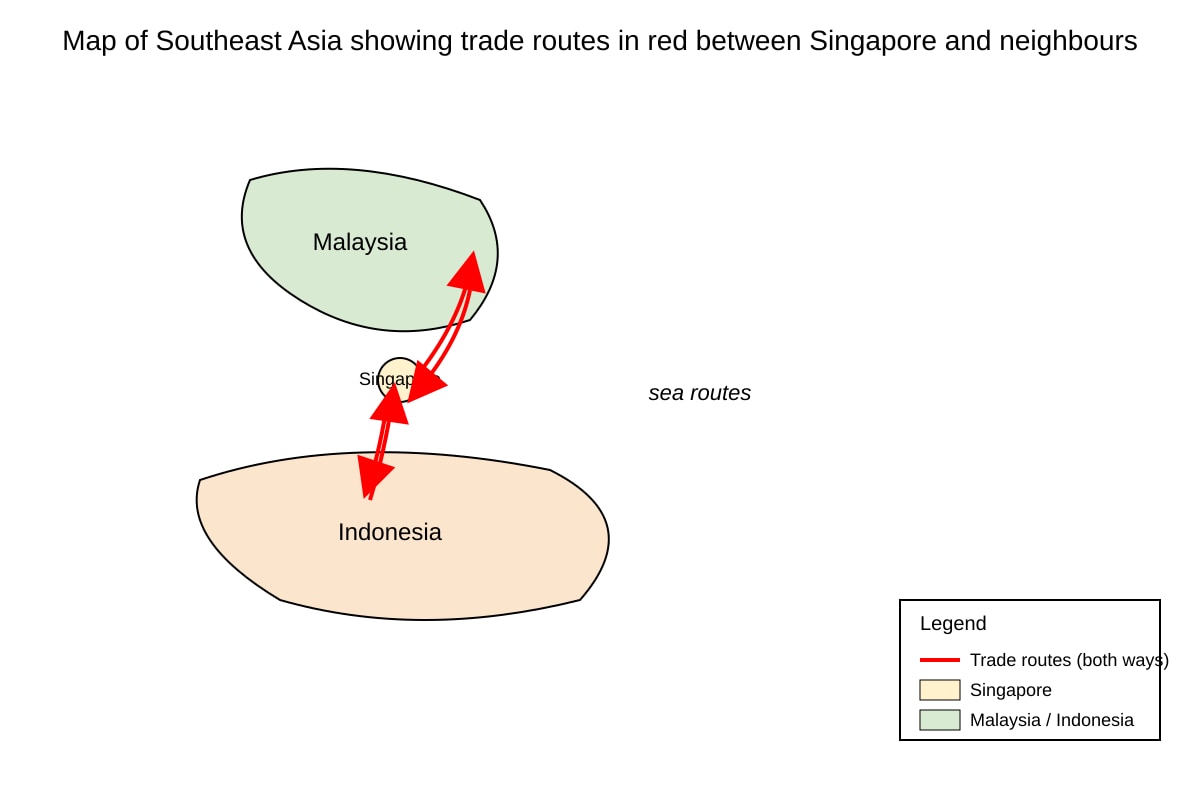
Image pending generation: map for Q17.
- (a) What does Source K show about Singapore? (1m)
(b) How does this relate to globalisation? (1m)
Source L:
Report: "Racial harmony is achieved through policies like housing quotas that mix groups."
- (a) State one policy that promotes harmony from Source L. (1m)
(b) Explain how it helps. (1m)
Source M:
Quote: "Citizens can engage in public affairs by giving feedback to MPs."
- (a) What is one way citizens engage according to Source M? (1m)
(b) Why is this important for governance? (1m)
Source N:
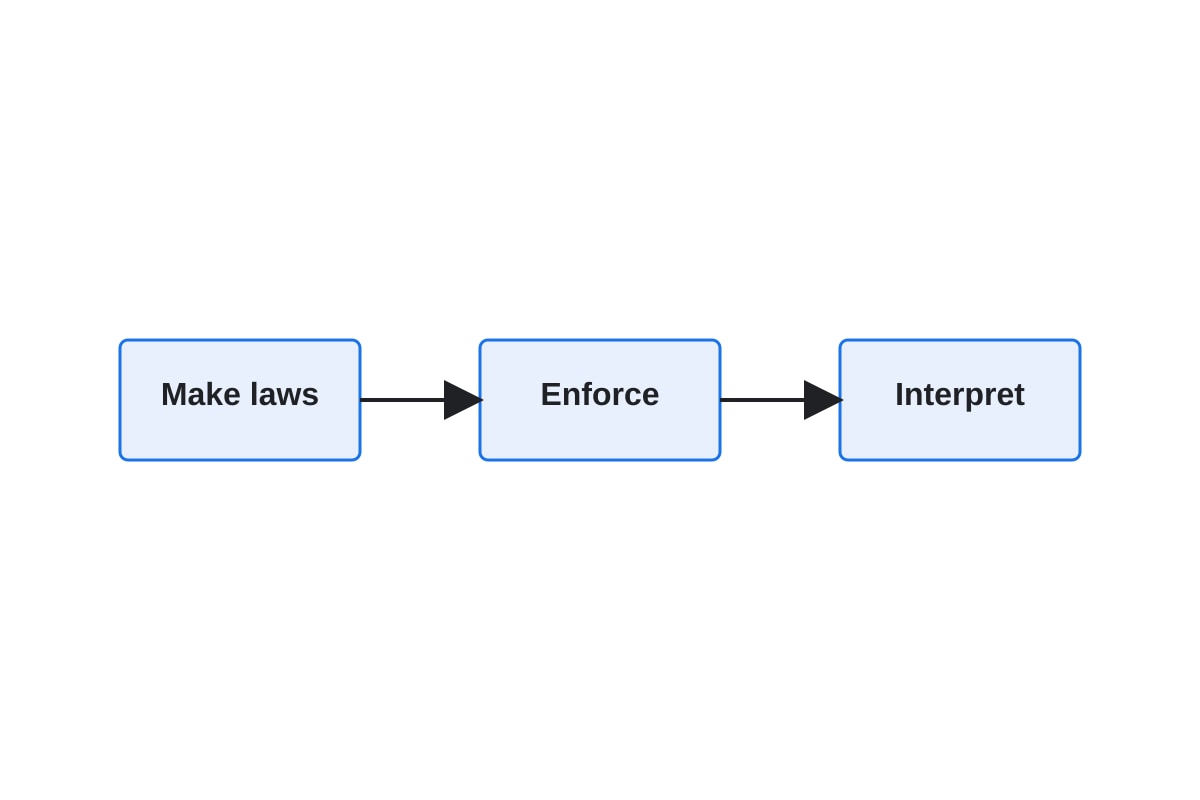
Image pending generation: diagram for Q20.
- (a) List the three government functions in Source N. (1m)
(b) Why is enforcing laws important? (1m)
Answers
TuitionGoWhere Practice Paper Answers — Version 3
Subject: Social Studies
Level: Secondary 3
Paper: Practice Paper (Source Based Skills)
Total Marks: 40
Note: This is syllabus-first generated content. Not derived from past-year exams. Teaching notes included.
Section A Answers (10 marks)
Q1. Right: security / public services. (1m)
Teaching: Source A says citizens enjoy these; a right is something owed to them.
Q2. Responsibility: obey laws / participate in community life. (1m)
Teaching: These are expected actions, not gifts.
Q3. Racial diversity. (1m)
Teaching: Different races shown; matches Issue 2 factors.
Q4. Builds friendship / cultural exchange. (1m)
Teaching: Planting together is cooperative activity.
Q5. 10%. (1m)
Teaching: Table shows local farms 10%.
Q6. Supply may be disrupted if imports stop. (1m)
Teaching: High import reliance = vulnerability.
Q7. Ideas spread quickly. (1m)
Teaching: Positive from Source D.
Q8. Competition for local jobs. (1m)
Teaching: Negative from Source D.
Q9. Government and citizens. (1m)
Teaching: Labels in Source E.
Q10. Society / good of society. (1m)
Teaching: House label indicates shared build.
Section B Answers (10 marks)
Q11. Integration means different groups keep their culture while living together. (2m: 1 for keep culture, 1 for living together)
Teaching: Extract explicitly says so; do not confuse with assimilation.
Q12. Assimilation makes minorities adopt majority culture, losing identity. (2m: 1 reason, 1 link to syllabus)
Teaching: Syllabus says integration preferred to keep identities.
Q13. Low 20%, Middle 50%, High 30%; middle largest. (2m: 1 data, 1 observation)
Teaching: Read chart values; describe spread.
Q14. Example: Building MRT helps commuters but costs taxpayers. (2m: 1 policy, 1 cost)
Teaching: Trade-off = benefit + cost per note.
Q15. Government (welfare) and families (responsibility). (2m: 1 each)
Teaching: Letter names both.
Section C Answers (20 marks)
Q16. (a) Join community clean-up / be active. (1m)
(b) Active citizenship = participate. (1m)
Teaching: Issue 1 says active citizenship is role.
Q17. (a) Singapore trades with neighbours. (1m)
(b) Globalisation = cross-border links. (1m)
Teaching: Map shows routes; Issue 3 driving force.
Q18. (a) Housing quotas. (1m)
(b) Mixes groups to prevent segregation. (1m)
Teaching: Source L says mixes groups.
Q19. (a) Give feedback to MPs. (1m)
(b) Lets government hear needs. (1m)
Teaching: Engagement improves governance.
Q20. (a) Make laws, enforce, interpret. (1m)
(b) Keeps order / safety. (1m)
Teaching: Diagram order; enforcement key role.
Free quiz and exam paper access
Enter your details to view this paper
Your access is remembered on this device.