AI Generated Exam Paper
Secondary 3 Social Studies Practice Paper 2
Free Sec 3 Social Studies Practice Paper 2, HY3 AI version, with questions, answers, and O Level-style practice for Singapore students.
These static practice materials are generated from the site's syllabus and paper-generation workflow, with source and model context shown so students and parents can evaluate the material before use.
Questions
Free quiz and exam paper access
Enter your details to view this paper
Your access is remembered on this device.
Answers
TuitionGoWhere Practice Paper Answer Key — Social Studies Secondary 3 (Version 2)
Subject: Social Studies
Level: Secondary 3
Paper: Practice Paper (Source Based Skills)
Total Marks: 40
Teaching notes explain each answer for students new to topic. Syllabus: Issue 1 Citizenship/Governance, Issue 2 Diversity/Harmony.
Section A: Source Comprehension (16 marks)
Q1 [1 mark]
Answer: Obey laws / serve National Service / contribute to community life (any one from Source A).
Teaching: Citizenship legal status includes obligations. Source A states these duties explicitly.
Q2 [1 mark]
Answer: Maintains law and order / provides public housing / ensures economic well-being (any one).
Teaching: Government roles from syllabus; Source A lists them.
Q3 [2 marks]
Answer: Higher taxes on wealthy fund eldercare but may reduce work incentives.
Marking: 1 mark for identifying policy, 1 for stating both sides of trade-off.
Teaching: Trade-off = balancing competing costs/benefits.
Q4 [2 marks]
Answer: Assimilation = minorities adopt majority culture; Integration = mutual adaptation, keep identities (RC uses integration).
Marking: 1 each concept. Source B shows festivals kept.
Q5 [1 mark]
Answer: Race / religion / socio-economic status (any from Source B).
Teaching: Factors shaping identity per syllabus.
Q6 [2 marks]
Answer: Different races plant together in garden, showing cooperation and cultural exchange.
Marking: 1 for example, 1 for link to harmony.
Q7 [1 mark]
Answer: Richer residents donate more, showing socio-economic gap.
Teaching: Socio-economic diversity challenge.
Q8 [6 marks]
Answer: Sources show citizens obey laws & participate (A, B); government provides housing/order (A). Shared responsibility because trade-offs (taxes) need citizen consent, and RC integration needs resident effort (B).
Marking descriptors: 2 marks evidence from A, 2 from B, 2 synthesis of shared responsibility.
Teaching: Citizenship not passive; governance needs both sides.
Section B: Data and Visual (12 marks)
Q9 [1 mark]
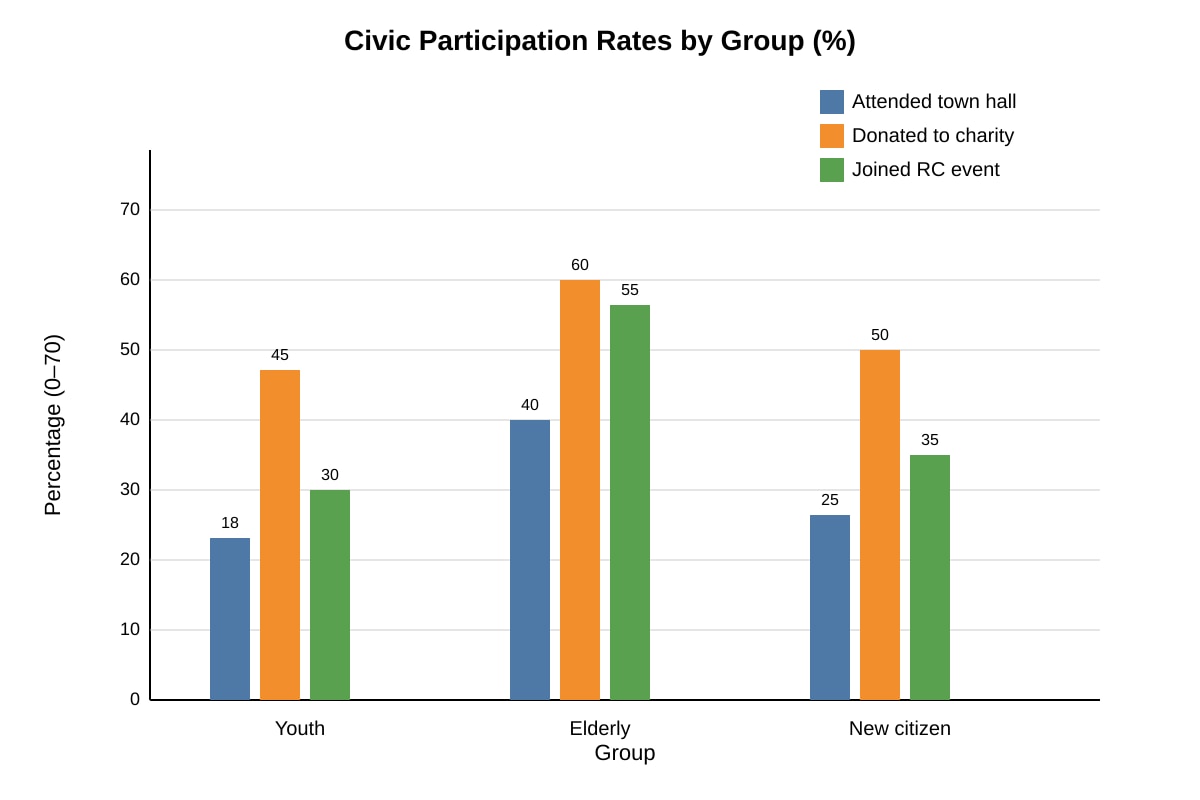
Answer: Elderly (40%).
Teaching: Read table row.
Q10 [2 marks]
Answer: Elderly 55% > Youth 30%; chart shows gap.
Marking: 1 value each.
Q11 [2 marks]
Answer: 60% – 45% = 15 percentage points.
Working: Elderly 60, Youth 45, difference = 15.
Teaching: Subtract rates, unit = percentage points.
Q12 [2 marks]
Answer: New citizens less familiar with local systems / language barrier.
Marking: Plausible reason, 2 marks.
Q13 [2 marks]
Answer: Elderly more engaged than youth in formal participation.
Marking: 1 observation, 1 link age.
Q14 [3 marks]
Answer: Use social media for youth, transport help for elderly, orientation for new citizens.
Marking: 1 per suggestion tied to data.
Section C: Evaluation (12 marks)
Q15 [2 marks]
Answer: No; principle says everyone should have stake, not top-down only.
Marking: 1 disagree, 1 reason.
Q16 [2 marks]
Answer: Help low-income vs higher GST burden on all.
Teaching: Trade-off from syllabus.
Q17 [2 marks]
Answer: Forum post is personal view, may be biased; check reliability.
Teaching: Source evaluation skill.
Q18 [2 marks]
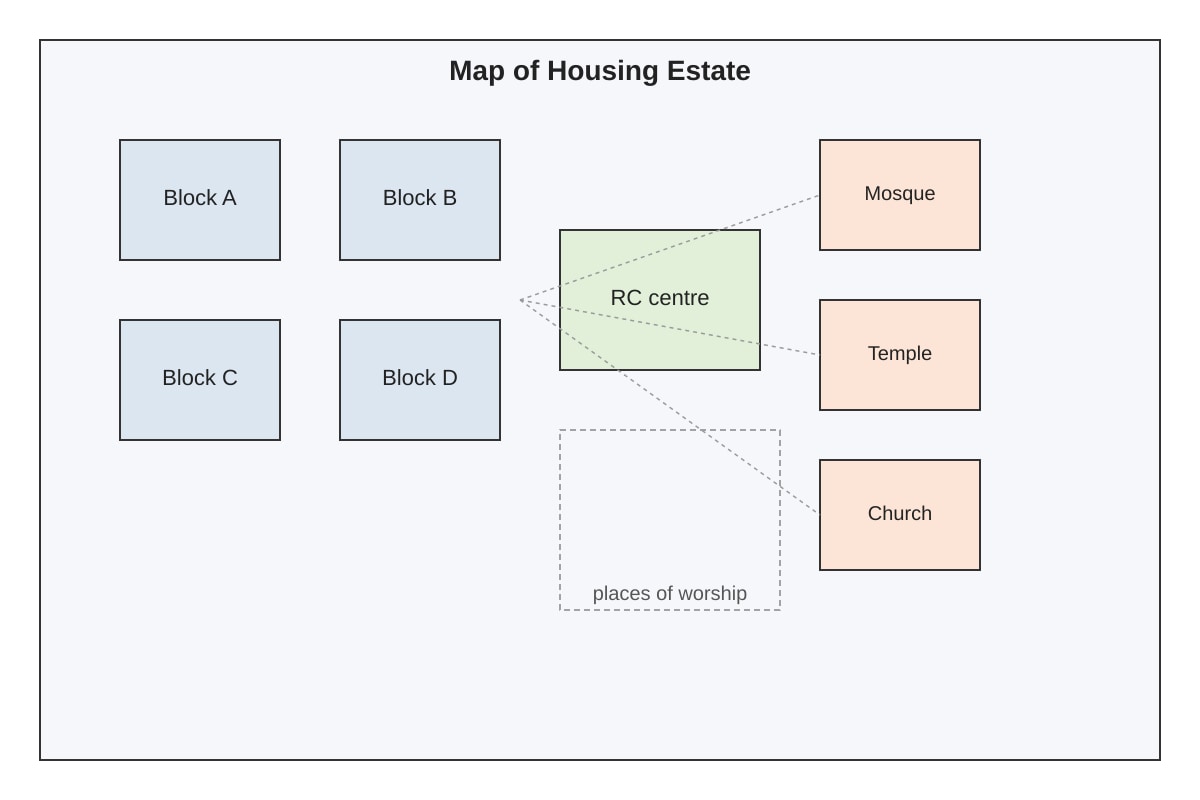
Answer: Worship sites near RC centre may encourage interaction, supporting integration.
Must_show: Map labels used.
Teaching: Integration needs shared spaces.
Q19 [2 marks]
Answer: Meritocracy = opportunities based on ability/effort, not status.
Teaching: Syllabus principle.
Q20 [2 marks]
Answer: Disagree; Source B shows garden cooperation despite diversity.
Marking: 1 disagree, 1 evidence.