AI Generated Exam Paper
Secondary 3 Social Studies Practice Paper 1
Free Sec 3 Social Studies Practice Paper 1, HY3 AI version, with questions, answers, and O Level-style practice for Singapore students.
These static practice materials are generated from the site's syllabus and paper-generation workflow, with source and model context shown so students and parents can evaluate the material before use.
Questions
TuitionGoWhere Practice Paper - Social Studies Secondary 3
TuitionGoWhere Practice Paper (AI) — Version 1
Subject: Social Studies
Level: Secondary 3
Paper: Practice Paper (Source Based Skills)
Duration: 1 hour 15 minutes
Total Marks: 40
Name: ______________________
Class: _________
Date: ____________
Instructions:
- This practice paper tests Source Based Skills using syllabus-first content for Secondary 3 Social Studies (Issue 1: Citizenship and Governance; Issue 2: Living in a Diverse Society).
- No past-year exam templates were available; questions are generated from the interpreted syllabus.
- Read all sources carefully. Answer all questions in the spaces provided.
- Section A: 10 marks, Section B: 15 marks, Section C: 15 marks. Total = 40 marks.
Section A: Source Comprehension (10 marks)
Source A (adapted from a school civic education pamphlet, 2023):
"Citizenship in Singapore is more than holding a pink IC. It means taking part in community clean-ups, obeying laws, and voting responsibly. The government builds hospitals and keeps peace, but citizens must also care for neighbours."
Source B (from a student essay, 2024):
"When the town council raised fees, some residents complained. The MP explained it was to maintain lifts. This shows trade-offs: pay more or risk broken lifts."
-
What is one right or obligation of a citizen mentioned in Source A? [1]
-
According to Source A, give one example of active citizenship. [1]
-
Source B shows a trade-off. What are the two sides of the trade-off? [2]
-
Which principle of governance is reflected when the MP explains the reason for the fee increase? [1]
-
Based on Source A, why is citizenship not just a legal status? [1]
-
Give one function of government shown in Source A. [1]
-
In Source B, who made the decision about the fee? [1]
-
What does "active citizenship" require from individuals? [1]
-
Identify one challenge of deciding what is good for society from the sources. [1]
-
Explain one way citizens and government can work together using Source A. [1]
Section B: Source Analysis and Inference (15 marks)
Source C (news report, 2023):
"To reduce racial tension, the government funded inter-faith dialogues. Some community groups also started food-sharing events during festivals. However, a survey found 3 in 10 youths still hold stereotypes about other races."
Source D (table summary):
| Group | Action | Aim |
|---|---|---|
| Government | Inter-faith dialogues | Promote harmony |
| Community group | Food-sharing | Build friendship |
| Individuals | Avoid stereotypes | Respect diversity |
-
What is one government response to diversity in Source C? [1]
-
According to Source D, what is the aim of food-sharing? [1]
-
Give one challenge to harmony from Source C. [1]
-
Explain how Source D shows shared responsibility. [2]
-
Using Sources C and D, why is harmony not automatic? [2]
-
What concept in Issue 2 does "stereotypes" relate to? [1]
-
Suggest one way an individual can respond to socio-economic diversity not mentioned. [1]
-
Compare assimilation and integration based on syllabus. [2]
-
From Source C, was the government's approach assimilation or integration? Explain. [2]
-
Using Sources C and D, give two reasons why both citizens and government are needed for harmony. [2]
Section C: Applied Source Skills (15 marks)
Source E (case study, 2024):
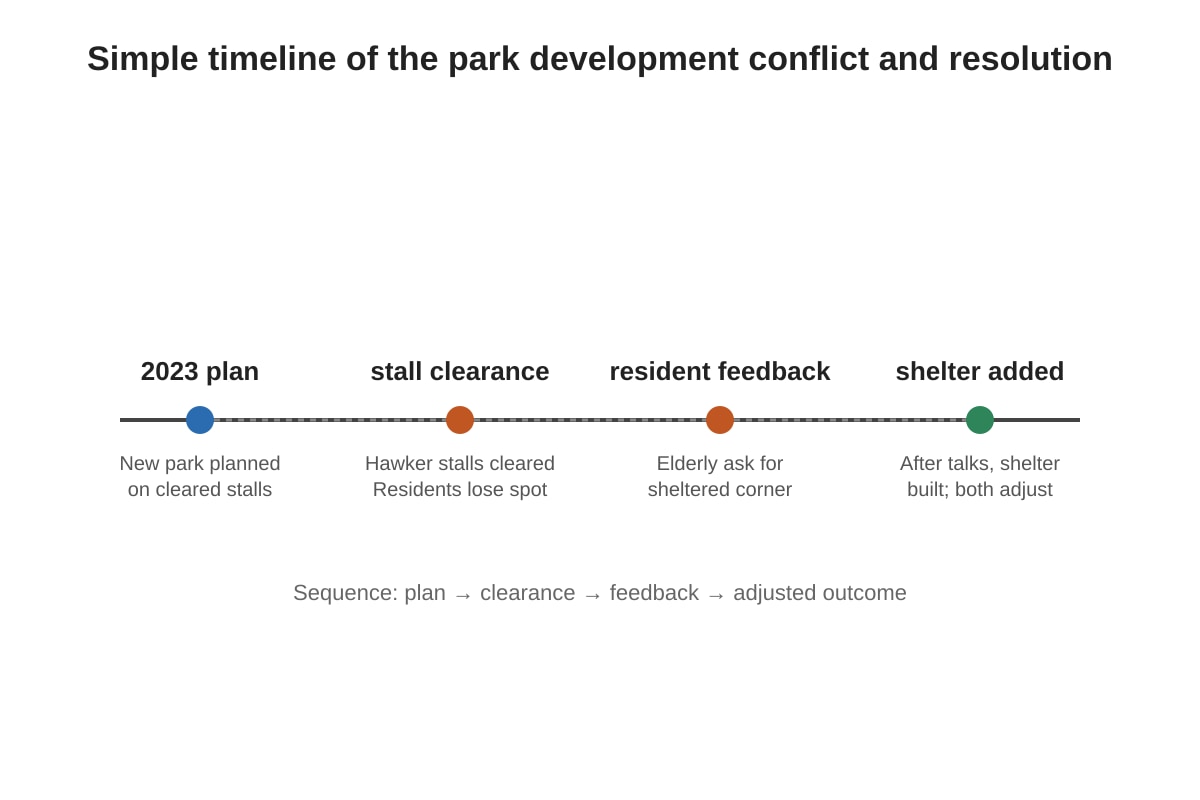
"A new park was built on cleared hawker stalls. Elderly residents lost their morning meeting spot. The government said it was for green space. Residents asked for a sheltered corner. After talks, a small shelter was added. Some cost more, but both sides adjusted."
Image pending generation: diagram for 21.
-
What was the trade-off in Source E? [2]
-
Which principle of governance is shown by adding the shelter? [1]
-
Explain how citizens worked with government in Source E. [2]
-
Identify one challenge of determining "good for society" in Source E. [1]
-
Using Source E, describe one role of government. [1]
-
Give one way this case shows active citizenship. [1]
-
What is one possible cost mentioned? [1]
-
How does the outcome reflect managing trade-offs? [2]
-
Link this case to Issue 1 learning outcome. [2]
-
Suggest one improvement to the process for future cases. [2]
Answers
TuitionGoWhere Practice Paper Answer Key — Social Studies Secondary 3 (Version 1)
Total Marks: 40
Section A: 10 marks | Section B: 15 marks | Section C: 15 marks
Section A: Source Comprehension (10 marks)
Q1 [1] Obeying laws / voting responsibly / holding pink IC (legal status).
Teaching note: Source A lists obligations and rights. Any one is acceptable. Common mistake: giving "community clean-up" as right (it is active citizenship, not legal right).
Q2 [1] Taking part in community clean-ups.
Teaching note: Active citizenship = voluntary participation beyond legal duty.
Q3 [2] (a) Pay higher fees; (b) Risk broken lifts / no maintenance.
Marking: 1 mark each side. Trade-off = balancing two undesirable alternatives.
Q4 [1] Practicing good leadership / anticipating change and staying relevant.
Teaching note: MP explained reason → transparent leadership.
Q5 [1] Because it involves participation and responsibility, not just IC.
Teaching note: Syllabus: citizenship = legal + active.
Q6 [1] Builds hospitals / keeps peace (maintains law and order).
Function of government per syllabus.
Q7 [1] Town council / MP (government).
Q8 [1] Participating in public affairs, caring for neighbours.
Q9 [1] Competing demands (fees vs lifts) or unequal cost sharing.
Q10 [1] Citizens join clean-ups; government provides services.
Section B: Source Analysis and Inference (15 marks)
Q11 [1] Funded inter-faith dialogues.
Q12 [1] Build friendship / promote harmony.
Q13 [1] Youths hold stereotypes (3 in 10).
Q14 [2] Both government (dialogues) and community (food-sharing) act → not only state's job. 1 mark each actor.
Q15 [2] Stereotypes remain despite policies; harmony needs continuous effort. Evidence from C + D.
Q16 [1] Prejudice / discrimination (Issue 2 concept).
Q17 [1] e.g., volunteer at charity, donate to poor.
Q18 [2] Assimilation: minority adopts majority culture; Integration: mutual adaptation, keep identity. 1 mark each.
Q19 [2] Integration: inter-faith dialogues respect identities, not force merge. Explain = 1, label = 1.
Q20 [2] (1) Gov provides platform; (2) Citizens act at ground. 1 mark each from sources.
Section C: Applied Source Skills (15 marks)
Q21 [2] Green space vs elderly meeting spot. 1 mark each.
Q22 [1] Stake for everyone / opportunities for all.
Q23 [2] Residents gave feedback; govt adjusted plan. 1 mark each.
Q24 [1] Differing needs (elderly vs general public).
Q25 [1] Provides public space / maintains well-being.
Q26 [1] Residents voiced concerns collectively.
Q27 [1] Extra cost of shelter.
Q28 [2] Both adjusted: residents accepted loss, govt added shelter. 1 mark each side.
Q29 [2] Shows citizens + government working together for good of society (Issue 1 outcome). Link = 1, outcome = 1.
Q30 [2] e.g., consult before clearance; 1 for suggestion, 1 for reason.
Image note for Q21: Placeholder Q21-fig1 must show timeline: 2023 plan → stall clearance → resident feedback → shelter added. Answer uses sequence to show resolution.
Free quiz and exam paper access
Enter your details to view this paper
Your access is remembered on this device.