From Real Exams Quiz
Secondary 3 Physics Electricity Magnetism Quiz
Free Sec 3 Physics Electricity Magnetism quiz, HY3 Exam version, with questions, answers, and O Level-style practice for Singapore students.
These static practice materials are generated from the site's syllabus and paper-generation workflow, with source and model context shown so students and parents can evaluate the material before use.
Questions
Secondary 3 Physics Quiz - Electricity Magnetism
Name: ___________________________
Class: ___________________________
Date: ___________________________
Score: _______ / 40
Duration: 50 minutes
Total Marks: 40
Instructions:
- Answer all 20 questions.
- Section A: Multiple Choice (1 mark each).
- Section B: Structured Questions (2 marks each).
- Section C: Extended Questions (3–4 marks each).
- Show your working where calculation is required.
- Use g=10 m s−2 if needed.
Section A: Multiple Choice (Questions 1–5)
1. A circuit contains a battery, a switch, and a lamp connected in series. When the switch is opened, what happens to the current in the circuit?
A. Current increases
B. Current decreases but does not stop
C. Current becomes zero
D. Current remains the same
_____ (1 mark)
2. Which of the following is a non-contact force?
A. Friction
B. Tension
C. Magnetic force
D. Normal reaction
_____ (1 mark)
3. A resistor has a resistance of 4 Ω and a current of 2 A flows through it. What is the potential difference across it?
A. 0.5 V
B. 2 V
C. 6 V
D. 8 V
_____ (1 mark)
4. Two bar magnets are brought close together with their north poles facing. What is observed?
A. They attract
B. They repel
C. No force acts
D. They rotate to align
_____ (1 mark)
5. In a parallel circuit with two identical lamps, if one lamp is removed, the other lamp will:
A. Become brighter
B. Become dimmer
C. Stay the same brightness
D. Go out
_____ (1 mark)
Section B: Structured Questions (Questions 6–10)
6. State one difference between a series circuit and a parallel circuit.
__________________________________________________________________ (2 marks)
7. A wire carries a current of 3 A for 10 s. Calculate the total charge that flows through the wire.
Working: ______________________________________________________
Answer: ________________________ (2 marks)
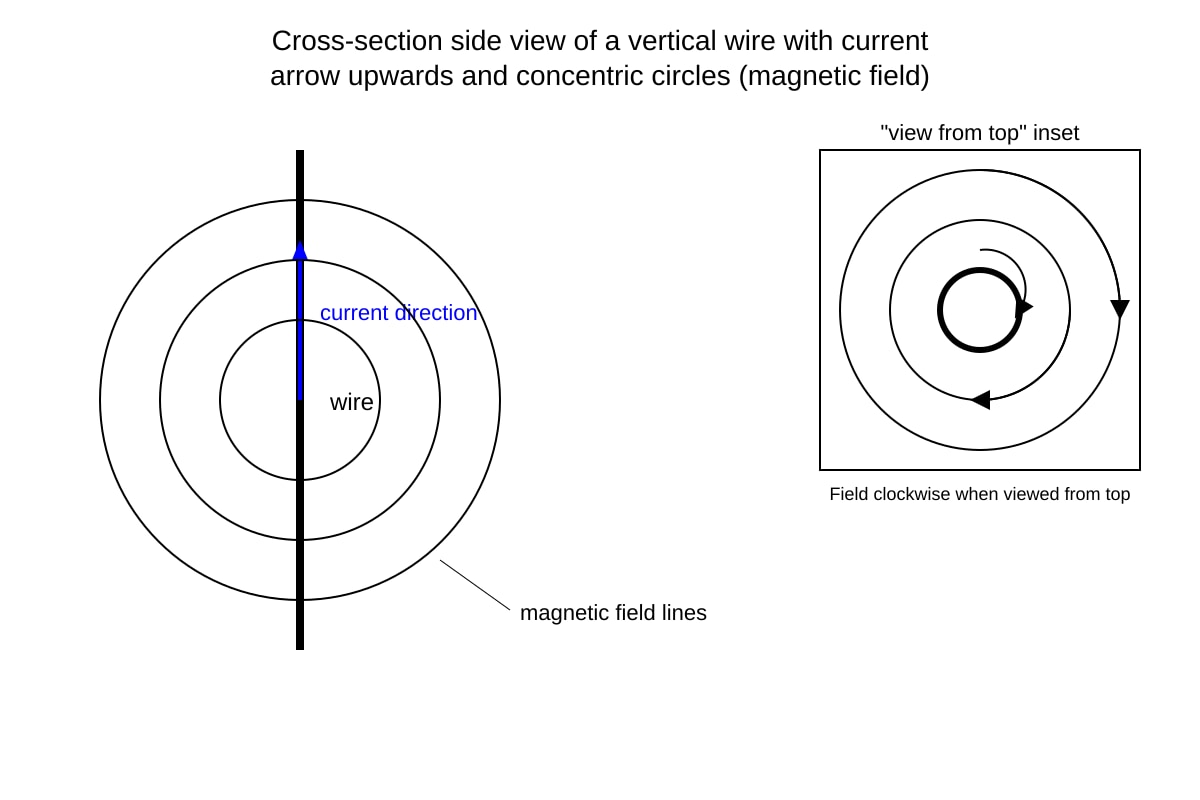
8. Draw the magnetic field pattern around a straight current-carrying wire. Show the direction of the field for current flowing upwards.

Generated diagram for Q8.
(2 marks)
9. A magnet is pushed into a coil of wire connected to a galvanometer. Explain why the galvanometer needle deflects.
__________________________________________________________________ (2 marks)
10. Calculate the resistance of a bulb if 0.5 A flows when it is connected to a 6 V battery.
Working: ______________________________________________________
Answer: ________________________ (2 marks)
Section C: Extended Questions (Questions 11–20)
11. A circuit has a 12 V battery and two resistors in series: R1=3 Ω and R2=5 Ω.
(a) Calculate the total resistance. (1 mark)
(b) Calculate the current in the circuit. (2 marks)
Working: ______________________________________________________
Answers: (a) __________ (b) __________
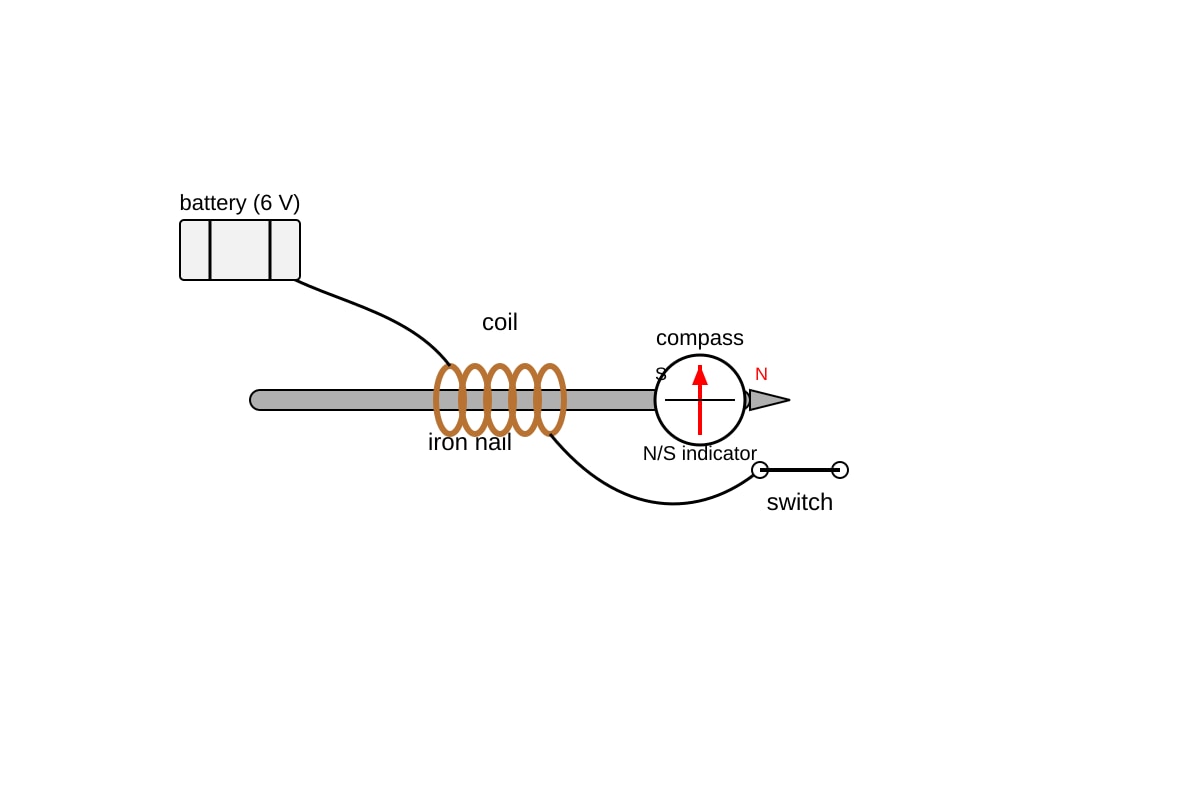
12. The diagram shows a simple electromagnet made by wrapping a coil around an iron nail connected to a battery.

Generated experimental_setup for Q12.
(a) State how to increase the strength of this electromagnet. (1 mark)
(b) Explain why the iron nail becomes magnetised. (2 marks)
Answers: (a) __________ (b) ______________________________
13. A parallel circuit has two branches. Branch 1 has a 2 Ω resistor, Branch 2 has a 4 Ω resistor, supplied by 8 V.
(a) Calculate the current in each branch. (2 marks)
(b) Calculate the total current. (1 mark)
Working: ______________________________________________________
Answers: (a) Branch1 ______ Branch2 ______ (b) ______
14. Describe an experiment to show that a current-carrying wire experiences a force in a magnetic field. Include apparatus and observation. (3 marks)
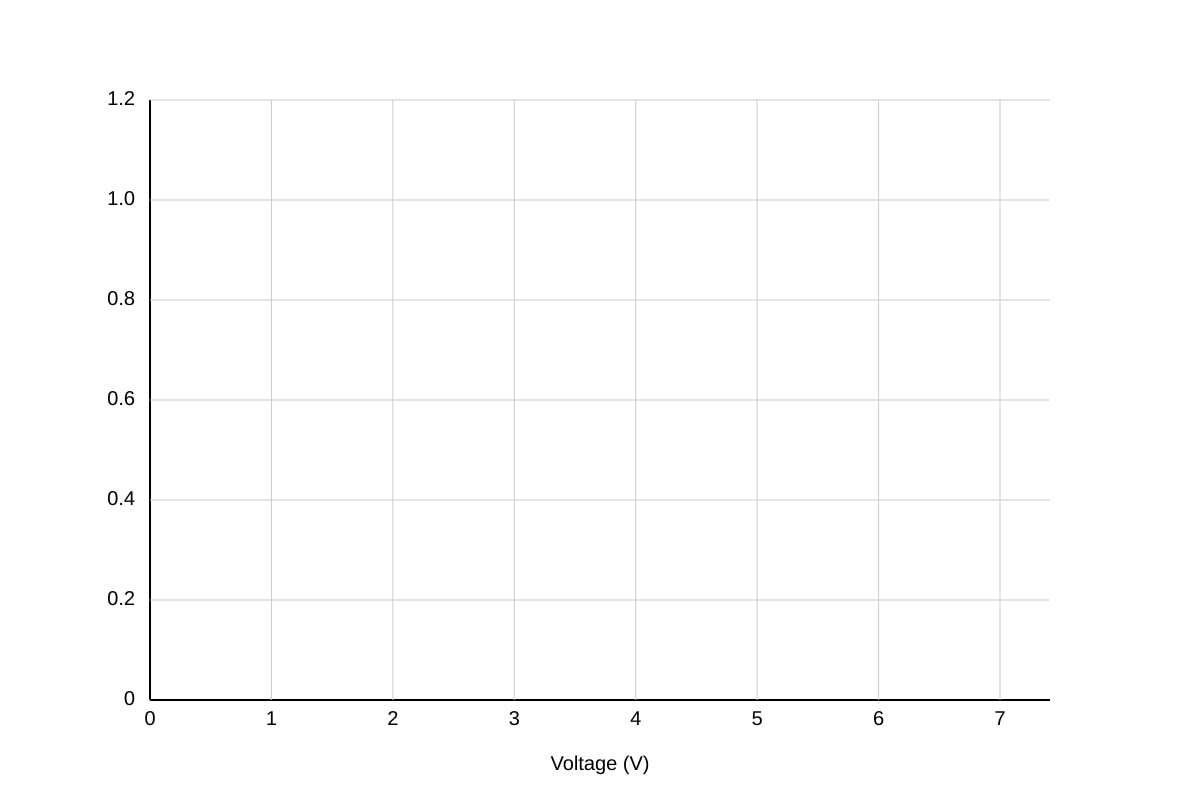
15. A student measures the current through a resistor at different voltages:
| Voltage (V) | Current (A) |
|---|---|
| 2.0 | 0.40 |
| 4.0 | 0.80 |
| 6.0 | 1.20 |
(a) Plot a graph of current against voltage. (1 mark)

Generated graph for Q15.
(b) Determine the resistance from the graph. (2 marks)
Answer: __________
16. Explain how electromagnetic induction is used in a bicycle dynamo to light a lamp. (3 marks)
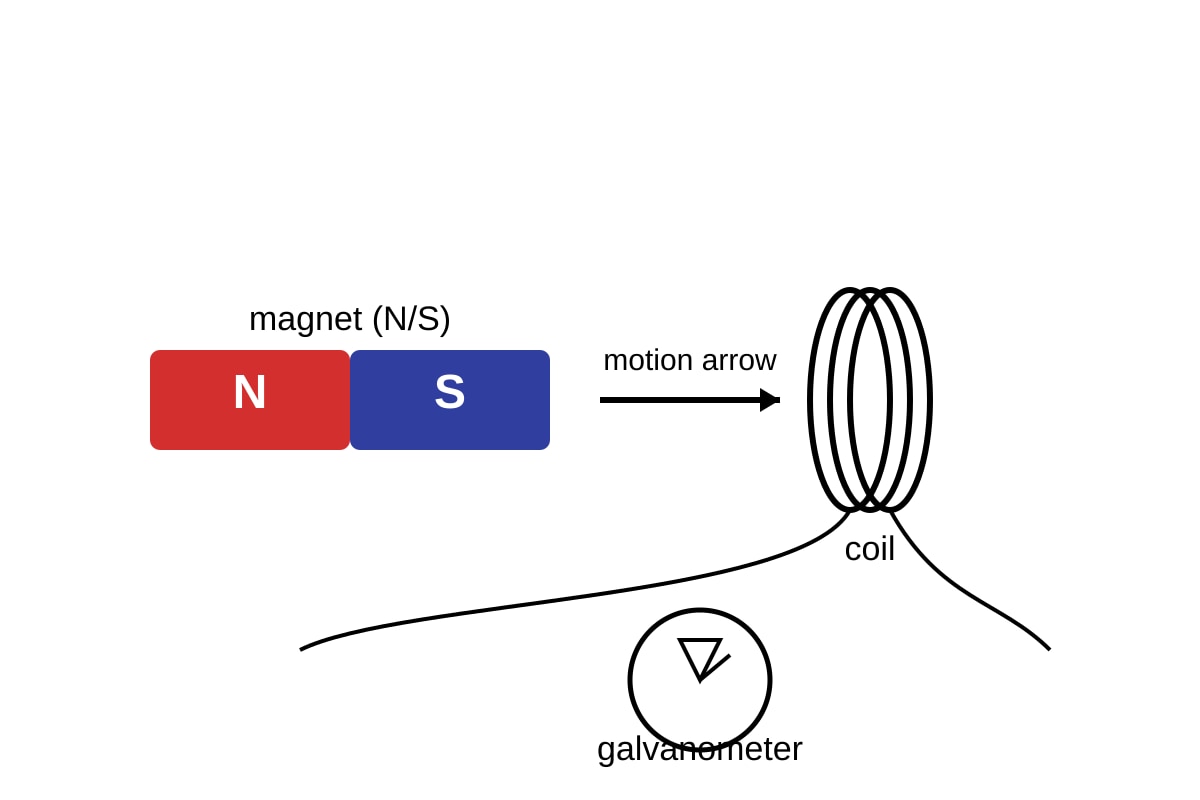
17. A coil is placed near a magnet as shown. The magnet is moved away from the coil.

Generated diagram for Q17.
(a) What happens to the galvanometer reading as the magnet moves away? (1 mark)
(b) State Faraday's law in this context. (2 marks)
Answers: (a) __________ (b) ______________________________
18. A 9 V battery is connected to three resistors in parallel: 6 Ω, 3 Ω, and 9 Ω.
(a) Calculate the current through each resistor. (2 marks)
(b) Calculate the total current drawn. (1 mark)
Working: ______________________________________________________
Answers: (a) I1 ______ I2 ______ I3 ______ (b) ______
19. Compare the magnetic field of a bar magnet and that of a solenoid carrying current. (3 marks)
20. A electric kettle has a heating element of resistance 20 Ω and is connected to 240 V.
(a) Calculate the current. (1 mark)
(b) Calculate the power used. (2 marks)
(c) Explain why the element becomes hot. (1 mark)
Working: ______________________________________________________
Answers: (a) ______ (b) ______ (c) ________________________
Answers
Secondary 3 Physics Quiz - Electricity Magnetism (Answer Key)
Total Marks: 40
Topic: Electricity & Magnetism
Section A: Multiple Choice
1. C (1 mark)
Teaching note: In a series circuit, the current has only one path. Opening the switch breaks the circuit, so current becomes zero. Common mistake: thinking current "decreases" – in an open series circuit it stops completely.
2. C (1 mark)
Teaching note: Magnetic force acts at a distance without contact. Friction, tension, normal are contact forces needing physical touch.
3. D (1 mark)
Using V=IR=2×4=8 V. Correct choice D.
4. B (1 mark)
Like poles (N–N) repel. Unlike poles attract.
5. C (1 mark)
In parallel, each branch has same voltage and independent path. Removing one lamp does not affect the other.
Section B: Structured Questions
6. (2 marks)
Marking: 1 mark for stating series has single path; 1 mark for parallel has multiple branches.
Sample: In series, components are connected end-to-end so same current flows; in parallel, components are on separate branches with same voltage.
7. (2 marks)
Formula: Q=It
Substitute: Q=3×10=30 C
Answer: 30 C (2 marks for correct value and unit)
8. (2 marks)
Expected drawing: concentric circles around wire, arrow up on wire, clockwise field in top view (right-hand grip: thumb up = fingers curl clockwise from top). Award 1 mark for circles, 1 mark for correct direction.
9. (2 marks)
Moving magnet changes magnetic flux in coil → induces emf (Faraday's law) → current flows → galvanometer deflects. 1 mark for flux change, 1 mark for induced current/emf.
10. (2 marks)
R=V/I=6/0.5=12 Ω. 1 mark working, 1 mark answer with unit.
Section C: Extended Questions
11. (a) Rtotal=3+5=8 Ω (1 mark)
(b) I=V/R=12/8=1.5 A (2 marks: 1 for formula, 1 for answer)
12. (a) Increase coils, increase current, use softer iron core. (1 mark, any one)
(b) Current in coil produces magnetic field aligning domains in iron → nail magnetised. (2 marks: 1 field from coil, 1 domain alignment)
13. (a) Branch1: I=8/2=4 A; Branch2: I=8/4=2 A (2 marks)
(b) Total I=4+2=6 A (1 mark)
14. (3 marks)
Apparatus: U-shaped magnet, copper wire between poles, battery, switch. (1)
Method: Close switch, wire carries current in field. (1)
Observation: Wire experiences force, moves (Fleming left-hand rule). (1)
15. (a) Graph: straight line through origin, points (2,0.4),(4,0.8),(6,1.2). (1 mark)
(b) Resistance =V/I=2/0.4=5 Ω (or from gradient 6/1.2). (2 marks)
16. (3 marks)
Dynamo: magnet rotates near coil (1), changing flux induces emf (1), current lights lamp (1).
17. (a) Reading decreases / returns to zero. (1 mark)
(b) Induced emf proportional to rate of change of flux; moving away reduces flux → emf decreases. (2 marks)
18. (a) I1=9/6=1.5 A, I2=9/3=3 A, I3=9/9=1 A (2 marks)
(b) Total =1.5+3+1=5.5 A (1 mark)
19. (3 marks)
Both have N and S poles (1); bar magnet permanent, solenoid temporary (1); solenoid field inside uniform, outside like bar magnet (1).
20. (a) I=240/20=12 A (1 mark)
(b) P=VI=240×12=2880 W (2 marks)
(c) Current through resistance → electrical energy converted to heat (1 mark)
Free quiz and exam paper access
Enter your details to view this paper
Your access is remembered on this device.