AI Generated Exam Paper
Secondary 3 History Practice Paper 5
Free Sec 3 History Practice Paper 5, HY3 AI version, with questions, answers, and O Level-style practice for Singapore students.
These static practice materials are generated from the site's syllabus and paper-generation workflow, with source and model context shown so students and parents can evaluate the material before use.
Questions
Free quiz and exam paper access
Enter your details to view this paper
Your access is remembered on this device.
Answers
TuitionGoWhere Practice Paper - History Secondary 3 (Answers)
Version 5 — Answer Key with Teaching Notes
Section A (2m each; total 20m)
Q1 (2m): The Resident was a British adviser placed with the Sultan to guide local government and protect British interests.
Teaching note: In the syllabus, the Resident system was indirect rule; the Sultan kept title but Resident controlled policy. Common mistake: saying Resident was a military governor.
Q2 (2m): Tin exports tripled after the Resident was placed (per Source 1).
Teaching note: Shows economic motive for British control. Mark for "tripled" or "increased greatly".
Q3 (2m): War guilt (or reparations).
Teaching note: Treaty of Versailles terms: Article 231 war guilt, reparations, loss of territory. Accept any one.
Q4 (2m): Resentment / humiliation / anger among Germans.
Teaching note: Connect to later rise of extremism. Mark for explicit feeling from treaty.
Q5 (2m): The Great Depression.
Teaching note: Economic crisis increased Nazi appeal. Do not accept "unemployment" alone without linking to Depression.
Q6 (2m): Speech.
Teaching note: "Hitler promised" indicates oral public address. Diary would be private; map is visual.
Q7 (2m): To gain raw materials.
Teaching note: Japanese expansion driven by need for resources; Manchuria 1931 case study.
Q8 (2m): East Asia / China / Northeast China.
Teaching note: Manchuria is in northeast China. Mark for regional correctness.
Q9 (2m): Allied unity and determination to win WWII.
Teaching note: Posters are propaganda for morale. Accept "togetherness".
Q10 (2m): Posters may show bias / only one side / made to persuade not record fact.
Teaching note: Limitation of propaganda sources.
Section B (4m each; total 20m)
Q11 (4m):
- Useful: shows Nazi claim of economic recovery (2m).
- Limited: historian reveals unemployment stat excluded forced labour, so source misleading (2m).
Teaching note: Use provenance + content + caution. Mark descriptors: 2 for use, 2 for limitation.
Q12 (4m):
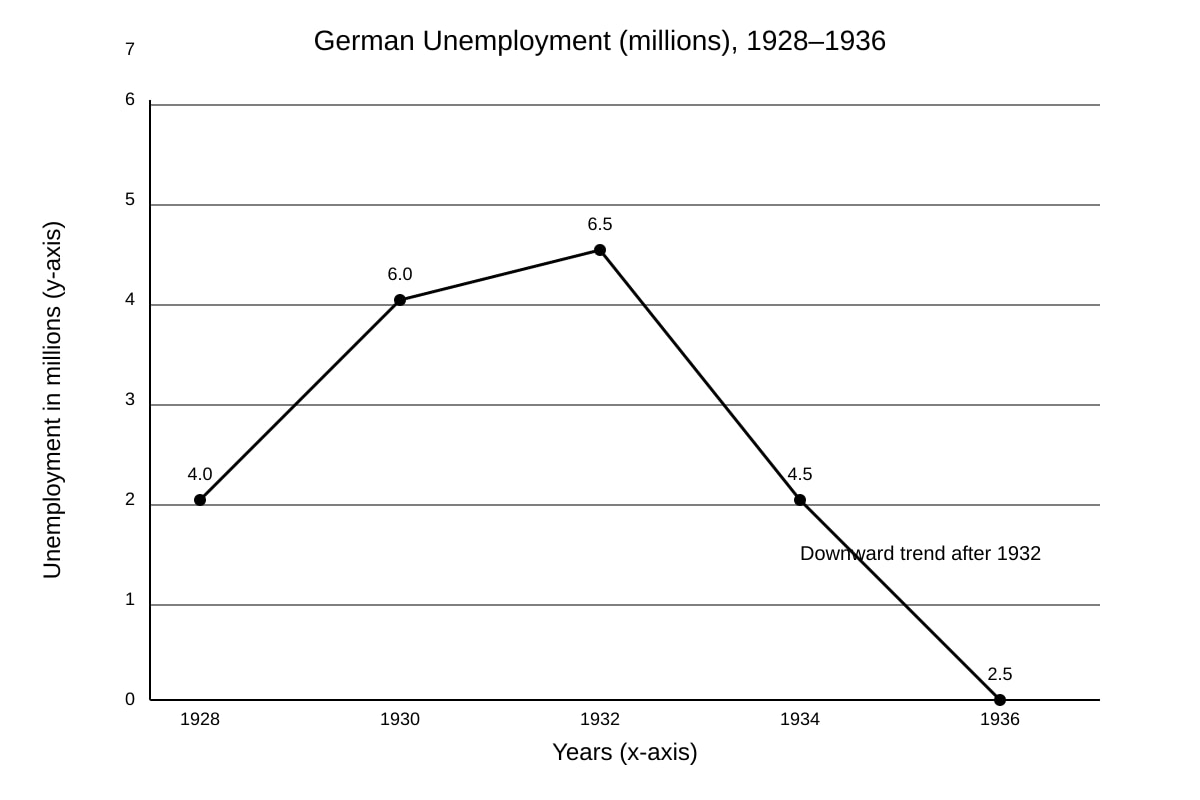
- Unemployment rose 1928–1932 (4.0 to 6.5m) (2m).
- After 1932 fell to 2.5m by 1936 (2m).
Teaching note: Describe trend using values from graph. Image must show axis labels; answer relies on visible data.
Q13 (4m):
- Tone: positive/liberationist (2m).
- Caution: textbook is state-controlled, may hide brutality, so bias (2m).
Teaching note: Japanese "Co-Prosperity" ideology vs reality.
Q14 (4m):
- Villager (Source 9) shows loss/suffering (2m).
- British report shows profit/benefit (2m). Different perspectives due to position.
Teaching note: Diversity concept; compare not contrast only.
Q15 (4m):
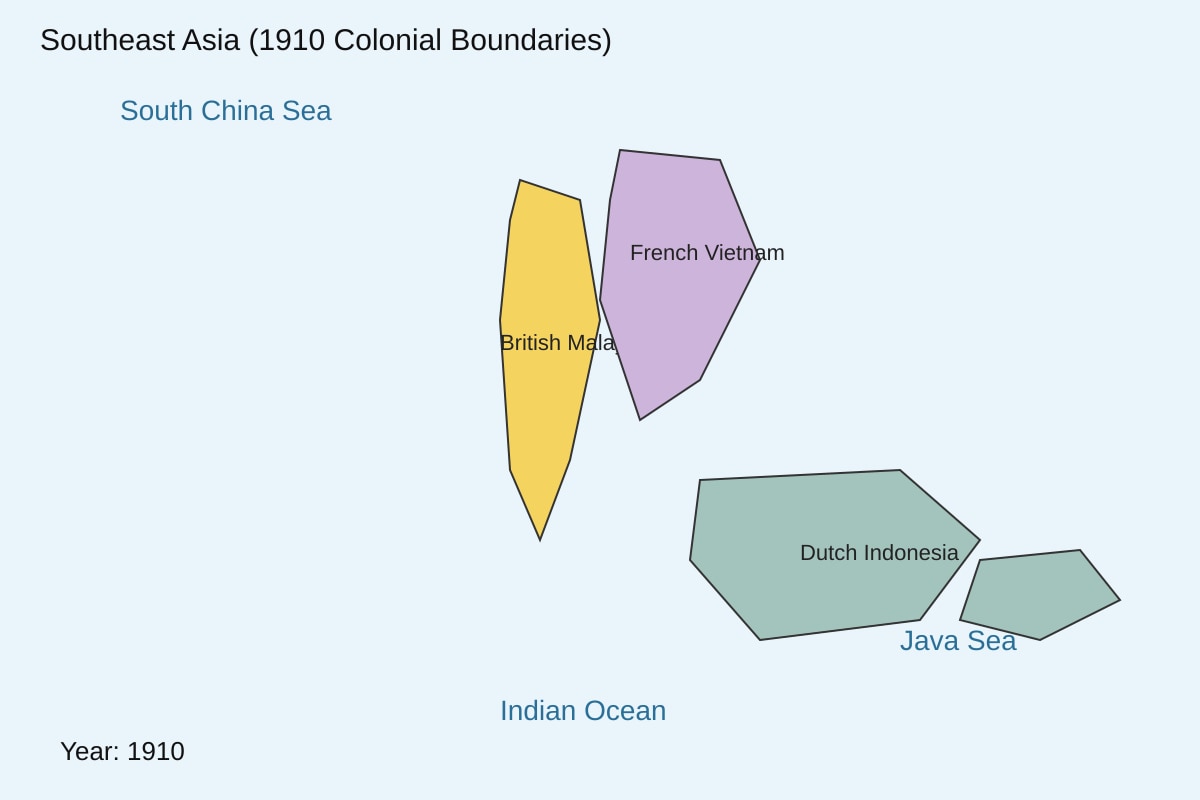
- Shows three European colonial areas divided by borders (2m).
- Helps visualise extent of control in SE Asia (2m).
Teaching note: Map as source; must show labels per placeholder.
Section C (6m each; total 20m)
Q16 (6m):
- Historian A: Enabling Act ended democracy (2m).
- Historian B: necessary due to crisis (2m).
- Own view: A more convincing because Act gave dictatorial power, evidence from speech "without delay" (2m).
Teaching note: Compare + judgement with reason. Mark: 2+2+2.
Q17 (6m):
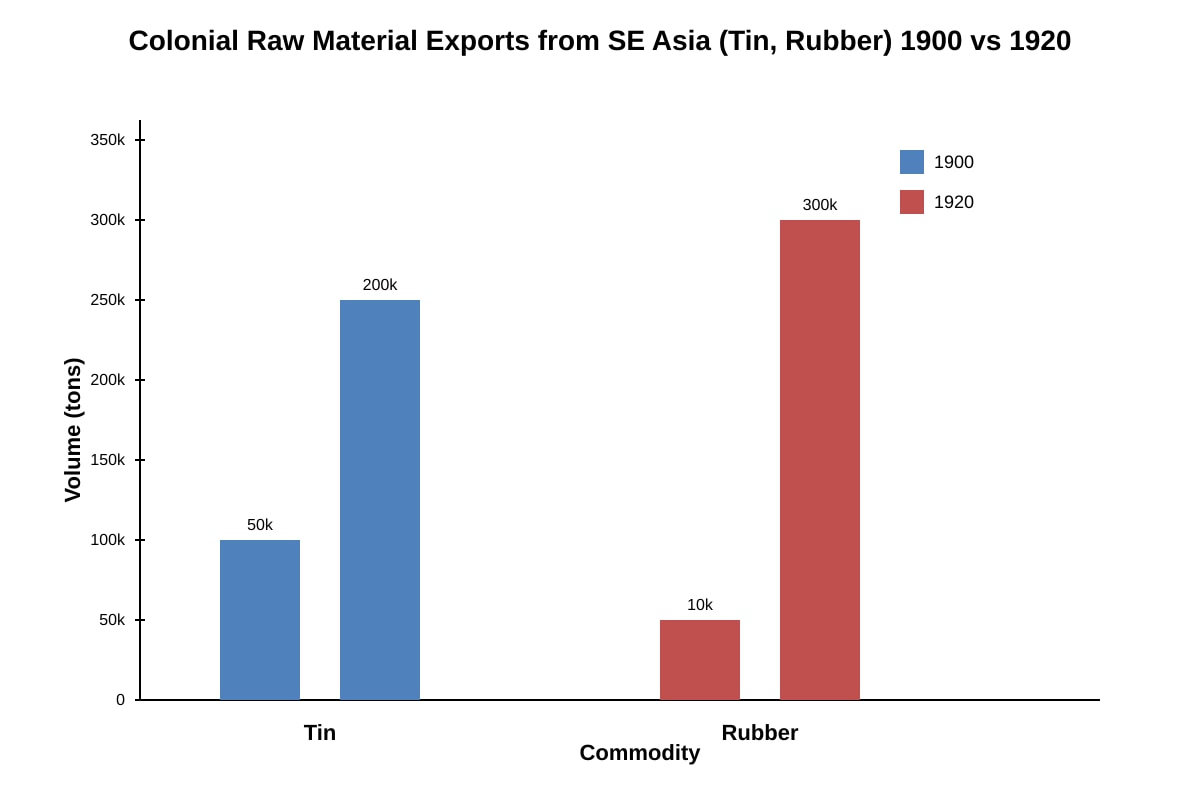
- Tin export 50k→200k, rubber 10k→300k (2m).
- Shows massive growth due to European demand/plantations (2m).
- Impact: export economy, not local subsistence (2m).
Teaching note: Use chart values; link to economic transformation syllabus.
Q18 (6m):
- Value: personal experience of migrant life, hard work, remittance (3m).
- Limitation: single person, may not represent all migrants (3m).
Teaching note: Origin + purpose + audience.
Q19 (6m):
- US: embargo justified to stop aggression (2m).
- Japan: saw as aggression threatening survival (2m).
- Empathy: understand both contexts (2m).
Teaching note: Historical empathy; no single truth.
Q20 (6m):
- Survivor account (B) more reliable (2m).
- Reason: propaganda film (A) made to glorify Nazis, survivor gives lived evidence (4m).
Teaching note: Reliability = bias + closeness to event.
Total Marks: 60 — matches paper.