AI Generated Quiz
Secondary 3 Geography Resources Sustainability Quiz
Free Sec 3 Geography Resources Sustainability quiz, HY3 AI version, with questions, answers, and O Level-style practice for Singapore students.
These static practice materials are generated from the site's syllabus and paper-generation workflow, with source and model context shown so students and parents can evaluate the material before use.
Questions
Secondary 3 Geography Quiz - Resources Sustainability
Name:
Class:
Date:
Score:
Duration: 45 minutes
Total Marks: 40
Instructions:
- This quiz has 20 questions across three sections. Answer all questions in the spaces provided.
- Section A: 10 multiple-choice / short structured questions (1 mark each).
- Section B: 6 structured questions with subparts (2–4 marks each).
- Section C: 4 extended response questions (3–5 marks each).
- This content is syllabus-first practice generated from the 2023 Upper Secondary Geography Syllabus. No past-year exam templates were available; questions are not claimed to be exam-derived.
Section A (Questions 1–10, 1 mark each, total 10 marks)
-
Which of the following best defines sustainable development?
A. Using resources as fast as possible to grow the economy
B. Meeting present needs without compromising future generations’ ability to meet their needs
C. Preserving all natural areas by stopping all human activity
D. Exporting waste to other countries
-
Name one type of ecosystem service provided by urban trees that helps reduce heat.
-
Which of these is a renewable resource?
A. Coal
B. Natural gas
C. Solar energy
D. Petroleum
-
State one example of a provisioning ecosystem service.
-
Which of the following is a common urban hazard?
A. Earthquake in Singapore
B. Air pollution from traffic
C. Glacier melt
D. Volcanic ash
-
The 3 pillars of sustainability are economic, social, and __________.
-
Which strategy helps build a sustainable neighbourhood?
A. Building more car parks only
B. Increasing green spaces and community gardens
C. Removing all recycling bins
D. Burning waste openly
-
State one way households can conserve water.
-
Which of these is a supporting ecosystem service?
A. Soil formation
B. Tourism enjoyment
C. Flood control
D. Food supply
-
What does the term “resource depletion” mean?
A. Resources are shared fairly
B. Resources are used up faster than they can be replaced
C. Resources are exported
D. Resources are recycled
Section B (Questions 11–16, total 18 marks)
- (a) Explain what is meant by “economic sustainability”. [2]
(b) Give one example of an economic sustainability practice in a town. [1]
- The table below shows monthly water use in a Singapore housing estate.
| Month | Litres used per household |
|---|---|
| Jan | 380 |
| Feb | 360 |
| Mar | 340 |
| Apr | 320 |
(a) Calculate the mean monthly water use. [2]
(b) Suggest one reason for the decrease from Jan to Apr. [1]
- (a) What are regulating ecosystem services? [2]
(b) Name one regulating service and explain how it helps the environment. [2]
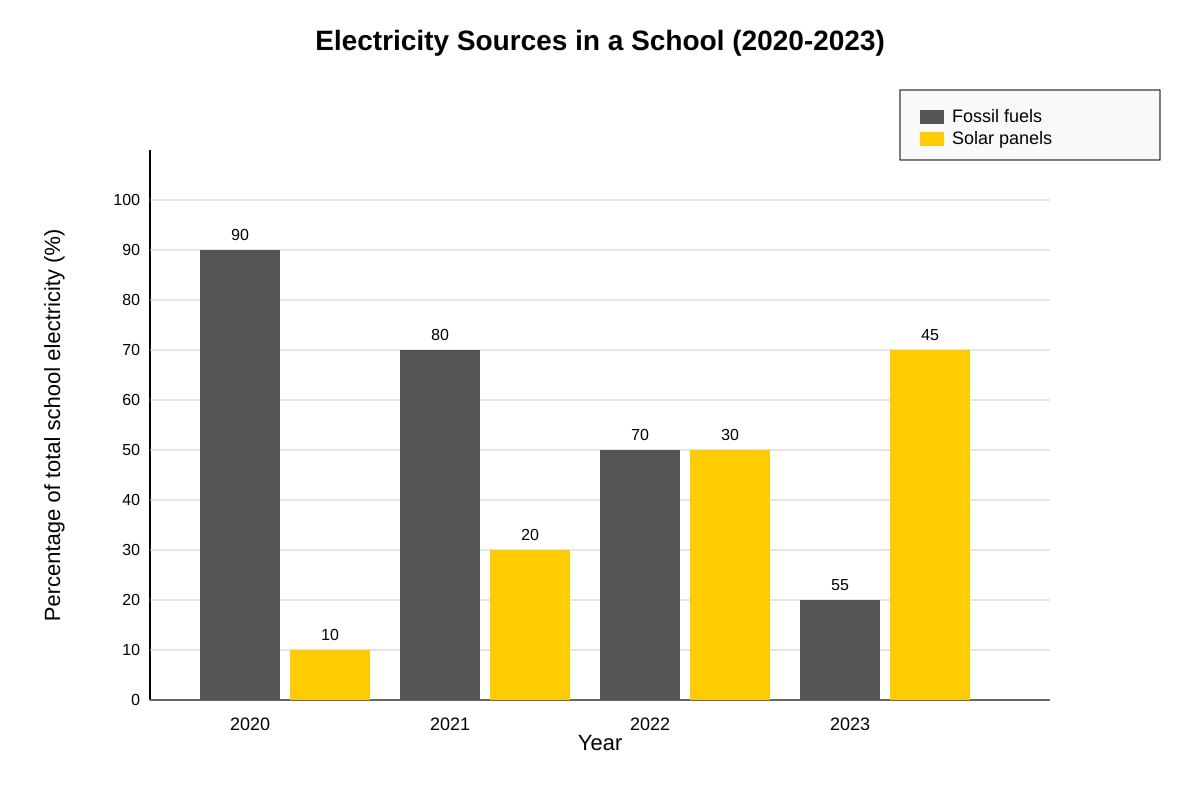
Image pending generation: graph for Q14.
Using the graph, (a) state the trend in solar energy use from 2020 to 2023. [1]
(b) Explain how this change improves environmental sustainability. [2]
- (a) Define “sense of place” in a neighbourhood. [1]
(b) Explain how community gardens can strengthen social sustainability. [2]
- (a) What is a common traffic-related hazard in urban areas? [1]
(b) Suggest two strategies to reduce this hazard. [2]
Section C (Questions 17–20, total 12 marks)
- Explain how balancing economic, social, and environmental sustainability can help a town become more resilient to climate change. Use an example. [4]
- A new housing estate plans to clear a small forest for flats. Discuss how the loss of ecosystem services should be considered in sustainable development. [3]
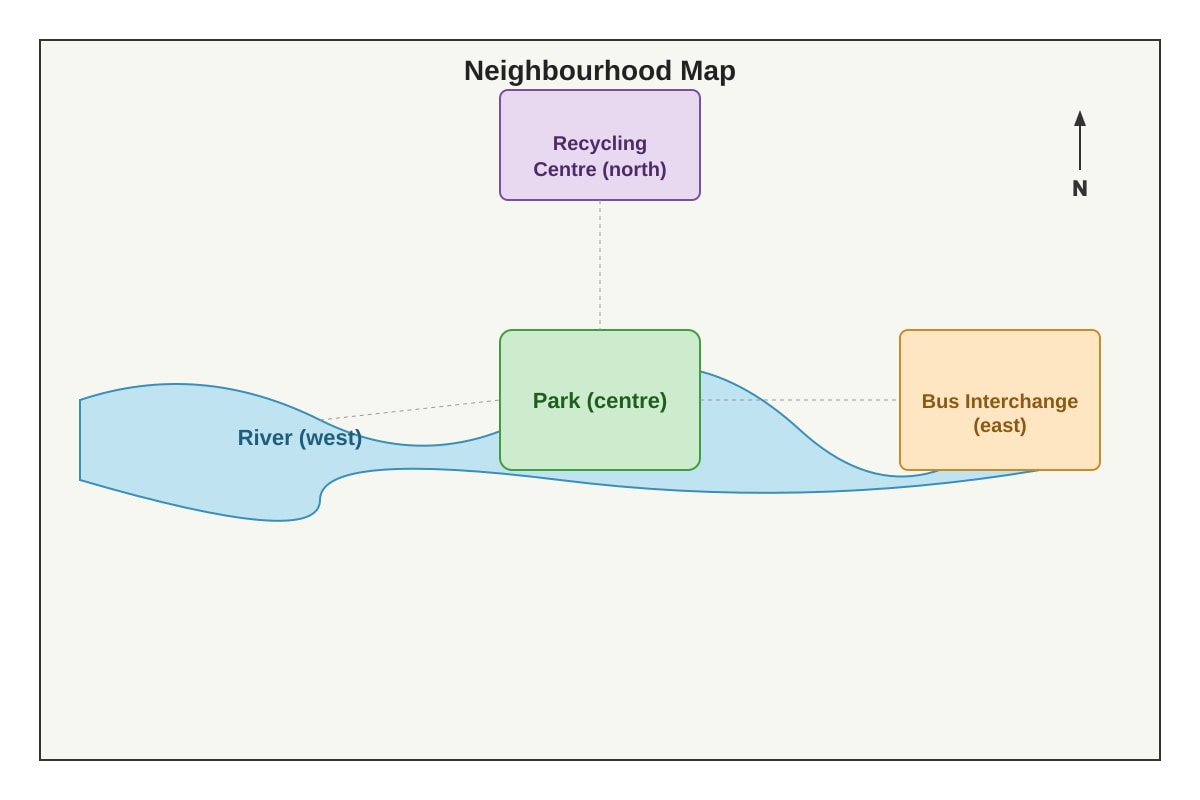
- Study the map description below.
Image pending generation: map for Q19.
Using the map, explain how the labelled features support resources sustainability in the neighbourhood. [3]
- “Singapore should rely fully on imported food because we have no land.” Do you agree? Explain your answer with sustainability ideas. [5]
Answers
Secondary 3 Geography Quiz - Resources Sustainability (Answer Key)
Total Marks: 40
Caveat: Syllabus-first practice from 2023 Upper Secondary Geography Syllabus. No Stage 3 past-paper evidence was used.
Section A Answers (10 marks)
-
B [1]
Teaching note: Sustainable development is defined as meeting present needs without compromising future generations. A and C are extreme; D shifts burden elsewhere. -
Regulating (e.g. shade cooling / air purification) [1]
Accept: “regulation of temperature” or “provides shade reducing heat island effect”. -
C [1]
Solar energy renews naturally; coal, gas, petroleum are non-renewable fossil fuels. -
Food / timber / fresh water [1]
Provisioning = products obtained from ecosystems. -
B [1]
Air pollution from traffic is a common urban hazard in Singapore context. -
Environmental [1]
Three pillars: economic, social, environmental. -
B [1]
Green spaces support environmental and social sustainability. -
Use a basin when washing / fix leaking taps / reuse water [1]
Any sensible conservation action. -
A [1]
Soil formation supports other services; B is cultural, C regulating, D provisioning. -
B [1]
Depletion = use faster than renewal.
Section B Answers (18 marks)
-
(a) Economic sustainability means using resources to support long-term livelihood and wealth without causing future economic loss. [2]
(b) Example: local recycling business creating jobs. [1] -
(a) Mean = (380+360+340+320)/4 = 1400/4 = 350 litres/household. [2]
(b) E.g. water conservation campaign, weather cooler. [1] -
(a) Regulating services are benefits from ecosystem processes that control natural conditions (e.g. climate, floods). [2]
(b) Flood control by wetlands: absorbs excess rain, protects homes. [2] -
(a) Solar increased from 10% to 45% over 4 years. [1]
(b) Less fossil fuel use → lower emissions → better environmental sustainability. [2] -
(a) Emotional connection people feel to a place. [1]
(b) Gardens build community bonding, shared responsibility, local food. [2] -
(a) Traffic accidents / congestion. [1]
(b) More buses, cycling paths, pedestrian zones. [2]
Section C Answers (12 marks)
-
[4] Mark descriptors: identifies balance (1), example (1), climate resilience link (1), clear explanation (1).
E.g. Green roofs (env) reduce heat, community centres (soc) aid recovery, local jobs (ec) fund upgrades. -
[3] Loss of provisioning (food), regulating (flood), cultural (recreation). Should offset via replanting, impact study.
-
[3] River = water resource; park = cooling/biodiversity; recycling = waste cut; bus = less car use. One mark each.
-
[5] Disagree (1): import risk (1), local farms/vertical farming help food security (1), env impact of transport (1), balanced approach (1).
Free quiz and exam paper access
Enter your details to view this paper
Your access is remembered on this device.