Secondary 3 Geography Quiz - Physical Geography
Name:
Class:
Date:
Score:
Duration: 45 minutes
Total Marks: 40
Instructions:
- This quiz covers the topic of Physical Geography based on the Secondary 3 syllabus (Climate and Tectonics clusters).
- Answer all 20 questions.
- Section A: Multiple-choice (1 mark each). Section B: Short structured questions (2 marks each). Section C: Data and extended response (3–4 marks each).
- Write your answers clearly in the spaces provided.
- This is syllabus-first practice content generated from inferred templates; it is not derived from past-year exam papers.
Section A: Multiple-Choice (Questions 1–5, 1 mark each)
-
Which of the following best describes the greenhouse effect?
A. Heat from the Sun is reflected directly back to space.
B. Certain gases trap heat in the atmosphere and warm the Earth.
C. Ocean currents cool the atmosphere at the equator.
D. Mountains block warm air from reaching the poles.
Answer: ______
-
The Earth’s internal heat that drives plate movements mainly comes from:
A. solar radiation
B. radioactive decay and residual heat
C. ocean tides
D. wind energy
Answer: ______
-
A constructive plate boundary is best described as a place where:
A. plates collide and form mountains
B. plates slide past each other
C. plates move apart and new crust is formed
D. plates sink into the mantle
Answer: ______
-
Which climate zone is closest to the Equator and receives the most direct sunlight all year?
A. Polar
B. Temperate
C. Tropical
D. Arid
Answer: ______
-
An earthquake’s magnitude measured on the Richter scale tells us about its:
A. depth below the surface
B. energy released at the source
C. number of people affected
D. cost of damage
Answer: ______
Section B: Short Structured Questions (Questions 6–10, 2 marks each)
-
State two natural causes of climate change.
(a) ________________________
(b) ________________________
-
Define the term “plate boundary” in one sentence.
-
Name two types of tectonic plate boundaries.
(a) ________________________
(b) ________________________
-
Give two pieces of evidence that support the theory of continental drift.
(a) ________________________
(b) ________________________
-
What is the difference between weather and climate? Write one sentence.
Section C: Data and Extended Response (Questions 11–20)
- Study the climate graph below showing monthly temperature and rainfall for City X.
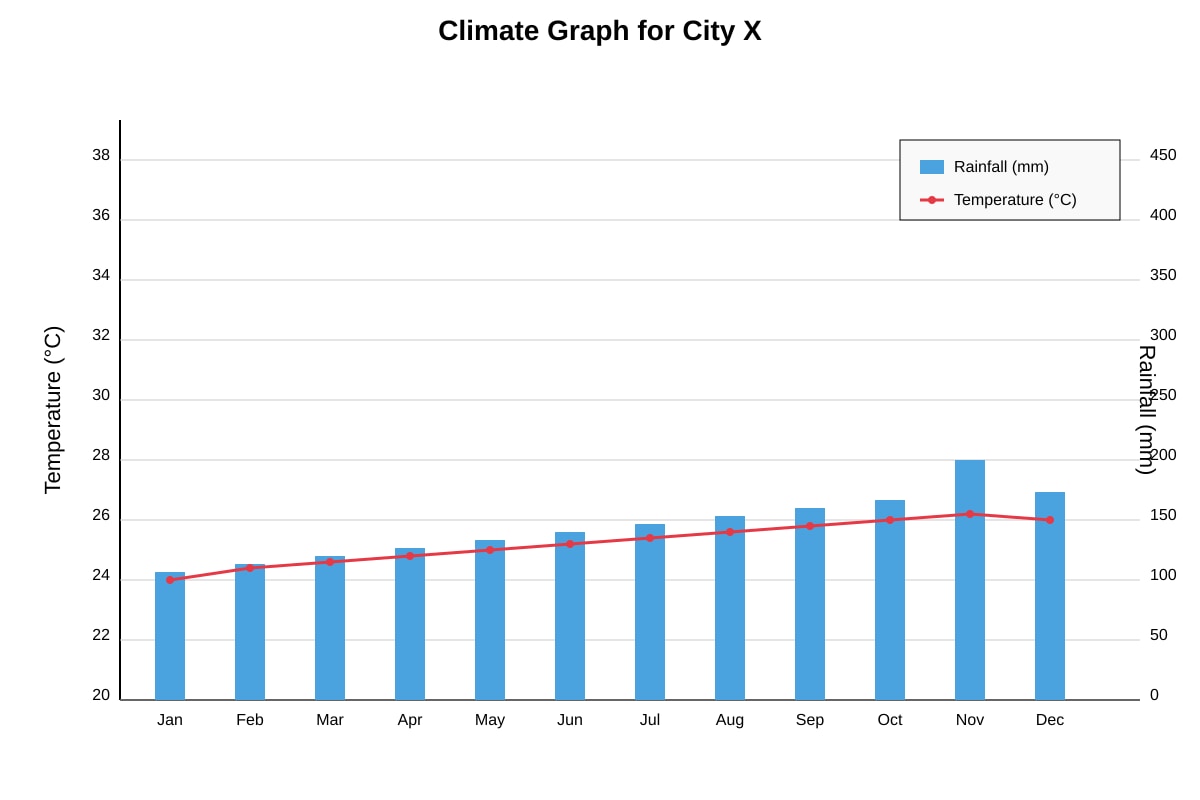
Generated graph for Q11.
(a) Describe the temperature pattern of City X. [2]
(b) Suggest the climate type of City X and give a reason. [2]
-
Explain how the greenhouse effect keeps the Earth warm enough to support life. [3]
-
The diagram shows a cross-section of a convergent plate boundary.
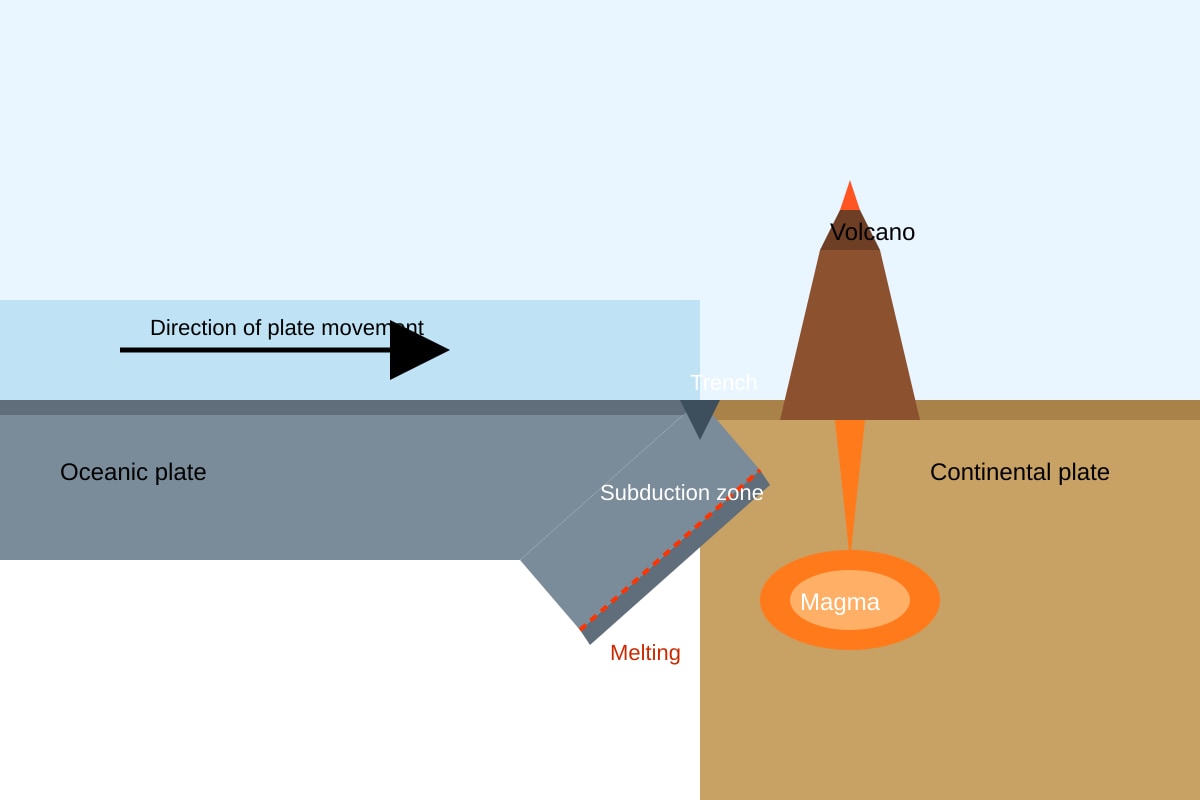
Generated diagram for Q13.
Using the diagram, explain how a volcano forms at a convergent boundary. [3]
-
List three effects of global warming on physical environments. [3]
(a) ________________________
(b) ________________________
(c) ________________________
-
Compare the climate of a tropical rainforest and a desert under two headings: rainfall and temperature range. [4]
-
A student says: “Earthquakes only happen at destructive plate boundaries.” Explain why this statement is not correct. [3]
-
Study the table of earthquake data below.
| Plate Boundary Type | Frequency of Earthquakes | Example Region |
|---|
| Constructive | Moderate | Iceland |
| Conservative | Frequent | San Andreas |
| Convergent | Frequent & strong | Japan |
(a) Which boundary type has the strongest earthquakes? [1]
(b) Explain why earthquakes occur at conservative boundaries. [2]
-
Define “sustainable development” and explain one way it relates to climate action. [3]
-
The map shows the Ring of Fire.

Generated map for Q19.
(a) What is the Ring of Fire? [1]
(b) Why are countries along the Ring of Fire prone to earthquakes? [2]
- “Human activities have increased the greenhouse effect since 1900.” Do you agree? Explain your answer with two points. [4]
</stage5_quiz_answers_md>
<stage5_quiz_answers_md>
Secondary 3 Geography Quiz - Physical Geography: Answer Key
Total Marks: 40
Topic: Physical Geography (Climate & Tectonics)
Note: Syllabus-first content from inferred templates; not exam-derived.
Section A: Multiple-Choice (1 mark each)
-
B [1]
Teaching note: The greenhouse effect is when gases like CO₂ trap infrared heat. A is wrong (heat escapes partly). C and D are unrelated.
-
B [1]
Teaching note: Internal heat from radioactive decay and leftover formation heat drives mantle convection, not solar (A) or tides (C).
-
C [1]
Teaching note: Constructive = plates diverge, magma rises, new crust. A is destructive, B is conservative, D is subduction.
-
C [1]
Teaching note: Tropical zone at Equator gets direct sun; polar (A) cold, temperate (B) seasonal, arid (D) dry not latitude-based.
-
B [1]
Teaching note: Richter scale measures energy released. Depth (A) is separate; affected people (C) and cost (D) are impact not magnitude.
Section B: Short Structured (2 marks each)
-
[2] Any two natural causes:
- Volcanic eruptions (release aerosols)
- Solar output variation
- Orbital changes (Milankovitch)
Marking: 1 mark each, accept any two valid (e.g. ocean currents shift). Common mistake: listing human causes.
-
[2] A plate boundary is the margin where two tectonic plates meet and interact.
Marking: 1 for “margin between plates” + 1 for “interact/move”.
-
[2] (a) Constructive (divergent) (b) Destructive (convergent) OR Conservative (transform).
Marking: 1 each, any two correct types.
-
[2] Evidence: (a) matching coastlines (e.g. S. America/Africa) (b) same fossils across oceans (Mesosaurus).
Marking: 1 each; accept rock layers, glacier scars.
-
[2] Weather is short-term atmospheric condition; climate is average weather over 30+ years.
Marking: 1 for difference in time, 1 for definition clarity.
Section C: Data & Extended (11–20)
-
(a) [2] Temperature stays high (25–29°C) all year with small range.
Marking: 1 constant high, 1 small annual range.
(b) [2] Tropical rainforest climate; reason: high rain every month (>150 mm) and steady heat.
Marking: 1 type, 1 reason from graph.
-
[3] Greenhouse gases absorb outgoing infrared, re-radiate to surface, keeping avg ~15°C vs -18°C.
Marking: 1 trap heat, 1 warms surface, 1 supports life (liquid water).
Note: Explain simply: without it Earth would freeze.
-
[3] Oceanic plate sinks, melts, magma rises through continental crust, erupts as volcano.
Marking: 1 subduction, 1 melting/magma, 1 volcano build. Use diagram labels.
-
[3] (a) sea level rise (b) glacier melt (c) coral bleaching / habitat loss.
Marking: 1 each, any valid environmental effect.
-
[4] Rainfall: rainforest >2000 mm/yr, desert <250 mm. Temperature range: rainforest small daily range, desert large day-night range.
Marking: 2 for rainfall contrast, 2 for temp range contrast.
-
[3] Wrong because earthquakes also at constructive (rift) and conservative (fault slip).
Marking: 1 statement false, 2 for other boundary examples.
-
(a) [1] Convergent.
(b) [2] Plates slide past, friction builds, sudden release = quake.
Marking: 1 friction, 1 release mechanism.
-
[3] Sustainable dev = meet present needs without harming future. Climate action reduces emissions for long-term safety.
Marking: 1 def, 2 link to climate.
-
(a) [1] Zone of many volcanoes/quakes around Pacific.
(b) [2] Plates converge there, cause quakes.
Marking: 1 ring def, 1–2 plate reason.
-
[4] Agree: (1) burning fossil fuels raised CO₂ (2) deforestation cut sinks.
Marking: 2 points × 2 marks, each with explanation.
</stage5_quiz_answers_md>
<stage5_quiz_md>
Secondary 3 Geography Quiz - Physical Geography
Name:
Class:
Date:
Score:
Duration: 45 minutes
Total Marks: 40
Instructions:
- This quiz covers the topic of Physical Geography based on the Secondary 3 syllabus (Climate and Tectonics clusters).
- Answer all 20 questions.
- Section A: Multiple-choice (1 mark each). Section B: Short structured questions (2 marks each). Section C: Data and extended response (3–4 marks each).
- Write your answers clearly in the spaces provided.
- This is syllabus-first practice content generated from inferred templates; it is not derived from past-year exam papers.
Section A: Multiple-Choice (Questions 1–5, 1 mark each)
-
Which of the following best describes the greenhouse effect?
A. Heat from the Sun is reflected directly back to space.
B. Certain gases trap heat in the atmosphere and warm the Earth.
C. Ocean currents cool the atmosphere at the equator.
D. Mountains block warm air from reaching the poles.
Answer: ______
-
The Earth’s internal heat that drives plate movements mainly comes from:
A. solar radiation
B. radioactive decay and residual heat
C. ocean tides
D. wind energy
Answer: ______
-
A constructive plate boundary is best described as a place where:
A. plates collide and form mountains
B. plates slide past each other
C. plates move apart and new crust is formed
D. plates sink into the mantle
Answer: ______
-
Which climate zone is closest to the Equator and receives the most direct sunlight all year?
A. Polar
B. Temperate
C. Tropical
D. Arid
Answer: ______
-
An earthquake’s magnitude measured on the Richter scale tells us about its:
A. depth below the surface
B. energy released at the source
C. number of people affected
D. cost of damage
Answer: ______
Section B: Short Structured Questions (Questions 6–10, 2 marks each)
-
State two natural causes of climate change.
(a) ________________________
(b) ________________________
-
Define the term “plate boundary” in one sentence.
-
Name two types of tectonic plate boundaries.
(a) ________________________
(b) ________________________
-
Give two pieces of evidence that support the theory of continental drift.
(a) ________________________
(b) ________________________
-
What is the difference between weather and climate? Write one sentence.
Section C: Data and Extended Response (Questions 11–20)
- Study the climate graph below showing monthly temperature and rainfall for City X.
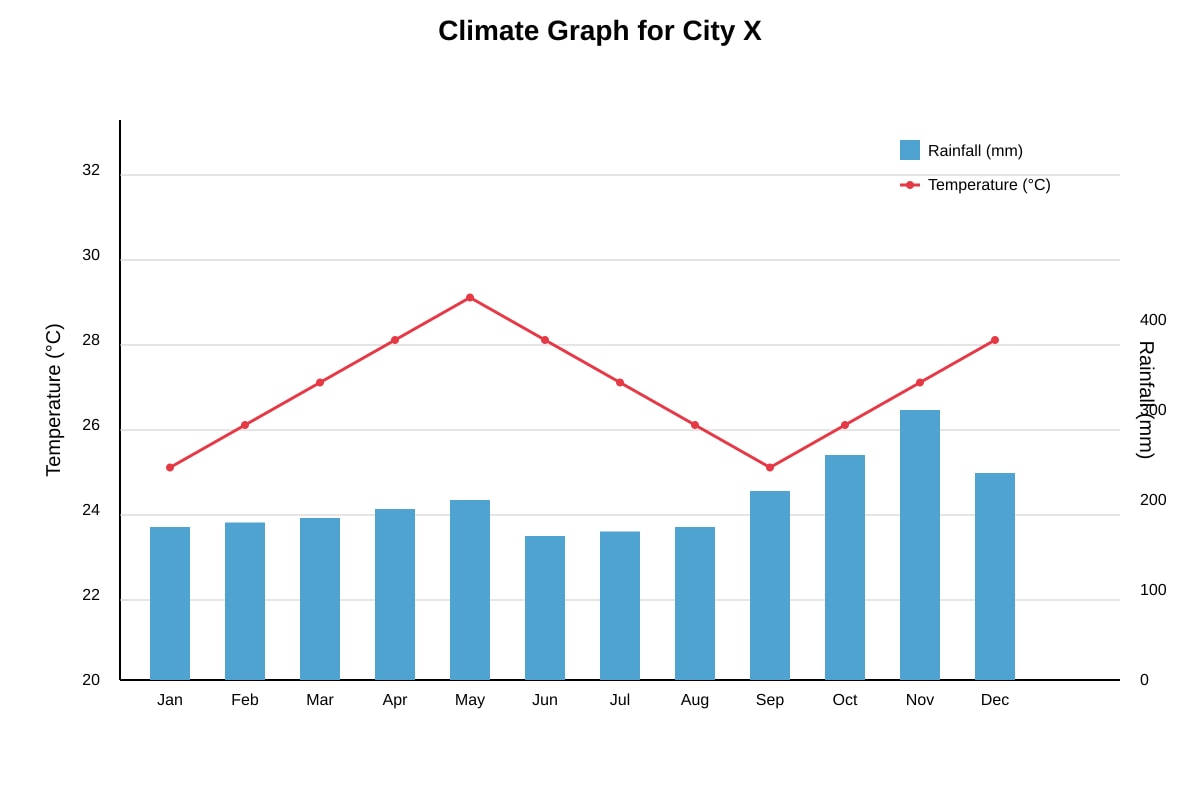
Generated graph for Q11.
(a) Describe the temperature pattern of City X. [2]
(b) Suggest the climate type of City X and give a reason. [2]
-
Explain how the greenhouse effect keeps the Earth warm enough to support life. [3]
-
The diagram shows a cross-section of a convergent plate boundary.
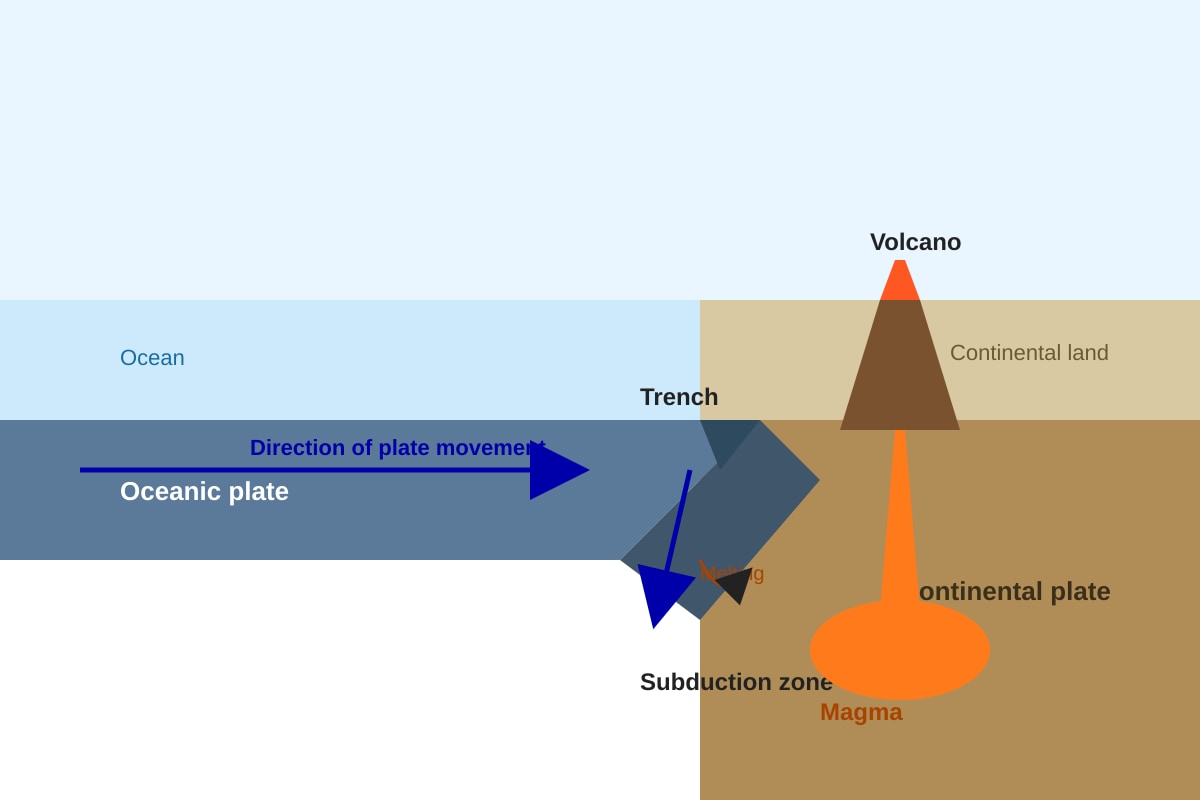
Generated diagram for Q13.
Using the diagram, explain how a volcano forms at a convergent boundary. [3]
-
List three effects of global warming on physical environments. [3]
(a) ________________________
(b) ________________________
(c) ________________________
-
Compare the climate of a tropical rainforest and a desert under two headings: rainfall and temperature range. [4]
-
A student says: “Earthquakes only happen at destructive plate boundaries.” Explain why this statement is not correct. [3]
-
Study the table of earthquake data below.
| Plate Boundary Type | Frequency of Earthquakes | Example Region |
|---|
| Constructive | Moderate | Iceland |
| Conservative | Frequent | San Andreas |
| Convergent | Frequent & strong | Japan |
(a) Which boundary type has the strongest earthquakes? [1]
(b) Explain why earthquakes occur at conservative boundaries. [2]
-
Define “sustainable development” and explain one way it relates to climate action. [3]
-
The map shows the Ring of Fire.

Generated map for Q19.
(a) What is the Ring of Fire? [1]
(b) Why are countries along the Ring of Fire prone to earthquakes? [2]
- “Human activities have increased the greenhouse effect since 1900.” Do you agree? Explain your answer with two points. [4]