AI Generated Exam Paper
Secondary 3 English Practice Paper 5
Free Sec 3 English Practice Paper 5, HY3 AI version, with questions, answers, and O Level-style practice for Singapore students.
These static practice materials are generated from the site's syllabus and paper-generation workflow, with source and model context shown so students and parents can evaluate the material before use.
Questions
Free quiz and exam paper access
Enter your details to view this paper
Your access is remembered on this device.
Answers
TuitionGoWhere Practice Paper - English Secondary 3 (Answers)
Version: 5
Total Marks: 40
Section A: Literal & Inferential (8 marks)
1. [1 mark]
Answer: The jagged rocks (that bit into the sea).
Teaching note: Scan Paragraph 1: "it had guided fishing boats safely past the jagged rocks". The question tests literal retrieval. Common mistake: saying "the sea" instead of the rocks.
2. [1 mark]
Answer: He was reassigned to the mainland.
Teaching note: Paragraph 1 states "the keeper, Mr. Halim, was reassigned to the mainland." Literal fact recall.
3. [1 mark]
Answer: It tells us the rocks were sharp, dangerous, and threatening.
Teaching note: Simile "like teeth" compares rocks to teeth — suggests they are jagged, pointed, and can "bite"/harm. Avoid dictionary definition of "jagged"; give contextual meaning.
4. [1 mark]
Answer: It suggests he felt attached, reluctant to leave, or sentimental.
Teaching note: "Running his hand along" and "he had polished every Sunday" shows care and attachment. Inference from action.
5. [2 marks]
Answer: Mr. Halim means the sea remembers or respects those who spend their lives watching over it; he feels a deep bond with the sea.
Marking: 1 mark for paraphrase of "doesn't forget those who watch it"; 1 mark for inferred meaning of bond/duty.
Teaching note: Explain in own words — not copy. "Watch" = keep, guard. The sea personified as remembering keepers.
6. [1 mark]
Answer: They missed his stories / they felt his absence.
Teaching note: Paragraph 2: "children missed his stories". Literal recall.
7. [1 mark]
Answer: The lighthouse.
Teaching note: "it" refers to the lighthouse (subject of previous clause). Referent identification.
8. [1 mark]
Answer: The village sees the lighthouse as lonely, empty, and personified as sad after Mr. Halim left.
Teaching note: "sigh", "hollow giant", "abandoned by guardian" = lighthouse given human sadness.
Section B: Language Use & Analysis (16 marks)
9. [3 marks]
Answer (3 details):
- "white paint now flaked and yellowed" → shows age/neglect.
- "stood for over a century" → shows it is very old.
- "cold iron railing he had polished every Sunday" → contrast of care vs abandonment.
Marking: 1 mark per valid detail + explanation.
Teaching note: Identify feature, quote, explain effect.
10. [2 marks]
Answer: He feels a personal, respectful duty; he believes the sea has a memory of keepers; he is solemn about his role.
Marking: 1 for attitude of respect/duty, 1 for connection to sea's "memory".
Teaching note: Inference from dialogue; not literal.
11. [1 mark]
Answer: 68%.
Teaching note: Passage B: "68% felt 'left out'".
12. [2 marks]
Answer: The writer means that although platforms aim to connect people, they actually make users feel alone because they compare themselves and see others having fun without them.
Marking: 1 for "promises connection but gives isolation"; 1 for explanation of comparison/curated lives.
Teaching note: Paraphrase + cause.
13. [4 marks]
Negative side:
- "promise connection but often deliver isolation"
- "68% felt left out" / "curated lives breeds quiet insecurity"
Positive side: - "mobilise communities for good"
- "fundraisers, alerts, support groups thrive"
Marking: 2 marks negative (1 each), 2 marks positive (1 each).
Teaching note: Pick contrastive language, quote, link.
14. [4 marks]
Answer: Passage A uses gentle, melancholic tone (e.g., "flaked", "sigh", "abandoned") to show loss; Passage B uses factual, balanced tone (e.g., "survey", "68%", "yet") to show debate.
Marking: 2 marks for Passage A analysis with example; 2 for Passage B with example.
Teaching note: Compare mood via word choice; not content summary.
Section C: Visual Text & Synthesis (16 marks)
15. [2 marks]
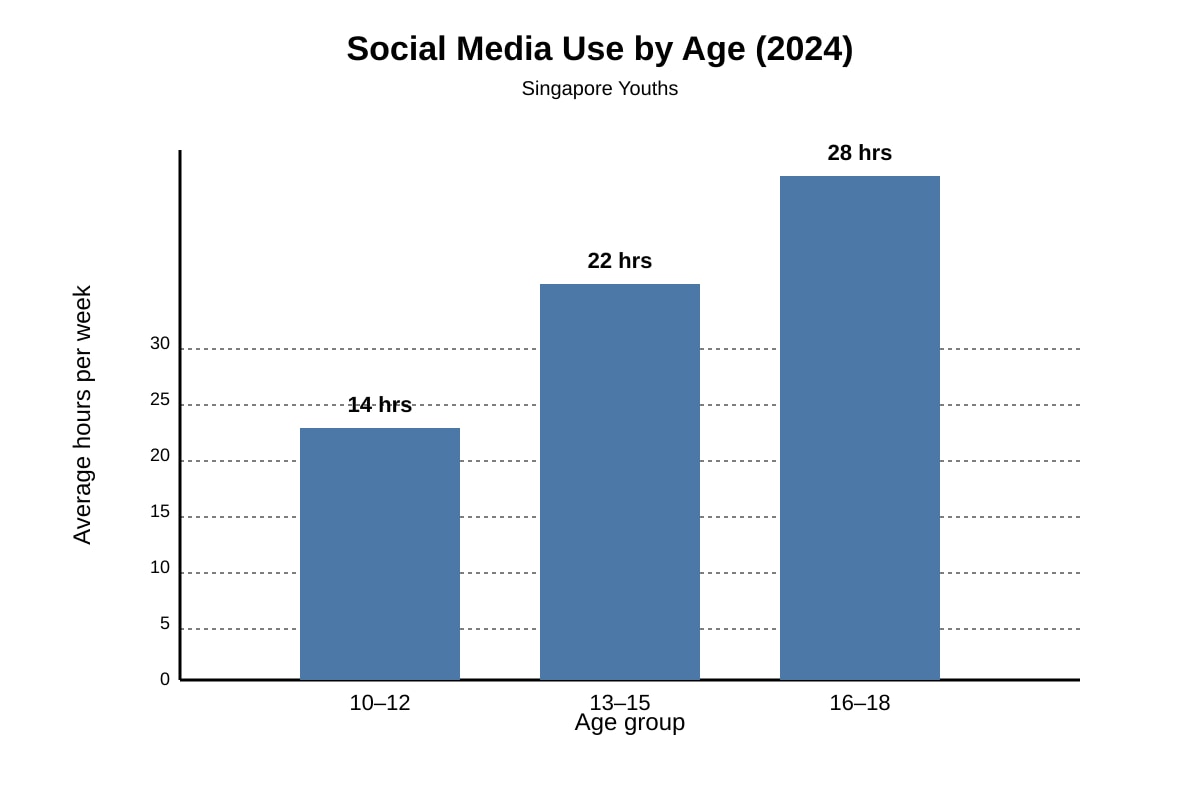
Answer: 16–18 age group; 28 hours per week.
Teaching note: Read chart values from placeholder. Both marks required.
16. [2 marks]
Answer: The chart shows rising hours with age, supporting Passage B's claim that youths spend much time on social media and may feel its effects.
Marking: 1 link to Passage B, 1 use of data.
17. [1 mark]
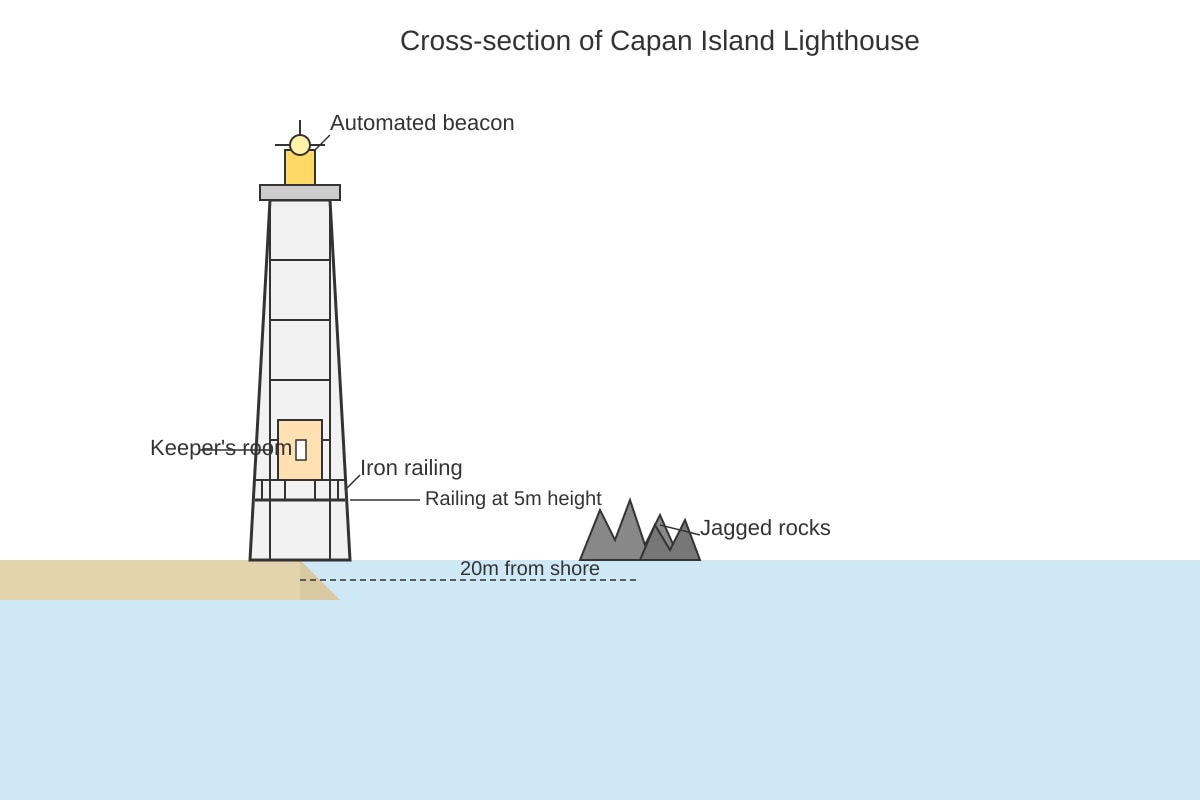
Answer: 20 m from shore.
Teaching note: From diagram values.
18. [3 marks]
Answer: The lighthouse's beacon (now automated) warned boats; the railing was where Halim stood watch; rocks 20m out show why guidance was needed.
Marking: 1 each point.
Teaching note: Synthesise text + visual.
19. [4 marks]
Answer: Both show things losing their watchers: the lighthouse lost Halim and felt abandoned, while youths on social media feel left out and forgotten despite being connected.
Marking: 2 for Passage A point, 2 for Passage B point, own words.
Word count ~40 acceptable.
20. [4 marks]
Answer: Texts do not fully support ban: Passage B says mindful use helps communities; chart shows use rises but not only harm. Reasons: (1) Passage B notes positive uses; (2) no evidence under-16 only harmed.
Marking: 1 view, 1 Passage B reason, 1 chart reason, 1 conclusion.
Teaching note: Evaluate claim against evidence.