AI Generated Exam Paper
Secondary 3 English Practice Paper 1
Free Sec 3 English Practice Paper 1, HY3 AI version, with questions, answers, and O Level-style practice for Singapore students.
These static practice materials are generated from the site's syllabus and paper-generation workflow, with source and model context shown so students and parents can evaluate the material before use.
Questions
Free quiz and exam paper access
Enter your details to view this paper
Your access is remembered on this device.
Answers
TuitionGoWhere Practice Paper - English Secondary 3 (Answers)
Version: 1 of 5
Subject: English
Level: Secondary 3
Total Marks: 50
Section A: Literal & Inferential Understanding (8 marks)
1. [1 mark]
Answer: His legs were aching (or "his legs ached").
Teaching note: Scan Paragraph 1: "his legs aching, yet his spirit remained unbroken." The fact states his legs ached after hours of walking. Common mistake: saying "tired" only — must specify aching from text.
2. [1 mark]
Answer: The mist is personified as shy / reluctant to leave / gentle and attached to the hills.
Teaching note: Simile compares mist to a shy child. This shows mist is soft, quiet, and hesitant. Avoid dictionary definition of "mist"; give contextual meaning.
3. [1 mark]
Answer: His grandmother told him; she spoke with a tremor in her voice / with fear or unease.
Teaching note: Paragraph 2 states source (grandmother) and manner (tremor in voice). Must name both parts for full mark.
4. [1 mark]
Answer: She felt afraid / nervous / emotional about the topic.
Teaching note: "Tremor" = slight shaking, suggests fear or strong emotion. Link to "tales of lost valley" being serious to her.
5. [2 marks]
Answer: He had walked a long time and was tired, but reaching the forest edge made him feel peaceful / he felt safe after the long journey.
Teaching note: 1 mark for paraphrase of "strange calm" (unexpected peace); 1 mark for reason (end of difficult walk, connection to grandmother's tales). Do not copy phrase; use own words.
6. [1 mark]
Answer: The mist.
Teaching note: "its" refers to the mist (the hills are not clinging). Pronoun referent is the nearest logical noun before "mother".
7. [1 mark]
Answer: The wind gently encouraged / pushed him to go forward without force.
Teaching note: "Nudged" is personification; shows wind influenced him softly. Do not say "wind was blowing hard".
8. [1 mark]
Answer: The voice came from stones / was ancient / neither kind nor cruel.
Teaching note: Paragraph 4: voice from stones, ancient, neutral tone. Any one correct point gains mark.
Section B: Language Use & Analysis (14 marks)
9. [1 mark]
Answer: They view it as too much / harmful / negative.
Teaching note: "Excessive" = more than needed; shows disapproval of high screen use.
10. [1 mark]
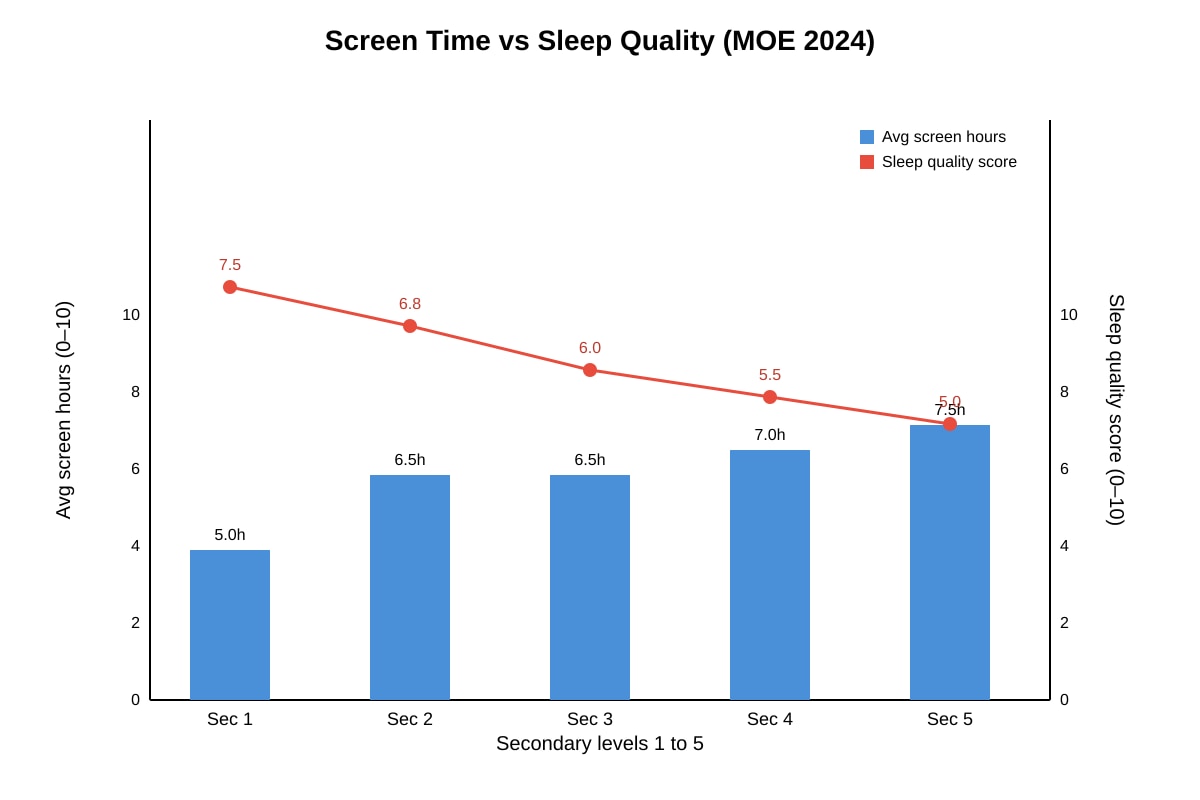
Answer: 6.5 hours daily outside school hours.
Teaching note: Paragraph 6 exact figure. Common trap: including school hours — text says "outside school hours".
11. [2 marks]
Answer: We cannot stop screen use completely, but we can guide students to use it in a healthy, controlled way.
Teaching note: 1 mark for "cannot reverse trend"; 1 mark for "teach moderation/balance". Own words required.
12. [1 mark]
Answer: Parents had different / mixed opinions — some strict, some trusting.
Teaching note: "Divided" shows lack of agreement. Do not say all parents same.
13. [3 marks – 1 for balanced view, 2 for details]
Answer: The writer uses "However" to contrast with earlier warning, and gives a positive fact (15% improvement) with a number.
Marking:
- Identifies contrast word "However" (1)
- Quotes "not all screen time is harmful" showing counter-view (1)
- Cites "15%" statistic as evidence of benefit (1)
Teaching note: Show how language creates balance, not just content.
14. [4 marks – 1 for graph link, 3 for two examples]
Answer: The graph shows sleep quality drops as screen time rises, supporting harm claim. Example 1: Sec3 at 6.5h has score 6.0 vs Sec1 7.5 at 5h. Example 2: Title from MOE adds credibility.
Marking descriptors:
- States visual shows negative correlation (1)
- Example 1 with values (1)
- Example 2 with source/title (1)
- Clear link to passage argument (1)
Teaching note: Must refer to specific labels/values from placeholder.
Section C: Visual Text & Synthesis (28 marks)
15. [1 mark]
Answer: Retired elderly (55%).
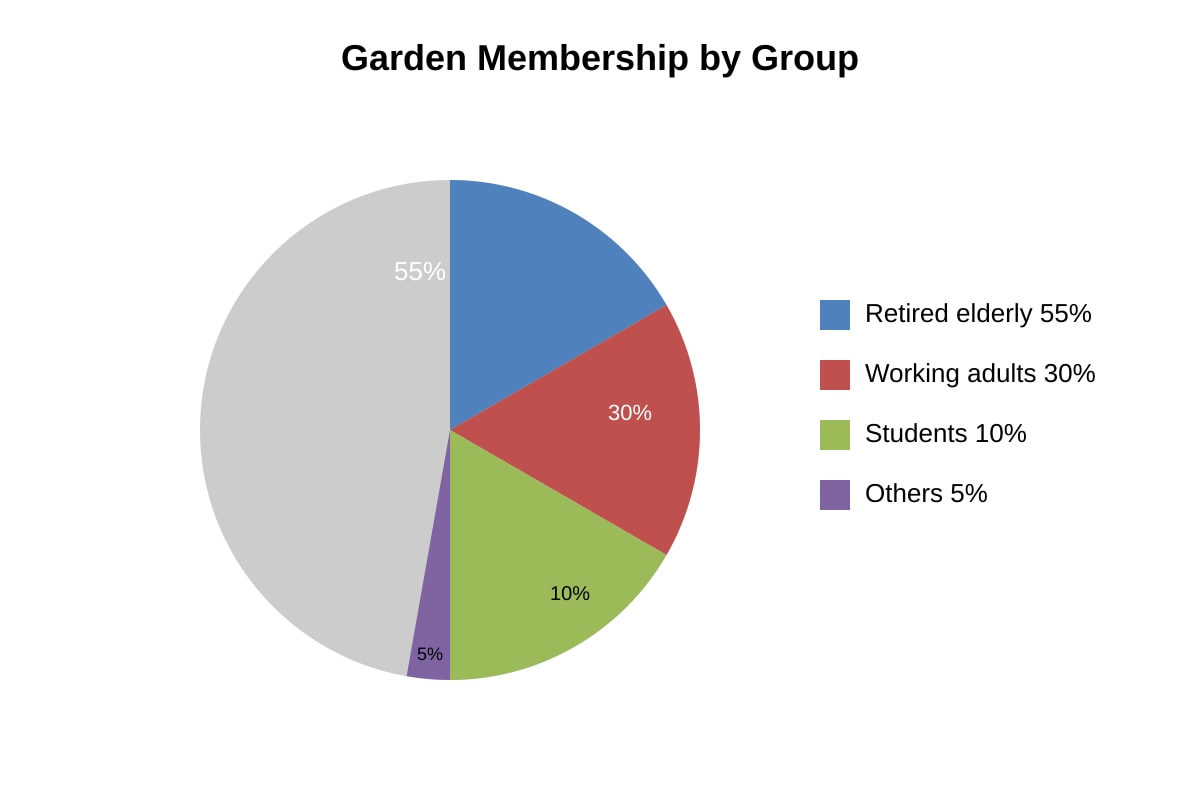
Teaching note: Largest segment in pie chart.
16. [2 marks]
Answer: Chart shows 55% retired + 30% working = 85% adults; with students/others, total >80 households plausible.
Marking: Identifies groups (1), explains supports "over eighty households" (1).
Teaching note: Visual quantifies "eighty households" claim.
17. [3 marks]
Answer: "just six" vs "over eighty" shows growth; "began" vs "today" shows time contrast.
Marking: Contrast identified (1), quote 1 (1), quote 2 (1).
Teaching note: Look for numbers and time words as language features.
18. [8 marks – Summary band]
Band 7–8: Uses own words, all points: stress relief (70%), social bonding, mixed ages. ~60 words.
Band 5–6: Mostly own words, most points.
Sample: The garden lowers stress for 70% of members. It builds friendships among 80 households across ages, especially retirees. It began small but grew, showing community success.
Teaching note: Do not copy; synthesise Passage C + chart.
19. [5 marks]
Answer: Para 11 uses past small start ("just six"); Para 13 uses data ("70%", "lower stress") for proven success.
Marking: Compare language (2), examples from each (2), link to success (1).
Teaching note: Show different purposes: narrative origin vs factual result.
20. [9 marks]
Band 7–9: Clear extent, evidence from passage (70% lower stress, 80 households, chart groups) + chart. >80 words.
Band 4–6: Some evidence, partial view.
Sample: I agree strongly. Passage shows 70% feel less stress and 80 households join, proving social bond. Chart proves retirees lead, showing wide appeal. Thus gardens boost well-being.
Teaching note: Must use both text and visual; state extent clearly.
Total Marks Check: Section A 8 + B 14 + C 28 = 50 ✓